


NEWS
ESS Manufacturer | Battery Technology | Global Energy Partner
Is Solar + Storage Now the Only Real Energy Solution for the Future?
Solar Alone Is No Longer Enough
The combination of solar generation and battery storage is redefining how energy systems are designed and deployed globally.
For years, solar power has been deployed as a standalone solution—generating clean electricity during daylight hours and feeding excess energy back into the grid. However, this traditional model is rapidly becoming outdated.
Across global markets, a clear shift is taking place. Solar plus storage is no longer viewed as an upgrade or optimization—it is increasingly treated as a standard configuration.
This transformation is driven by both technical and economic realities. As renewable penetration rises and grid constraints intensify, energy storage for solar systems is becoming essential to ensure reliability, efficiency, and profitability.
In fact, the long-standing comparison between solar vs solar with battery storage is quickly becoming irrelevant. The industry is moving toward a new baseline:
Solar without storage is no longer considered a complete energy solution.
For a deeper technical explanation of system design and cost considerations, see our detailed analysis of solar plus storage system configurations.
Real-World Projects Show a Clear Shift
The transition toward integrated solar storage systems is not theoretical—it is already happening across multiple regions.
India: Time-Shifting Solar Power for Peak Demand
In India, large-scale solar projects are increasingly paired with battery storage to address one of the most fundamental challenges: the mismatch between generation and demand.
During the day, solar output is abundant, often exceeding immediate consumption needs. However, electricity demand typically peaks in the evening when solar generation drops.
By integrating a pv battery storage system, these projects can store excess daytime energy and discharge it during peak hours. This not only improves energy utilization but also enhances project economics by enabling participation in peak pricing markets.
Spain: Stabilizing the Grid and Enabling Renewables
In Spain, energy storage is being deployed alongside solar to address grid stability challenges.
With a growing share of renewable energy in the grid mix, variability has become a major concern. Battery energy storage systems help:
- Smooth fluctuations in solar output
- Maintain frequency stability
- Support higher renewable penetration
These applications clearly demonstrate why solar needs energy storage—not as an optional enhancement, but as a core functional component.
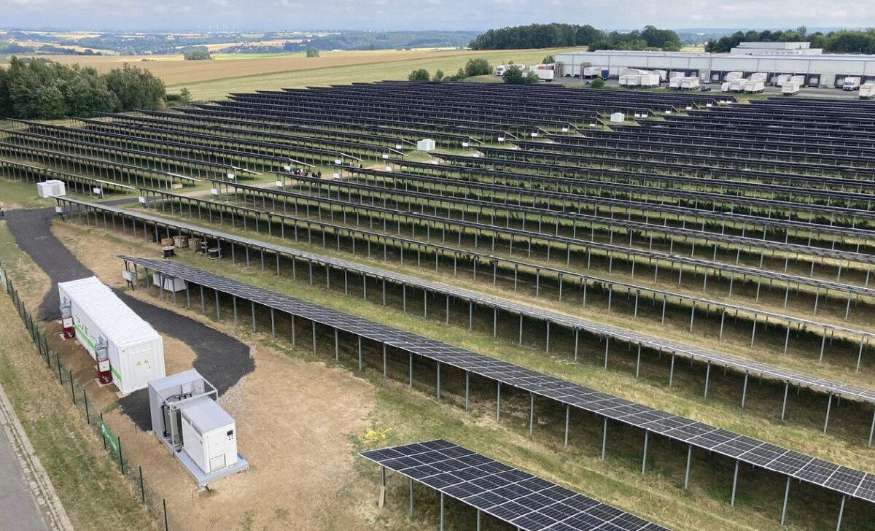

Why Energy Storage Is Now Essential for Solar
The rapid adoption of solar plus storage is driven by several fundamental challenges inherent to solar power.
Intermittency: The Core Limitation of Solar
Solar energy is inherently intermittent. Output depends on sunlight availability, which varies by time of day and weather conditions.
Without storage, this variability limits the usability of solar power. Energy storage systems enable consistent and predictable energy delivery, transforming solar into a more reliable resource.
Mismatch Between Generation and Demand
One of the biggest inefficiencies in standalone solar systems is the timing mismatch between energy production and consumption.
- Solar generates power during the day
- Demand often peaks in the evening
Energy storage bridges this gap, allowing stored energy to be used when it is most valuable.
Grid Constraints and Curtailment
In many regions, grid infrastructure cannot absorb all the electricity generated by solar farms. This leads to curtailment, where excess energy is simply wasted.
By integrating storage, projects can capture and utilize this otherwise lost energy—significantly improving overall system efficiency.
Without storage, solar cannot fully deliver its economic and operational value.
Solar vs Solar + Battery Storage: The Real Difference
The benefits of solar plus storage systems become even clearer when compared directly to standalone solar installations.
Performance Comparison
| Parameter | Solar Only | Solar + Storage |
| Energy Utilization | Limited | Optimized |
| Grid Stability | Low | High |
| Revenue Potential | Moderate | Higher |
| Operational Flexibility | Low | High |
This comparison highlights a critical shift in industry thinking.
The question is no longer whether to adopt energy storage, but how to optimize its integration.


From Optional to Standard: What Is Driving the Shift
Several structural factors are accelerating the transition toward integrated solar storage systems.
1. Changing Electricity Market Dynamics
Time-of-use pricing and peak demand charges are making energy storage economically attractive. Projects that can store energy and discharge during peak periods can significantly increase revenue.
2. Grid Requirements Are Becoming More Stringent
In many markets, new solar projects are required to include storage as part of grid connection agreements. This is especially true in regions with high renewable penetration.
3. Rising Renewable Energy Targets
As countries push toward higher renewable energy targets, the need for flexible and dispatchable power increases. Energy storage plays a critical role in enabling this transition.
Integrated solar storage systems are rapidly becoming a standard requirement rather than an optional upgrade.
Market Signal: Solar + Storage Is Becoming the Default
Across global markets, a clear pattern is emerging:
- New solar projects increasingly include storage by default
- EPC contractors are integrating storage into baseline system designs
- Investors are prioritizing projects with higher flexibility and resilience
This shift reflects a broader transformation in how energy systems are designed and evaluated.
The era of standalone solar is gradually coming to an end.
What This Means for Developers and EPC Contractors
The rise of solar plus storage has significant implications for project stakeholders.
For Developers
- Revenue models are evolving
- Project valuation increasingly depends on flexibility
- Storage is becoming essential for competitiveness
For EPC Contractors
- System design complexity is increasing
- Integration expertise is becoming a key differentiator
- Supply chain coordination is more critical than ever
Developers are increasingly adopting integrated battery energy storage system for solar solutions to maximize project value.
At the same time, choosing the right solar energy storage system supplier is now critical for ensuring long-term project success.


The Next Phase: Beyond Basic Integration
As solar plus storage becomes standard, the industry is already moving toward the next stage of evolution.
Advanced Energy Management
- AI-driven optimization
- Real-time energy dispatch
Hybrid Systems
- Integration with wind and other renewables
- Multi-source energy systems
Long-Duration Storage
- Supporting multi-hour and multi-day energy shifting
These developments will further enhance the value of solar plus storage systems and expand their role in the global energy transition.
Conclusion: Solar Plus Storage Is No Longer a Choice
The global energy landscape is undergoing a fundamental transformation.
Solar power, once seen as a standalone solution, is now part of a broader, more integrated system where energy storage plays a central role.
The key takeaway for industry stakeholders is clear:
The question is no longer whether to add storage to solar—but how to do it effectively.
As the market continues to evolve, those who adapt to this new reality will be best positioned to capture the full value of renewable energy.
2026 Energy Storage Shock: Grid-Scale Boom Takes Over While Profitability Finally Returns
Lithium Battery Supply Chain: Why China Dominates the U.S. Market
Related Article


contact us
For more questions please


Office Address: 701, Building A, Yonghuayuan Business Building, Baotian 2nd Road, Chentian Community, Xixiang Street, Bao'an District, Shenzhen, Guangdong Province, China
Factory Address 1: Room 701, Building 2, Kegu Industrial Park, Zone B, Jian'an Road, No. 790, Chang'an Town, Dongguan City, Guangdong Province, China
Factory Address 2: Building 7, Phase II Standardized Factory, Innovation Industrial Park, Duji Economic Development Zone, Huaibei City, Anhui Province, China