


NEWS
ESS Manufacturer | Battery Technology | Global Energy Partner
ESS inverter compatibility: 24/7 support and long-term peace of mind with PCEnerSys

If you’re an industrial or commercial ESS integrator, you already know the ugly truth: most battery problems don’t look like “battery problems” at first.
They show up as commissioning delays, intermittent alarms, unexplained derates, or a system that behaves perfectly in a lab and then falls apart at a live site.
That’s why “inverter compatibility” isn’t a marketing checkbox. It’s a technical and operational risk decision.
In this buyer’s guide, you’ll get a practical way to validate ESS inverter compatibility, and you’ll see how PCEnerSys approaches integration and long-term support in a way that’s built for real deployments.
Compatibility isn’t a spec. It’s a system behavior.
A battery and an inverter can look compatible on paper and still fail in the field.
Because the integration isn’t just DC voltage and kW. It’s also communications, control logic, protections, and how the system reacts when something goes wrong.
There’s also a safety and compliance layer: UL’s code-authority guidance warns that pairing components without verifying compatibility can violate NEC 110.3(B) and create fire/electric shock hazards, and it points to UL 9540 expectations for evaluating an energy storage system as a whole.UL Code Authorities: Can PV inverters be used with battery energy storage systems?
Key Takeaway: Treat battery–inverter compatibility as an integration plan (test + commissioning + support), not as a single claim.
The ESS inverter compatibility checklist (what integrators should validate)
You can think of battery-inverter compatibility as four layers. If any layer is weak, your project ends up paying for it later.
1) Electrical matching (the basics that still get teams)
You already validate these, but they belong on the checklist because they’re easy to “assume” when timelines get tight:
-
Nominal voltage and operating window: the inverter/PCS DC input range must align with the battery system’s voltage range across operating conditions.
-
Power and current capability: peak charge/discharge current, protection limits, and thermal limits must align to the operating profile.
-
Protection coordination: system-level protection design needs to be consistent with the combined system behavior, not a single component.
If you’re switching chemistries or moving from an existing battery line, don’t skip the charge parameter validation step. The practical point: your inverter needs the right battery profile (for example, LiFePO4 mode or custom parameters) and the system needs a clean path to enforce limits.
2) BMS communication protocols (where compatibility becomes real)
When people say “it works with our inverter,” they often mean “we can charge and discharge.” That’s not the same as stable long-term operation.
For integrators, communications compatibility typically means:
-
The inverter can read the battery’s state of charge (SOC), state of health, temperature, alarms, and limits.
-
The battery can enforce safe charge/discharge limits through a reliable data path.
-
The inverter’s control logic responds correctly to limits (no oscillation, no false trips, no delayed stop behavior).
In many deployments, the handshake runs through BMS communication protocols such as CAN or RS485. PCEnerSys explains this compatibility layer in plain language and calls out CAN/RS485 support as a way to improve system synchronization and protection.PCEnerSys: Home Battery Storage Guide (compatibility and BMS communication)
3) Validation and “known-good” pairings (don’t trust assumptions)
Compatibility should be proven, not promised.
What you want, ideally:
-
a tested inverter compatibility matrix (model + firmware versions, where practical)
-
a defined BMS profile or parameter set for each common pairing
-
evidence of integration testing beyond “it powers on”
4) Operations readiness (the part that drives peace of mind)
Even a clean integration can fail later if your support path is unclear.
If a site throws a fault at 2:00 AM, “compatibility” needs to include:
-
remote diagnosis (what data can you see?)
-
escalation (who owns the issue when it’s ambiguous?)
-
parts (what’s the RMA/spares reality?)
-
documentation (do you have the right wiring diagrams, SOPs, and commissioning logs?)
ESS commissioning support: what to demand before you sign
Commissioning is where schedule risk concentrates.
The integrator questions aren’t philosophical. They’re practical:
-
Who validates the BMS–inverter handshake and logic?
-
What’s the test plan?
-
What’s the acceptance criteria?
-
What’s the escalation path when you hit a fault that could be wiring, firmware, settings, or a component issue?
Here’s what a supplier should be able to provide without drama.
Commissioning package (minimum bar)
-
Commissioning checklist and acceptance test plan
-
Wiring and communications guide (including supported protocol options)
-
Parameter set / profile for the agreed inverter/PCS pairing
-
Fault code mapping and troubleshooting workflow
-
Handover documentation (as-built notes, settings snapshots, test results)
If a supplier can’t provide this package, the hidden cost lands on your engineers.
24/7 technical support for BESS: what it should include (and how to verify it)
“24/7 support” is easy to say. The only version that matters is the one that reduces downtime and stops small issues from becoming site visits.
A strong support program usually has three characteristics.
1) Clear coverage and escalation
You want a defined path:
-
first response (hotline / remote)
-
technical escalation (engineering)
-
field escalation (if onsite support is required)
PCEnerSys describes its service approach as “professional, quick response” and “a complete set of service processes to meet customer needs.” That’s a good starting point because it implies a defined service workflow, not ad-hoc support.
The decision-stage question is simple: what is that process, and what are the response targets?
2) Remote visibility (so you can avoid unnecessary truck rolls)
If the system can’t tell you what’s happening, you’ll default to onsite work.
At a minimum, ask how your team can access:
-
alarms and event logs
-
SOC/SOH and temperature history
-
charge/discharge limit states
-
communications status (heartbeat, dropouts)
Safety best-practice guidance also emphasizes monitoring BESS facilities 24/7 using remote systems as part of safer operations.EASE safety guidelines webinar slides (2025)
3) A realistic spares and RMA path
Integrators don’t need perfection. They need predictability.
Ask the supplier:
-
what spares are recommended for your site class
-
what the RMA workflow looks like
-
typical lead times and where inventory is held
If answers are vague, you’re looking at schedule risk later.
How PCEnerSys reduces integration risk (and why integrators care)
You’re not just buying batteries. You’re buying a deployment outcome: a system that integrates cleanly and stays stable.
Here’s what stands out about PCEnerSys for integrators.
Compatibility breadth (and help matching other inverter brands)
PCEnerSys’ on-site positioning is explicit: “Batteries are compatible with over 90% inverters in the market. We also have the ability to help clients match the inverters of other brands.”PCEnerSys
In decision-stage procurement terms, that translates into a practical question you can test:
-
Do they have a compatibility process for your target inverter/PCS and a plan to validate it quickly?
A portfolio built for real deployment formats
Integrators often need more than a single battery module. They need complete formats that match the deployment:
-
cabinet systems for commercial sites
-
containerized BESS for larger industrial loads
-
PCS and related balance-of-system components
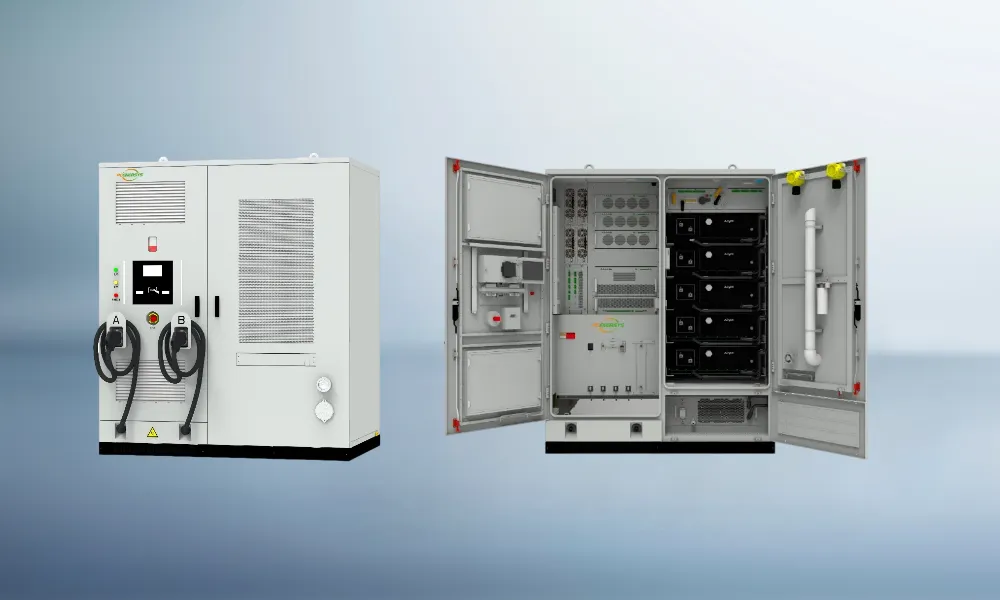
PCEnerSys’ Commercial & Industrial ESS lineup includes cabinet and containerized options across a wide power/capacity range (including air-cooled and liquid-cooled configurations), plus related PCS and switching equipment. That breadth matters because it gives you more standardization options across projects.
Engineering depth and manufacturing capability (context, not hype)
You should always validate capabilities independently, but the About page provides useful context when you’re shortlisting: self-developed technologies (cells, BMS, modules, and system integration), manufacturing scale, and global deployment claims. Review the details on the PCEnerSys site and then ask for the evidence you need in your RFQ.
Copy-paste RFI/RFQ questions for ESS integrators
Use these questions to quickly separate “compatible in theory” from “compatible in deployment.”
Compatibility and integration
-
Which inverter/PCS models have you validated with this battery system? Provide the compatibility list (model + version, if applicable).
-
What communication protocols are supported (e.g., CAN, RS485)? What is the default configuration?
-
Do you provide a BMS profile/parameter set for the target inverter?
-
What data points are available for commissioning and troubleshooting (SOC, limits, alarms, event logs)?
-
What are the top three integration failure modes you see, and how do you mitigate them?
Commissioning and documentation
-
Do you provide a commissioning checklist and acceptance test plan?
-
What documentation is included at handover (as-built settings, test results, wiring diagrams)?
-
Who is the technical point of contact during commissioning, and what is the escalation path?
Support and long-term operations
-
Describe your support process end-to-end. What are the response targets?
-
What remote troubleshooting support is available, and what is the expected time to first diagnosis?
-
What spares do you recommend, and what does the RMA process look like?
FAQ
What does ESS inverter compatibility actually mean?
It means the battery, BMS, and inverter/PCS operate as a stable system: electrical parameters align, communications are reliable, protections behave correctly, and the pairing has been validated.
It also has a compliance and safety dimension. UL’s code-authority guidance explicitly warns against installing mismatched components without compatibility investigation.
Is “works with 90% of inverters” enough to approve a supplier?
It’s a strong starting point, but you still need a compatibility plan for your inverter/PCS and your commissioning workflow. Ask for validated pairings, supported protocols, and a clear testing path.
How do CAN and RS485 help integration?
They allow the inverter and BMS to share live data and limits, improving synchronization and protection. In practice, the value is fewer surprises at commissioning and clearer troubleshooting when faults appear.
What should 24/7 technical support include for an ESS project?
At minimum: defined response and escalation, remote troubleshooting capability, commissioning support, and a practical spares/RMA pathway. Also ask what monitoring approach is recommended, and what data your team can access remotely.
Next steps
If you want to reduce integration risk before procurement, start with a compatibility checkpoint:
-
your target inverter/PCS models
-
your communications requirements (CAN/RS485)
-
your commissioning timeline and acceptance tests
Then validate the supplier’s process against it.
If PCEnerSys is on your shortlist and you want to confirm the best-fit configuration, start here: review their Commercial & Industrial ESS line and contact the team to align on your target inverter pairing and commissioning plan.
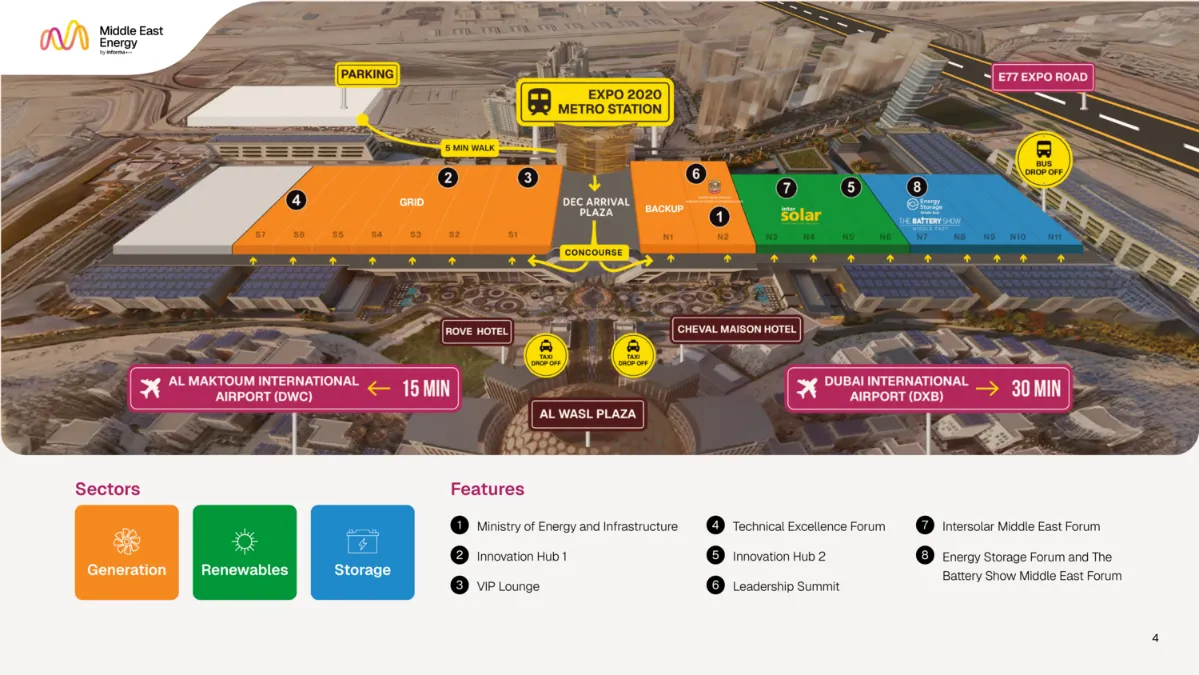
PCEnerSys to Showcase Next-Gen Energy Storage Solutions at Middle East Energy Dubai 2026 (Booth H6.E54)
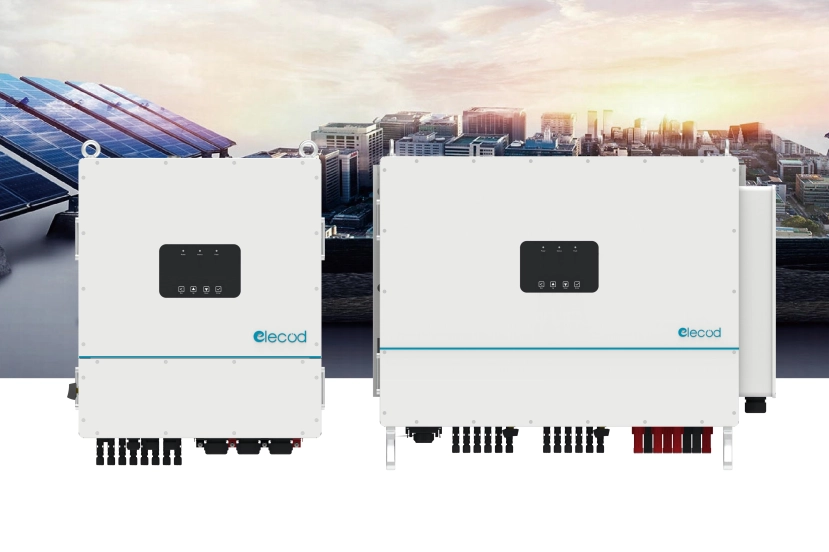
PCENERSYS Launches 50kW–500kW C&I Power Conversion System for Commercial & Industrial Energy Storage
Related Article

contact us
For more questions please


Office Address: 701, Building A, Yonghuayuan Business Building, Baotian 2nd Road, Chentian Community, Xixiang Street, Bao'an District, Shenzhen, Guangdong Province, China
Factory Address 1: Room 701, Building 2, Kegu Industrial Park, Zone B, Jian'an Road, No. 790, Chang'an Town, Dongguan City, Guangdong Province, China
Factory Address 2: Building 7, Phase II Standardized Factory, Innovation Industrial Park, Duji Economic Development Zone, Huaibei City, Anhui Province, China