


NEWS
ESS Manufacturer | Battery Technology | Global Energy Partner
Australia’s 3.8 GWh Large-Scale Storage Push: Deconstructing the 4-Hour Standard, Grid-Forming Integration, and the Battle for Project Approvals
As the second half of the CIS Tender 8 unfolds, Australia’s utility-scale storage sector enters a "race for grid connection approvals."
Key Event Milestones
On July 7, 2026, three landmark grid-scale battery energy storage system (BESS) projects—totaling over 3.8 GWh—achieved simultaneous breakthroughs under the rigorous regulatory framework of Australia’s *Environment Protection and Biodiversity Conservation Act* (EPBC Act). One "mega-project" secured final approval, while two other core assets in Victoria officially entered the public consultation phase. This concentrated release of policy dividends marks a significant milestone for overseas clean energy developers in the strategic race to secure a foothold in the Australian grid.
Macro-Context and Drivers
The Policy Race: Why did utility-scale storage projects see a surge in approvals in mid-2026? The primary catalyst was the conclusion of "Tender 8" under the Capacity Investment Scheme (CIS)—Australia’s largest-ever capacity investment initiative—at the end of June 2026. Covering the National Electricity Market (NEM), this tender round exceeded targets, locking in 4.2 GW / 16.1 GWh of clean dispatchable capacity. The announcement of the Tender 8 results ignited a "race" among developers to secure critical grid connection approvals; to reach a Final Investment Decision (FID) before upcoming project delivery deadlines, companies had to accelerate the process of clearing all federal environmental hurdles.
Coal Retirement and the "Duck Curve": Concurrently, the accelerated retirement of aging coal-fired power plants along Australia’s east coast created a systemic gap in baseload power. This was compounded by the severe exacerbation of the "daytime duck curve"—driven by high rooftop solar PV penetration—leading to frequent instances of negative pricing. Consequently, the NEM grid’s demand for long-duration energy storage assets capable of peak shaving and load shifting reached an all-time high. These three energy storage clusters, totaling 3.8 GWh, represent far more than a mere aggregation of capacity figures; they serve as three pivotal indicators of the evolution of Australia’s utility-scale energy storage sector. They signal to the global supply chain that "4-hour duration standardization" has become a non-negotiable grid requirement, "grid-forming technology mandates" are upending inverter selection standards, and the "securitization of clean energy project rights" is emerging as the ultimate weapon for investment institutions to build core defensive moats.
Key Parameters Dashboard: A Structured Breakdown of Three Major Energy Storage Projects

To enable decision-makers, investors, and supply chain experts to quickly grasp critical insights amidst fragmented reading time, this section presents a structured breakdown of the 3.8 GWh energy storage assets currently being advanced in New South Wales and Victoria.
Through a comparative analysis of project developers, site locations, technology pathways, and grid-connection parameters, we can clearly observe the latest trends in hardware selection and asset approval within the Australian National Electricity Market (NEM). Below is the Key Parameters Dashboard for these three major projects:
|
Project Name |
Developer |
Location / REZ |
Capacity & Storage |
Coupling Configuration |
Hardware Configuration |
Approval Status |
|
Dinawan Solar Farm |
Spark Renewables (Subsidiary of TNB) |
New South Wales (NSW) South-West Renewable Energy Zone (South-West REZ) |
1,000MW Solar (PV) + 300MW / 1,200MWh Battery Storage (BESS) |
AC or DC Coupled (To be confirmed by final design) |
Approx. 1.5 million single-axis trackers |
Approved under the EPBC Act (Final federal environmental hurdle cleared) |
|
Mologa Solar Hybrid |
Potentia Energy |
Victoria (VIC) Loddon Mallee Region (Loddon Mallee System) |
250MW Solar (PV) + 250MW / 1,000MWh Battery Storage (BESS) |
AC-Coupled Hybrid |
Approx. 500,000 PV modules + 272 containerized batteries + 68 inverters |
EPBC Referral Consultation Stage |
|
WRESST |
Celero Infrastructure |
Victoria (VIC) Glenrowan Node |
400MW / 1,600MWh Battery Storage (BESS) (Pure Standalone BESS) |
Standalone BESS Grid Interconnection |
Fully underground transmission cables; Footprint reduced to 7.2 hectares |
EPBC Referral Consultation Stage |
This robust dashboard clearly demonstrates that the "4-hour duration" standard has become the technical benchmark for grid-scale energy storage development in Australia. Whether utilizing a co-located solar-plus-storage configuration or a standalone BESS approach, the primary objective of these three major projects is to capture value through grid arbitrage and system ancillary services (FCAS) in an environment characterized by high renewable energy penetration. These findings also provide the foundational data necessary for subsequent in-depth analysis of the hardware supply chain and the dynamics surrounding grid-connection policies.
Benchmark Case Study: How Did the 1.2 GWh Dinawan Project in NSW Clear Its Final Hurdles?
Developer Background and Capital Intent
As the sole "mega-asset" in this round of environmental approvals, the Dinawan Solar Farm project exemplifies the long-term investment commitment of overseas sovereign-level capital to capturing grid arbitrage opportunities in Australia. The project’s developer, Spark Renewables, is backed by Tenaga Nasional Berhad (TNB), Malaysia’s premier national power utility. In recent years, this Asian energy giant has aggressively deployed grid-scale assets within the Australian National Electricity Market (NEM) through its wholly-owned subsidiaries. The fundamental driver behind this foreign giant’s willingness to persist through a lengthy development cycle is its recognition of the long-term, stable arbitrage potential within Australia’s highly volatile spot electricity market—an opportunity created by the supply gap in coal-fired peaking generation assets.
A "Compliance Masterclass": Navigating the IPC and EPBC Processes
Community Opposition: The project did not have a smooth journey during the local assessment phase. During the public exhibition period managed by the NSW Department of Planning, Housing and Infrastructure, the application faced 82 public objections. Because a significant number of these objections came from residents living more than 100 kilometers away from the site, the application triggered the "State Significant Development Framework" protocols. Consequently, it was referred to the NSW Independent Planning Commission (IPC) for a comprehensive ruling in January 2026, ultimately securing approval in April 2026 after a challenging review process.
Ecological Constraints (EPBC Compliance): Approval under the federal *Environment Protection and Biodiversity Conservation Act* (EPBC Act) represented the final major federal environmental hurdle for the asset. Given the project's vast footprint—covering 4,500 hectares with a proposed disturbance area of 2,600 hectares—the federal environmental authority imposed extremely stringent conditions: the developer is required to report any non-compliance with the Environmental Management Plan to both federal and state governments within two days of the incident. Given that the project site is home to ten local species and ecosystems—including grasslands, woodlands, rare plants, and native birds and reptiles—classified as vulnerable, threatened, or endangered, the developer formulated highly complex biodiversity offsetting schemes. Successfully navigating this rigorous compliance pathway serves as an invaluable "textbook" case study on compliance benchmarks for Chinese new energy developers expanding overseas.
The Core Value of Grid Access and Project Approvals
In the Australian electricity market, "Connection is King." Last year, the Dinawan project not only secured a highly coveted 1,007 MW of grid access rights within the South-West Renewable Energy Zone (REZ) but also stood out as the only hybrid energy hub project in that allocation round to incorporate solar PV.
Notably, the project demonstrates sophisticated skill in leveraging policy mechanisms: the initial 300 MW solar component secured a federal government revenue underwriting agreement under the Capacity Investment Scheme (CIS) Tender 7 (a generation-only tender) for May 2026, while the wind farm component had already won a bid in the earlier CIS Tender 4. With the finalization of the core environmental clearances for the BESS (Battery Energy Storage System) component, the last piece of the "Dinawan Energy Hub" puzzle has fallen into place. The developer is now collaborating with the transmission network operator, Transgrid, to advance detailed design and generator registration, pushing hard toward the Final Investment Decision (FID) and the commencement of construction, both targeted for 2027.
Technological Frontier: Supply Chain Trends Revealed by the Mologa Project in Victoria
Breakdown of Hardware Specifications for a 4-Hour System
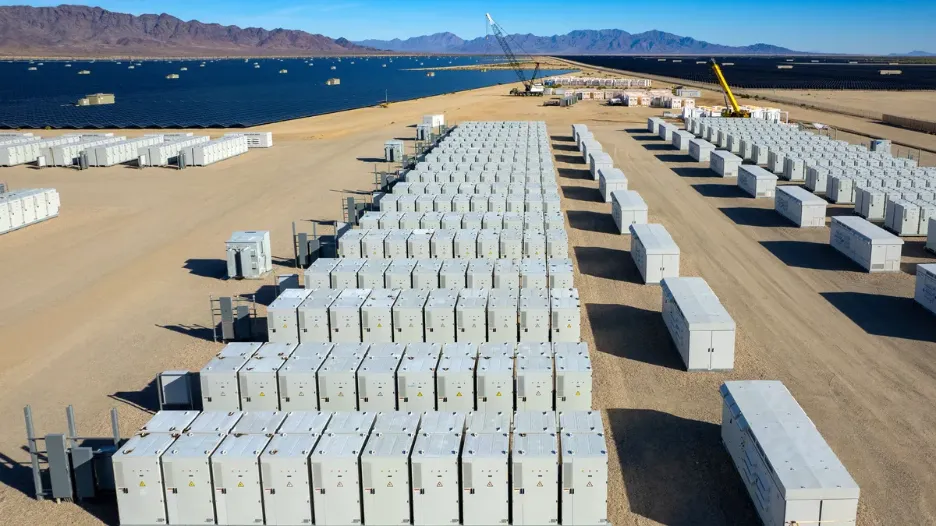
The Mologa Solar Hybrid Project, currently advancing in northern Victoria, offers a valuable reference for the hardware configuration of utility-scale Battery Energy Storage System (BESS) integrators worldwide. According to the official technical specifications submitted to federal environmental authorities, the project’s planned 250 MW / 1,000 MWh storage system will utilize 272 containerized battery units and 68 Power Conversion Systems (PCS).
Mathematical analysis and supply chain deduction reveal an asymmetric configuration with a high ratio of four battery containers per inverter. This design confirms that high-power integrated storage units—featuring individual power ratings of 3.X MW or higher—are becoming the industry standard for 4-hour long-duration BESS applications. Furthermore, the project’s 30-year design life imposes rigorous requirements on the large-format Lithium Iron Phosphate (LiFePO4) cells (314Ah+ capacity) currently favored by the supply chain. To minimize capacity degradation and the risk of thermal runaway over the cells' full lifecycle, the system will inevitably incorporate high-precision liquid cooling systems and intelligent Battery Management Systems (BMS).
Grid-Forming Technology: From "Bonus Feature" to "Entry Ticket"
Vulnerability of Weak Grids: The Mologa Project is located in northern Victoria (the Loddon Mallee region), an area situated at the extremity of a typical "weak grid." The region relies heavily on the existing 220kV transmission line (connecting Kerang Terminal Station to Bendigo Terminal Station). With the grid connection of numerous intermittent photovoltaic power plants along this route, local system strength has severely deteriorated, creating a high risk of serious sub-synchronous resonance or even grid voltage collapse.
The Mandate for a Paradigm Shift to Grid-forming Technology: To address this, the developer Potentia Energy deployed a decisive technical solution: the explicit adoption of grid-forming technology—specifically, the Virtual Synchronous Machine (VSM) control strategy. While energy storage systems in the Australian National Electricity Market (NEM) historically relied on passive grid-following technology, Battery Energy Storage Systems (BESS) must now evolve into grid "firefighters" capable of actively establishing voltage, stabilizing frequency, and providing inertia support.
This technological shift sends a critical, make-or-break signal to inverter giants rapidly expanding into the Australian market: hardware that lacks grid-forming certification and fails to pass Australia’s extremely rigorous grid-connection compliance tests—such as the Generator Performance Standards (GPS)—will effectively be shut out of the Australian market.
Commercial Monetization: The "Parasitic & Firming" Survival Strategy of the 1.6GWh WRESST Standalone BESS

Logic Behind Optimal Site Selection for Standalone Energy Storage
Unlike the two previously mentioned co-located solar-plus-storage projects, the WRESST (Winton Renewable Energy Stability and Storage Terminal) project—which has entered the EPBC Act assessment queue—is a purely standalone battery energy storage system (BESS). Its developer, Celero Infrastructure, boasts a formidable background; the management team includes industry veterans such as the former Chief Operating Officer of the Australian Energy Market Operator (AEMO). Furthermore, the company recently made a strategic investment in Padthaway Resources—a First Nations-owned entity—thereby securing a service portfolio covering up to 6GW of battery assets across Australia, a move that demonstrates exceptional commercial acumen.
Despite lacking any integrated solar or wind generation components, Celero has demonstrated a textbook example of site selection based on "geographical arbitrage": the WRESST site is strategically positioned right in the heart of the area connecting two existing, commercially operational large-scale solar PV power plants. This physical layout—highly clustered yet non-co-located—perfectly bypasses the lengthy development cycles typical of the generation side, allowing the project to "parasitically" attach itself to mature, core power generation nodes in the most direct manner possible.
The Commercial Rationale Behind "Fully Underground Cabling"
Asset Model with an Extremely Compact Footprint: Project filings reveal that, while this massive 400MW/1,600MWh standalone long-duration energy storage cluster encompasses a total project area of 27 hectares, the actual surface disturbance has been minimized to a remarkable 7.2 hectares. This achievement is due to a design that relies purely on battery stacking and utilizes fully underground transmission cabling. The entire BESS will connect directly to the grid's critical node—the existing Glenrowan Terminal Station—via an underground cable network; this approach minimizes regulatory friction regarding federal environmental approvals while drastically shortening the physical grid-connection construction timeline to just 12–18 months.
Daytime Negative-Price Arbitrage and Grid Firming: The project’s underlying commercial model directly addresses Victoria’s current grid challenges. The state has seen an uncontrolled proliferation of both rooftop and utility-scale solar PV, resulting in a massive daytime supply surplus that frequently drives spot market prices into negative territory.
The commercial logic underpinning WRESST leverages its four-hour long-duration dispatch capability to act as a "sponge" during periods of negative daytime pricing, absorbing excess, low-cost energy from two nearby solar farms and the broader grid. It then discharges this stored energy at high prices during evening peak-demand periods—when prices spike—via its underground substation hub. Furthermore, the asset is designed to provide robust grid firming services and Frequency Control Ancillary Services (FCAS) to the National Electricity Market (NEM); with a 25-year operational lifespan, it is poised to become a highly lucrative capital asset for the Victorian grid.
In-depth Analysis and Industry Insights: A Guide for the Global Large-Scale Energy Storage Supply Chain
Energy Storage Duration Fully Anchored to the "4-Hour" Standard
A close look at this wave of 3.8 GWh large-scale energy storage projects reveals a definitive trend for global investors and supply chain participants: grid-scale battery energy storage systems (BESS) in Australia are increasingly anchoring to the "4-hour duration benchmark." With the early-stage market opportunities for short-duration systems (1–2 hours)—primarily driven by Frequency Control Ancillary Services (FCAS)—largely saturated, and the "duck curve" phenomenon creating a critical need for deep storage capacity to address late-night supply gaps, short-duration systems are no longer sufficient. Whether participating in government subsidy auctions under the Capacity Investment Scheme (CIS) or executing high-premium grid-firming contracts with energy retailers, the 4-hour duration (e.g., the 100 MW/400 MWh class) has become the new technical baseline for grid-scale BESS to secure grid entry, ensure viability, and achieve commercial closure in Australia.
The "Moat" of Permitting Assets Extends Beyond Hardware
Against a macroeconomic backdrop of global battery cell overcapacity and hyper-competitive, transparent hardware costs for large-scale storage integration, the ultimate competitive advantage—or "moat"—for energy storage plants no longer lies in equipment procurement prices. As demonstrated by projects such as Dinawan, Mologa, and WRESST, the true core defensive assets—offering immense potential for value appreciation and resisting easy replication—are "clean permits." These are permits that have successfully navigated the Independent Planning Commission’s (IPC) lengthy public hearings and the federal EPBC Act’s rigorous assessments regarding endangered ecosystems, while also securing critical grid connection points with main grid operators (such as Transgrid) or existing, established substations. For renewable energy developers and EPC giants, these permits represent the most valuable assets in the landscape. When expanding into the Australian market, Chinese-backed supply chain enterprises must adopt a global perspective that integrates the export of equipment with a synergistic evolution toward deep regulatory compliance and "permit asset securitization operations."
In-depth Analysis:Why Europe’s Solar + BESS Integration Requires a Cultural and Regulatory Overhaul
Australia’s 40GW Energy Storage Roadmap: Decoding AEMO’s 2026 ISP and the BESS Reality Gap
Related Article


contact us
For more questions please


Office Address: 701, Building A, Yonghuayuan Business Building, Baotian 2nd Road, Chentian Community, Xixiang Street, Bao'an District, Shenzhen, Guangdong Province, China
Factory Address 1: Room 701, Building 2, Kegu Industrial Park, Zone B, Jian'an Road, No. 790, Chang'an Town, Dongguan City, Guangdong Province, China
Factory Address 2: Building 7, Phase II Standardized Factory, Innovation Industrial Park, Duji Economic Development Zone, Huaibei City, Anhui Province, China