


NEWS
ESS Manufacturer | Battery Technology | Global Energy Partner
Europe Pledged 45 GW of Storage by 2028. C&I Buyers, Your Real Deadline Is 18 February 2027

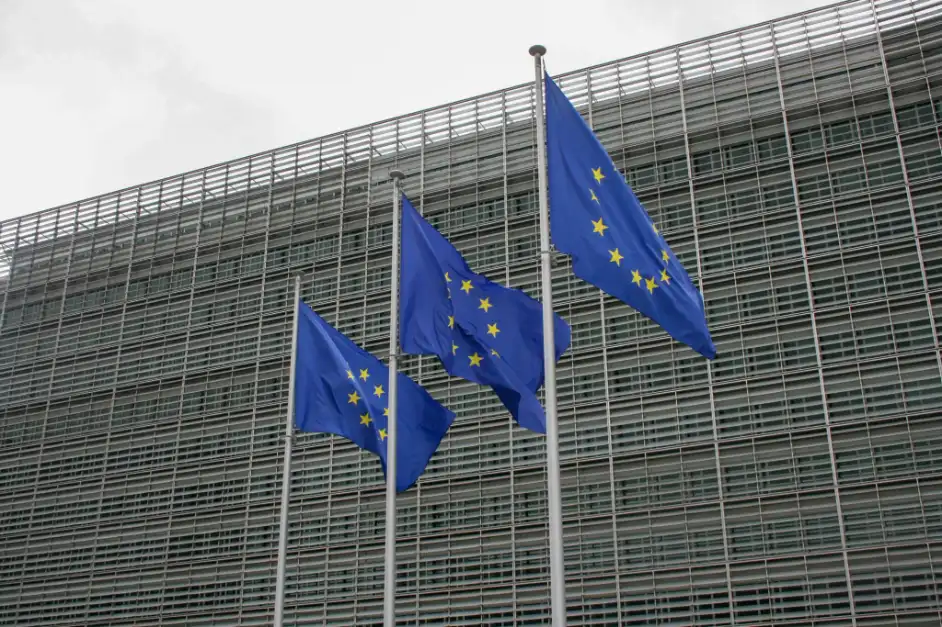
In mid-2026, the EU's three main institutions reached a political agreement to accelerate energy storage deployment and grid interconnection: roughly 45 GW of storage to be installed cumulatively between 2026 and 2028, with annual deployment growth of at least 20% year on year. Behind-the-meter and commercial & industrial (C&I) storage were explicitly named as the leading growth segments.
But for European C&I storage project owners and EPCs, the harder deadline is not 2028. It is 18 February 2027. Under Article 77 of Regulation (EU) 2023/1542, every industrial battery above 2 kWh placed on the EU market from that date must carry a digital battery passport linked to a QR code. The policy window and the compliance window now overlap between Q4 2026 and Q2 2027 — the single most important timeline for C&I procurement over the next 18 months.
What the Tripartite Agreement Actually Agreed
The agreement is a political commitment on storage and grid interconnection, not a single subsidy bill. The headline numbers are:
- Approximately 45 GW of cumulative storage deployment targeted for 2026–2028;
- Against a 2025 base of around 12 GW per year, annual growth of at least 20%;
- A push for PPA-plus-storage models, behind-the-meter capacity mechanisms, and EU-level coordination on double grid-tariff exemptions for storage.
One clarification worth making early: 45 GW is a deployment target, not a subsidy amount. Actual delivery depends on member-state mechanism design, grid connection permits, and grid expansion. The same policy dividend will land unevenly — France, Germany and the Nordic countries have more mature frameworks, while Southern and Central-Eastern Europe are still catching up.
A less obvious backdrop is that the agreement bundles grid interconnection together with storage. Cross-border transmission capacity has long constrained renewable energy absorption in Europe; storage is not only deployed at the site or power-plant level, but also expected to provide cross-region balancing, frequency support and reserve capacity. This is part of why 45 GW is a more aggressive number than most industry forecasts assumed.
Where the 45 GW Is Expected to Land: C&I and Behind-the-Meter Lead
The 45 GW will not be split evenly between utility-scale plants and residential storage. Based on how the policy instruments are designed, behind-the-meter C&I storage is the growth engine, for three reasons:
- France launched 15-year behind-the-meter capacity contracts in November 2026, bringing site-side storage into the capacity market;
- Similar mechanisms are being advanced in Italy and Poland;
- The EU is coordinating an exemption from paying grid tariffs twice — once on import, once on export — for storage. If that lands, the economics of behind-the-meter projects improve noticeably.
For C&I owners, this means the revenue model is shifting from "single peak-shaving arbitrage" to a combination of "peak arbitrage + capacity contract + PPA." Mechanism maturity differs by country, so the choice of project location now affects IRR earlier than the choice of technology.
The driver is not only policy. Industrial power prices across Europe have been more volatile over the past two years; ESG tenders increasingly require supply-chain carbon footprint disclosure; and conventional diesel backup gensets are being restricted in many cities. C&I owners' willingness to install storage has been rising on its own — policy is now institutionalising and financialising that trend. For mid-sized manufacturers, cold-storage operators, data centres and retail chains, storage has moved from a nice-to-have resilience project to a line item in the annual energy budget.
|
Policy instrument |
Beneficiary segment |
Timing |
|
45 GW cumulative deployment target |
Whole value chain (utility + C&I) |
2026–2028 |
|
15-year behind-the-meter capacity contracts |
French C&I owners |
Launched Nov 2026 |
|
Similar capacity mechanisms |
Italian, Polish C&I |
In progress |
|
Double grid-tariff exemption |
EU storage owners |
EU coordination underway |
|
PPA + storage |
Industrial and renewable projects |
Policy encouraged |
The practical takeaway: C&I owners in France are the first to have a visible capacity-contract revenue stream; owners in Italy and Poland should watch the mechanism rollout through 2027; owners everywhere should track the double-tariff exemption, which has the largest single impact on behind-the-meter project economics.
The Harder Deadline for C&I Buyers: 18 February 2027
The 45 GW target pulls demand forward, and it also stretches lead times for cells, modules and system integration. Layer on the battery passport mandate effective 18 February 2027, and C&I projects being evaluated for late-2026 or 2027 delivery are now chasing two things at once: the policy dividend window and the compliance gate.
These two pressures interact more than they look at first glance. A stronger demand signal lengthens lead times; longer lead times push delivery dates closer to or past the 18 February 2027 cutoff; projects that cross that cutoff must comply with the passport regime, which itself takes data preparation and supplier qualification time. A project that looks comfortably "pre-2027" on paper in Q4 2026 can easily slip into "post-2027" by Q3 2027 if procurement is not sequenced early. That is the core reason the 18-month window starting now matters.
The practical impact breaks down into three layers:
First, the revenue model needs rebuilding, and compliance costs need to move up-front. Capacity contracts and PPAs give long-term revenue more stability, but the data preparation, supplier verification and contract amendments required for the battery passport are costs that must sit in the project budget now — not retrofitted at handover. Several of the 71 passport data points — carbon footprint declaration, cycle life, supply-chain due diligence — are exactly the materials banks and insurers already ask for in project finance and insurance due diligence. Prepare once, use them in several places. For example, the carbon-footprint declaration a supplier produces for the passport can double as the ESG report appendix and the bank's KYC package; the cycle-life test data backs both the warranty claim and the insurance risk assessment.
Second, passport delivery must be written into acceptance criteria. The legal duty for the passport sits with the manufacturer and the EU importer, but the owner's risk is whether the procurement documents actually make "passport data delivery + loadable QR code" an acceptance condition. We have broken this down in detail elsewhere — the EU Battery Passport 2027 C&I storage buyer's procurement checklist covers the eight questions to ask in the RFP, contract clauses to add, and on-site verification steps.
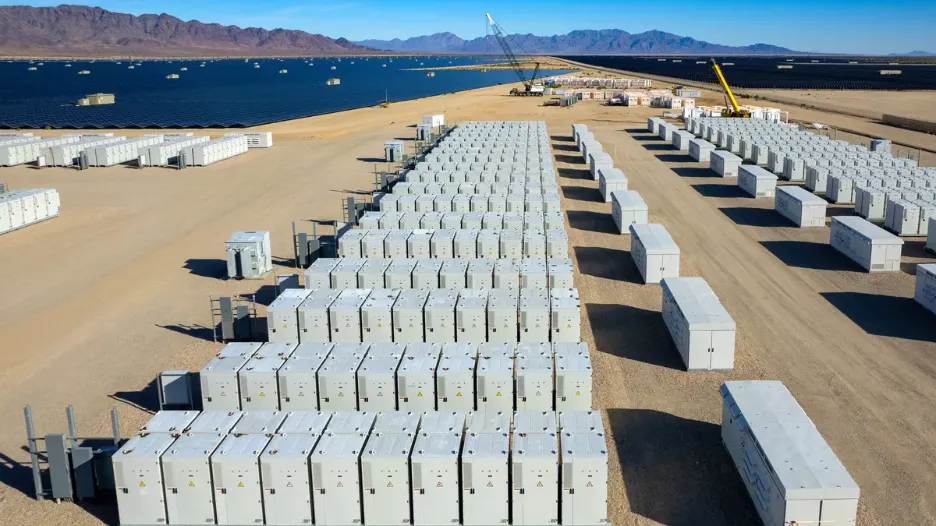
Third, the supply chain needs locking in early, and the delivery format needs to absorb volatility. Under the 45 GW push, traditional one-shot containerised delivery carries more schedule risk — cell production slots, shipping, on-site lifting, grid connection approvals; any one delay pushes a project past February 2027 and triggers the new rules. Modular, stackable systems that can be delivered and expanded in phases are more flexible on both lead time and later expansion. This is exactly the design response of the PCENERSYS 6MWh indoor stackable BESS: small footprint, low site requirements, fast on-site installation, and a materially shorter order-to-connection cycle.
The Q4 2026–2027 Project Pipeline
Lay the policy window and the compliance window on one timeline, and C&I projects in flight roughly follow three steps:
- Q4 2026 (now): Add battery passport questions and lead-time questions to the RFP; confirm suppliers' passport-data readiness for EU-market projects; assess capacity-contract eligibility in the project country (France / Italy / Poland / other). The most common trap at this stage is price-only comparison without compliance questions — only to find out after award that the chosen supplier is not ready, and delivery slips. A practical move is to ask shortlisted bidders for a QR-code sample or a working demo in the RFP response, not just a written promise.
- Q1 2027: Write passport data delivery into acceptance criteria; lock in the EU importer responsibility; frame the PPA or capacity contract structure. The priority is to put "who owns the passport, how missing data is handled, how expansion modules link" into enforceable clauses, not oral promises. This is also the window to revisit the IRR model — French capacity contracts, Italian and Polish mechanisms, and double-tariff exemption all change the revenue side, and the compliance cost should be subtracted before comparing bids.
- From Q2 2027: On-site QR-code acceptance; build a project-level passport data archive; reserve the data-linkage approach for future expansion modules during planning. One easy-to-miss acceptance action is scanning the QR code to confirm it loads the official passport page — not a placeholder or internal test page. Cross-check nameplate parameters (capacity, chemistry, rated values) against the identification data in the passport, and keep the owner-side access credentials on file.
The key judgment is this: projects ordered now but delivered after February 2027 fall under both the new deployment dividend and the new passport obligation. Ordering early does not exempt you from compliance later — the delivery date determines which rules apply.
PCENERSYS' Position
Against this Q4 2026–Q2 2027 overlap, PCENERSYS is ready to provide passport-ready data for European C&I customers. The company's 6MWh indoor stackable BESS uses a modular design that fits behind-the-meter phased delivery and phased expansion, and keeps passport data continuous as the system grows.
The system addresses several constraints C&I projects feel most acutely in this window: no outdoor pad required, low building-sitings requirements, short on-site installation, and the ability to add modules as business grows. For owners worried about a post-2027 delivery triggering the new rules — while still wanting to connect within the policy dividend window — this delivery format gives more control over the schedule. It also means future expansion modules can be brought into the same passport data architecture, rather than retrofitting data links after the fact.
To discuss 2026–2027 project timing, the supplier compliance checklist, or to request a passport-ready data sample, please contact the PCENERSYS team.
EU Battery Passport 2027: A C&I Energy Storage Buyer's Procurement Checklist
Related Article



contact us
For more questions please


Office Address: 701, Building A, Yonghuayuan Business Building, Baotian 2nd Road, Chentian Community, Xixiang Street, Bao'an District, Shenzhen, Guangdong Province, China
Factory Address 1: Room 701, Building 2, Kegu Industrial Park, Zone B, Jian'an Road, No. 790, Chang'an Town, Dongguan City, Guangdong Province, China
Factory Address 2: Building 7, Phase II Standardized Factory, Innovation Industrial Park, Duji Economic Development Zone, Huaibei City, Anhui Province, China