


NEWS
ESS Manufacturer | Battery Technology | Global Energy Partner
2026 Energy Storage Shock: Grid-Scale Boom Takes Over While Profitability Finally Returns
Introduction
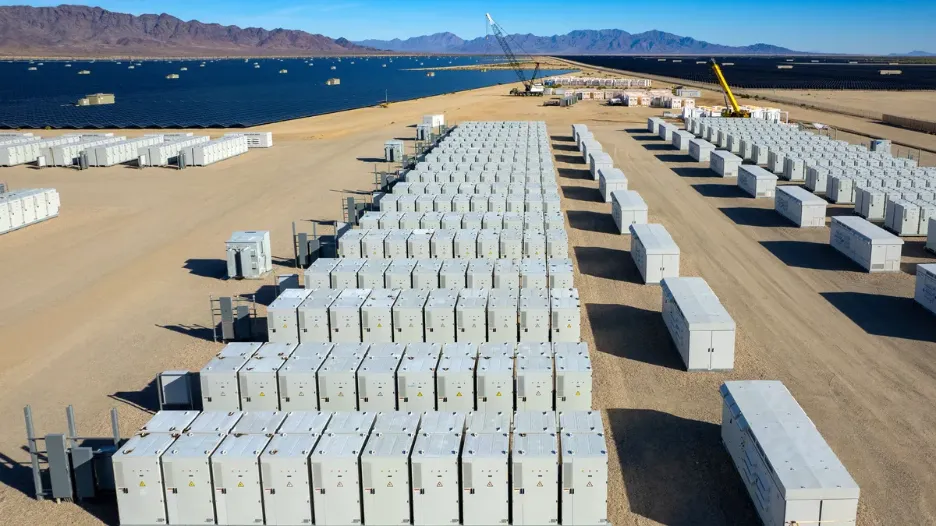
The industry has entered a new phase where utility-scale deployment dominates global energy storage growth.
The global energy storage industry is entering 2026 with a level of momentum that has caught the attention of developers, utilities, and investors alike. According to recent market data, newly installed energy storage capacity in the first two months of the year increased more than fourfold compared to the same period last year. At the same time, the rebound in lithium carbonate prices—after a prolonged downturn—has begun to stabilize battery pricing, signaling a potential recovery in profitability across the value chain.

This combination of rapid deployment growth and improving economic fundamentals has led many analysts to ask a critical question: Is the energy storage industry reaching a true inflection point, or is this simply a short-term rebound driven by cyclical factors? The answer has significant implications, particularly for stakeholders involved in grid scale energy storage and utility scale battery storage, where project economics are highly sensitive to both cost structures and revenue certainty.

Recent project-level developments provide early evidence of structural change. In several major power markets, large-scale battery storage systems are increasingly being deployed not just as policy-driven add-ons, but as economically viable assets. For example, in regions with high renewable penetration, storage projects are now actively participating in electricity markets—generating revenue through peak shaving, frequency regulation, and, most notably, energy arbitrage. In some cases, operators have reported improved utilization rates and more predictable cash flows compared to previous years, reflecting a shift toward market-driven business models.
Against this backdrop, this article examines whether the current surge represents a sustainable turning point. By analyzing demand drivers, cost dynamics, and evolving revenue models, we aim to provide a structured assessment of where the energy storage industry stands—and where it may be heading next.
2026 Energy Storage: Inflection Point or Temporary Market Rebound?
Installation Growth Surge
The most immediate signal supporting the “inflection point” narrative is the sharp acceleration in global energy storage deployments. Multiple authoritative datasets indicate that growth is not isolated, but broad-based across major markets.
In the United States, utility-scale battery installations reached record levels in 2025 and are expected to continue expanding in 2026, driven by rising electricity demand and renewable integration needs (Reuters). Europe shows a similar trajectory: battery storage capacity in the EU increased by 45% in 2025, with utility-scale systems accounting for over half of new installations (Reuters). More recently, Q1 2026 installations in Europe more than doubled year-on-year, reinforcing the acceleration trend (Benchmark Mineral Intelligence).
From a global perspective, energy storage is rapidly transitioning from a niche segment to a core infrastructure layer. Industry projections suggest that battery energy storage system (BESS) demand could grow by over 40% annually through 2026, with the U.S., China, and Europe acting as primary growth engines (linkedin.com).
Global Installation Growth Snapshot
|
Region |
Recent Growth Signal |
Key Driver |
|
United States |
~30% growth in 2025; continued expansion in 2026 |
Data centers + renewable integration |
|
Europe |
+45% YoY in 2025; Q1 2026 doubled YoY |
Policy incentives + utility-scale projects |
|
China |
~40–60% expected growth in 2026 |
Power sector reform + large-scale deployment |
|
Global |
>40% annual BESS demand growth |
Structural energy transition |
The simultaneity of growth across regions suggests that this is not a localized rebound, but a synchronized global expansion cycle, typically associated with early-stage structural upcycles.
Price Signal – Lithium Carbonate Rebound
A second critical indicator lies in upstream pricing dynamics. After a prolonged downturn in 2023–2025, lithium carbonate prices have entered a recovery phase, albeit with volatility.
According to industry analyses, lithium carbonate prices in 2026 are expected to stabilize within a range of $15,000–$18,000 per metric ton, supported by improving demand fundamentals rather than speculative activity (Discovery Alert). Earlier data also shows that prices rebounded sharply from 2025 lows, in some cases rising over 100% from trough levels (Reuters).
At the same time, supply-demand dynamics are tightening. The global lithium surplus is projected to narrow in 2026, while total consumption is expected to grow by 13.5% year-on-year, with energy storage emerging as the fastest-growing demand segment (S&P Global).
Lithium Price Transmission Mechanism
|
Factor |
Impact on Storage Industry |
|
Lithium price rebound |
Increases battery cell costs (short-term pressure) |
|
Demand growth (ESS) |
Supports price floor, stabilizing supply chain |
|
Reduced oversupply |
Improves pricing power for upstream producers |
|
Long-term contracts |
Enhances cost predictability for storage projects |
While rising lithium prices may appear negative from a cost perspective, they also signal demand normalization and industry rebalancing, which are prerequisites for sustainable profitability recovery.
Policy and Demand Drivers
Beyond data and pricing, structural demand drivers provide the strongest evidence that the current growth cycle may be durable.
First, the rapid expansion of renewable energy is creating systemic pressure on power grids. Energy storage is increasingly required to balance intermittency and ensure grid stability, a role that conventional generation cannot fully replace. Academic and industry research consistently highlight storage as a critical enabler of high-renewable systems (arXiv).
Second, new demand sources—particularly AI infrastructure and data centers—are reshaping electricity consumption patterns. These facilities require reliable, dispatchable power, accelerating the deployment of both short-duration and long-duration storage solutions (Reuters).
Third, policy frameworks in major markets are evolving from subsidy-driven to market-based mechanisms. Capacity markets, long-term contracts, and mandatory storage requirements are becoming more common, directly improving project bankability and revenue visibility. In Europe, for example, targeted support schemes and long-term contracts are already driving utility-scale investments (Reuters).

Core Demand Drivers Summary
|
Driver |
Mechanism |
Impact on Storage |
|
Renewable penetration |
Intermittency management |
Structural demand increase |
|
Grid stability needs |
Frequency + peak regulation |
Essential infrastructure role |
|
Data center growth |
24/7 power reliability |
New demand vertical |
|
Policy evolution |
Capacity markets / mandates |
Improved project economics |
Interim Assessment
Taken together, deployment acceleration, upstream price recovery, and structural demand expansion form a coherent signal set. While short-term volatility remains—particularly in lithium pricing and policy adjustments—the underlying drivers point toward a transition from cyclical recovery to structural growth rather than a temporary rebound.
The next step is to examine whether this growth is supported by sustainable economics—specifically, whether cost structures and revenue models are aligning to deliver consistent profitability.
Key Drivers of Grid-Scale Energy Storage Demand in 2026
Renewable Energy Integration Pressure
The rapid expansion of wind and solar capacity is fundamentally reshaping power systems, but it also introduces structural instability challenges that directly drive demand for grid scale energy storage.
1. Intermittency of Wind and Solar
- Solar generation is inherently diurnal and weather-dependent
- Wind output is non-dispatchable and highly variable
- This creates mismatches between generation and demand profiles
For example, in high-renewable regions such as California and parts of Europe, oversupply during midday (“duck curve”) is increasingly common, followed by steep ramping needs in the evening. Without storage, this leads to:
- Curtailment of renewable energy
- Increased reliance on peaking fossil generation
2. Grid Stability Requirements
Energy storage systems are now being deployed to provide:
- Frequency regulation (millisecond response)
- Voltage support
- Load balancing
According to the International Energy Agency, power systems with high renewable penetration require significantly more flexibility resources, with battery storage emerging as one of the most cost-effective solutions.
Key takeaway:
Storage is no longer optional—it is becoming a core balancing infrastructure in modern grids.
Utility-Scale Battery Storage Expansion
The second major driver is the rapid scaling of utility-scale battery storage projects, particularly in developed power markets.
1. Growth of Large-Scale Projects
Utility-scale battery storage (typically >100 MWh systems) is expanding due to:
- Improved project economics
- Standardization of system integration
- Increased participation in wholesale electricity markets
In the United States, grid-scale battery installations have increasingly been co-located with solar farms, creating hybrid renewable-storage assets that enhance dispatchability.
2. Evolving Role in Power Systems
Historically, storage was deployed primarily for pilot projects or policy compliance. That role is shifting toward:
- Primary grid asset (not auxiliary)
- Revenue-generating infrastructure
- Capacity replacement for peaker plants
In markets like Texas (ERCOT) and the UK, battery storage is already competing with traditional gas peaking units in certain use cases.
3. Institutional Adoption
Major utilities and independent power producers are integrating storage into long-term planning, reflecting a shift toward:
- Portfolio-level optimization
- Multi-asset energy management
Key takeaway:
Utility scale battery storage is transitioning from a supporting technology to a central component of grid architecture.
Peak Shaving and Energy Arbitrage Opportunities
Beyond system-level necessity, clear monetization pathways are accelerating adoption—particularly through peak shaving and energy arbitrage.
1. Peak Shaving (Load Management)
Electricity prices vary significantly between peak and off-peak hours
Storage allows operators to:Charge during low-price periods;Discharge during peak demand
This reduces:Grid congestion;Peak generation costs
For commercial and industrial users, this can directly lower electricity bills.
2. Energy Arbitrage Battery Storage
Energy arbitrage has emerged as one of the most scalable and market-driven revenue models.
Typical workflow:
- Charge battery when prices are low (e.g., high solar output)
- Discharge when prices spike (e.g., evening peak)
In liberalized electricity markets, this strategy can generate consistent revenue streams, especially when combined with:
- Real-time pricing
- Day-ahead market participation
Peak vs Off-Peak Price Dynamics (Illustrative)
|
Time Period |
Grid Condition |
Electricity Price |
Storage Action |
|
Midday (solar peak) |
Oversupply |
Low |
Charge |
|
Evening peak |
High demand |
High |
Discharge |
|
Night |
Stable demand |
Moderate |
Idle / Charge |
3. Multi-Value Stacking
Advanced projects increasingly combine:
- Arbitrage
- Frequency regulation
- Capacity payments
This “revenue stacking” significantly improves project economics and reduces payback periods.
Section Insight
Demand for grid scale energy storage is no longer driven by a single factor. Instead, it is the result of three converging forces:
- Structural grid instability from renewable energy
- Rapid deployment of utility-scale systems
- Viable and scalable revenue models
Together, these drivers reinforce the argument that the current growth cycle is structural rather than cyclical, laying the foundation for sustained expansion in the energy storage sector.
Energy Storage Business Model Evolution
From Subsidy-Driven to Market-Driven
The energy storage sector is undergoing a clear transition from policy-dependent growth to market-based profitability. In earlier stages, project viability relied heavily on subsidies, mandates, and incentive schemes. While these mechanisms accelerated deployment, they often masked underlying economic weaknesses.
Today, as major markets mature, revenue is increasingly derived from participation in competitive electricity markets. According to the International Energy Agency, the shift toward market-driven mechanisms—such as capacity markets and ancillary services—has significantly improved the bankability of storage projects. This evolution marks a critical step toward a self-sustaining industry.
Energy Arbitrage Battery Storage as a Core Model
Energy arbitrage is now emerging as a foundational revenue stream for grid-scale storage. By leveraging price volatility across intraday and day-ahead markets, operators can systematically capture value.
Key characteristics:
- Low operational complexity
- Scalable across markets
- Directly linked to power price spreads
In regions with high renewable penetration, arbitrage opportunities have become more pronounced, reinforcing storage as an active trading asset rather than a passive grid component.
Hybrid Revenue Models Emerging
Modern storage projects rarely rely on a single income source. Instead, hybrid revenue models—or “value stacking”—are becoming the industry standard.
Typical revenue stack includes:
- Energy arbitrage
- Frequency regulation services
- Capacity payments
This diversification reduces revenue volatility and improves project returns, particularly in markets with evolving regulatory frameworks.
Section Insight:
The transition toward market-driven, multi-revenue business models is a defining feature of the current cycle, indicating that energy storage is moving closer to long-term commercial sustainability.
Technology Outlook – Lithium vs Sodium-Ion Batteries
Lithium Battery Dominance and Margin Recovery
Lithium-ion batteries remain the dominant technology in grid-scale energy storage, primarily due to their mature supply chain, high energy density, and proven performance in utility-scale applications.
Recent market developments show that the sector is also entering a margin recovery phase, driven by:
- Stabilization of lithium carbonate prices
- Improved manufacturing efficiency
- Strong demand from both EV and storage segments
These factors are helping restore profitability across leading battery manufacturers and system integrators.
Sodium-Ion Battery Potential
Sodium-ion batteries are gaining attention as a cost-competitive alternative, particularly in applications where energy density is less critical.
Key advantages:
- Lower raw material cost (abundant sodium resources)
- Improved safety profile
- Potential for reduced supply chain dependency
However, according to current industry assessments, commercial deployment is still in an early scaling phase, with limited large-scale grid installations.
Lithium vs Sodium-Ion – Short vs Long Term Outlook
|
Dimension |
Lithium-Ion Battery |
Sodium-Ion Battery |
|
Short-term (0–5 years) |
Market dominant |
Limited deployment |
|
Cost structure |
Stabilizing after volatility |
Potentially lower long-term cost |
|
Energy density |
High |
Moderate |
|
Commercial maturity |
High |
Emerging |
|
Grid-scale adoption |
Mainstream |
Pilot to early-stage |
Strategic Outlook
In the near term, lithium-ion technology will continue to anchor the grid scale energy storage market. Over the longer horizon, sodium-ion batteries may emerge as a complementary or niche-disruptive technology, particularly in cost-sensitive applications.
Risks and Uncertainties
Despite the strong growth trajectory of grid-scale energy storage, the industry remains exposed to several structural and cyclical risks that can materially affect project economics and long-term returns.
1. Lithium Carbonate Price Volatility
Lithium remains a key cost driver for battery systems. Although recent price stabilization has improved visibility, historical cycles show that lithium carbonate is highly sensitive to supply-demand imbalances. Sudden price spikes or corrections can directly impact battery energy storage system cost structures, particularly for projects with long procurement lead times.
2. Storage Utilization Risk
Many projects face the risk of underutilization, especially in markets where arbitrage spreads or ancillary service revenues are not sufficiently deep. Lower-than-expected cycling frequency reduces asset returns and extends payback periods.
3. Policy and Regulatory Uncertainty
Energy storage revenues are often influenced by regulatory frameworks such as capacity markets, grid access rules, and subsidy programs. Sudden policy adjustments can alter project viability, particularly in emerging markets.
4. Revenue Instability
Even in mature markets, revenue streams such as energy arbitrage and frequency regulation are inherently volatile. Price spreads can compress during periods of high storage penetration, reducing overall profitability.
Key Insight:
While the long-term outlook for energy storage remains structurally positive, investors and developers must account for material variability in both cost and revenue assumptions when evaluating project economics.
Conclusion – A New Growth Cycle for Energy Storage?
The analysis across demand, cost structure, and business models suggests that the energy storage industry is increasingly shaped by a dual inflection point: accelerating demand growth on one side, and gradual profitability recovery on the other. The surge in grid-scale deployments, combined with improving lithium supply dynamics and expanding revenue mechanisms, indicates that the sector is moving beyond a purely policy-supported phase.
On the demand side, renewable energy integration, grid stability requirements, and large-scale electrification are creating structural and non-cyclical drivers for storage deployment. On the financial side, the recovery in battery pricing and the rise of market-based revenue models—particularly energy arbitrage and ancillary services—are gradually improving project economics.

Taken together, these trends increase the probability that the industry is entering a structural growth phase rather than a temporary rebound cycle. However, this transition is not linear, and short-term volatility in pricing, policy, and utilization remains a critical factor to monitor.
From a strategic perspective, this may represent a key window for positioning in the energy storage value chain, particularly for stakeholders involved in utility-scale deployment and system integration.
Ultimately, the central question is no longer whether energy storage will grow, but how quickly the market will mature into a fully market-driven infrastructure asset class.
C&I Energy Storage Market 2026: Is It Dominating the Global Energy Storage Market?
Is Solar + Storage Now the Only Real Energy Solution for the Future?
Related Article



contact us
For more questions please


Office Address: 701, Building A, Yonghuayuan Business Building, Baotian 2nd Road, Chentian Community, Xixiang Street, Bao'an District, Shenzhen, Guangdong Province, China
Factory Address 1: Room 701, Building 2, Kegu Industrial Park, Zone B, Jian'an Road, No. 790, Chang'an Town, Dongguan City, Guangdong Province, China
Factory Address 2: Building 7, Phase II Standardized Factory, Innovation Industrial Park, Duji Economic Development Zone, Huaibei City, Anhui Province, China