


NEWS
ESS Manufacturer | Battery Technology | Global Energy Partner
Australia BESS 2026: Battery Spread Collapses 85% — Why the Best Traders Still Made Millions
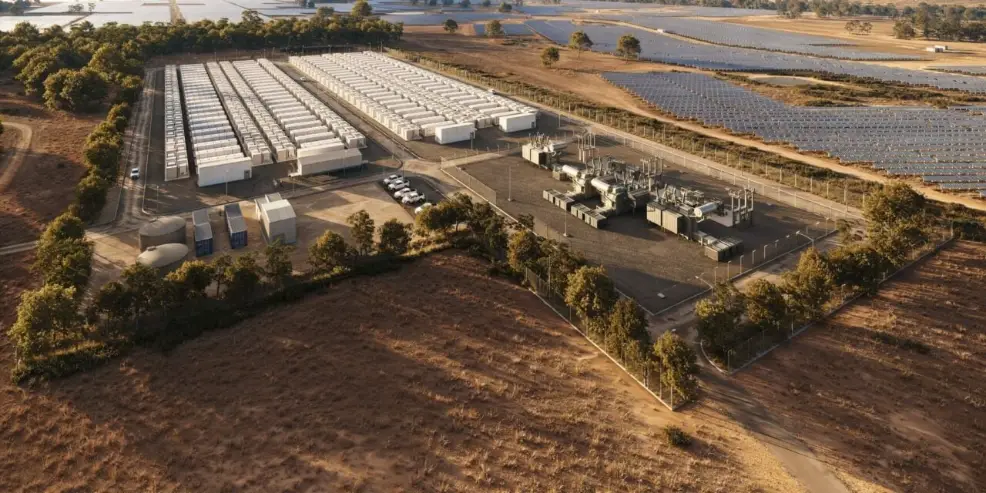
Australia BESS Market 2026: Battery Spread Collapses by 85% as Asset Management Pivots Beyond Arbitrage
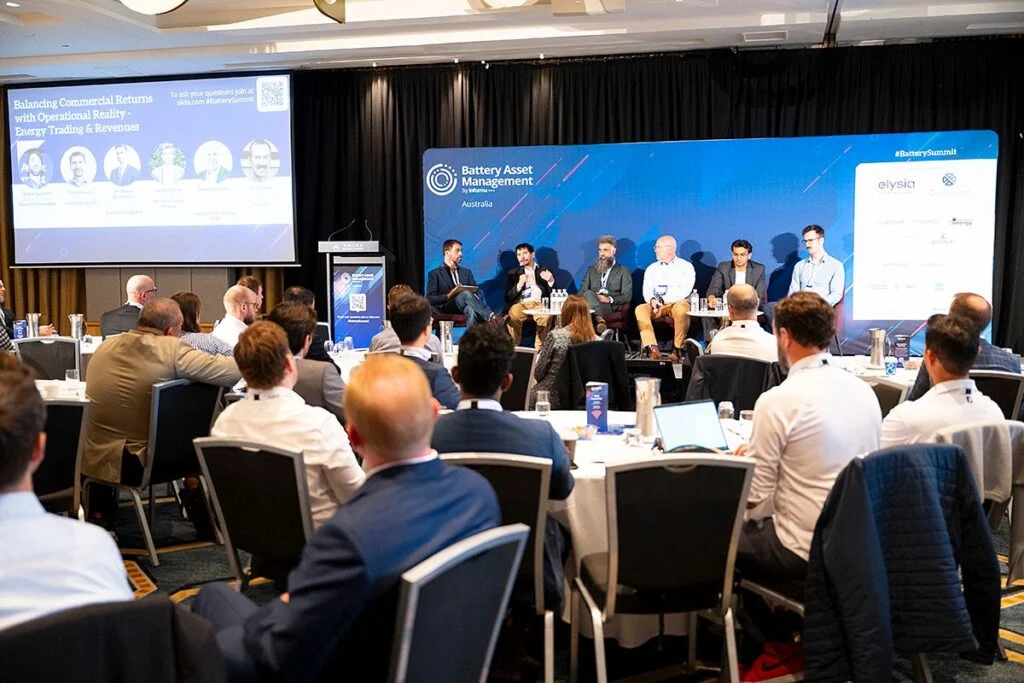
The highly anticipated Battery Asset Management Summit is set to take place in Sydney on August 25–26, 2026. This industry landmark arrives at a pivotal juncture for grid-scale Battery Energy Storage Systems (BESS) in Australia. According to the latest *Quarterly Energy Dynamics* report from the Australian Energy Market Operator (AEMO), installed grid-scale storage capacity within the National Electricity Market (NEM) has historically surpassed the 9,000 MW milestone. However, this surge in scale is accompanied by severe commercial challenges: over the past year, the NEM battery price spread has plummeted by 85%—dropping to an average of AUD 51/MWh—resulting in a more than 50% contraction in net battery revenue.
This volatility sends a clear signal to the market: the traditional "merchant arbitrage" model—relying simply on buying low and selling high—is no longer sustainable. Competition among Australian battery assets is entering a new phase defined by sophisticated, precision operations. The industry urgently needs to accelerate its transition toward automated bidding optimization, data center energy storage co-location, and circular economy practices (including full-lifecycle ESG management). The upcoming Sydney summit serves as a crucial platform for addressing these commercial bottlenecks and charting a path forward.
Key Issue 1: Spread Plummets 85%—Computing Power and SoC Management Become the "Lifeline" for Asset Fleets
Industry Landscape and Profit Margin Squeeze
Grid-scale Battery Energy Storage Systems (BESS) in Australia are facing an unprecedented profitability crisis. As high solar PV output during the day depresses electricity prices, discharging during evening peak periods has become the primary source of revenue for batteries. However, during evening peak dispatch intervals in the second quarter, gas-fired generation remained the price-setter 46% of the time. This directly squeezed the price spread available for battery discharge, causing the volume-weighted average price of battery discharge to plummet from 427 AUD/MWh to 101 AUD/MWh. Amidst an increasingly cutthroat environment where growing capacity competes for limited peak-demand windows, profit margins for traditional merchant arbitrage have been severely compressed.
Data Comparison: A Stark Contrast in Operational Performance
Data from NEMPulse, which tracks 55 grid-scale BESS units across the National Electricity Market (NEM), reveals a striking disparity in operational precision:
|
Operational Metrics / Case Studies |
Performance & Data |
Commercial Impact & Analysis |
|
NEM Fleet Aggregate Revenue |
Captured only 32% of theoretical perfect strategy in June 2026 |
Massive sunk cost, with the fleet leaving approx. 34.9M AUD on the table |
|
Outperformer Benchmark (Mannum BESS) |
Epic Energy's asset discharged precisely, dropping SOC (State of Charge) from 21.4% to 3.2% |
Generated an estimated 151,740 AUD in a single evening |
|
Underperformer Pitfall (Lake Bonney & Templers BESS) |
Low SOC (13.5% & 4.5%) before peak event, mistakenly charged during market price cap |
Incurred a net loss of 49,570 AUD, completely missing discharge opportunities |
Take the event on June 21, when South Australia hit the market price cap of AUD 20,300/MWh: the window of extreme pricing lasted for 2 hours and 35 minutes (with an average price of AUD 3,900/MWh). Yet, among the 15 large-scale energy storage projects in the region, only four generated positive net revenue; seven sat idle throughout the event due to errors in capacity reservation, and two actually incurred losses from reverse charging.
Sahand Karimi, CEO of the battery optimization platform OptiGrid, summarized the situation: "The gap between theoretical revenue and actual captured revenue often stems from flawed decisions made before the price peak arrives. If a battery discharges too early, it depletes its energy before the period of highest prices." This phenomenon signals the end of the era reliant on manual decision-making or traditional fixed-frequency scheduling; instead, a competition of computational power—driven by autobidding optimization algorithms and real-time State of Charge (SOC) management—has become the critical factor determining the profitability and survival of grid-scale energy storage projects.
Focus Area 2: Policy Implementation Sparks a New Trend in Co-located Energy Storage for Data Centers via "Self-Generation"
Policy Regulations and Market Shifts
As traditional merchant arbitrage revenue faces pressure, the explosive growth of data center computing power is driving historic incremental demand. The Australian federal government and New South Wales (NSW) are accelerating the development of regulatory frameworks for large-scale data centers. These regulations mandate that new facilities ensure self-sufficiency through "firming capacity," effectively becoming "net generators" of renewable energy rather than merely a burden on the grid. The Australian Energy Market Commission (AEMC) has put forward four key recommendations regarding mandatory obligations, Renewables Guarantee of Origin (REGO) certification, and co-location. Currently, the Australian Energy Market Operator (AEMO) is tracking 17 data center grid-connection projects with a combined load of 9 GW; the energy storage demand arising solely from data center compliance measures rivals the total capacity of existing utility-scale storage projects.
Reshaping Commercial Use Cases and Overcoming Pain Points
According to industry analysis by systems integration giant Fluence, the deployment of co-located battery energy storage systems (BESS) at data centers is evolving from a simple backup power solution into three core commercial use cases:
|
Commercial Application Scene |
Technical Core & Execution Mode |
Value Proposition & Grid Impact |
|
Load Smoothing |
Smooths out high-frequency load fluctuations from AI workloads in real time |
Reduces localized power quality stress and peak power charges |
|
Cold-Start Backup |
Provides zero-emission instantaneous emergency power and black-start backup |
Replaces diesel generators, supporting corporate ESG compliance |
|
Rapid Power & Interconnection |
Lowers the facility's firm capacity commitment to grid operators |
Bypasses severe network constraints and significantly speeds up energization |
The core breakthrough of this business model lies in resolving the long-standing industry challenge of the grid interconnection queue. Under the traditional model, data centers seeking high-capacity grid connections often face wait times exceeding three years. By co-locating Battery Energy Storage Systems (BESS) and implementing grid-forming control, operators can manage the impact of peak loads on the main grid, thereby drastically reducing the interconnection waiting period to 15 months. This strategy of "trading storage for time" unlocks immense commercial value and accelerates deployment for computing infrastructure.
Focus Area 3: Integrating Circular Economy and Full-Lifecycle Battery Risk Management into Early-Stage Project Design
Perspective on Industry Compliance Risks
As early grid-scale BESS installations approach the end of their lifecycles, asset decommissioning management has shifted from a discretionary "optional task" to a critical determinant of the Levelized Cost of Energy (LCOE) and financing feasibility. Factors associated with battery decommissioning—such as environmental compliance, residual value recovery, and waste disposal costs—are reshaping the risk management models used by asset managers.
Daniel Elias, Senior Global Environmental Manager at Fluence, notes that tightening global regulations are compelling developers to embed circular economy principles into the project design phase from the outset. Policy evolution in international markets offers a clear, forward-looking reference for Australia:
|
Regional Regulatory Framework |
Key Policy Mechanism |
Impact on BESS Asset Management |
|
EU Battery Regulation |
Mandates minimum recycled content for industrial batteries >2kWh by 2031 (e.g., 6% recycled Lithium) |
Drives supply chain traceability and forces early End-of-Life (EoL) cost modeling |
|
Japan Regulatory Mechanism |
Wide Area Certification allows cross-prefecture collection without local waste permits |
Streamlines collection logistics and establishes standardized recycling pathways |
For Australian developers, overlooking compliance regarding decommissioning and recycling entails significant downstream compliance risks and the potential for stranded capital. Integrating supply chain traceability and material recovery into the planning process at the Final Investment Decision (FID) stage has become essential to ensuring favorable ESG ratings and a closed-loop commercial model across the asset's entire lifecycle.
Focus 4: Queensland’s 16.9% Share Milestone Proves Large-Scale Storage Has Become a New Grid Backbone
Regional Benchmark Data
While southern states face margin compression in merchant arbitrage revenues, Queensland (QLD) is demonstrating the core potential of grid-scale BESS to serve as a new backbone for the power grid. According to analysis by energy expert Geoff Eldridge, Queensland set a record on the final day of autumn (May 31) with an instantaneous renewable energy and storage share of consumption reaching 79.5%. Notably, battery storage alone accounted for 16.9% of this consumption. This nearly threefold surge—up from 6.4% during the same period a year earlier—powerfully demonstrates that large-scale storage has evolved from a marginal ancillary tool into a structural core asset within NEM operations.
A Warning on Divergent Commercial Strategies
However, even within the same regional market, the quality of bidding strategies determines the ultimate fate of these assets. Comparative tracking by NEMPulse reveals a commercially significant divergence:
|
BESS Asset Case |
Bidding Strategy & Execution |
Monthly Dispatch Revenue |
Revenue Capture Performance |
|
Swanbank BESS (CleanCo QLD) |
Passive Bidding Approach: Sets target prices and waits for the market |
743,000 AUD |
Captured 49.1% of linear-programming optimal revenue |
|
Victorian Big Battery (Vic) |
Active Rebidding Approach: High-frequency interval adjustments |
306,000 AUD |
Captured 22.4% of linear-programming optimal revenue |
Despite having comparable capacity and cycle life, the Swanbank BESS achieved monthly revenues more than double those of the Victorian Big Battery, thanks to more resilient passive order placement and strategic matching. This case study reaffirms a key insight for the Australian energy storage market heading into 2026: simply connecting a battery to the grid no longer guarantees profitability; rather, a sophisticated trading strategy rooted in market dynamics is the ultimate differentiator that secures an asset's long-term viability and return on investment.
Industry Outlook and Implementation Guidance
Synthesis and Industry Transformation
2026 undoubtedly marks a historic watershed for grid-scale BESS development in Australia. The industry is officially moving beyond the era of windfall profits driven by crude capacity expansion and simple merchant arbitrage, entering a new epoch of sophisticated asset operations centered on autobidding optimization, precision State of Charge (SOC) management, co-location with data centers, and circular economy principles (including full-lifecycle ESG management).
Sydney Summit: Key Focus Areas and Industry Guidance
As the Battery Asset Management Summit 2026 approaches in Sydney, the spotlight will be on the dynamic interplay surrounding co-located BESS, grid-forming control, and algorithmic trading strategies. For developers, investors, system integrators, and providers of software and optimization services, closely monitoring price dynamics, algorithmic evolution, and policy shifts within the National Electricity Market (NEM) will be paramount to securing commercial success in the Australian energy storage sector over the coming decade.
Australia NEM BESS Squeeze: Arbitrage Profits Fall 85% in 2026
8,000 Sold a Week! Australia 500k Battery Boom: ROI Guide
Related Article

contact us
For more questions please


Office Address: 701, Building A, Yonghuayuan Business Building, Baotian 2nd Road, Chentian Community, Xixiang Street, Bao'an District, Shenzhen, Guangdong Province, China
Factory Address 1: Room 701, Building 2, Kegu Industrial Park, Zone B, Jian'an Road, No. 790, Chang'an Town, Dongguan City, Guangdong Province, China
Factory Address 2: Building 7, Phase II Standardized Factory, Innovation Industrial Park, Duji Economic Development Zone, Huaibei City, Anhui Province, China