


NEWS
ESS Manufacturer | Battery Technology | Global Energy Partner
Google Invests in Long Duration Energy Storage to Address Surging AI Data Center Power Demand
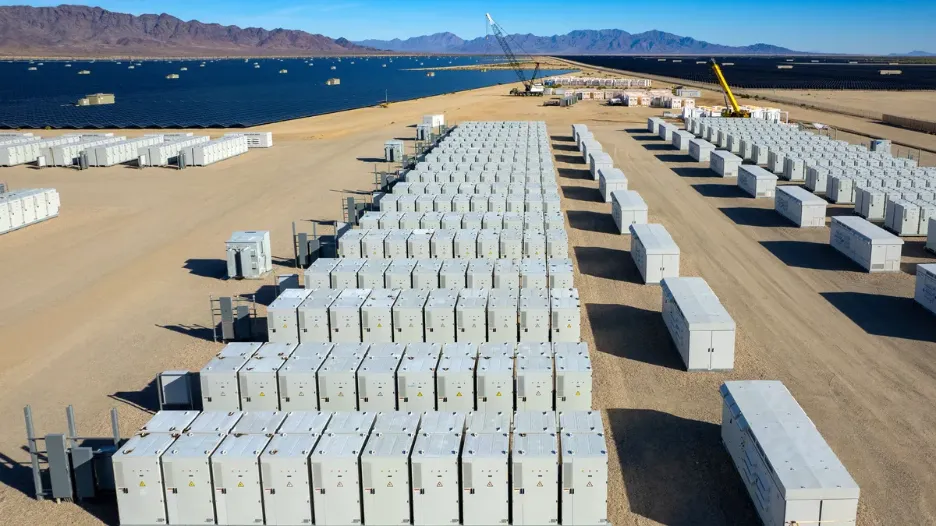
Global technology leader Google is accelerating its investment in long duration energy storage (LDES) technologies as part of a broader strategy to address the rapidly increasing AI data center power demand. As artificial intelligence continues to scale across industries, the energy requirements of hyperscale data centers are reaching unprecedented levels, forcing a structural shift in how power is generated, stored, and managed.
This move reflects a growing industry consensus: energy storage is no longer just a supporting technology for peak shaving, but a critical infrastructure layer underpinning the next generation of digital systems.
The surge in AI adoption—particularly large language models, generative AI platforms, and high-performance computing—has significantly intensified global electricity consumption. Modern AI data centers operate continuously, often requiring stable, high-density power over extended periods.
According to the International Energy Agency, global electricity demand from data centers is expected to increase sharply in the coming years, largely driven by AI workloads. The U.S. Department of Energy has also highlighted the growing pressure on grid stability caused by these energy-intensive operations.
In response, major technology companies are actively exploring energy storage for AI infrastructure as a strategic necessity, rather than an optional enhancement.
Google’s collaboration with Form Energy signals a decisive shift toward long duration energy storage technologies. Form Energy is developing iron-air battery systems capable of delivering electricity for extended durations—far exceeding the limits of traditional lithium-ion batteries.
These systems are designed to support 8-hour energy storage systems and beyond, making them particularly suitable for applications where continuous power delivery is essential. For AI-driven data centers, which often operate around the clock, this capability is becoming increasingly critical.
While lithium-ion batteries have long dominated the energy storage market, their limitations are becoming more apparent in the context of AI infrastructure. Typically optimized for short-duration discharge cycles of two to four hours, lithium systems struggle to meet the requirements of long-duration, high-load environments.
The question of why lithium batteries are not enough is increasingly being answered by real-world operational demands. AI data centers require stable, long-duration energy support to maintain uptime and manage fluctuating loads, making long duration energy storage a more viable long-term solution.
Related reading:Why Data Centers Need 8-Hour+ Energy Storage Systems
Lithium-ion vs Long Duration Energy Storage for AI Data Centers
| Metric | Lithium-ion Batteries | Long Duration Energy Storage |
|---|---|---|
| Discharge Duration | 2–4 hours | 8+ hours |
| Suitability for AI Data Centers | Moderate | High |
| Cost Efficiency (Long Duration) | Low | High |
| Grid Support Capability | Limited | Strong |
| Scalability | Medium | High |
As demand grows, 8-hour energy storage systems are quickly becoming the new benchmark across commercial and industrial sectors. These systems provide extended energy coverage, enabling facilities to reduce reliance on peak grid supply and better integrate renewable energy sources.
For operators seeking scalable and reliable infrastructure, modern commercial energy storage systems are evolving to meet these demands.
Manufacturers with strong R&D and system integration capabilities are increasingly delivering solutions tailored to high-demand environments, including data centers and industrial applications.

Energy storage for data centers is now transitioning from a backup function to a core infrastructure component. Rather than being deployed only during outages, storage systems are being integrated into daily operations to stabilize loads, optimize energy consumption, and enhance resilience.
This shift is driving increased adoption of C&I energy storage solutions, particularly in regions where energy costs are volatile or grid reliability is uncertain.
Companies are recognizing that integrating storage directly into infrastructure planning offers both operational and financial advantages.
At the system level, battery energy storage systems (BESS) are evolving rapidly to meet the demands of AI infrastructure. Advanced systems now incorporate intelligent battery management systems (BMS), energy management systems (EMS), and high-voltage architectures that improve efficiency and scalability.
High-voltage architectures, such as those used in advanced battery energy storage systems, are particularly well-suited for large-scale deployments.
These systems enable more efficient energy transfer, reduced losses, and improved overall performance in demanding applications.
Evolution of Battery Energy Storage Systems for AI Infrastructure
| Feature | Traditional Systems | AI-Driven Systems |
|---|---|---|
| Duration | Short (2–4h) | Long (8h+) |
| Intelligence | Basic | Advanced EMS |
| Voltage | Low/Medium | High Voltage |
| Application | Backup | Core Infrastructure |
Looking ahead, the future of energy storage infrastructure will be closely tied to the continued growth of AI technologies. As digital systems become more energy-intensive, the integration of storage, renewable energy, and intelligent grid management will become essential.
According to BloombergNEF, global investment in energy storage is expected to expand significantly, with long duration energy storage playing a central role in enabling a more flexible and resilient energy system.
The implications are clear: long duration energy storage is no longer optional. It is rapidly becoming a strategic necessity for companies operating in energy-intensive sectors.
As AI data center power demand continues to rise, the deployment of scalable battery energy storage systems, advanced commercial energy storage systems, and integrated C&I energy storage solutions will define the next phase of global infrastructure development.
Companies that move early to adopt these technologies will be better positioned to manage risk, control costs, and maintain operational continuity in an increasingly electrified world.
Long Duration Energy Storage Enters Acceleration Phase as Global Mega Projects and New Technologies Emerge-battery energy storage news 2026
What Will Change in Energy Storage in 2026? Key Market Shifts Explained
Related Article

contact us
For more questions please


Office Address: 701, Building A, Yonghuayuan Business Building, Baotian 2nd Road, Chentian Community, Xixiang Street, Bao'an District, Shenzhen, Guangdong Province, China
Factory Address 1: Room 701, Building 2, Kegu Industrial Park, Zone B, Jian'an Road, No. 790, Chang'an Town, Dongguan City, Guangdong Province, China
Factory Address 2: Building 7, Phase II Standardized Factory, Innovation Industrial Park, Duji Economic Development Zone, Huaibei City, Anhui Province, China