


NEWS
ESS Manufacturer | Battery Technology | Global Energy Partner
Ford Officially Launches Ford Energy: A Major Entry Into the Energy Storage Business Targeting Data Centers, Utilities, and C&I Markets

Ford Motor Company has officially launched a dedicated energy storage subsidiary called Ford Energy, marking one of the most significant strategic shifts in the company’s recent history as it expands beyond electric vehicles into the stationary power sector.
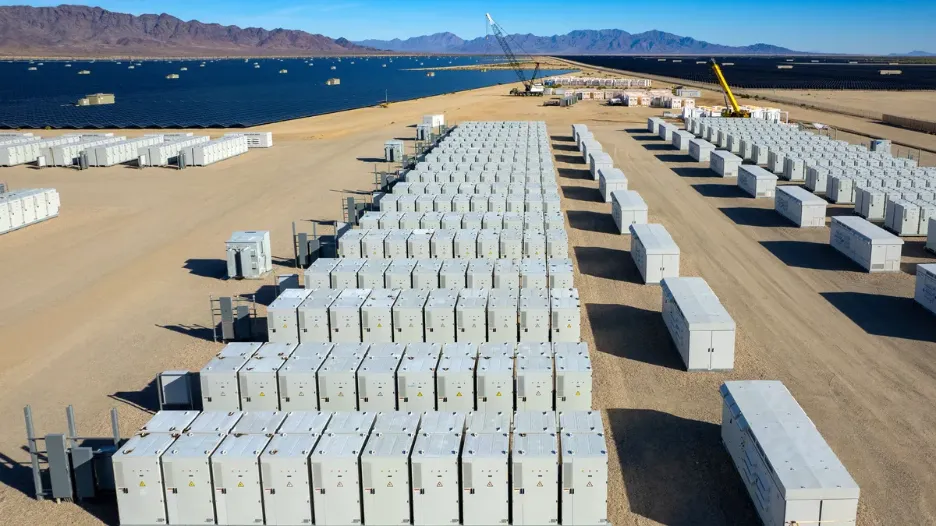
According to Energy-Storage.news and multiple industry reports, the new business will focus on manufacturing and deploying grid-scale battery energy storage systems (BESS) for data centers, utilities, and commercial and industrial (C&I) customers across the United States. First deliveries are expected to begin in late 2027, with production ramp-up occurring over the next two years.
The move positions Ford directly within the rapidly expanding energy storage business segment, where demand is being reshaped by AI-driven electricity consumption, renewable energy integration, and increasing grid instability.
A Strategic Shift From EV Manufacturing to Energy Infrastructure
Ford’s entry into energy storage is not an isolated product expansion but a structural redefinition of its long-term business model.
The company plans to invest approximately $2 billion into Ford Energy, partially by repurposing existing EV battery production capacity in the United States.
At the center of the strategy is a recognition that EV demand growth in key markets has slowed, while battery manufacturing capacity has expanded rapidly. Rather than allowing this imbalance to create stranded assets, Ford is redirecting production toward stationary storage systems.
This shift reflects a broader industry transition in which automakers are increasingly treating batteries not only as vehicle components but as multi-use energy assets capable of serving the electricity grid.
What Ford Energy Will Actually Do
Ford Energy will operate as a vertically integrated energy storage platform rather than a simple hardware supplier.
The company will manufacture:
- Battery cells
- Battery packs
- Containerized energy storage systems
Its flagship product is expected to be a standardized utility-scale BESS platform, built using lithium iron phosphate (LFP) chemistry, which is widely used in stationary storage due to its safety profile and long cycle life.
Ford has also outlined a deployment target of at least 20 gigawatt-hours (GWh) of storage annually, which places it in direct competition with established global energy storage providers.
This scale suggests that Ford Energy is being positioned not as an experimental initiative but as a long-term industrial business unit.
Why Data Centers and AI Infrastructure Are Central to the Strategy
One of the most important demand drivers behind Ford Energy is the rapid expansion of AI infrastructure and hyperscale data centers.
Modern data centers require:
- Continuous backup power
- Peak load management during compute spikes
- Grid stability support during high-demand events
Unlike traditional industrial loads, AI data centers create highly volatile and concentrated electricity demand patterns, making them ideal candidates for battery energy storage solutions.
This has led to a structural increase in demand for energy storage solutions that can operate at both grid scale and facility scale, particularly in North America.
Industry analysts have increasingly linked this trend to the acceleration of clean energy investment and the need for flexible grid assets that can respond in milliseconds rather than hours.
Utilities and Grid Operators: The Second Growth Engine
Beyond data centers, Ford Energy is also targeting utility-scale deployments.
Electric utilities are accelerating investment in battery storage systems to:
- Replace aging peaker plants
- Stabilize renewable energy output from solar and wind
- Improve grid resilience during peak demand events
This segment is central to the broader renewable energy storage market, where batteries act as the balancing mechanism for intermittent generation.
The inclusion of utilities in Ford’s strategy signals that the company is not only targeting commercial buyers but also aiming to participate in grid-level infrastructure deployment.
Commercial and Industrial Energy Storage (C&I): The Profitability Layer
The third key market is the commercial and industrial segment.
C&I customers typically adopt battery storage systems to:
- Reduce electricity costs through peak shaving
- Optimize time-of-use pricing
- Ensure backup power resilience
This segment is widely viewed as one of the most commercially attractive parts of the energy storage business model, because it combines predictable revenue streams with relatively standardized deployment structures.
Ford’s entry into this segment suggests an intention to capture both hardware sales and long-term service-based revenue.
EV Battery Oversupply and the Second-Life Opportunity
A major structural factor behind Ford’s move is the changing economics of EV battery production.
As EV growth moderates in several regions, automakers have begun facing:
- Excess battery production capacity
- Higher inventory pressure
- Lower marginal utilization of gigafactories
Rather than scaling back, Ford is redirecting this capacity into stationary storage applications.
This includes potential use of second-life battery systems, where EV batteries are repurposed for grid storage after automotive use.
This approach extends battery lifecycle value and reduces the effective cost per kilowatt-hour deployed in stationary systems.
Industry Context: Automakers Enter the Energy Storage Market
Ford is not entering the energy storage market in isolation.
The broader automotive industry is increasingly converging with the energy sector, as EV platforms create vertically integrated battery ecosystems.
This shift places automakers in competition with:
- Traditional energy storage developers
- Grid-scale system integrators
- Battery manufacturers
It also signals a deeper structural transformation where automotive companies evolve into clean energy businesses, rather than purely transportation-focused manufacturers.
Competitive Benchmark: Tesla Energy and Market Pressure
The closest reference point remains Tesla Energy, which has already established large-scale deployment capabilities in both residential and utility storage markets.
Ford’s entry intensifies competition in:
- Utility-scale battery deployment
- Commercial energy storage systems
- Integrated EV-to-grid ecosystems
However, Ford’s advantage lies in its manufacturing scale and access to U.S.-based production infrastructure, which may provide cost and policy advantages in domestic markets.
Supply Chain Implications and CATL Relationship
Ford’s energy storage expansion also intersects with global battery supply chains, including its relationship with major suppliers such as Contemporary Amperex Technology Co. Limited.
While Ford continues to rely on external battery expertise, its move into system integration suggests a gradual shift toward greater vertical control over energy storage value chains.
This hybrid model—combining internal manufacturing with external technology partnerships—has become increasingly common among automakers entering the energy sector.
The Broader Energy Storage Business Model Shift
The economic structure of energy storage is also evolving alongside Ford’s entry.
Instead of relying solely on equipment sales, modern storage businesses generate revenue from:
- Grid capacity payments
- Energy arbitrage
- Ancillary services (frequency regulation, voltage support)
- Long-term service contracts with utilities and enterprises
This transition transforms energy storage from a capital equipment market into a hybrid infrastructure-and-services industry.
Conclusion: A Structural Industry Transition
Ford’s launch of Ford Energy represents more than a diversification strategy—it reflects a broader structural convergence between transportation, energy, and digital infrastructure.
As electricity demand grows from AI data centers, renewable energy integration, and electrification trends, energy storage is becoming a foundational layer of the modern power system.
By entering the energy storage business, Ford is positioning itself within one of the most strategically important infrastructure markets of the next decade, alongside utilities, technology companies, and established energy storage leaders.
The result is a rapidly evolving competitive landscape where automakers are no longer just vehicle manufacturers—but emerging participants in the global energy transition.
The hundred billion dollar race track has begun! Chinese energy storage companies lead Australia's epic bidding for 12GWh ultra long time energy storage
From MW to GW: Why Battery Energy Storage Systems Are Becoming Mandatory in Renewable Energy Projects
Related Article



contact us
For more questions please


Office Address: 701, Building A, Yonghuayuan Business Building, Baotian 2nd Road, Chentian Community, Xixiang Street, Bao'an District, Shenzhen, Guangdong Province, China
Factory Address 1: Room 701, Building 2, Kegu Industrial Park, Zone B, Jian'an Road, No. 790, Chang'an Town, Dongguan City, Guangdong Province, China
Factory Address 2: Building 7, Phase II Standardized Factory, Innovation Industrial Park, Duji Economic Development Zone, Huaibei City, Anhui Province, China