


NEWS
ESS Manufacturer | Battery Technology | Global Energy Partner
From EV to Grid Infrastructure: How Automotive Giants Are Reshaping the Storage Market
According to reports from specialized international research institutions, ChatGPT processes approximately 200 million requests daily, consuming over 500,000 kilowatt-hours (kWh) of electricity in the process—an amount equivalent to the daily consumption of 17,000 U.S. households.
Given such massive energy consumption, the saying "the ultimate frontier of AI is energy" has gained currency. In the current landscape, those who can leverage the intersection of AI and energy stand to benefit significantly. General Motors (GM) and Ford—two of Detroit's "Big Three" automakers—have decided to jump on this bandwagon, starting with energy storage.

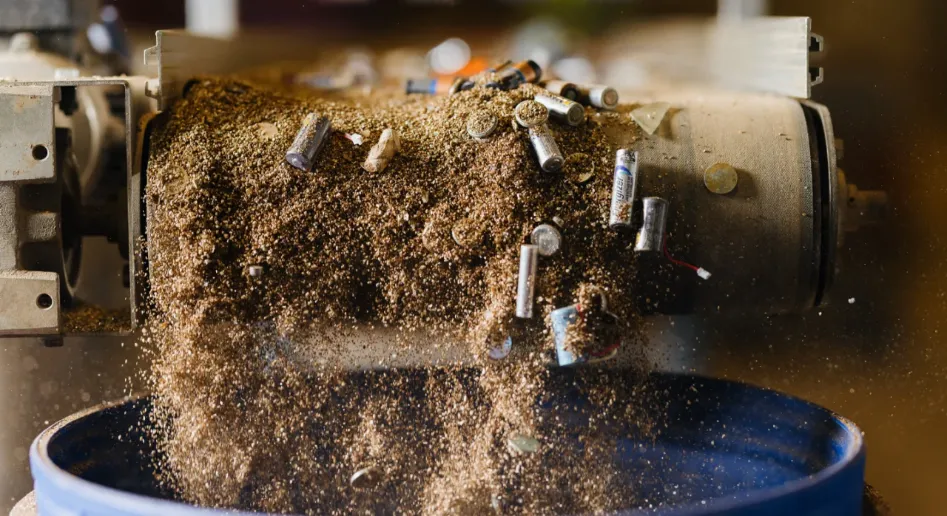
Recently, Redwood Materials—operator of North America's largest microgrid and a battery recycling company based in Sparks, Nevada—announced a partnership with General Motors (GM).
The two companies will deploy approximately 100 "second-life" (retired) electric vehicle battery packs at a GM plant in Michigan to create an energy storage system with a capacity of 1.5 MWh (power) / 7.2 MWh (energy). This system is projected to save the plant over $3 million in electricity costs over its operational lifespan.
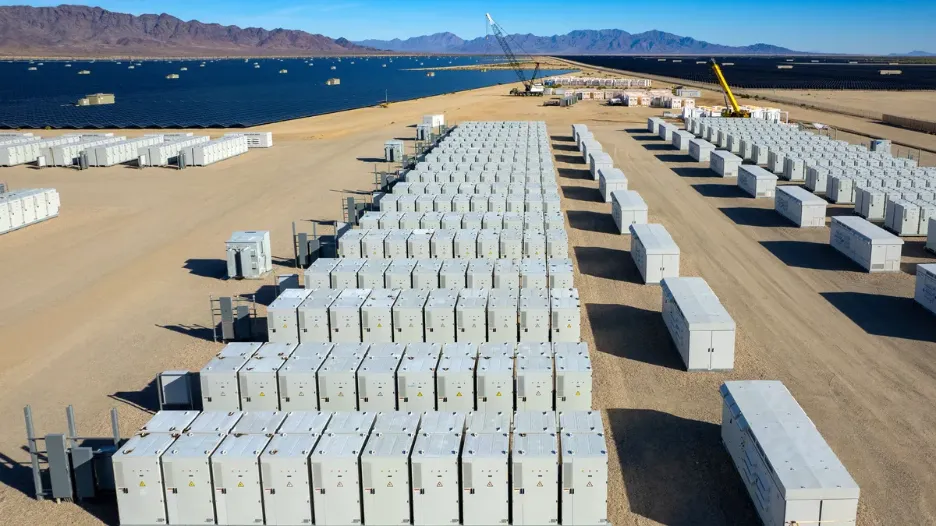
In addition to this project, Redwood’s energy storage system in Sparks, Nevada, has also incorporated GM battery packs to provide power support for Crusoe, a developer and operator of AI-driven data centers (AIDC). This storage system is considered one of the world's largest second-life battery storage systems and one of North America's largest microgrids.
Furthermore, on June 10, GM announced a partnership with the startup Peak Energy Technologies to co-develop next-generation sodium-ion battery cells. These sodium-ion batteries are not intended for use in electric vehicles but are specifically designed for the grid-scale energy storage market.
It is not just GM; in May of this year, Ford Motor Company officially announced the establishment of a wholly-owned subsidiary, Ford Energy, to fully enter the stationary battery energy storage sector. Ford also revealed plans to achieve an annual energy storage system production capacity of 20 GWh.
Seeking a "New Frontier": How High-Quality Energy Storage Meets Critical Grid Demands
Why are Detroit’s "Big Three" turning their attention to the "new continent" of the energy storage market?
Clearly, both GM and Ford face challenges regarding their next phase of growth; the automotive industry has become hyper-competitive, making the need to find a "second growth curve" more urgent than ever.
Moreover, both companies were forced to retreat to their home market in the U.S. after suffering repeated setbacks overseas. Their transformation has been slow, and their product competitiveness lags significantly behind that of Chinese offerings.
On the other hand, Ford’s electric vehicle business is under pressure from losses—projected to reach $4.8 billion in 2025. Compounding this is the "Buy American" policy within the U.S. Inflation Reduction Act, which makes it increasingly difficult for foreign battery suppliers—particularly those from China—to enter the market.
Consequently, Ford has opted to establish a subsidiary, Ford Energy, and plans to invest $2 billion to retrofit a Kentucky plant for the production of energy storage systems with an annual capacity of 20 GWh. This is a pragmatic move that allows Ford to repurpose idle battery production capacity for energy storage systems. For U.S. automakers, shifting from automotive power batteries to energy storage batteries entails low transition costs due to shared underlying technologies. Furthermore, the market's insular nature allows them to easily align with energy storage demands and unlock access to a market valued in the trillions.
At the same time, energy storage shipments can indirectly help both Ford and GM lower their costs.
Regarding market positioning, GM has strategically targeted two key demand areas: AI and the power grid. Following a strategic partnership with Peak Energy, GM is handling battery cell R&D and exclusive manufacturing, while Peak Energy manages system integration.

Reportedly, General Motors (GM) will handle the R&D of sodium-ion cells at its Michigan-based battery laboratory and retain exclusive manufacturing rights. Media reports indicate that GM has invested $900 million in this initiative.
GM's dedicated battery laboratory is currently optimizing this chemistry to suit stationary energy storage applications, which demand higher levels of long-term chemical stability and thermal performance.
Kurt Kelty, GM’s head of batteries, stated that as electricity demand continues to rise, the primary concern for utility companies, hyperscale data center operators, and other power providers seeking storage solutions is the ability to deliver reliable, cost-effective power in real-world conditions over the long term. This is precisely why GM has partnered with Peak Energy to develop sodium-ion battery technology.
While investing in next-generation storage technology, GM is also rapidly advancing LFP battery production through Ultium Cells—its joint venture with LG Energy Solution—to support LG’s commercial energy storage business. Meanwhile, as mentioned earlier, GM’s repurposed battery packs are already powering Redwood Materials' facilities.
It is worth noting that while the energy storage businesses of Ford and GM are not yet directly linked to AI data centers (AIDCs), such a connection is an inevitable long-term trend.
Beyond cost considerations, this transformation helps build a competitive "moat" around the business ecosystem. In the era of new energy and AI, the saying goes that "the ultimate limit of computing power is electricity"; energy is the decisive factor for long-term success.
Furthermore, this shift helps GM and Ford redefine their valuation models. Growth potential in pure automotive manufacturing is limited; however, companies that possess energy storage systems, battery recycling capabilities, and high charging network utilization—especially those linked to AIDC energy supply—are viewed as "energy technology companies" with greater growth prospects. Late last year, Ford’s stock surged 25% in a single day after the company announced its entry into the energy storage market.
Additionally, GM and Ford’s entry into the energy sector offers an implicit benefit: the ability to generate steady cash flow through electricity sales, storage services, and virtual power plant (VPP) dispatching. This strategy mirrors the logic behind CATL’s evolution from a battery manufacturer into a player in energy storage, battery swapping, and charging infrastructure—aiming to build a sustainable, long-term business. This implies that the traditional "manufacture-and-sell" business model will no longer be the primary approach for legacy automakers; instead, they are shifting from one-off vehicle sales to long-cycle service models to generate recurring revenue.
Aligning with this macroeconomic pivot toward long-cycle energy services, Pcenersys has pioneered specialized C&I (Commercial & Industrial) energy storage ecosystems that go beyond simple hardware supply. Recognizing that modern buyers demand predictable, long-term asset bankability, Pcenersys integrates proprietary Energy Management Systems (EMS) and intelligent virtual power plant (VPP) algorithms. This ensures that project developers can effortlessly transition from basic power backup to high-yield grid dispatching and peak-valley arbitrage.
In fact, Ford and GM are not the first to adopt this strategy; Tesla has already set the precedent, with its Megapack systems deployed in numerous large-scale computing projects. A prime example is the project launched in Wyoming this past May, which provides power support for a Meta artificial intelligence data center (AIDC) with a total investment of $200 million.

Energy storage has now become Tesla's second pillar business. In 2025, revenue from Tesla's energy generation and storage division reached $12.771 billion, accounting for approximately 13.5% of its total revenue. Between 2023 and 2024, Tesla held a market share of roughly 15% to 18%.
Consequently, in terms of market positioning, Ford Energy is directly targeting Tesla's Megapack products. Ford Energy aims to supply battery energy storage systems to utility companies, data centers, and large-scale industrial and commercial clients. Its specific strategy involves leveraging lithium iron phosphate (LFP) technology licensed from CATL to rapidly address capability gaps and break into the high-growth energy storage sector—a veritable "new frontier."
Technology Originating from China
While GM and Ford are automakers whose primary sales markets are currently in the U.S., where does the battery technology come from as they pivot toward the energy storage market?
Let’s start with Ford. Ford’s battery technology stems from a partnership with CATL based on a pure technology licensing model (LRS); CATL does not enter into a joint venture or hold any equity in the project.
In other words, Ford is fully funding and operating the plants—producing locally at the Marshall, Michigan facility and the Kentucky energy storage plant—with production slated to begin between 2026 and 2027. CATL merely provides patents for LFP cells, battery pack technology (prior to 2025), equipment lists, and training.
According to industry estimates circulating online, the licensing fee for this technology transfer is approximately $250 million to $280 million annually (based on a capacity of 35–40 GWh/year), which works out to a licensing fee of roughly $7 per kWh.
Some might ask: does this pose a risk of technology leakage? The answer is no. Ford finds itself in a difficult position, as regulators in both China and the U.S. are actively working to prevent such leakage.
In July 2025, China added the manufacturing of battery cathode materials and lithium extraction technologies to its restricted export list. Consequently, the agreement between CATL and Ford underwent review by China’s Ministry of Commerce and Ministry of Science and Technology; the license covers only mature LFP technology and excludes core materials or cutting-edge innovations.
Meanwhile, in the U.S., the House of Representatives has conducted multiple investigations since July 2023, demanding that Ford disclose details of the technology transfer and raising concerns about "security risks." The outcome has been that Ford has scaled back planned capacity, increased localization, and pledged to gradually achieve technological autonomy—yet it insists on using the CATL license because it cannot match the cost-efficiency and yield rates on its own.
In short, Ford has obtained only the right to use the technology, while ownership remains with CATL. The agreement is explicit: Ford is prohibited from reverse-engineering the technology, sub-licensing it, or transferring it to third parties. Furthermore, the products are restricted to the North American market (the U.S. and Canada) and to Ford’s own internal use (for electric vehicles and energy storage systems). CATL provided only "mature mass-production technology"—including fifth-generation LFP mass-production processes, equipment parameters, quality control SOPs, and basic BMS algorithms—while withholding underlying R&D data such as material formulation details, core process parameter windows, and R&D databases.
Industry consensus holds that technology licensing should involve authorizing the "current generation" while retaining the "next generation." This mirrors CATL’s strategy: licensing mature technology while iterating on cutting-edge technology, using licensing fees to reinvest in R&D, and maintaining a lead of two to three generations.
As Academician Ouyang Minggao noted, "Technology licensing is the highest form of business model; it represents technological confidence." Mature technologies that are publicly known—disclosed in papers or patents—and non-exclusive can certainly be shared externally; however, core technologies and next-generation technologies (such as high-energy-density LFP, sodium-ion batteries, and solid-state batteries) are strictly kept in-house.
Perhaps finding the win-win strategy between Ford and CATL unappealing, General Motors (GM) is pursuing a dual-track approach for energy storage batteries: using LFP (lithium iron phosphate) in the near term and betting on sodium-ion technology for the long term. These technologies belong to different lineages, and neither involves collaboration with or licensing from CATL.
The LFP energy storage batteries GM currently mass-produces are manufactured at the Spring Hill, Tennessee plant of Ultium Cells, a joint venture with LG Energy Solution. The LFP formulations and processes used there originate from LG Energy Solution.
However, LG Energy Solution leads the equipment and manufacturing aspects, while GM participates in engineering integration. System integration for the energy storage units is handled by LG Vertech (an LG subsidiary).
Meanwhile, the next-generation sodium-ion energy storage batteries being co-developed by GM and Peak Energy are slated for pilot production in Michigan in 2028, with the goal of establishing a localized North American supply chain. In short, GM develops the cell technology in-house while Peak handles integration—a strictly U.S.-based approach.
In fact, given current trends, U.S. automotive giants like Ford and GM could well evolve into energy giants. The U.S. energy storage market is currently seeing robust demand, with the market size projected to reach 40–50 GWh by 2026; furthermore, the massive power supply gap driven by the rise of AI data centers (AIDC) creates ample market opportunity for energy storage solutions. This is the "blue ocean" market where Ford and GM aim to follow in Tesla's footsteps and strike gold.
According to estimates by China Merchants Securities, AIDC (AI Data Center) operations could drive U.S. energy storage demand to between 122 GWh and 245 GWh by 2030 (based on 4-hour and 8-hour storage configurations). Against this backdrop, energy storage systems are shifting from a merely supplementary role to becoming a "stabilizing anchor" that ensures the reliable operation of AIDCs.
By providing backup power, participating in load regulation, and optimizing peak-valley electricity costs, energy storage not only enhances the power supply resilience of AIDCs but also improves their operational economics. Driven by the trend of deep integration between AI and energy systems, energy storage solutions for AIDCs are entering a period of rapid, large-scale deployment.
Capitalizing on this massive wave of AI-driven infrastructure deployment, Pcenersys delivers next-generation liquid-cooling BESS containers specifically optimized for hyperscale data centers and computing hubs. Engineered to handle intense thermal loads and feature millisecond-level response times, Pcenersys’ solutions serve as the "stabilizing anchor" that modern AIDCs require. We empower technology providers to secure uninterrupted uptime, achieve ambitious zero-carbon mandates, and substantially optimize operational economics amid rising grid volatility.
This trend is attracting an increasing number of companies to ramp up their investments, propelling AIDC energy storage from a surge in demand toward large-scale commercial implementation and establishing it as a key driver of global energy storage market growth. Ford and GM are also striving to keep pace with this dynamic shift.
Rising costs fail to halt surging demand; LFP solidifies its position as the mainstream technology for power batteries.
Moving Beyond the "Box": Why Global Energy Storage Is Entering a Solution-Driven Era
Related Article

contact us
For more questions please


Office Address: 701, Building A, Yonghuayuan Business Building, Baotian 2nd Road, Chentian Community, Xixiang Street, Bao'an District, Shenzhen, Guangdong Province, China
Factory Address 1: Room 701, Building 2, Kegu Industrial Park, Zone B, Jian'an Road, No. 790, Chang'an Town, Dongguan City, Guangdong Province, China
Factory Address 2: Building 7, Phase II Standardized Factory, Innovation Industrial Park, Duji Economic Development Zone, Huaibei City, Anhui Province, China