


NEWS
ESS Manufacturer | Battery Technology | Global Energy Partner
PCENERSYS Launches 6MWh Indoor Energy Storage System: A Stackable BESS Designed for C&I Indoor Applications
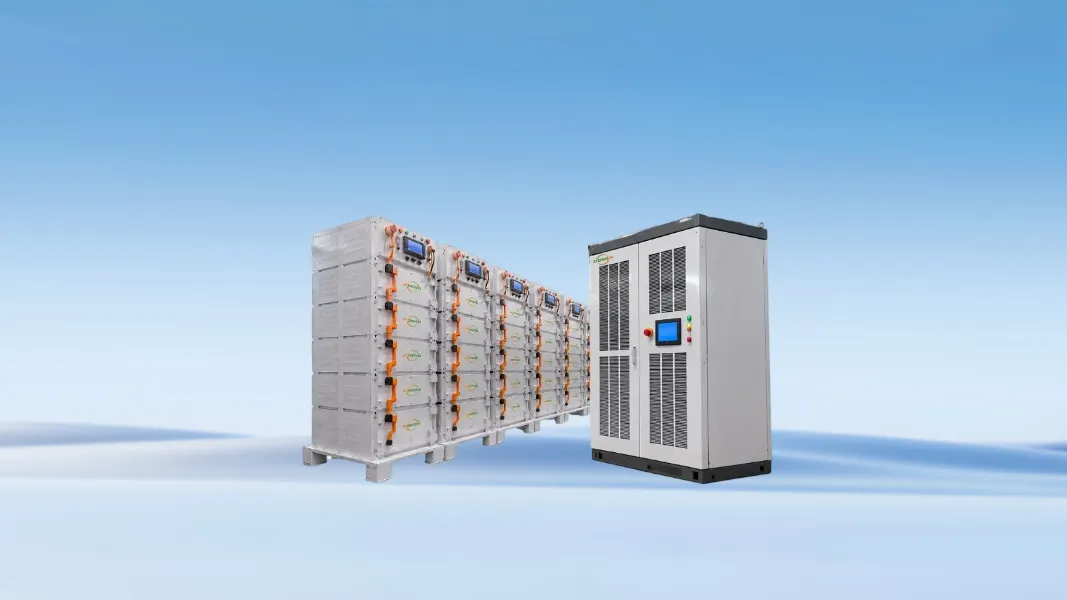 PCENERSYS has launched a 6MWh indoor energy storage system (model: PC-6MWH-L) designed for commercial and industrial (C&I) applications. This stackable battery energy storage system (BESS) integrates 386 lithium iron phosphate (LFP) battery modules and three 625kW inverters, offering a rated capacity of 6.1MWh. Its modular, stackable design ensures a small footprint, minimal site requirements, flexible capacity expansion, and straightforward installation. The system is well-suited for a variety of use cases, including peak shaving and valley filling, backup power supply, and integrated solar-plus-storage solutions.
I. Why Focus on Indoor Stackable Energy Storage Solutions for C&I Applications?
Deploying energy storage in commercial and industrial (C&I) settings often faces challenges such as limited outdoor space, complex requirements for crane-assisted container installation, and high outdoor maintenance costs. Furthermore, as energy demand grows, the initial investment for a large-capacity system can be burdensome, while retrofitting or expanding such systems later often leads to redundant construction work. Indoor stackable Battery Energy Storage Systems (BESS) integrate battery and power units into cabinet assemblies that can be housed in existing utility rooms or basements, allowing for a more compact footprint. Their modular design enables users to configure the system based on current needs and add more modules as loads increase—eliminating the need to rebuild the entire system. This approach is ideal for projects in areas with unstable power grids, or for sites looking to integrate solar PV and backup power solutions.
II. Product Overview: What is the 6MWh Indoor Energy Storage System?
The PCENERSYS 6MWh Indoor Energy Storage System is a high-voltage, large-capacity indoor BESS designed for commercial and industrial applications. It consists of stackable battery modules and power conversion units, with an integrated Energy Management System (EMS) that coordinates solar PV, battery storage, grid power, and diesel generators to optimize energy consumption patterns.
Key Technical Specifications
|
Project / Parameter |
Specification |
|
Product Model |
PC-6MWH-L |
|
Battery Type |
LFP (LiFePO4 / Lithium Iron Phosphate) |
|
Battery Capacity |
6.1 MWh |
|
Number of Battery Modules |
386 |
|
Inverter |
625 kW × 3 units |
|
Max. Inverter Efficiency |
96.5% |
|
Nominal Voltage |
1,331.1 V |
|
Operating Voltage Range |
1,164.8 V – 1,497.6 V |
|
Cycle Life |
≥ 6,000 cycles (@ 80% DOD, 25°C) |
|
IP Rating |
IP21 |
|
Charge / Discharge Temperature |
0°C to 60°C / -10°C to 60°C |
|
Communication Interface |
RS485 / CAN |
|
Installation Method |
Cabinet Type, Indoor Installation |
|
Warranty |
5 years or 10 years (optional) |
The BMS monitors SOC, system voltage, current, individual cell voltages, individual cell temperatures, and PCBA temperature. Requirements regarding indoor site conditions, fire separation distances, ventilation, and temperature control should be determined by a qualified engineer, based on an on-site assessment in accordance with local regulations.
III. Four Key Design Advantages
3.1 Compact Indoor Layout: Space-Saving and Reduced Site Requirements
The system can be installed in existing indoor spaces, such as equipment rooms or basements, eliminating the need for outdoor containers. By housing equipment within a modular cabinet assembly, the system reduces reliance on outdoor open space, site drainage, and foundation construction. It also minimizes maintenance challenges related to sun exposure, rain, and noise—making it an ideal solution for sites with limited land or high building density.
3.2 Modular Stacking: Scalable Capacity Without Demolition or Reconstruction
The stackable modular design allows for flexible capacity configuration. An initial setup can be selected based on current power requirements, with additional modules integrated as loads increase over time. This avoids the need to dismantle and rebuild the entire system, lowers initial capital expenditure, and enables the solution to scale in tandem with business growth.
3.3 Modular Transport and Forklift-Accessible Installation: Simplified Deployment
Units are designed for modular transport and can be moved into place using a forklift, eliminating the need for large-scale cranes. Compared to the hoisting required for outdoor containers, this approach imposes fewer constraints on access roads, lifting areas, and construction windows. It facilitates installation within existing buildings and shortens the overall installation timeline (actual project duration may vary based on site conditions and specific engineering plans).
3.4 Intelligent EMS Coordination and Millisecond-Level Backup Switching
The Energy Management System (EMS) coordinates the operation of photovoltaics (PV), batteries, the utility grid, and diesel generators. During normal operation, it performs peak shaving and valley filling, stores excess solar energy, and helps reduce peak-period electricity costs. In the event of a sudden grid outage, the system switches to backup power within milliseconds, ensuring that critical loads—such as essential equipment in hotels, hospitals, and factories—remain powered and operational.
IV. Safety Design: Multi-Layered Protection and 24/7 Monitoring
The system is equipped with independent Battery Management System (BMS) protection, temperature control, an automatic aerosol fire-extinguishing system, and 24/7 remote monitoring. The BMS continuously tracks cell voltage, temperature, and overall system status; the temperature control unit regulates the operating environment; the fire-extinguishing system provides cabinet-level protection; and remote monitoring ensures a rapid response to any anomalies. Indoor energy storage systems should be installed in dedicated spaces that comply with fire safety regulations, with adequate provisions for ventilation, heat dissipation, and maintenance access. During the project planning phase, it is recommended that site conditions, fire safety designs, and electrical schemes be submitted to professional engineers for review to ensure compliance with local safety standards.
V. Typical Application Scenarios
Hotels and Resorts: Reliable backup power for areas with unstable grid conditions; reduces reliance on diesel generators, features a noise-controlled indoor design, and saves space.
- Commercial Buildings: Provides backup power and peak-shaving support for critical systems such as lighting and elevators; optimizes electricity costs through peak-shaving and load-shifting; modular design adapts to varying load requirements.
- Hospitals and Medical Facilities: Ensures power continuity for critical medical equipment and essential loads during outages; intelligent monitoring provides continuous tracking of operational status.
- Factories and Industrial Facilities: Lowers peak demand charges and optimizes energy consumption; maintains continuous production during brief grid interruptions; capacity can be scaled according to demand.
- Shopping Malls and Supermarkets: Maintains power supply for refrigeration, lighting, and essential equipment; stores surplus solar energy for use during peak demand periods.
- Solar-plus-Storage Projects: Integrates solar PV, battery storage, grid power, and diesel generators; enhances solar energy utilization, reduces fuel consumption, and allows for flexible configuration and capacity expansion.
VI. Case Study: 6MWh Energy Storage Project for a Hotel in Nigeria
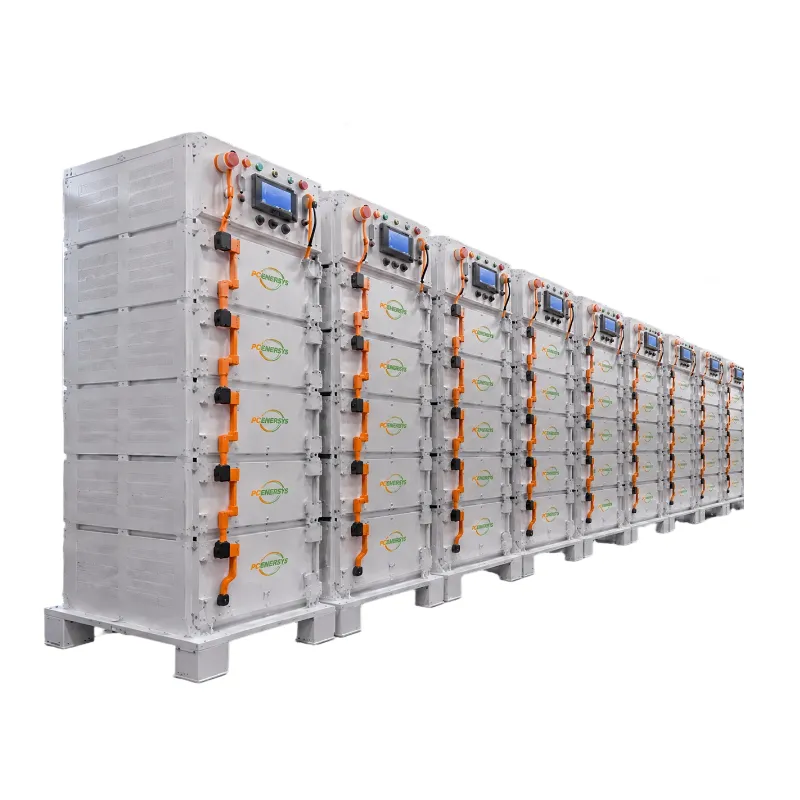
A 6MWh PCENERSYS energy storage system has been deployed at a hotel in Nigeria. The system consists of three 625kW inverters paired with 6MWh of battery capacity, providing backup power in an environment with an unstable grid. Its indoor, stackable design fits into the hotel’s existing utility rooms, saving installation space while allowing for future capacity expansion. The system coordinates the operation of solar PV, battery storage, and diesel generators—ensuring the hotel’s critical operations continue during power outages while simultaneously reducing fuel consumption and electricity costs.
VII. Quality Assurance and Project Services
PCENERSYS is a brand under Shenzhen PCENERSYS Technology Co., Ltd., which holds certifications for ISO 9001 (Quality Management), ISO 14001 (Environmental Management), and ISO 45001 (Occupational Health and Safety Management). Its battery products have obtained various certifications, including CE (EMC 2014/30/EU), UN38.3, and IEC 62619 CB (please refer to the factory-issued certificates for the specific scope of coverage). The manufacturing facility is equipped with standardized production workshops and rigorous IPQC (Input Process Quality Control) testing procedures. Our service includes a dedicated one-on-one account manager, customized solutions, coordination by a project manager, and rapid delivery; a 5-year or 10-year warranty option is available.
VIII. Frequently Asked Questions (FAQ)
Q1: Is this 6MWh Indoor Energy Storage System suitable for indoor installation?
The product is designed for indoor, cabinet-style installation (IP21 rating) and can be deployed in equipment rooms or basements. Requirements regarding floor load-bearing capacity, ventilation, temperature control, and fire safety clearances must be assessed on-site by an engineer and verified against local regulations.
Q2: How can the capacity of the stackable BESS be expanded later?
The modular, stackable design allows for capacity expansion by adding battery modules to the initial configuration, eliminating the need for dismantling or reconstruction. The extent of potential expansion should be determined during the project planning phase, taking into account the inverter, Energy Management System (EMS), and site-specific conditions.
Q3: What type of batteries are used, and what is their cycle life?
The system utilizes Lithium Iron Phosphate (LFP/LiFePO4) batteries, with an official cycle life of ≥6,000 cycles (at 80% Depth of Discharge (DOD) and 25°C).
Q4: Can the system be integrated with photovoltaics (PV) and diesel generators?
Yes. The EMS supports coordinated dispatch of PV, batteries, the grid, and diesel generators, making it suitable for applications such as integrated solar-plus-storage, backup power, and peak shaving/load shifting.
Q5: What is the warranty period?
Warranty options of 5 or 10 years are available; specific terms are subject to the project contract and factory documentation.
Conclusion
In response to challenges such as limited space, grid instability, and growing energy demand, the PCENERSYS 6MWh Indoor Energy Storage System (Stackable BESS) offers a high-capacity, scalable solution. Featuring a compact indoor footprint, modular stacking, simplified installation, and intelligent dispatch capabilities, it allows for phased implementation. For customized solutions and price quotes, please contact the PCENERSYS team to discuss your site area, load profile, and PV configuration.
product:6MWh Indoor Energy Storage System | Stackable BESS
Skip Grid Upgrades: Deploy the 253kWh / 125kW Solar Energy Storage & EV Charging System in Weeks
Related Article

contact us
For more questions please


Office Address: 701, Building A, Yonghuayuan Business Building, Baotian 2nd Road, Chentian Community, Xixiang Street, Bao'an District, Shenzhen, Guangdong Province, China
Factory Address 1: Room 701, Building 2, Kegu Industrial Park, Zone B, Jian'an Road, No. 790, Chang'an Town, Dongguan City, Guangdong Province, China
Factory Address 2: Building 7, Phase II Standardized Factory, Innovation Industrial Park, Duji Economic Development Zone, Huaibei City, Anhui Province, China