


NEWS
ESS Manufacturer | Battery Technology | Global Energy Partner
AI Energy Consumption Is Reshaping the Data Center Energy Storage Market
Opening Paragraph
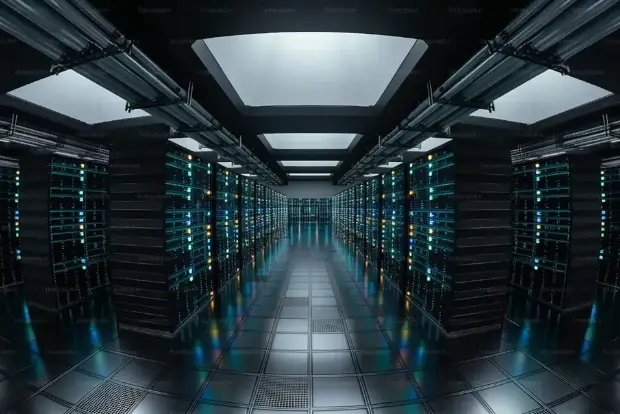
According to investigations by relevant personnel, battery storage companies have reported that there is increasing interest from large-scale computing operators and artificial intelligence infrastructure developers, and the electricity demand for artificial intelligence data centers is beginning to reshape the energy storage market in the United States. In recent weeks, companies including Tesla and Fluence have indicated a growing demand for large-scale battery systems related to artificial intelligence data centers, GPU clusters, and high-density computing facilities, reflecting a broader shift and change in the deployment of energy storage in the power industry.
This trend marks a significant transformation in the battery storage industry, which has traditionally been driven by integrated solar and wind energy projects. However, as artificial intelligence energy consumption accelerates and utilities face increasing grid constraints, data center operators are increasingly exploring utility scale and off balance sheet battery storage systems to improve power reliability, manage peak power demand, and support sustained AI workloads. Industry analysts now predict that artificial intelligence infrastructure will become one of the fastest-growing drivers of data center energy storage demand in the next decade.
AI Data Centers Are Emerging as a New Growth Driver for Battery Storage
Recent disclosures from energy storage companies such as Tesla and Fluence indicate that AI related infrastructure is becoming a new and rapidly growing source of demand for large-scale battery energy storage systems (BESS). This change marks a structural shift in the composition of end-users in the storage industry. From a historical perspective, the deployment of utility scale batteries has always been dominated by renewable energy integration use cases, mainly balancing solar and wind energy, as well as grid stability services such as peak shaving and frequency regulation. According to industry data, these applications have accounted for the majority of grid scale storage capacity in the past decade.
However, the demand for energy storage is currently expanding. Artificial intelligence training centers, ultra large scale data centers, and GPU intensive computing clusters are becoming incremental and increasingly material load centers for power infrastructure. Recent power grid and market analysis indicates that, driven by the accelerated deployment of artificial intelligence workloads and high-density computing architectures, the growth rate of power demand in data centers is significantly faster than in traditional load areas. In this context, energy storage systems have not only been evaluated in the integration of renewable energy, but also in ensuring continuous power supply, managing rapid load fluctuations, and supporting on-site resilience requirements for AI driven computing facilities. This transformation represents a measurable shift in demand structure - from energy transition driven storage adoption to compute driven, AI infrastructure led deployment.
Tesla and Fluence Report Rising Interest From AI Infrastructure Customers
Tesla Energy stated that AI infrastructure clients are driving robust growth in utility-scale battery storage demand, with its Megapack large-scale battery system seeing surging orders from AI data center operators. The company noted that AI computing facilities’ volatile power load characteristics have spawned urgent market demand for flexible and efficient backup power systems, while grid stability pressures brought by large-scale AI power consumption have further boosted customer willingness to procure energy storage equipment for grid reliability guarantee.
Fluence disclosed a significant market uptick in AI infrastructure-related energy storage business recently. The company revealed that global AI data center projects have generated massive incremental demand for utility-scale battery solutions, and high-reliability backup power supply has become a core procurement requirement for AI computing facilities. Fluence officials added that the booming AI industry has intensified grid operation volatility, making grid reliability optimization a key focus of AI infrastructure customers, and the firm has secured a large number of supporting energy storage project orders driven by the above market demands.
How Does AI Data Center Power Consumption Challenge the Public Grid?
Surging power consumption from continuous AI model training has created new strain on public power grids, while large-scale GPU clusters deployed for AI computing generate sustained, high and fluctuating electrical loads. The concentrated energy demand of AI data centers has pushed power grids in parts of the United States closer to operational limits, exacerbating grid supply instability and operational pressure. This growing mismatch between AI infrastructure’s massive, variable power needs and existing grid capacity is driving widespread industry demand for battery energy storage solutions to stabilize power supply and ease grid burdens.
Why Behind-the-Meter BESS Is the Best Solution for AI GPU Clusters?
Escalating power usage for AI model training and persistent high load from massive GPU clusters have drastically boosted electricity draw from AI data centers. The concentrated, heavy power demand has intensified grid stress in multiple U.S. regions, stretching existing power infrastructure thin. To mitigate grid volatility and avoid power disruptions, AI facility operators are increasingly turning to energy storage systems for power backup and grid support.
Fluence disclosed a significant market uptick in AI infrastructure-related energy storage business recently. The company revealed that global AI data center projects have generated massive incremental demand for utility-scale battery solutions, and high-reliability backup power supply has become a core procurement requirement for AI computing facilities. Fluence officials added that the booming AI industry has intensified grid operation volatility, making grid reliability optimization a key focus of AI infrastructure customers, and the firm has secured a large number of supporting energy storage project orders driven by the above market demands.
Behind-the-Meter Battery Storage Gains Attention
With the continuous explosion of demand for AI computing power, the fluctuation of power load in AI data centers has intensified, and the demand for electricity has significantly increased. Traditional public power grids have limited carrying capacity and insufficient power supply elasticity, making it difficult to match the high computing power and high power consumption operation needs of AI data centers. In order to avoid the risk of computing power interruption caused by power supply fluctuations and power shortages, and reduce the high dependence on the public power grid, independent and controllable power matching solutions have become a necessity in the industry. In this context, the Behind the Meter BESS (Battery Energy Storage System) on the user side, with its core advantages of flexible deployment, fast response speed, and stable power supply, can achieve millisecond level power regulation, effectively stabilize computing load fluctuations, fill power supply gaps in the power grid, comprehensively improve data center power supply stability, and ensure uninterrupted and smooth operation of computing equipment. Based on the core value of adapting to the power consumption scenarios of AI data centers, user side BESS technology has rapidly landed and its attention continues to rise, becoming the core trend for optimizing power architecture and solving power supply bottlenecks in data centers.
The AI Boom Could Accelerate the Next Phase of the Energy Storage Market
The rapid development of the AI industry is becoming a new core demand growth pole in the energy storage market, opening up new incremental space for the energy storage industry. Unlike the traditional development model of photovoltaic and wind power supporting energy storage, the current development logic of the energy storage market is undergoing a fundamental transformation. The industry is gradually bidding farewell to the single "new energy distribution and storage" model and iterating and upgrading towards a new development stage of "AI infrastructure distribution and storage".
This market shift marks a comprehensive expansion of the application scenarios and value logic of energy storage. Energy storage is no longer just a supporting tool for the consumption of new energy, but has become a core support for ensuring the stable and efficient operation of AI computing infrastructure. It is expected to drive the energy storage market into a new round of development cycle.
As the AI boom reshapes the energy landscape, PCENERSYS is at the forefront, providing high-safety and reliable utility-scale and Behind-the-Meter BESS solutions tailored for next-generation data centers. Contact our energy experts today for a customized power resilience plan.
SNEC 2026: Photovoltaic giants reunite, who will be the focus of BC technology and long-term energy storage track?
The hundred billion dollar race track has begun! Chinese energy storage companies lead Australia's epic bidding for 12GWh ultra long time energy storage
Related Article
contact us
For more questions please


Office Address: 701, Building A, Yonghuayuan Business Building, Baotian 2nd Road, Chentian Community, Xixiang Street, Bao'an District, Shenzhen, Guangdong Province, China
Factory Address 1: Room 701, Building 2, Kegu Industrial Park, Zone B, Jian'an Road, No. 790, Chang'an Town, Dongguan City, Guangdong Province, China
Factory Address 2: Building 7, Phase II Standardized Factory, Innovation Industrial Park, Duji Economic Development Zone, Huaibei City, Anhui Province, China