


NEWS
ESS Manufacturer | Battery Technology | Global Energy Partner
GB 29447-2026: China’s Energy Rules to Wipe Out 1.5M Tons
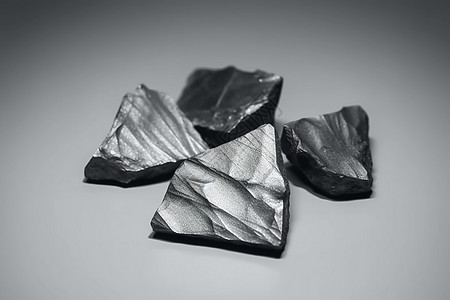
New Regulations Take Effect: China’s PV Industry Shifts from "Industry Self-Regulation" to "Mandatory Technical Oversight"
This historic upgrade to energy efficiency standards marks the formal entry of China’s PV sector into a fast track of rule-based and technology-driven capacity rationalization. The State Administration for Market Regulation and the Standardization Administration of China have released the full text of the mandatory national standard, The Norm of Energy Consumption Per Unit Product of Polysilicon and Germanium (GB 29447-2026), with mandatory implementation scheduled for January 1, 2027. The introduction of this policy fundamentally rewrites the operational rules for upstream PV manufacturing.
Serving as a key lever for restructuring the polysilicon supply chain, the new regulations tighten energy consumption thresholds far beyond market expectations, effectively breaching the viability threshold for legacy polysilicon capacity:
Drastic tightening of compliance thresholds:
The finalized metrics are significantly stricter than those in the earlier draft, causing the industry-wide compliance rate to plummet from the projected 84% to just approximately 45%.
Surging pressure for capacity rationalization:
This implies that over 1.5 million tons of industry-wide capacity face a high risk of elimination or the challenge of costly technical upgrades.
Long-term restructuring of supply and demand:
Given that current operational capacity stands at only about 1.3 million tons—with most high-energy-consumption lines already idle—the immediate impact on short-term supply remains relatively manageable. However, in the long run, the regulations will purge inefficient supply from Tier-2 and Tier-3 manufacturers by 2027, fundamentally reshaping the global competitive landscape of China’s PV industry.
In-Depth Analysis of GB 29447-2026: Comparing Energy Consumption Metrics for Rod Silicon vs. Granular Silicon
As a guiding technical standard for China's upstream photovoltaic manufacturing sector, the upcoming GB 29447-2026 establishes extremely stringent quantitative limits for the specific energy consumption of polysilicon production. Compared to the draft version released in September 2025, the final text imposes stricter requirements across the board; by significantly lowering the standard coal equivalent (kgce/kg) thresholds, it has effectively ignited a fierce battle over technical compliance.
Rod Silicon (Trichlorosilane Method): Tier 3 Limit Lowered to 6.3 kgce/kg
For rod silicon—produced via the Modified Siemens Process (trichlorosilane method) and currently dominating the market—GB 29447-2026 establishes a three-tier progressive energy consumption evaluation system:
Tier 1 (Advanced Level): Set at 5.0 kgce/kg, representing the industry's top-tier performance for new production lines with ultra-low energy consumption;
Tier 2 (Market Entry Level): Set at 5.5 kgce/kg, serving as the minimum approval threshold for new construction and capacity expansion projects;
Tier 3 (Mandatory Limit for Existing Capacity): Set at 6.3 kgce/kg.
Notably, the Tier 3 limit represents a critical threshold determining the survival of existing plants. Regulators tightened this limit from the 6.4 kgce/kg proposed in the draft to 6.3 kgce/kg—a marginal reduction of 0.1 kgce/kg that exceeded the expectations of most industry practitioners. Because a vast amount of active rod silicon capacity is concentrated within the narrow 6.3–6.4 kgce/kg range, this tightening immediately classified a large number of older production lines as "non-compliant."
Granular Silicon (Silane Fluidized Bed): Tier 3 Threshold Set at 4.6 kgce/kg
For next-generation technology pathways—exemplified by FBR (silane fluidized bed) granular silicon—the new regulations impose more aggressive, mandatory constraints. Given the inherent advantages of the fluidized bed process regarding low-temperature operation and continuous production, its energy efficiency thresholds are already significantly superior to those of the traditional Siemens process:
Tier 1 (Advanced Level): Reaches a record-breaking 3.6 kgce/kg;
Tier 2 (Market Entry Level): Strictly set at 4.0 kgce/kg;
Tier 3 (Mandatory Limit for Existing Capacity): Significantly lowered from the 5.0 kgce/kg proposed in the draft to 4.6 kgce/kg.
This substantial reduction of 0.4 kgce/kg signals that regulators will not tolerate low-quality expansion in the granular silicon sector; even new technology pathways must achieve peak performance in systemic heat recovery and off-gas recycling to qualify for legal production beyond 2027.
Tightening Accounting Boundaries: Closing Loopholes for "Boundary Leakage"
Beyond raising technical parameters, GB 29447-2026 restructures the energy accounting boundary, effectively eliminating the gray areas where companies could "launder" energy consumption figures through financial and boundary-related loopholes.
In previous audits, some manufacturers excluded high-energy-consuming process stages—such as the procurement of silicon seeds or the outsourcing of hydrogen recovery and purification—from their reporting boundaries, thereby nominally lowering their reported energy consumption. The new regulations explicitly mandate that all externally sourced intermediate materials and secondary energy inputs be factored into the total energy consumption based on strict equivalent conversion factors. This standardization of calculation boundaries means companies must rely on genuine technological upgrades rather than "accounting tricks" to circumvent regulations.
The following is a comparison of core indicators between the final version of GB 29447-2026, the original draft for comment, and the various process pathways:
|
Process & Product |
Grade Level |
Final Standard (GB 29447-2026) |
Draft Proposal (Consultation Draft) |
Threshold Change |
|
Rod Silicon (Modified Siemens Process) |
Level 1 (Advanced) |
5.0 kgce/kg |
5.0 kgce/kg |
Unchanged |
|
Level 2 (Entry Threshold) |
5.5 kgce/kg |
5.5 kgce/kg |
Unchanged |
|
|
Level 3 (Mandatory Limit) |
6.3 kgce/kg |
6.4 kgce/kg |
Tightened by 0.1 |
|
|
Granular Silicon (FBR Process) |
Level 1 (Advanced) |
3.6 kgce/kg |
3.6 kgce/kg |
Unchanged |
|
Level 2 (Entry Threshold) |
4.0 kgce/kg |
4.0 kgce/kg |
Unchanged |
|
|
Level 3 (Mandatory Limit) |
4.6 kgce/kg |
5.0 kgce/kg |
Tightened by 0.4 |
A Major Shake-up in Production Capacity: The Squeeze from 3.5 Million to 2 Million Tons of Compliant Capacity
The official release of GB 29447-2026 marks the entry of China’s photovoltaic supply-side reform into an era of rigorous legal regulation. By establishing a mandatory "red line" for energy consumption, the standard not only reshapes the entry benchmarks for polysilicon capacity but is also set to trigger a profound shake-up across the upstream supply chain over the coming years. For market analysts and supply chain executives, understanding the standard's actual impact on total supply and effective capacity is crucial for assessing future market trends.
Only 45% of Capacity Meets New Regulations: Who Is Teetering on the Edge?
Calculations by authoritative industry bodies following the standard's implementation briefing reveal a stark reality: as the "Level 3" limit in GB 29447-2026 was tightened from the draft's 6.4 kgce/kg to 6.3 kgce/kg, the polysilicon industry's overall compliance rate plummeted.
Assessments indicate that while approximately 84% of existing capacity previously met the draft threshold of 6.4 kgce/kg, the tightening of the metric by 0.1 kgce/kg in the final version caused the compliant capacity to shrink instantly to just around 45%. The primary reason for this sharp decline is that the vast majority of "rod silicon" plants commissioned in recent years operate with energy consumption levels concentrated within the narrow 6.3–6.4 kgce/kg range.
This slight adjustment effectively categorizes over 1.5 million tons of "borderline" capacity as non-compliant. Brokerage firms and investment institutions estimate that without large-scale debottlenecking and technical retrofitting, China’s nominal polysilicon capacity—currently reaching 3.5 million tons—will be compressed to less than 2 million tons once the mandatory limits take effect in 2027.
2026 vs. 2027: A Dialectical View of Short-Term Supply and Long-Term Market Clearing
When assessing the commercial impact of this policy, it is essential to clearly distinguish between—and dialectically evaluate—short-term market impacts and long-term structural market adjustments:
Short-Term Perspective (2026): Stable Supply with No Risk of Price Spikes
The immediate impact on the current market is extremely limited. Due to previous industry overcapacity and low-price competition, the vast majority of aging production lines with energy consumption exceeding 6.3 kgce/kg have already been idled or shut down for economic reasons. Data indicates that in the first half of 2026, China's actual operating polysilicon capacity will remain at approximately 1.3 million tonnes. Consequently, the new regulations will not trigger immediate supply disruptions or a surge in spot prices.
Long-Term Perspective (2027 and Beyond): A Fundamental Shift in Supply-Demand Dynamics to Reverse Severe Overcapacity
Looking ahead to 2027, global polysilicon demand is projected to rise to approximately 1.5 million tonnes. With the mandatory implementation of GB 29447-2026 taking effect on January 1, 2027, over 1.5 million tonnes of non-compliant capacity will be barred from legal market transactions. Trimming the compliant capacity pool from 3.5 million tonnes to under 2 million tonnes will effectively eliminate the "hidden overcapacity" that has long loomed over the market; this will steer capacity utilization rates back toward a healthy range and fundamentally reshape the industry's supply-demand ecosystem.
From Upstream Polysilicon to Downstream Modules: Three Mandatory National Standards Establish a Closed-Loop Regulatory Framework
Addressing overcapacity and energy consumption control in the photovoltaic (PV) industry is a task that extends far beyond the upstream polysilicon sector. Released and taking effect concurrently with GB 29447-2026 are two other critical national standards covering silicon wafers and finished modules: GB 47835-2026 and GB 47834-2026. Together, these three mandatory standards form a closed-loop regulatory network spanning the entire PV value chain, comprehensively transforming what was previously loose, voluntary industry self-regulation into legally binding, rigorous technical oversight.
The Silicon Wafer Segment (GB 47835-2026): Energy Consumption Benchmarks for Crystal Pulling and Slicing
Midstream wafer manufacturing also faces a rigorous test of energy efficiency. GB 47835-2026 establishes clear energy consumption limits specifically for the two key processes of ingot pulling and wafer slicing.
For ingot pulling, the new regulations mandate the phase-out of early-model, small-diameter Czochralski (CZ) furnaces—characterized by poor energy efficiency and outdated thermal field designs—by capping the comprehensive electricity consumption per kilogram of monocrystalline silicon ingot. Regarding slicing, the standard imposes strict energy consumption requirements for diamond-wire slicing and fine-wire cutting technologies. This move blocks the midstream industry's path of crude capacity expansion—where high slicing speeds were previously prioritized at the cost of energy efficiency—and accelerates the sector's transition toward advanced production capabilities featuring large-format wafers, thinner slices, and high levels of automation.
The Module and Inverter Segment (GB 47834-2026): Market Access Barred for Products Failing to Meet "Level 3" Energy Efficiency
The regulatory network reaches its ultimate scope with GB 47834-2026, which directly governs downstream end-products. This standard establishes clear minimum efficiency standards and energy efficiency ratings for crystalline silicon modules and inverters.
It sets a strict legal threshold: any photovoltaic modules or inverters failing to meet the "Level 3 Minimum Efficiency Requirements" are prohibited from being manufactured, imported, or sold within China. This measure effectively cuts off market access for low-quality, low-efficiency products.
Raising the market entry threshold has exerted significant pressure for industry-wide upgrading, accelerating the market penetration of high-efficiency N-type cell technologies—such as TOPCon and BC (Back-Contact) solar cells—and driving inverter manufacturers to improve power conversion efficiency. From polysilicon raw materials to finished photovoltaic power plants, three major mandatory national standards are working in concert to ensure the simultaneous phase-out of outdated production capacity across the entire supply chain, ushering in a new phase of high-quality development.
Gearing Up for 2027: Three Pathways for Energy Compliance and Technical Retrofitting in PV Enterprises
As the countdown to the implementation of GB 29447-2026 begins, the window of opportunity for enterprises hovering near the compliance threshold to undertake technical retrofitting is rapidly narrowing. For polysilicon producers and engineering decision-makers, assessing the feasibility of upgrading outdated capacity and formulating targeted energy efficiency optimization roadmaps is an urgent priority to ensure continued market access beyond 2027.
Upgrading Heat Recovery and Off-Gas Recycling Systems
For large-scale rod silicon enterprises with energy consumption levels in the critical 6.3–6.4 kgce/kg range, the most direct and cost-effective retrofitting pathways focus on waste heat recovery and hydrochlorination process optimization.
By upgrading off-gas jacket heat recovery units on reduction furnaces and optimizing heat exchange efficiency in high-pressure hydrochlorination reaction systems, enterprises can effectively capture high-grade thermal energy from high-temperature off-gases and redirect it to distillation and chlorosilane purification stages. Practical experience demonstrates that refined thermal energy cascading can achieve a marginal reduction of 0.1–0.2 kgce/kg—sufficient to safely bring production lines teetering on the edge back within the "Level 3" compliance limit of 6.3 kgce/kg.
Green Power Direct Connection and Energy Management Systems (EMS)
Building upon process optimization, the introduction of high-precision Energy Management Systems (EMS) and green power integration serves as a key supplementary measure for enterprises to lower their reported comprehensive energy consumption.
Leveraging IoT-based digital energy control platforms, enterprises can conduct real-time energy efficiency monitoring and millisecond-level dynamic adjustments across distillation systems, auxiliary cooling water circulation, and hydrogen compression stages, thereby eliminating energy losses caused by process fluctuations. Meanwhile, deploying an integrated "source-grid-load-storage" system within the plant—directly connected to local off-grid renewable energy (wind and solar)—not only reduces the carbon footprint but also optimizes the overall energy consumption structure at the system level.
Capacity Replacement and Accelerated Phase-out of Inefficient Equipment
For aging plants utilizing the Siemens process—where energy consumption far exceeds 6.3 kgce/kg and there is little room for retrofitting—attempting marginal upgrades often entails significant ROI risks. Such enterprises should decisively initiate decommissioning and capacity replacement strategies.
Companies should capitalize on the policy transition period to accelerate the phase-out of small-scale reduction furnaces and energy-intensive purification equipment. They should concentrate resources on next-generation production lines with inherent energy-efficiency advantages—such as FBR (Fluidized Bed Reactor) granular silicon technology—or exit inefficient capacity through asset restructuring. Enterprises that proactively transition their technology pathways can not only avoid the risk of forced regulatory phase-out but also secure a competitive edge in the market for low-carbon, high-quality polysilicon beyond 2027.
Conclusion: The Era of Mandatory Energy Efficiency Begins; High-Quality Transformation Ends Unchecked, Low-Price Competition
The official release and implementation of GB 29447-2026 mark the Chinese photovoltaic industry's comprehensive entry into a new development phase driven by mandatory energy efficiency standards. This historic shift will put a definitive end to the chaotic price wars fueled by the expansion of low-quality, inefficient capacity, accelerating the phase-out of non-compliant production capabilities through rigorous technical benchmarks. As the 2027 compliance deadline approaches, the upstream sector of China's PV industry will reshape its polysilicon supply chain—prioritizing high energy efficiency, low-carbon operations, and high technological barriers—thereby consolidating its long-term competitiveness in the global new energy sector through a high-quality transformation.
AI Power Demand Is Reshaping America’s Grid: Why Utility Investment and Grid Resilience Matter
Australia Renewable Energy FY26: Record 9.1 GW Operations Amid 18-Month Grid Delays
Related Article


contact us
For more questions please


Office Address: 701, Building A, Yonghuayuan Business Building, Baotian 2nd Road, Chentian Community, Xixiang Street, Bao'an District, Shenzhen, Guangdong Province, China
Factory Address 1: Room 701, Building 2, Kegu Industrial Park, Zone B, Jian'an Road, No. 790, Chang'an Town, Dongguan City, Guangdong Province, China
Factory Address 2: Building 7, Phase II Standardized Factory, Innovation Industrial Park, Duji Economic Development Zone, Huaibei City, Anhui Province, China