


NEWS
ESS Manufacturer | Battery Technology | Global Energy Partner
SNEC 2026: Photovoltaic giants reunite, who will be the focus of BC technology and long-term energy storage track?
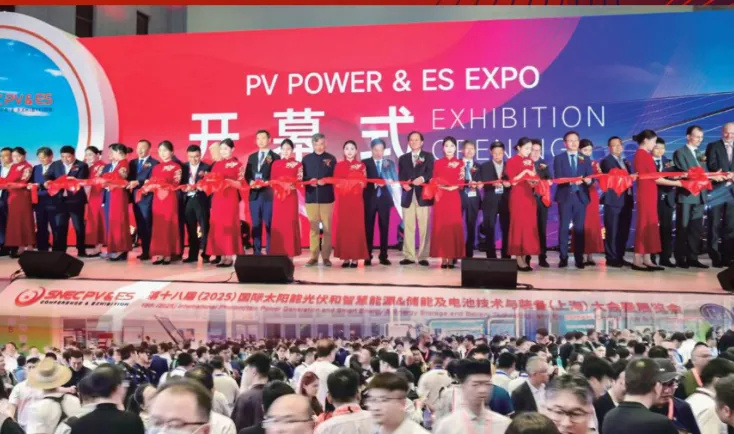
As the northern hemisphere enters summer, the season for photovoltaic industry practitioners to attend various industry summits and exhibitions has arrived. Many industry insiders are calculating how many industry events they can attend in June.
The two top global photovoltaic exhibitions, Shanghai SNEC Photovoltaic Exhibition and Munich Intersolar Photovoltaic Exhibition, are both close at hand. So, what are the hot topics and core issues that all industry insiders need to focus on this year?
When will the dilemma of overcapacity in energy storage capacity see a substantial turning point?
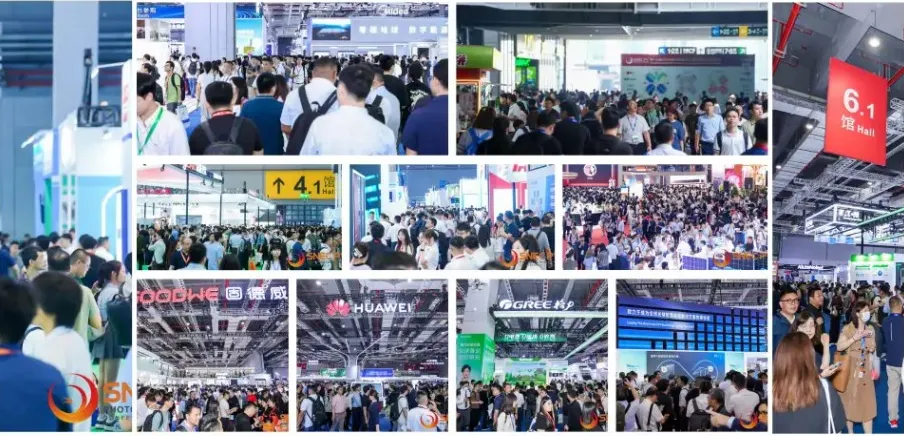
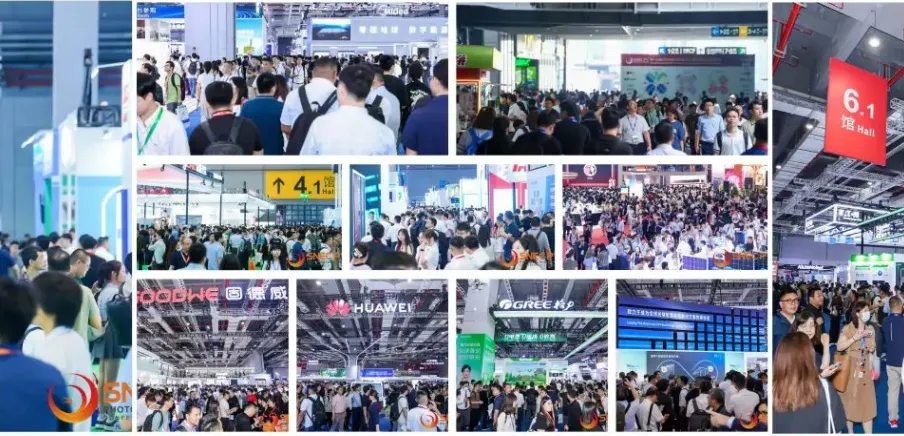
Due to the fact that the production capacity growth of the photovoltaic supply chain has far exceeded the demand growth in the past two years, the participation heat of industry exhibitions in 2025 has declined. Under the pressure of shrinking profitability, the confidence index of photovoltaic manufacturing enterprises is at a low level, and the industry generally believes that pessimistic expectations will continue to dominate the market strategy in the near future until supply and demand return to balance.
There are some attendees who have abandoned the SNEC exhibition, and there are more vacant booths in the surrounding area than in previous years. Major manufacturers claim that industry consolidation and a wave of corporate bankruptcies are imminent - of course, the ones undergoing bankruptcy restructuring are always competitors, not themselves. But this is more of a manufacturer's hope for a better future, rather than a rational prediction based on specific planning and industry information.
As previously stated in a PV Tech article, "Too many manufacturers are still unwilling to face the long-term situation of overcapacity... The industry clearly lacks effective response strategies
After a year, numerous production enterprises along the entire supply chain are still deeply mired in operational difficulties. Although the industry vigorously advocates the elimination of internal competition in the second half of 2025, there have been few implementation measures and no substantial industry pattern adjustment has been formed. The core challenges facing the industry today are no different from a year or even two ago.
To make matters worse, the annual new installed capacity of photovoltaics worldwide may decline. PV Tech predicts that the global installed capacity of photovoltaics will be slightly below 600GW by 2026, a year-on-year decline of about 10%. This market downturn is unprecedented for major manufacturers.
At present, only a few small and medium-sized enterprises have exited the market, and large-scale mergers and acquisitions are progressing slowly. There is currently no clear sign of a spontaneous return to supply-demand balance in the short term. In this context, the most realistic possibility for the industry market to rebound is still for relevant Chinese regulatory authorities to introduce substantial regulatory measures.
In recent weeks, there have been calls in the market to establish a minimum price standard and strictly prohibit dumping below cost price. This will also become a hot topic of discussion at this exhibition. However, based on past experience, it is not advisable to have high expectations for large-scale regulatory measures before substantive policies are officially implemented.
Technological iteration continues to advance, waiting for the opportunity to shift towards BC technology?
In several exhibitions held last year, TOPCon half cut battery modules remained the absolute mainstream product.
Although several manufacturers' booths display one or two back contact (BC) components, most of them are only for display purposes and have not achieved commercial mass production. Except for Aixu and Longi, few manufacturers have truly started large-scale production of BC batteries.
Since the end of last year's exhibition until now, major manufacturers have been secretly working hard to implement BC technology (back contact technology). Each manufacturer is busy researching technology and building experimental production lines, trying to find ways to reduce expensive costs. Although you will see an overwhelming display of BC components at this year's booth, according to CRU's analysis, most of these products are still just showing off their muscles and are still some distance away from being truly launched in large quantities. In the upstream of the industrial chain, the production capacity of BC batteries is still in the hands of two giants, Aixu and Longi. Most other manufacturers are currently building small-scale test lines or have just started small-scale production, and are in the stage of "follow-up observation".
The photovoltaic industry has always had a very fast pace of technological iteration, and this technological transformation may exceed market expectations. Will any companies release large-scale BC production capacity plans this year? There is a certain possibility. However, PV Tech stated that based on the internal cost model of the market research department, it is highly likely that the industry will not fully switch from TOPCon to BC technology until 2028.
He Rise of Three-piece and Four-piece Battery Modules in 2026
At the component level, only a few companies exhibited three or four piece battery modules at last year's exhibition. However, the number of such products exhibited this year will significantly increase, and a large number of TOPCon components equipped with multi slice batteries, stacked batteries, and backside polycrystalline fine grid line technology will be showcased.
Research and market reports indicate that the nominal maximum conversion efficiency of this new type of component has generally exceeded 24.5%, and it is gradually being included in our component tracking report, which will also become a highlight of the two exhibitions.
In terms of component size, the 66 piece G12R specification (2382mm x 1134mm) has gradually become the industry standard, bidding farewell to the chaotic and diverse component size specifications of previous years. This year, the size of silicon wafers is expected to undergo only minor adjustments, and stacked cell technology can allow component manufacturers to further increase the effective light receiving area within the existing component size.
Last year, raw material suppliers and testing agencies generally reached a consensus that the simplification of component raw material usage has reached a critical point, and may even have exceeded a reasonable range. The space for cost reduction through reducing raw material usage has become extremely limited.
Therefore, last year many companies began to introduce raw material substitution solutions, such as using steel frames, composite frames, etc. Subsequently, due to factors such as the conflict in the Middle East, the prices of key raw materials such as aluminum and packaging film materials continued to rise. Previously, such raw material substitution solutions were mainly promoted by raw material suppliers. It remains to be seen whether component manufacturers themselves will be more proactive in promoting such alternative solutions in 2026.
Regardless of the new products on display, it is expected that third-party testing agencies and downstream power plant developers will more frequently explore the quality defects of components that have recently appeared in laboratories and actual power plants. Although it seems unlikely that manufacturers can improve quality by increasing the thickness of the frame or upgrading the film configuration to increase costs, the market still calls on companies to face potential quality risks and further enhance their emphasis on the long-term reliability of components.
In the field of batteries, silver prices have frequently been a hot topic in the industry in the past six months. During the exhibition, it is important to focus on the attention of silver free and low silver battery technologies, while also paying attention to whether these technologies are only limited to silver paste and equipment supplier booths, or whether there are already a large number of component manufacturers exhibiting related products simultaneously.
Recently, there have been endless rumors in the market about Tesla and SpaceX's layout in the photovoltaic industry. It is expected that the discussion heat related to this year's SNEC exhibition will remain high, but the official announcement may not be implemented for the time being.
Cutting edge technology evaluation: Track the first achievements of efficient batteries, advanced components, and energy storage systems on site, and comprehensively showcase the latest application trends of BIPV and photovoltaic energy storage and charging integration. High level in-depth dialogue: Directly visit the exhibition booths of major light storage companies, conduct in-depth interviews with the core teams of industry giants such as Longi, Tianhe, Jinko, Aixu, Sunac Power, and Huawei, and analyze their latest corporate strategies and technological evolution paths.
Industry trend analysis: sorting out high-level viewpoints, production capacity patterns, technological route games, energy storage business models and other topics; External network dissemination: We will also share on-site photos of new products, interview observations, updates on corporate signing, and exclusive information to showcase the charm of Chinese optical storage enterprises to various sectors overseas, and help local enterprises explore overseas markets.
2026 SNEC, We are in Shanghai, standing shoulder to shoulder with the industry, witnessing the advancement and breakthroughs of the new stage of the optical storage industry. For businesses looking for reliable energy storage solutions, explore our range of LiFePO4 Battery System optimized for long-duration applications.
2026 Energy Storage Surge: How the Supply Chain Absorbs Lithium Volatility
AI Energy Consumption Is Reshaping the Data Center Energy Storage Market
Related Article


contact us
For more questions please


Office Address: 701, Building A, Yonghuayuan Business Building, Baotian 2nd Road, Chentian Community, Xixiang Street, Bao'an District, Shenzhen, Guangdong Province, China
Factory Address 1: Room 701, Building 2, Kegu Industrial Park, Zone B, Jian'an Road, No. 790, Chang'an Town, Dongguan City, Guangdong Province, China
Factory Address 2: Building 7, Phase II Standardized Factory, Innovation Industrial Park, Duji Economic Development Zone, Huaibei City, Anhui Province, China