

NEWS
ESS Manufacturer | Battery Technology | Global Energy Partner
10 GWh of Sodium-Ion Storage MOUs in Europe: Is the Chemistry Ready for Your C&I Project?
On 27 October 2026, CATL (Contemporary Amperex Technology) and German storage system integrator INTILION signed a memorandum of understanding (MOU) to deploy up to 3 GWh of TENER sodium-ion energy storage systems across Germany, Switzerland and Austria over five years, covering both grid-scale and commercial & industrial (C&I) applications. This is CATL's third European sodium-ion storage agreement within four months. Together with a 5 GWh agreement with Alfen in the Netherlands and a 2 GWh agreement with Solarpro in Bulgaria in July, the combined agreement volume reaches 10 GWh.
The boundary matters before the numbers are read too far: these agreements are MOUs or strategic partnership frameworks, not purchase orders that have been placed or delivered. Sodium-ion batteries are entering the view of the European storage market, but they remain some way from being a deployable option for most C&I projects. This article sets out where the three agreements sit and what cadence they imply, separates what has actually been committed from what appears only in supplier materials, and gives C&I buyers a framework for assessing the sodium-ion option at this stage.
1. The Three European Agreements on the Table
All three agreements are led by CATL, with European local integrators as the delivery channel, extending existing lithium-ion relationships into sodium-ion. They span Western Europe, Central and Eastern Europe and the German-speaking region.
|
Counterparty |
Announced |
Volume |
Region |
Scope and notes |
Agreement type |
|
Alfen N.V. (Almere, Netherlands) |
16 Jul 2026 |
5 GWh |
Western Europe |
Lithium cooperation since 2023, expanded in 2024; first sodium-ion deployments expected in H2 2027 |
Cooperation MOU |
|
Solarpro Technology AD (Bulgaria) |
21 Jul 2026 |
2 GWh |
Central/Eastern Europe |
Targeting the region's first sodium-ion storage project; focus on cold-climate performance and long cycling |
Strategic partnership |
|
INTILION GmbH (Paderborn, Germany) |
27 Oct 2026 |
3 GWh (five-year) |
Germany, Switzerland, Austria |
TENER sodium-ion system; grid-scale and C&I; 30+ projects delivered in Germany together since 2022; lithium and sodium pursued in parallel |
Cooperation MOU |
All three use a European integrator as the channel, build on prior collaboration, and position sodium-ion as a complement to lithium-ion rather than a replacement. Region, application mix and delivery cadence differ: only Alfen has published a first-deployment expectation (H2 2027); the other two have not announced a first-project milestone. For the integrators, the agreements diversify the chemistry they can offer customers while existing lithium relationships continue; none of the three announcements frames sodium-ion as a wind-down of lithium programs.
2. Why Sodium-Ion Is Being Introduced Into European Storage
The first reason sodium-ion is attracting attention is supply chain. Sodium-ion chemistry replaces part of lithium with sodium as a key material, and sodium resources are more widely distributed. The stated aim is to reduce exposure to lithium-price volatility and to a single material path. This is an industry-level logic, not a settled conclusion that sodium-ion is already cheaper than lithium-ion; cost still depends on upstream prices, scale and process maturity.
The second narrative is cold-climate performance and safety. For high-latitude, cold European climates, supplier materials emphasise high-power discharge at -20°C and intrinsic safety. The caveat is important: cycle life, service life, system efficiency and low-temperature performance currently rest mainly on supplier wording. In the INTILION announcement, for example, the TENER system is described as exceeding 15,000 cycles, with a 25-year design life and a round-trip efficiency above 96.5%. These figures still require field operating data and third-party accounting, and should not be carried into project tenders as independently verified indicators.
Materials-wise, sodium-ion cells do not use lithium in their active cathode material and rely on different anode formulations. Recycling routes for the chemistry are still being developed alongside the market, so material recovery and second-life treatment remain less mature than the established lithium-ion recycling chain. This is another reason to keep chemistry-level expectations separate from today's operating data.
3. MOU, Strategic Partnership — Not a Purchase Order
The most common misreading of these agreements is to treat the "10 GWh" as capacity already built or under construction. In fact, an MOU expresses intent and a planning scale; the formal purchase order, delivery schedule, price terms and warranty conditions still have to be confirmed in subsequent contracts. Moving from a framework agreement to a deliverable project still requires project development, grid approval, contract negotiation and production scheduling.
The published cadence confirms this. Alfen's first sodium-ion deployment is expected in H2 2027; Solarpro and INTILION have not published a first-delivery date. For C&I projects due for delivery in 2026–2027, sodium-ion cannot be written into a defined scheme at this stage; at most, it can be included as a supplier watch item in tender enquiries. Before a framework becomes an order, typical steps include site selection and feasibility, grid connection assessment, technical specification alignment, price and warranty negotiation, and production slot allocation; the MOU alone establishes none of these as committed.
Three practical implications follow for procurement scheduling:
- Do not derive available capacity from agreement volume. The 10 GWh is a combined figure of intent agreements, not locked-in delivery capacity for 2026–2027; scheduling still follows formal contracts and supply commitments.
- Separate technology demonstration from field track record. European sodium-ion cases remain early-stage; operating hours and after-sales records need to be verified separately.
- Keep flexibility in the technology route. Contracts should allow the chemistry to be reassessed at expansion or phase-two stages, rather than locking a single route in advance.
One claim deserves correction: "sodium-ion storage has already entered Europe at scale." On the public record, what has entered the market is cooperation frameworks and product launches; scaled commissioning still awaits later project delivery.
4. How C&I Buyers Should Assess the Sodium-Ion Option Now
For owners and EPCs, there is no need to take sides between sodium-ion and LFP at this stage. The more practical approach is to observe item by item across application dimensions. The table below is a neutral comparison and does not constitute a performance or quality verdict:
|
Observation dimension |
Sodium-ion |
Lithium iron phosphate (LFP) |
|
Supply chain risk |
Lithium-removal narrative aims to diversify the material path; upstream supply chain still maturing |
Mature industry chain; material and capacity availability high |
|
Low-temperature performance |
Supplier wording highlights -20°C discharge; field data still accumulating |
Substantial existing cold-climate operating record |
|
Field validation |
Early project stage; limited long-cycle operating data |
Multi-year scaled deployment; cycle and warranty data traceable |
|
Compliance and data |
Same EU battery regulation framework as LFP; passport data requirements apply equally |
Material composition, carbon footprint and due-diligence disclosure under the same framework |
|
Maturity position |
Complementary route on the watch list |
Mature baseline for current C&I projects |
In RFP enquiries, ask suppliers to confirm: whether there is a working prototype or an operating commissioned site; the source and test conditions behind cycle and efficiency figures; warranty term, spare parts and service arrangements; the timetable for formal contracts and first delivery; and whether due-diligence and material-disclosure documentation is in place.
A prudent selection principle is to anchor near-term delivery projects on mature, field-validated solutions, keep sodium-ion on the watch list, and only reassess switching or blending in expansion or new projects once formal contracts land and field data accumulates.
5. Where Sodium-Ion Sits in the EU Regulatory and Supply-Chain Narrative
The EU battery regulation applies the same requirements to whichever chemistry is chosen. The battery passport (Article 77), carbon footprint declaration (Article 7), recycled-content reporting and supply-chain due diligence all apply to sodium-ion products as well; material composition, manufacturing plant and cycle performance enter the passport data record. Chemistry diversification does not exempt compliance preparation; it only changes what has to be disclosed.
On the demand side, Europe's 2026–2028 storage deployment targets frame chemistry diversification as part of supply-chain resilience: parallel routes reduce exposure to a single material and a single supplier path. This ties back to our 45 GW storage target analysis. Recycling and second-life applications are not expanded here.
The battery passport data points are chemistry-agnostic in structure; a new chemistry changes the materials described, not the obligation to record them. The carbon footprint declaration duties discussed in this series likewise apply to any chemistry placed on the EU market; a sodium-ion system still needs its own model- and plant-specific footprint document.
6. Position and Current Selection Advice
When choosing a technology route for European C&I projects, PCENERSYS' recommendation is: anchor the project baseline on an LFP solution that has been validated at scale, keep sodium-ion on as a complementary route to track, rather than betting in reverse on a new chemistry that has not yet completed field validation.
 This recommendation rests on three practical judgments. First, industry-chain maturity: LFP has formed multi-year scaled deployment in global storage, with a relatively complete supply chain for cells, integration, test reports and warranty, making delivery risk more controllable. Second, traceable field data: cycle life, efficiency and thermal behaviour have long-period operating records and third-party reports that can be checked, supporting acceptance, project finance and insurance assessment. Third, compliance alignment: the preparation path for LFP in passport data, carbon footprint documentation and due diligence is already clear and aligns with the compliance timeline laid out in this series.
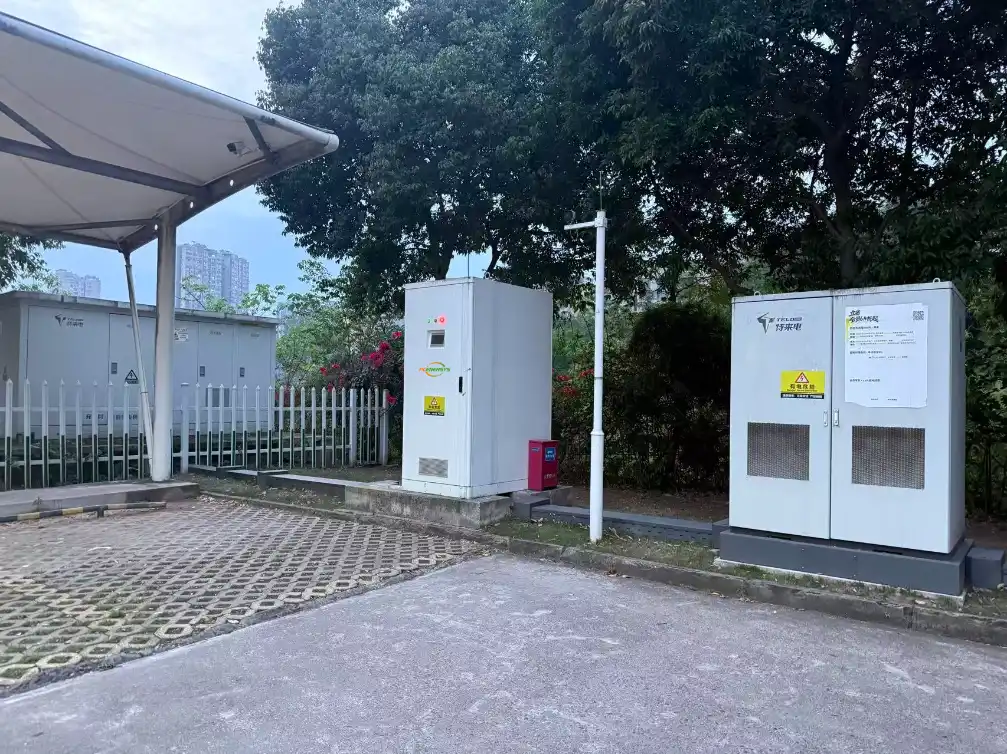
PCENERSYS currently serves European C&I projects on the LFP route. The 6MWh indoor stackable BESS uses a modular design that occupies little space, has low site requirements, and is simple to install and expand; it maps compliance documentation by plant and model and preserves room for data continuity as the system grows. On emerging chemistries such as sodium-ion, the company tracks commercial progress, field data and contract landings, but does not draw conclusions about unverified technical advantages in public materials.
If your project needs a chemistry selection review, compliance documentation preparation or modular expansion planning, please contact the PCENERSYS team.
Battery Carbon Footprint Declaration for BESS: Which EU Dates Are Hard Deadlines — and Which Wait on Delegated Acts
Related Article
contact us
For more questions please


Office Address: 701, Building A, Yonghuayuan Business Building, Baotian 2nd Road, Chentian Community, Xixiang Street, Bao'an District, Shenzhen, Guangdong Province, China
Factory Address 1: Room 701, Building 2, Kegu Industrial Park, Zone B, Jian'an Road, No. 790, Chang'an Town, Dongguan City, Guangdong Province, China
Factory Address 2: Building 7, Phase II Standardized Factory, Innovation Industrial Park, Duji Economic Development Zone, Huaibei City, Anhui Province, China