


NEWS
ESS Manufacturer | Battery Technology | Global Energy Partner
Lithium Battery Supply Chain: Why China Dominates the U.S. Market
U.S. Energy Storage Boom Meets a Structural Constraint
China Still Dominates Global Energy Storage Supply Chain — What It Means for Costs, Risk, and Investment Strategy
The global battery energy storage system market continues to expand at an unprecedented pace, driven by the rapid deployment of renewable energy, grid modernization, and electrification across industries. In the United States alone, energy storage installations are projected to reach approximately 58 GWh in 2025, with further growth expected into 2026 and beyond.
However, beneath this strong demand lies a structural challenge that is becoming increasingly difficult to ignore: the global energy storage supply chain remains heavily dependent on China.
For developers, EPC contractors, and procurement teams, this is not just an abstract industry concern—it is a direct operational risk. Project timelines, system costs, and long-term reliability are all influenced by how resilient the supply chain is.
While the market narrative often focuses on capacity expansion, the more critical question is whether the supply chain can keep pace—and how its concentration may affect future projects.
For a deeper breakdown of system architecture and procurement implications, see our technical analysis of energy storage supply chain design strategies.
Why the Energy Storage Industry Still Depends on China
The lithium battery supply chain has evolved over decades, and China has established a dominant position across nearly every critical segment.
At the core of this dependency is cell manufacturing—the most valuable and technically complex part of the energy storage value chain. Industry estimates suggest that approximately 50% or more of global battery cell production capacity is concentrated in China. In addition, battery cells themselves account for roughly 40% of the total cost of a battery energy storage system.
This concentration is not accidental. China has developed its leadership position through:
- Large-scale manufacturing capacity
- Integrated upstream and downstream supply chains
- Cost efficiencies driven by economies of scale
- Strong domestic demand supporting industrial growth
As a result, even projects developed in the United States or Europe often rely on components sourced directly or indirectly from Chinese manufacturers.
This explains why, despite policy efforts aimed at localization, the global energy storage supply chain dependency remains structurally high.
From a manufacturing perspective, producing a Tier-1 lithium ion battery cell involves far more than just assembling raw materials; it requires highly matured chemical processing, strict humidity control, and massive scaling to achieve cost efficiency. Because Chinese source factories have spent over a decade perfecting this vertically integrated ecosystem, breaking away from the established lithium battery supply chain presents a steep technical and financial barrier for overseas startups trying to localize production.
Breaking Down the Energy Storage Value Chain
To understand the depth of this dependency, it is essential to examine the full energy storage value chain.
Key Segments of the Value Chain
| Value Chain Stage | Key Activities | Dominant Regions | Dependency Level |
|---|---|---|---|
| Raw Materials | Lithium, nickel, cobalt mining | Australia, Chile, China | Medium |
| Processing & Refining | Material conversion and purification | China dominant | High |
| Cell Manufacturing | Battery cell production | China dominant | Very High |
| System Integration | BESS assembly, PCS, EMS | US, EU, China | Medium |
| Project Deployment | EPC, installation | Global | Low |
This table highlights a critical insight: even if project development occurs locally, the most critical and cost-intensive components are still tied to Chinese supply chains.
For procurement teams, this means that supply chain diversification is not simply a matter of switching suppliers—it requires a fundamental restructuring of the entire ecosystem.
Is Supply Chain Dependency Increasing or Decreasing?
A key question for industry stakeholders is whether reliance on China is declining as new policies and investments emerge.
The short answer: not yet.
While the United States and Europe have announced significant investments in domestic battery manufacturing, these projects are still in early stages of development. In contrast, China continues to expand its production capacity, further reinforcing its position.
Several factors explain why global energy storage supply chain dependency remains persistent:
- Time lag in infrastructure development: Building battery factories takes years
- Cost competitiveness: Chinese manufacturers continue to offer lower costs
- Technology maturity: Existing processes are already optimized in China
- Supply chain integration: Upstream and downstream coordination is difficult to replicate
As a result, the industry is experiencing a paradox: efforts to reduce dependency are increasing, but actual dependency remains largely unchanged in the short term.
Geopolitics and Policy: Can Regulation Reshape the Supply Chain?
Government policies are playing an increasingly important role in shaping the future of the energy storage supply chain.
In the United States, initiatives such as the Inflation Reduction Act (IRA) aim to incentivize domestic manufacturing and reduce reliance on foreign supply chains. Similarly, Europe is investing heavily in battery production through regional alliances and funding programs.
However, policy-driven shifts face several constraints:
- Higher production costs outside China
- Limited local expertise in battery manufacturing
- Supply shortages in upstream materials
Short-Term Impact
- Increased system costs due to compliance requirements
- Delays in project timelines as supply chains adjust
Medium-Term Impact
- Gradual diversification of manufacturing capacity
- Emergence of regional supply hubs
Long-Term Impact
- Potential multi-polar supply chain structure
Despite these efforts, battery supply chain risks in energy storage remain a major concern, particularly for projects with tight timelines or cost sensitivity.
What This Means for Developers and Procurement Teams
For project developers and procurement managers, supply chain dynamics are no longer a background issue—they are a central decision factor.
Key Risks
1. Price Volatility
Fluctuations in raw material prices and manufacturing costs can lead to significant variations in system pricing.
2. Project Delays
Supply chain bottlenecks may extend delivery timelines, particularly for large-scale projects.
3. Supplier Concentration Risk
Over-reliance on a limited number of suppliers increases exposure to disruptions.
Real-World Scenario
Consider a utility-scale project scheduled for deployment within 12 months. If battery cell supply is delayed due to manufacturing constraints or policy restrictions, the entire project timeline may shift—resulting in financial penalties and missed revenue opportunities.
This is why procurement strategies are evolving rapidly, with increased emphasis on supplier diversification and risk mitigation.
Global BESS Market Outlook: Growth Meets Constraint
Despite these challenges, the global BESS market outlook remains strong.
Demand continues to be driven by:
- Renewable energy integration
- Grid stabilization requirements
- Electrification of transport and industry
However, the market is entering a new phase where supply chain constraints play a more prominent role in shaping growth.
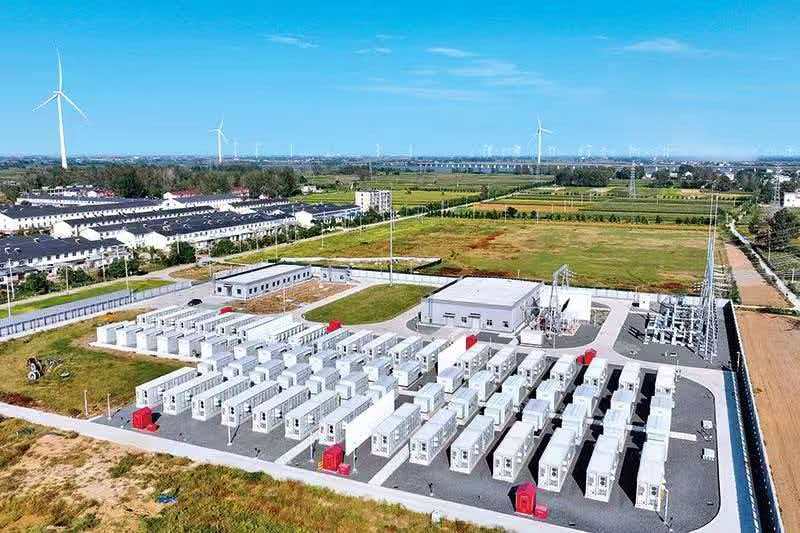

This shift can be summarized as:
As wind and solar assets take up a larger share of global power generation, deploying a utility-scale battery energy storage system shifts from a luxury to an absolute necessity. Modern electrical networks require massive grid energy storage infrastructure to provide critical ancillary services—such as frequency regulation, peak shaving, and voltage support—to mitigate the inherent intermittency of green energy and maintain grid stability.
The industry is moving from demand-driven growth to supply-constrained expansion.In this environment, companies that can secure stable supply chains will have a significant competitive advantage.
What This Means for BESS Manufacturers and EPC Contractors
As supply chain complexity increases, the role of manufacturers and system integrators is evolving.
Strategic Adjustments
- Expanding supplier networks
- Investing in local manufacturing capabilities
- Strengthening partnerships across regions
Companies are increasingly working with a global bess manufacturer network to mitigate supply risks.
At the same time, selecting the right energy storage system manufacturer is becoming a critical factor in ensuring project success.
For EPC contractors, this means that supplier evaluation must now include not only technical specifications, but also supply chain resilience.
The Next 1–2 Years: What Should the Industry Expect?
Looking ahead, several trends are likely to shape the near-term landscape:
1. Continued Dependence on China
Despite diversification efforts, China will remain a central player in the lithium battery supply chain.
2. Gradual Regionalization
New manufacturing facilities in the U.S. and Europe will begin to contribute, but not at sufficient scale to fully replace existing supply.
3. Increased Cost Pressure
Localization efforts may lead to higher system costs in the short term.
4. Greater Emphasis on Risk Management
Procurement strategies will increasingly prioritize supply security over lowest cost.
Conclusion: Supply Chain Is Becoming the Core Competitive Variable
The rapid expansion of the energy storage industry is undeniable. However, the ability to deliver projects on time and within budget increasingly depends on supply chain stability.
China’s dominance in the lithium battery supply chain remains a defining feature of the market, and while diversification efforts are underway, they have yet to fundamentally alter the landscape.
For developers, EPC contractors, and investors, the implication is clear:Supply chain strategy is now as important as technology selection.
In the coming years, companies that successfully navigate supply chain risks will be better positioned to capitalize on the continued growth of the global energy storage market.
Is Solar + Storage Now the Only Real Energy Solution for the Future?
Quantum Battery Technology Emerges, But Lithium Remains the Backbone of Energy Storage — What Changes Next?
Related Article


contact us
For more questions please


Office Address: 701, Building A, Yonghuayuan Business Building, Baotian 2nd Road, Chentian Community, Xixiang Street, Bao'an District, Shenzhen, Guangdong Province, China
Factory Address 1: Room 701, Building 2, Kegu Industrial Park, Zone B, Jian'an Road, No. 790, Chang'an Town, Dongguan City, Guangdong Province, China
Factory Address 2: Building 7, Phase II Standardized Factory, Innovation Industrial Park, Duji Economic Development Zone, Huaibei City, Anhui Province, China