


NEWS
ESS Manufacturer | Battery Technology | Global Energy Partner
In-depth Analysis:Why Europe’s Solar + BESS Integration Requires a Cultural and Regulatory Overhaul
Introduction: The "Two-Sided Paradox" of European Clean Energy in 2026
In 2026, the European clean energy market finds itself mired in a profound "two-sided paradox." Statistically, the industry appears to be at its peak; driven by rock-bottom supply chain costs and robust policy support, cumulative solar PV capacity in Europe has once again shattered historical records. Yet, beneath this wave of capital-fueled, blind optimism, the harsh realities facing ground-mounted assets are rapidly deteriorating. With grid infrastructure development lagging far behind the expansion of generation capacity, grid curtailment has become a persistent shadow over ground-mounted power plants. Simultaneously, the frequency and duration of negative pricing events during midday generation peaks across Europe have surged exponentially. Consequently, the industry has pinned its hopes on the "co-location" model—deeply integrating solar PV with battery energy storage systems (BESS) at a single grid connection point—viewing it as the ultimate "lifeline" to salvage project Internal Rates of Return (IRR) and alleviate grid strain.
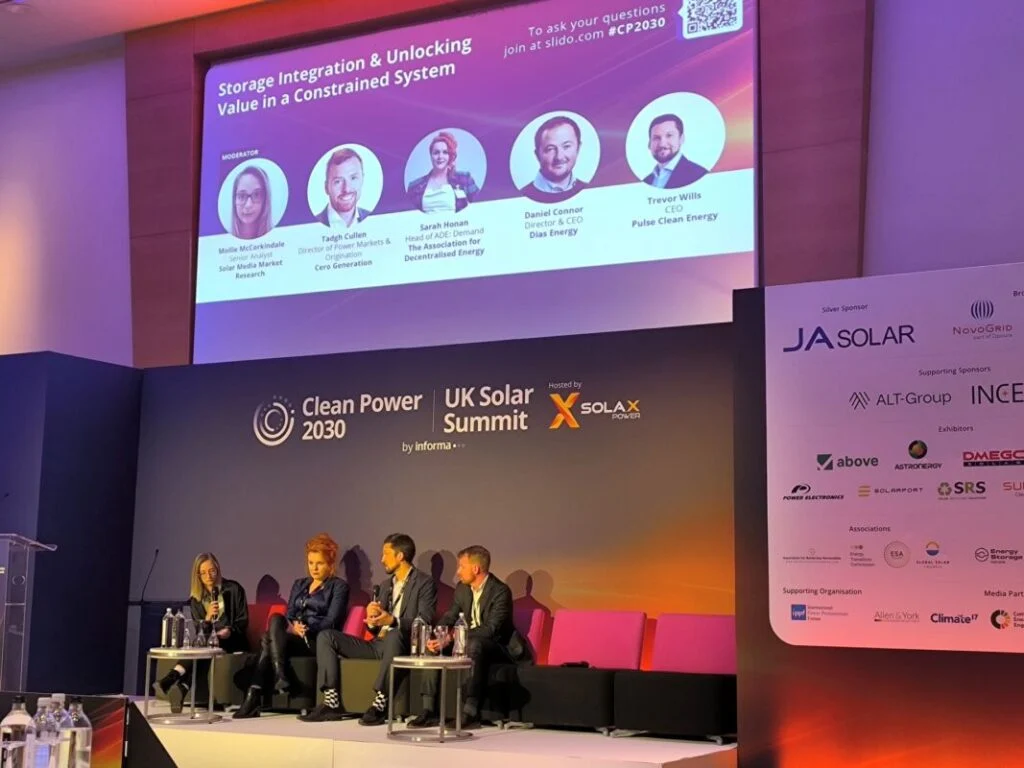
However, an insurmountable institutional chasm separates this ideal from reality. At the recently concluded "Clean Energy 2030 Summit," leading European developers and Independent Power Producers (IPPs) collectively poured cold water on the hype, unanimously noting that realizing the full potential of solar-plus-storage co-location requires immense effort and a long road ahead. This industry anxiety is well-founded; due to a lack of effective solar time-shifting and coordinated dispatch capabilities, the UK and parts of continental Europe have been forced to curtail generation—often exceeding 10% to 15%—during periods of extreme midday oversupply, resulting in hundreds of millions of euros in avoidable economic losses. Against this backdrop, Molly McCorkindale, a senior analyst at the market research firm Solar Media, posed a question to the assembled experts that cut straight to the heart of the issue: what "low-hanging fruit" could truly unlock the value of constrained power grids without requiring massive infrastructure investment? The complexity of the answer exposes the systemic deadlock currently facing the European electricity market.
The "Identity Crisis" in Grid Modeling: Why Are BESS Often Treated as Rigid "Generators"?
Legacy Grid Codes and Outdated Assumptions
In the current approval process for asset grid connection, the primary technical bottleneck hindering the deployment of co-located solar and storage projects stems from a deep-seated "identity crisis" within grid management. Transmission Operators (TOs) and Distribution Network Operators (DNOs) still rely on grid codes and mathematical models for battery asset simulation that are woefully outdated when managing interconnection queues. At their core, these traditional models mechanically apply the unidirectional logic of conventional fossil-fuel power plants to assets within the new power system. This outdated assumption forces grid entities to adopt a rigid, simplified, and one-dimensional perspective when modeling new assets, failing completely to capture the dynamic physical characteristics that emerge when intermittent renewable energy is combined with flexible, adjustable assets.
Trevor Wills’ Core Argument: Overlooking the "Reverse Absorption" Capability of Energy Storage
This institutional lag in modeling has sparked strong objections from developers. Trevor Wills, CEO of Pulse Clean Energy, voiced a key grievance at the summit: current grid models often rigidly classify Battery Energy Storage Systems (BESS) simply as "generators." This logic becomes absurd when faced with the supply glut caused by a surge in midday solar generation. When the system experiences extreme oversupply—straining DNO connection network capacity—simulation software automatically triggers an overload alert, assuming that connecting another asset (like a BESS) would inevitably "cause serious problems" and heighten the risk of grid collapse.
However, based on industry fundamentals and the physics of power systems, this reasoning completely inverts cause and effect. A battery energy storage system is never merely a unidirectional generator; rather, it is a highly flexible, dynamic, and bidirectional asset. Trevor Wills emphasizes that during extreme events—such as system overloads where solar generation must be curtailed due to a lack of absorption capacity—the operational response of a Battery Energy Storage System (BESS) is precisely the opposite: instead of injecting power into the grid, it rapidly switches to "load" (or absorber) mode to efficiently absorb the excess supply that the grid cannot handle. In essence, the physical nature of battery storage is to actively mitigate localized grid overloads caused by surges in solar generation, rather than exacerbating the risk of system collapse.
From a deeper technical perspective, this modeling limitation stems largely from constraints imposed by "single-point injection limit" regulations. When assessing grid capacity, grid operators often calculate only the aggregate peak output—assuming both solar and storage discharge at full power simultaneously under extreme conditions—while completely disregarding the physical reality that an Energy Management System (EMS) can enable intelligent, complementary, and even reverse-flow operations. This fundamental modeling flaw—a form of "double counting"—effectively stifles vast amounts of available capacity, ruthlessly barring numerous co-located projects with flexible absorption capabilities from grid interconnection.
The "Honey and Arsenic" of the UK’s CfD Policy: A Lack of Commercial Drive for Peak Shaving and Valley Filling
"Pseudo-Integrated" Operations Under the CfD Mechanism
Beyond the technical constraints of grid modeling, the lag in macro-level subsidy policies acts as another major bottleneck for the UK market. Under the current policy framework, the UK’s co-location policy for Contracts for Difference (CfD) presents a stark dichotomy. While the CfD acts as "honey"—offering long-term electricity price guarantees that successfully attract low-cost capital to ground-mounted solar projects—it also acts as "arsenic" regarding coordinated operations, as the associated storage incentives create a deeply fragmented commercial structure. An analysis of the financial logic reveals that because CfDs lock in guaranteed long-term returns for solar assets, Independent Power Producers (IPPs) can secure subsidies simply by feeding power into the grid during the day. This mechanism removes the market-driven incentive for developers to engage batteries in complex electricity spot market arbitrage. Without policy mandates or incentives driving assets toward genuine market-based operations, the vast majority of so-called co-location projects in the UK remain integrated in name only—a form of "pseudo-integration" designed merely to satisfy regulatory requirements.
A Missed Opportunity: The "Golden Bridge" of Solar Time-Shifting
This financial misalignment has caused the industry to miss out on the most economically valuable commercial closed-loop model. From a technical standpoint, the core financial model for solar-plus-storage co-location should be "solar time-shifting": batteries store excess energy at midday—when solar output peaks and market prices are low or even negative—and discharge it at night during peak system demand and high-price periods, thereby capturing substantial load-shifting revenue. However, the current approach to project structuring in the UK falls far short of this ultimate goal. As Tadgh Cullen, Director of Power Markets and Origination at Cero Generation, revealed at the summit, developers often adopt a compromise strategy when submitting grid modeling data for approval: they structure projects as single assets where solar PV connects to the grid without constraints. This pragmatic concession—driven by the need to satisfy bank financing assessments and navigate a bureaucratic permitting landscape—effectively relegates battery assets to a negligible "supporting role" during actual operations. Consequently, the UK's seemingly vast portfolio of co-located projects is largely superficial; it fails to realize the policy objective of using revenue contracts to shift solar generation to the time periods where it is truly needed.
A Fragmented European Energy Storage Landscape: Multidimensional Dynamics Across the UK, Spain, and Italy
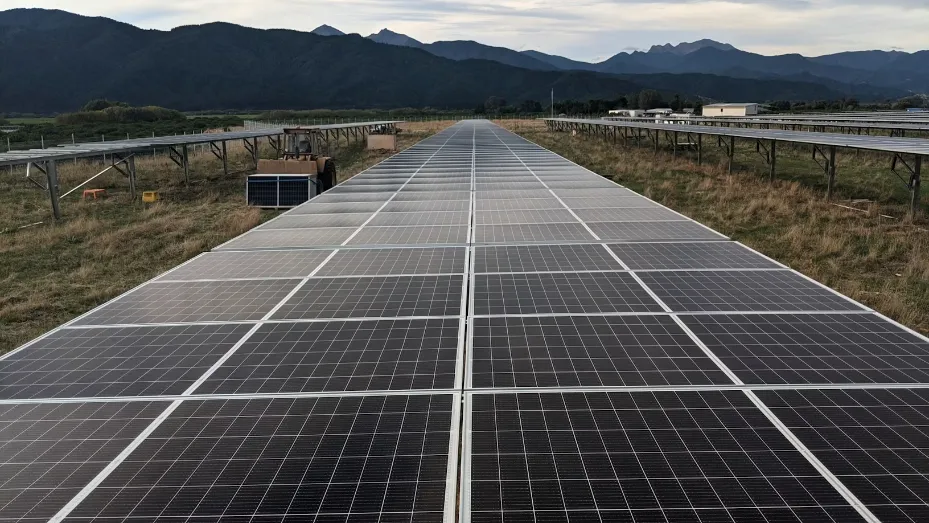
When examining the path toward achieving truly co-located solar and storage in Europe, the current policy landscape reveals a highly instructive state of fragmentation. While the UK, Spain, and Italy are all committed to decarbonization and grid modernization, the three nations have adopted vastly different approaches regarding the financial models and regulatory mechanisms for co-located solar and storage projects. These divergences not only dictate the pace of project deployment but also directly influence the assets' appeal within capital markets.
Spain’s "Fast Track": Market-Driven Exploration of Revenue Contracts and Commercial PPAs
In contrast to the UK, where the market remains tethered to the inertia of Contracts for Difference (CfD) subsidies, the Spanish market has demonstrated greater commercial flexibility, emerging as a "fast track" for solar-plus-storage co-location in Europe. Spanish developers have demonstrated the ability to establish a commercially viable closed-loop model without heavy government intervention, utilizing a series of innovative co-location revenue contracts.
In Spain, market forces are reshaping project structures. Developers are moving away from reliance on single, guaranteed feed-in tariffs; instead, they are signing innovative long-term Power Purchase Agreements (PPAs) and revenue-sharing contracts that tightly link battery dispatch strategies to the peak-shifting needs of solar generation. The core logic of this model is to enable battery assets to generate revenue through market-based "buy-low, sell-high" operations, thereby effectively shifting solar generation profiles to align with periods of peak grid demand. This forward-looking financial design significantly improves the predictability of project cash flows and enhances the "bankability" of these assets in the eyes of financial institutions. Through market mechanisms, Spain is demonstrating that—provided incentive policies are properly aligned—co-located solar and storage projects can achieve financial self-sufficiency without relying on subsidies.
Italy’s "Dual-Track Silos": The Divergent Paths of Fer X and MACSE
Unlike the market-oriented approach seen in Spain, the current state of the Italian market resembles a "dual-track silo" scenario driven by generous policies. Although Italy’s regulatory environment is highly favorable, the policy framework—characterized by the coexistence of the Fer X and MACSE mechanisms—has resulted in severe technical fragmentation. On one hand, the Italian government’s "Fer X" policy has—through robust subsidy mechanisms—triggered an explosion in ground-mounted solar PV installations. On the other, the latest MACSE (Storage Capacity Compensation Mechanism) offers standalone large-scale storage projects a near-perfect long-term capacity price guarantee, ensuring financial stability for these assets. However, this "dual-engine" strategy overlooks the crucial aspect of cross-technology integration. The two policy frameworks operate like parallel lines that never intersect, separately attracting solar PV developers and energy storage operators.
The drawbacks are evident: the mechanism completely disregards the necessity of cross-technology integration. Solar PV and energy storage projects often find themselves competing for—rather than synergizing through—scarce land resources and grid connection points. Italian developers have found that, in the absence of coordinated incentives for co-location, physically combining solar PV and storage can actually increase the complexity of compliance regarding subsidy applications and grid connection approvals, leading to the inefficient utilization of these resources in the market. This situation serves as a stark reminder to European nations: a mere influx of capital cannot resolve systemic challenges; without integrated policies that span technologies, co-located solar and storage projects will fail to achieve the "1+1 > 2" systemic synergy they are capable of delivering.
|
Country/Region |
Core Driver Policies/Mechanisms |
Co-location Commercial Maturity |
Core Characteristics of Grid & Financial Performance (2026 Latest Status) |
|
United Kingdom (UK) |
CfD (Contract for Difference) & Inertia Services |
Low (Virtual / Formal Co-location) |
Technically tied together, but severely decoupled in financial and grid dispatching operations; BESS is rigidly modeled as a pure generator. |
|
Spain |
Market-driven PPAs & Innovative Revenue Contracts |
High (Rapid Progress) |
Shifting away from subsidy reliance; successfully utilizing batteries to shift daytime solar generation to peak demand hours, backed by mature financial models. |
|
Italy |
Fer X (Solar) & MACSE (Utility-Scale BESS) Separation |
Medium (Fragmented Mechanisms) |
Single-asset deployment is expanding at an ultra-fast pace, yet the lack of an integrated policy causes solar and storage to compete rather than collaborate. |
From Rules to Culture: NESO and Ofgem’s New "Outcome-Oriented" Regime
Shedding Dogma: Sarah Honan (ADE) on Cultural Transformation
From a macro perspective, the bottlenecks facing co-located solar and storage projects in Europe appear—on the surface—to be merely technical conflicts between grid connection rules and outdated grid codes. At a deeper level, however, they expose entrenched, systemic cultural issues. As Sarah Honan, Head of Demand at the Association for Decentralised Energy (ADE), pointedly remarked at the summit: this is not merely a technical issue of tweaking grid codes, but an urgent need for a cultural transformation within the energy system. If the mindsets of regulators and operators remain stuck in the centralized dogmas of the fossil-fuel era, superficial rule adjustments will fail to fully unlock the true potential of the synergy between renewable energy and flexible storage.
The Emergence and Autonomy of the UK’s NESO
Encouragingly, the UK market is witnessing the dawn of a breakthrough amidst this systemic upheaval. With the establishment of the new National Energy System Operator (NESO) regime, the UK grid is undergoing unprecedented institutional change. Throughout this deep restructuring, the UK’s top regulator, Ofgem, has demonstrated remarkable, forward-looking regulatory flexibility. It is gradually stripping away the shackles of NESO’s traditional, overly complex financial incentive structures, replacing them with greater discretionary power focused on outcomes rather than the strict enforcement of idealized standards. Industry experts have described this new regime as "extremely liberal"; it moves away from rigidly demanding that assets adhere to idealized, dogmatic states, instead empowering the system operator to coordinate operations based on actual market and physical peak-shaving outcomes.
If NESO can effectively leverage this historic, highly flexible mandate to shatter the hidebound dogmatism that has long characterized traditional Distribution Network Operators (DNOs) and Transmission System Operators (TSOs), the deadlock surrounding co-location in Europe could finally be fundamentally resolved. By introducing a dynamic assessment mechanism under the NESO grid capacity regulation, future co-located solar and storage projects will be permitted to submit highly flexible, dynamic grid connection requests based on real-time system supply-demand dynamics and current grid constraints. This approach not only liberates battery storage from the traditional misconception that it is merely a "generator," but also enables a profound integration of technology and regulatory frameworks, reshaping the modern paradigm for renewable energy grid integration across Europe.
Inside the Inverter Ban: Why the EU’s Cybersecurity Crackdown Risks 14% of Solar Demand and Disrupts BESS Integration
Australia’s 3.8 GWh Large-Scale Storage Push: Deconstructing the 4-Hour Standard, Grid-Forming Integration, and the Battle for Project Approvals
Related Article



contact us
For more questions please


Office Address: 701, Building A, Yonghuayuan Business Building, Baotian 2nd Road, Chentian Community, Xixiang Street, Bao'an District, Shenzhen, Guangdong Province, China
Factory Address 1: Room 701, Building 2, Kegu Industrial Park, Zone B, Jian'an Road, No. 790, Chang'an Town, Dongguan City, Guangdong Province, China
Factory Address 2: Building 7, Phase II Standardized Factory, Innovation Industrial Park, Duji Economic Development Zone, Huaibei City, Anhui Province, China