


NEWS
ESS Manufacturer | Battery Technology | Global Energy Partner
Which European Markets Lead Grid-Scale BESS & EPC Growth?
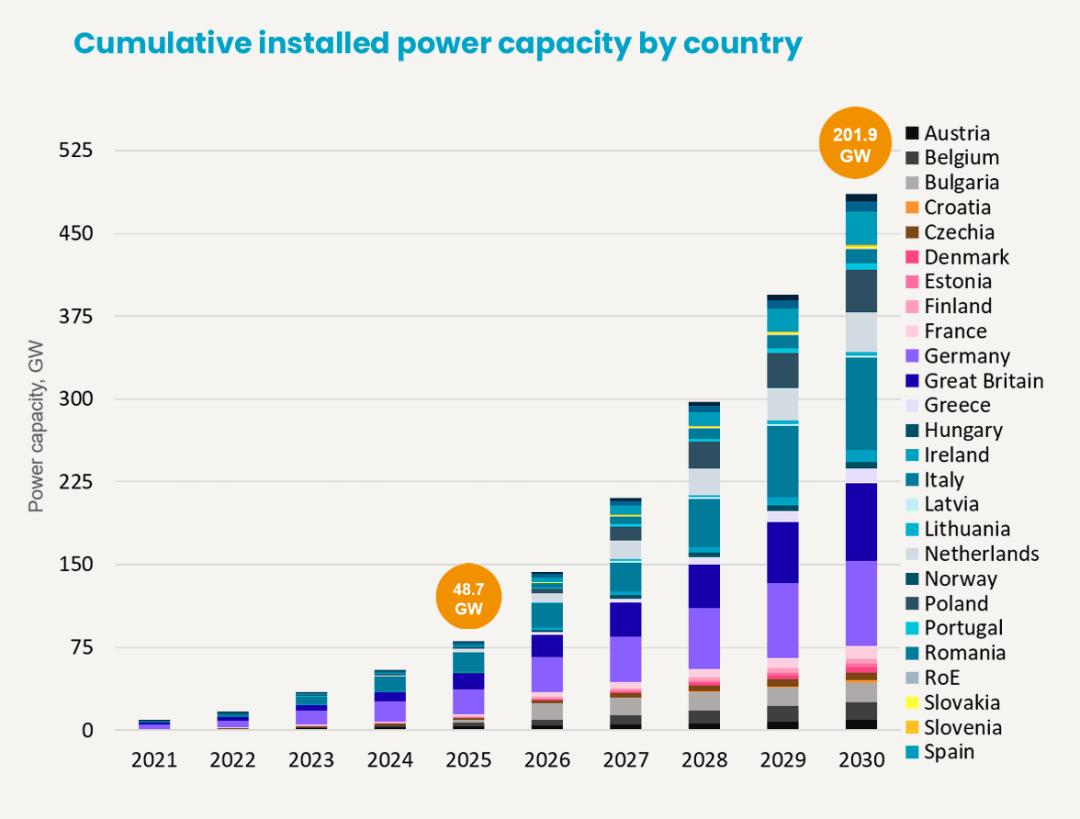
European Battery Energy Storage Market Outlook: High Solar Penetration, Policy Reforms, and the Shift to Grid-Scale Dynamics
The European energy storage sector is experiencing a monumental transformation. As variable renewable energy—particularly solar photovoltaics (PV)—continues to dominate the grid mix, the structural vulnerability of "high-solar, low-storage" infrastructure has become glaringly apparent.
Historically, massive residential solar installations across Europe operated under lucrative feed-in tariffs or net metering schemes. However, as grid congestion intensifies and negative electricity prices become a frequent midday reality, regulatory frameworks are pivoting sharply. The market is shifting from a pure solar play to a deeply integrated energy storage ecosystem. While certain territories are seeing unprecedented booms in residential and balcony-scale retrofits, others are transitioning toward massive front-of-the-meter (FTM), utility-scale Battery Energy Storage Systems (BESS).
An in-depth analysis of four bellwether European markets—the Netherlands, the United Kingdom, Belgium, and Germany—reveals distinct regulatory landscapes, localized demand drivers, and highly diversified commercial opportunities for international energy storage exporters and developers.
The Netherlands: Low Storage Attachment Meets Radical Retrofit Elasticity
The Netherlands represents Europe’s most classic example of an asymmetric renewable market: high solar penetration paired with a critically low energy storage ratio. Thanks to aggressive rooftop solar adoption over the past decade, the country boasts an exceptionally large installed residential PV base. However, because the grid historically absorbed excess generation under favorable terms, the accompanying storage market remained virtually dormant.
[MThis stark supply-demand mismatch has created a coiled spring. As regulatory pressures shift the financial incentive from grid-exporting to localized self-consumption, the Dutch residential retrofitting market is unleashing phenomenal elasticity.
Policy Evolution: The Unavoidable Retreat of Net Metering
For years, the prosperity of Dutch residential solar was sustained by its highly generous Net Metering Scheme (Salderingsregeling). This mechanism allowed households to offset their nighttime or winter grid electricity consumption directly against their daytime solar generation on a 1:1 basis, effectively treating the national grid as a free, infinite battery.
However, this model has pushed the Dutch low-voltage grid to its absolute limits, resulting in severe voltage fluctuations and widespread curtailments. The inevitable phase-out and structural retreat of net metering have completely rewritten the economic playbook for Dutch homeowners:
- The Demise of Profitable Exporting: As feed-in premiums vanish or face penalties—with several major utilities implementing direct fees on solar owners who export excess power during peak hours—selling solar electricity back to the grid has ceased to be financially viable.
- The ROI Equation Flips: To safeguard the return on investment (ROI) of their existing solar installations, millions of Dutch households are transitioning from passive grid exporters to active self-consumers. The only way to avoid export penalties and rising retail electricity rates is to capture midday generation locally via behind-the-meter (BTM) storage.
The Rise of Balcony Energy Storage
As policy directions crystallized, balcony energy storage systems emerged as an extraordinarily dynamic product category. Serving as the market's "light cavalry," these compact, plug-and-play lithium iron phosphate (LFP) systems are scaling rapidly due to their affordability, ease of installation, and minimal regulatory friction.
- Rapid Consumer Adoption: Driven by apartment tenants and households seeking localized energy autonomy without complex engineering overhauls, cumulative sales of balcony storage units in the Netherlands surged to approximately 42,000 units.
- Lowering Barriers to Entry: These micro-storage solutions bypass traditional installer bottlenecks, unlocking green energy transition pathways for demographic segments previously excluded from standard residential BESS setups.
Exponential Installation Metrics
The sheer velocity of the Dutch small-scale energy storage market reflects an extraordinary surge in demand. The installation volume for 0–15kW residential and micro-storage systems has entered a phase of explosive, vertical growth:
- Full-Year 2025: Installation volume rocketed by +296% YoY, signaling the initial wave of market awakening as utilities began testing export fees.
- Q1 2026: Momentum accelerated further, posting a +209% YoY expansion despite seasonal winter lows.
- April 2026: The market witnessed a staggering +648% YoY surge, driven by immediate consumer panic over finalized regulatory crackdowns on grid injection.
This unprecedented trajectory underscores that the Netherlands has officially entered a golden era of residential solar retrofitting. It has transformed almost overnight from a dormant territory into an indispensable strategic hub for global energy storage exporters.
United Kingdom: The Dual Engine of Regulatory Retrofits and Mature Capacity Markets
The United Kingdom presents a highly sophisticated, bifurcated energy storage market where both ends of the value chain are firing simultaneously. While the residential segment is being fiercely propelled by aggressive governmental mandates and multi-billion-pound decarbonization funding, the front-of-the-meter (FTM) utility-scale segment is anchored by one of the world's most mature merchant, ancillary, and capacity markets.
The Residential Frontier: Mandates and the £15 Billion "Warm Homes Plan"
On the behind-the-meter side, the UK government is utilizing both legislative sticks and financial carrots to rapidly scale residential solar-plus-storage integration.
- The 2026 New-Build Mandate: Statutory changes require all newly constructed residential buildings to feature integrated rooftop solar PV as a standard structural component. To maximize the grid-friendliness of these millions of new clean energy nodes, adjacent building regulations heavily incentivize or mandate matching energy storage systems.
- The Warm Homes Plan: This colossal £15 billion decarbonization initiative serves as a core pillar of the UK's net-zero housing strategy. The fund is specifically engineered to subsidize comprehensive clean energy retrofits, deploying generous light-income solar-plus-storage subsidies, zero-interest financing options, and localized community grid initiatives.
- A Massive Growth Runway: Institutional analysis indicates that these combined policy drivers are on track to catalyze new solar installations across roughly 3 million households, unlocking an estimated 24GWh of long-term residential storage capacity.
This institutional push is directly visible in the UK’s residential installation metrics. Small-scale storage installations expanded by +97% YoY throughout 2025, followed by solid gains of +71% YoY in Q1 2026, and a +95% YoY surge in April 2026.
The FTM Heavyweight: Utility-Scale BESS Maturation
Simultaneously, the UK maintains its status as one of Europe’s premier utility-scale battery storage arenas. Unlike continental markets that remain heavily reliant on localized subsidy schemes, the UK grid operates on highly advanced merchant trading and value-stacking frameworks.
- Advanced Revenue Stacking: Large-scale BESS assets in the UK generate complex, stacked revenue streams by seamlessly blending National Grid ESO ancillary services (such as Dynamic Containment and Dynamic Moderation) with active wholesale intra-day arbitrage and long-term Capacity Market contracts.
- A 10GW Milestone: Bolstered by deep institutional investment pipelines and an acute system need to mitigate massive offshore wind curtailments, third-party research conducted by firms like LCP Delta confirms robust growth in utility-scale deployments. The UK's online utility-scale BESS capacity is projected to reach approximately 10GW. This provides a resilient, highly liquid foundation that shields developers from the margin compression seen in less developed grids.
Belgium: Post-Deregulation Micro-Storage and Rapid Demand Release
Belgium occupies a unique position within the European landscape: it is the smallest of the primary focus markets by absolute volume, yet it represents the fastest-growing "new" market in terms of near-term velocity. The core narrative driving the Belgian market centers on the rapid liberalization of its micro-storage regulatory frameworks and the subsequent release of pent-up consumer demand.
The Balcony Storage Liberalization Wave
Historically, Belgium maintained highly conservative grid connection codes that strictly regulated behind-the-meter generation and micro-inverter injections. However, facing intensifying pressure to meet EU-wide decentralized energy targets, the regulatory environment broke open.
- The April 2025 Watershed: Belgium formally deregulated its balcony energy storage and plug-and-play micro-solar markets, streamlining the registration process and eliminating expensive utility-led safety certifications for sub-kW systems.
- Immediate Market Response: The consumer response was instantaneous. From a baseline of virtually zero, cumulative registered balcony storage installations shot past 6,000 units. Given that a significant volume of micro-installations in rural and semi-urban districts operate without formal immediate registration, the actual physical deployment figure is widely acknowledged by local distributors to be substantially higher.
High-Solar, Low-Storage Structural Transformation
Much like the Netherlands, Belgium is characterized as a "high-solar, low-storage starting point" market. Regions like Flanders had previously deployed massive volumes of residential rooftop solar under legacy net metering setups.
With those legacy policies unwinding and retail power prices remaining highly volatile across the nation's regional grid operators, the newly granted legal freedom to deploy micro-storage has unleashed an immediate wave of retrofitting. Homeowners are actively utilizing these newly legalized, lightweight systems to bypass traditional grid bottleneck fees and secure immediate, localized peak-shaving capabilities.
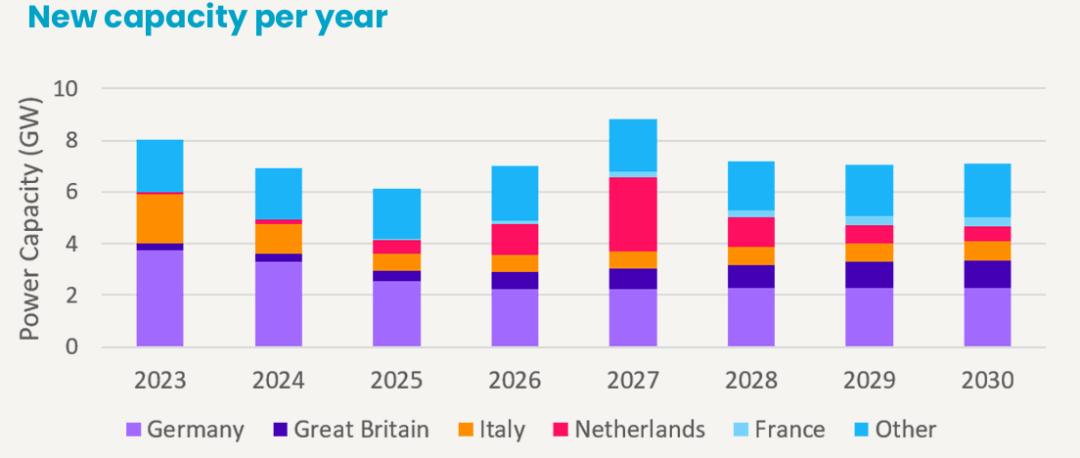
Germany: The Utility-Scale Acceleration and Structural Rebalancing of Europe’s Largest Market
As Europe's undisputed heavyweight energy storage arena—boasting an aggregate installed base well in excess of 10GW—Germany is undergoing a profound structural rebalancing. The core trend defining the German market involves a rapid acceleration of front-of-the-meter utility-scale assets, a cyclical cooling-off period for traditional residential storage, and the steady incubation of commercial and industrial (C&I) solutions.────────────┘
The Tipping Point: FTM Supercharges Past Residential
For years, Germany’s storage volume was overwhelmingly propelled by the domestic household segment, where over two million families paired premium high-voltage batteries with residential solar. However, market dynamics reached a fundamental tipping point.
During the first quarter, Germany’s newly installed utility-scale BESS capacity overshadowed residential additions by a clear margin. Data indicates that more than 2GWh of fresh battery capacity came online in Q1 alone, driven overwhelmingly by large-scale front-of-the-meter systems whose new capacity nearly quadrupled compared to the prior year. This structural inflection point marks Germany’s transition from a predominantly decentralized, fragmented storage network into a mature, centralized utility asset class.
Key Drivers Behind German FTM Dominance
The surge in large-scale German BESS deployment is anchored by major regulatory overhauls and fundamental shifts in power market economics:
- The 12GW Clean Capacity Procurement Framework: Following European Commission clearances, Germany initiated its historic power plant strategy (Kraftwerksstrategie), targeting the procurement of 12GW of new, climate-neutral capacity. Extensive modeling by LCP Delta highlights that long-duration battery storage (4-hour to 10-hour configurations) delivers equivalent security-of-supply capabilities far more cost-effectively than traditional gas-fired peaking plants, saving consumers up to €166 million annually in minimized subsidy burdens.
- The New Grid Maturity Framework: Implemented on April 1, following the removal of storage assets from the rigid Power Plant Grid Connection Ordinance (KraftNAV), Germany's transmission system operators (TSOs) introduced a structured grid-access priority queue. This framework is specifically engineered to filter out speculative projects and accelerate high-probability, utility-scale BESS installations directly into transmission nodes.
- Wholesale Volatility and Commercial Viability: While German ancillary services like FCR and aFRR face saturation, the widening price spread between solar-driven midday troughs and evening demand peaks has unlocked highly lucrative wholesale arbitrage models. Sophisticated project developers are capturing robust returns by deploying 4-hour systems, which achieve highly attractive unlevered IRRs (often tracking around 13.7%) that outperform shorter-duration 2-hour configurations.
Meanwhile, Germany's mid-sized Commercial & Industrial (C&I) sector grew by more than 40% over the same period, driven by corporate mandates to mitigate peak-shaving grid charges and guarantee uninterruptible power supply (UPS) for advanced manufacturing chains.
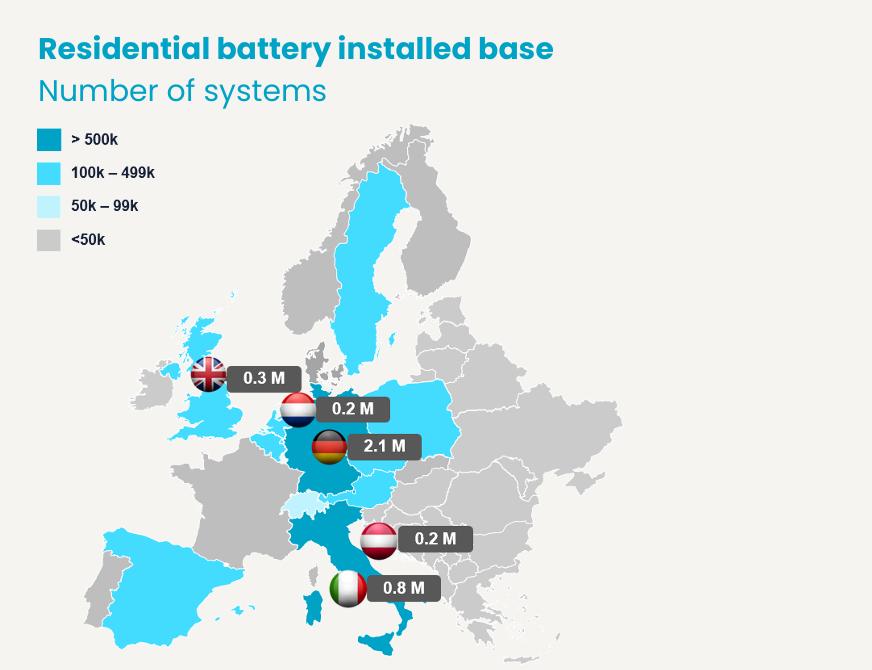
Comparative Strategic Matrix: Regional Opportunities and Core Metrics
To provide international developers, equipment manufacturers, and clean-tech investors with an immediate, scannable assessment of the European energy storage landscape, the following matrix contrasts the core positioning, regulatory levers, and operational parameters across these four critical nations:
|
Country |
Core Strategic Opportunity |
Regulatory/Policy Driver |
Key Market Metric |
Primary Product Archetype |
|
Netherlands |
High-elasticity retrofitting of massive existing residential solar infrastructure. |
Phase-out of Net Metering (Salderingsregeling); implementation of utility export fees. |
Installation volume surged +648% YoY in April; ~42k balcony units sold. |
Behind-the-Meter (BTM) Modular AC-coupled residential batteries & Balcony LFP units. |
|
United Kingdom |
Simultaneous deployment across new-build residential projects and large-scale merchant FTM grids. |
Mandated new-build solar; £15B Warm Homes Plan; mature ancillary stack. |
Target of 3 million households (24GWh); FTM fleet scaling toward 10GW. |
High-voltage residential hybrid storage & Containerized utility-scale BESS (2h to 4h). |
|
Belgium |
Tapping into newly deregulated consumer segments via lightweight, low-barrier storage. |
Formal deregulation of the balcony energy storage market. |
Cumulative balcony registrations quickly exceeded 6,000 units. |
Plug-and-play micro-inverter integrated balcony battery kits (sub-1.5kW). |
|
Germany |
Capitalizing on the transition toward centralized, long-duration utility infrastructure and C&I peak-shaving. |
12GW Clean Capacity Strategy; April 1 Grid Maturity Framework; AgNeS tariff reforms. |
>2GWh deployed in Q1 alone; 4-hour utility BESS delivering 13.7% unlevered IRR. |
Multi-megawatt containerized BESS (4h+ duration) & High-capacity C&I storage cabinets. |
Conclusion: Actionable Takeaways for Global Energy Storage Exporters
The European energy storage market has moved decisively past its early adoptive phase. For hardware manufacturers and project originators looking to maximize their deployment velocity, the implications of this data-driven landscape are clear:
- In the Netherlands and Belgium, the priority must center on supply-chain readiness for retrofits. Products must feature seamless, software-driven retrofitting compatibility capable of interfacing with a highly fragmented ecosystem of pre-existing, legacy third-party solar inverters. Balcony systems must minimize installation friction to capture the rapid volume expansion occurring outside traditional installer channels.
- In the United Kingdom and Germany, the commercial center of gravity has shifted to high-voltage optimization, long-duration safety, and merchant capability. Success in these arenas demands grid-forming inverter capabilities, highly competitive capex modeling for 4-hour containerized configurations, and software architectures optimized for complex, multi-market revenue stacking and algorithmic wholesale trading.
As Europe accelerates toward its collective target of expanding utility battery fleets fourfold into 2030, navigating these hyper-localized regulatory inflection points will distinguish the market leaders from the stranded assets.
Arizona’s 4GWh CO Bar Complex: A Blueprint for Financing Mega BESS Projects Under IRA
Rising costs fail to halt surging demand; LFP solidifies its position as the mainstream technology for power batteries.
Related Article



contact us
For more questions please


Office Address: 701, Building A, Yonghuayuan Business Building, Baotian 2nd Road, Chentian Community, Xixiang Street, Bao'an District, Shenzhen, Guangdong Province, China
Factory Address 1: Room 701, Building 2, Kegu Industrial Park, Zone B, Jian'an Road, No. 790, Chang'an Town, Dongguan City, Guangdong Province, China
Factory Address 2: Building 7, Phase II Standardized Factory, Innovation Industrial Park, Duji Economic Development Zone, Huaibei City, Anhui Province, China