


NEWS
ESS Manufacturer | Battery Technology | Global Energy Partner
Portugal's BESS Tender Closes 22 Dec: What Grid-Forming Rules and the New Capacity Tiers Mean for Your Bid
On 23 October 2026, Portugal's technical connection rules for storage facilities (Portaria n.º 464-A/2026/1) entered into force. The rules split storage installations into four tiers, A to D, with larger stations required to operate in grid-forming mode and provide synthetic inertia. In the same week, Portugal opened two rounds of connection-capacity tenders totalling up to 1,050 MVA, with electronic auction applications due by 22 December 2026.
Two boundaries should be held from the outset. These are Portuguese national rules and a national tender; at EU level, the revised Network Code on Requirements for Grid Connection Applicable to Generators (NC RfG 2.0) is still a draft and has not been adopted. Winning an auction reserves a connection-capacity title; it does not mean the project has been approved, secured subsidy, or represents deliverable capacity. This article sets out the tier obligations and tender terms, explains the prior permit procedure that follows a capacity title, and places the Portuguese rules within the European grid-forming trend.
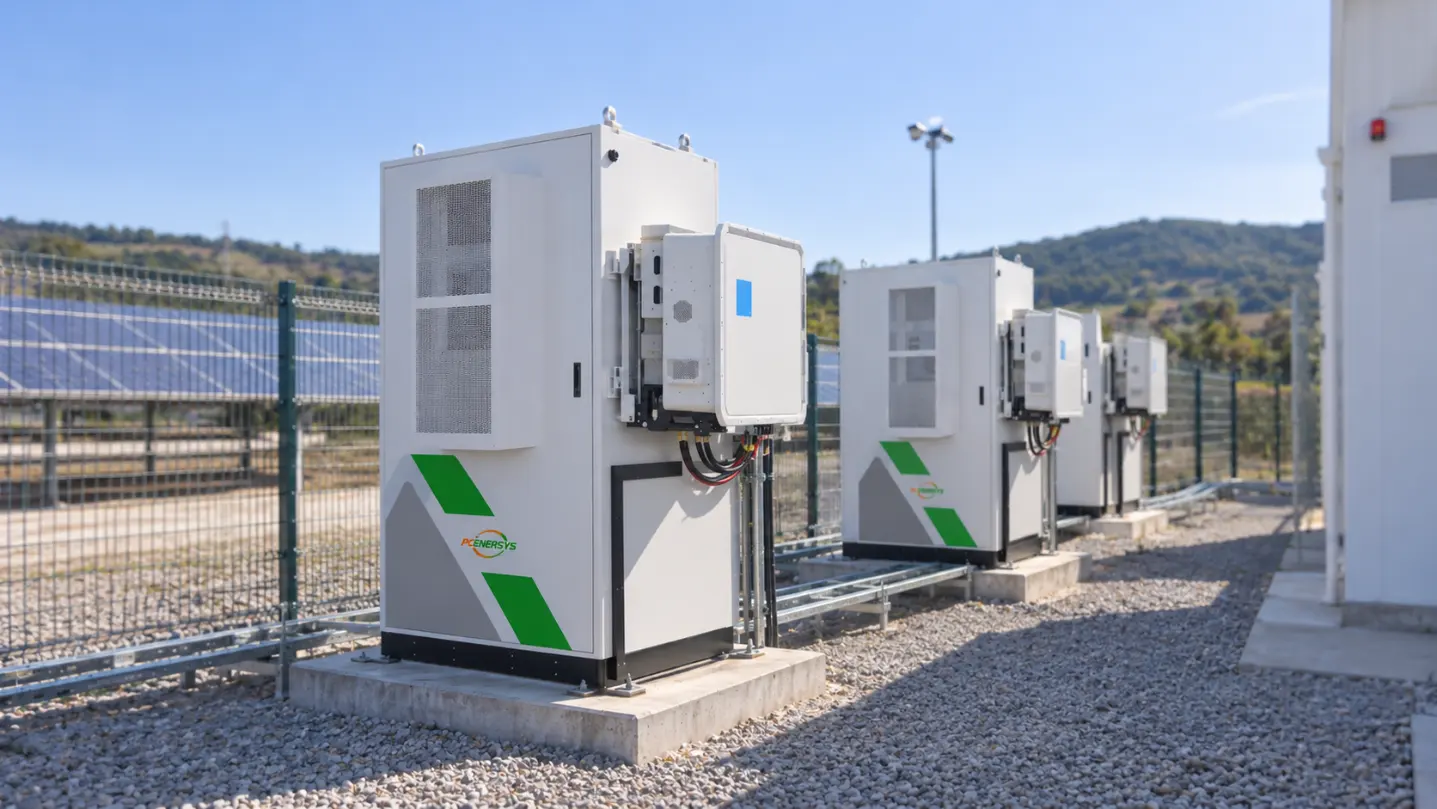 1. Portugal's Four-Tier Storage Grid Code
Portaria 464-A/2026/1 applies to new connection applications submitted after the rules entered into force. Existing installations fall under the new requirements only in statutory cases such as major retrofits or equipment replacement. Obligations rise with the tier:
|
Tier |
Capacity |
Frequency response and data |
Ancillary services |
Grid-forming obligation |
|
A |
0.8 kW – below 1 MW |
Exempt |
Exempt |
None |
|
B |
1 – 10 MW |
≥500 kW: automatic discharge below 49.2 Hz and automatic disconnection beyond limits; ≥1 MW: real-time data upload, accepts remote dispatch |
Technically capable of FCR, aFRR, mFRR and voltage/frequency regulation |
No mandatory grid-forming requirement |
|
C |
10 – 45 MW |
Same data and frequency requirements as B |
Same as B |
Specific grid-forming technical provisions apply |
|
D |
≥45 MW, or connection voltage ≥110 kV |
Same tier requirements |
Same as B and C |
Mandatory grid-forming operation plus synthetic inertia |
Two further thresholds are worth noting. Facilities with a distribution outlet of at least 250 kVA must carry a real-time data link and allow remote control by the network operator. Storage connected to the transmission network must meet the grid-forming requirements aligned with the rated-capacity basis.
Grid-forming capability means the inverter no longer simply follows the grid voltage; it can act as a voltage source in the manner of a conventional synchronous unit, supporting voltage and frequency during disturbances. Synthetic inertia limits frequency deviation and maintains system stability. For project developers, the tier should be fixed at the early design stage, because it directly determines which grid-support capabilities the equipment must provide.
The boundary between Tier C and Tier D should be read carefully. Tier C applies specific grid-forming technical provisions, and its obligations are defined against those provisions rather than a blanket grid-forming mandate; full grid-forming operation and synthetic inertia become mandatory only at Tier D. A supplier should confirm the project's tier before specifying the inverter and controller architecture, because the two call on different control capabilities.
2. The 1,050 MVA Tender: Stand-Alone vs Co-Located Storage
Both tenders are managed by DGEG, the Portuguese Directorate-General for Energy and Geology, and reserve injection and charging capacity on the public electricity service network (RESP) through electronic auction. This is the first such connection-capacity tender in Portugal since 2021. The procedure was announced in June 2026, originally slated to open on 14 September, and was postponed after a public consultation; Orders 12924-B/2026 and 12924-C/2026 were published in the Official Journal on 22 October to open the rounds.
|
Term |
Stand-alone storage (750 MVA) |
Co-located storage (300 MVA) |
|
Capacity reserved |
Up to 750 MVA across different connection points |
Up to 300 MVA paired with a renewable plant |
|
Minimum bid |
50 MVA per application, no upper limit |
50 MVA per application, no upper limit |
|
Power ratio |
Installed power ≥100% of awarded injection/charging capacity |
Storage power ≥20% of awarded injection capacity |
|
Energy duration |
At least 4 hours at maximum injection power |
At least 4 hours at maximum injection power |
|
Auction mechanism |
Eligibility → bid → capacity allocation; ascending-clock auction, capacity bid first, then preferred connection point; specific sites may be auctioned separately |
Same electronic auction mechanism; agrovoltaic projects receive specific consideration |
|
Application limit |
May enter both procedures, but one application per procedure |
Same |
|
Local share |
30% of stand-alone auction revenue to the host municipality; owner pays an additional annual compensation |
70% of renewable-plus-co-located auction revenue to the host municipality; owner pays an additional annual compensation |
Capacity is auctioned by connection point, not by project. A stand-alone project's installed power must be at least equal to its awarded injection and charging capacity, while the co-located power threshold is set at 20% of injection capacity; both categories require at least four hours of storage. Participants may enter both procedures, but each procedure accepts only one application per bidder. In an ascending-clock auction, bidders first compete on capacity; the clearing price moves upward in successive clock rounds until capacity demand matches the available reservation. The preferred connection point is then selected, and locations with particular constraints may be handled through a separate auction round.
It is worth repeating that auction success secures a capacity-reservation title, answering only the question of whether the project may connect at that point. Whether the project is ultimately built and commissioned still depends on later permits, construction approvals and equipment delivery.
3. Why Portugal Raised the Storage Bar Now
The rules respond to changes in the power-system structure. As the share of inverter-based renewable generation rises, the inertia and frequency support traditionally provided by synchronous units become relatively scarcer, increasing pressure on frequency and voltage stability. The wide-area blackout across the Iberian Peninsula in spring 2025 also intensified the reliability discussion.
Against that backdrop, storage moves beyond simple charge-and-discharge to actively support the grid: participating in frequency response, providing reserves, supporting voltage, and — at the large-station level — carrying grid-forming and inertia functions. The tiered rules match obligations to system role: smaller installations carry the most basic duties, while larger stations take on functions closer to those of a conventional power plant. Portugal's national storage expansion targets follow the official planning documents; figures differing between external sources are not cited as settled numbers in this article.
4. National Rules and the EU RfG 2.0 Context
The Portuguese rules should be positioned within the European legislative timetable. At EU level, ENTSO-E published its Phase II technical report on grid-forming requirements in November 2025, but that report is non-binding technical guidance; the revised NC RfG 2.0 remains a draft and has not been adopted, so no EU-level mandatory grid-forming requirement is currently in force.
The practical path is that member states first set their own national thresholds and later align with the EU code once it is adopted. Portugal can therefore be read as an early test sample of the European grid-forming shift, but its rules do not represent a current EU mandatory standard. For developers and suppliers outside Portugal, the safer reading is that grid-forming and ancillary-service capabilities are becoming the technical direction for European BESS; products should verify these capabilities in advance, without treating one country's threshold as a continent-wide requirement.
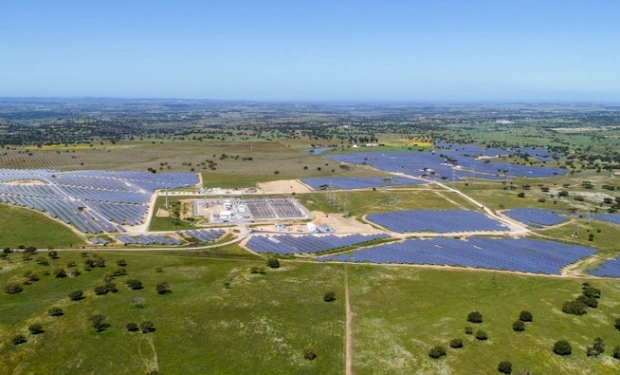
5. What the Rules and Tender Mean for Developers and Suppliers
Taken together, the rules and tender give projects several checks to run during bidding and early design:
- Grid-forming and inertia evidence: Tier D projects must provide technical proof of grid-forming operation and synthetic inertia; Tier C projects prepare against the specific provisions;
- Frequency response metrics: the 49.2 Hz automatic discharge and disconnection behaviour, plus FCR/aFRR/mFRR participation capability;
- Data and remote dispatch: real-time data upload links and the ability to accept operator remote commands;
- Energy and power configuration: the power ratio and four-hour energy requirement for the stand-alone or co-located category;
- Local arrangements: assess municipal revenue sharing and annual compensation for project economics under the relevant auction category.
For suppliers, these checks map to hardware and software: inverter capability to operate as a voltage source, controller support for the listed ancillary services, real-time communication interfaces, and data upload matching the operator's link requirements. Before pricing the bid, projects should also confirm how the power ratio and four-hour duration are calculated for their relevant category, since stand-alone and co-located use different ratios.
A capacity title is followed by a prior control procedure. Order 12991-A/2026, published on 23 October and entering into force on 24 October, sets out the prior licenses required to develop and operate storage: a production license plus an operating license, or prior registration by capacity plus an operating certificate. Its articles cover stand-alone and co-location application documents, registration documents and the procedure itself, and repeal the former Order 1859/2025. Under the transition rules, pending procedures at the time of entry into force follow the rules in force when the application was submitted; for solar-to-stand-alone storage conversions, DGEG notifies the applicant within 30 days whether to adapt to the new regime or withdraw.
A common misreading deserves correction: "winning capacity equals project delivery." In practice, after capacity reservation the project still has to complete prior permits, construction approvals and equipment delivery; none of these is completed without a commissioned project. The EU storage permitting rules under the Grids Package track the separate administrative route at EU level, while the Portuguese prior-control procedure governs the national stage. Compliance material prepared early should stay consistent with later obligations such as the battery passport, rather than being re-entered from scratch.
6. PCENERSYS' Position
PCENERSYS supports projects preparing under the rules currently in force and the site conditions actually present; the company does not describe trends that have not yet landed in EU legislation as adopted requirements. Its modular storage systems can be configured around project capacity and ancillary-service needs, and the 6MWh indoor stackable BESS is built for rapid deployment once a site is confirmed. To discuss early-stage project assessment or system fit, please contact the PCENERSYS team.
EU Battery Storage Permitting: 3 Months Co-Located, 6 Months Stand-Alone — Can the Grids Package Deal Finally Cut Through the Red Tape?
Related Article

contact us
For more questions please


Office Address: 701, Building A, Yonghuayuan Business Building, Baotian 2nd Road, Chentian Community, Xixiang Street, Bao'an District, Shenzhen, Guangdong Province, China
Factory Address 1: Room 701, Building 2, Kegu Industrial Park, Zone B, Jian'an Road, No. 790, Chang'an Town, Dongguan City, Guangdong Province, China
Factory Address 2: Building 7, Phase II Standardized Factory, Innovation Industrial Park, Duji Economic Development Zone, Huaibei City, Anhui Province, China