


NEWS
ESS Manufacturer | Battery Technology | Global Energy Partner
Saudi Arabia Places Major Bet on 1.07 GWh Solar-plus-Storage Deal to Resolve Syria's Grid Crisis
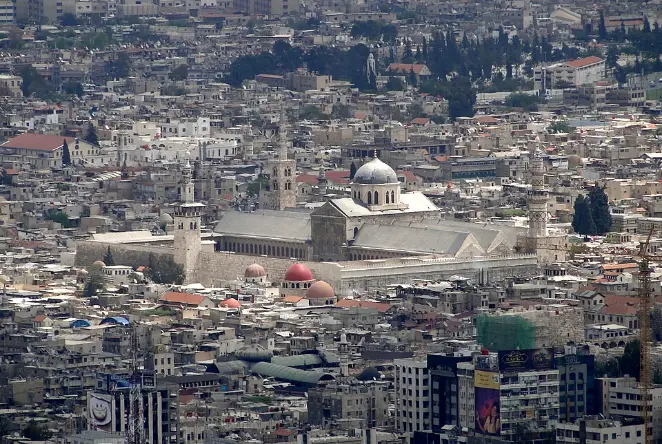
760 MW PV Paired with 1,077 MWh Storage: A Major Breakthrough in Rebuilding Syria’s Power Infrastructure
At a critical juncture marked by the acceleration of post-war infrastructure reconstruction and energy transition in the Middle East, the Syrian Electricity Company (SEC) and the leading Saudi contractor Al-Harfi Construction have officially signed three core development agreements in Damascus. This marks the transition of Syria’s largest-to-date integrated "PV + grid-scale storage" demonstration project from the preliminary intent stage to substantive commercial implementation.
1.Agreement Details and Geographical Layout: Targeting the Capital Region's Load Center
According to the Syrian Arab News Agency (SANA), the signing ceremony took place at Al-Harfi’s headquarters in Damascus. The project integrates a 760 MW utility-scale solar photovoltaic (PV) array and is equipped with a battery energy storage system (BESS) boasting a total capacity of 1,077 MWh.
Geographically, all three sub-projects are strategically located at the Widyan ar-Rabi' hub in the rural Damascus area. As a key load center for industrial and residential electricity in the capital region, this area has long grappled with severe power shortages and frequent outages. Deploying large-capacity BESS here allows for the alleviation of main grid overload close to the point of demand, providing critical peak shifting and frequency regulation capabilities.
2. Institutional Reform and Project Evolution: From Strategic MoU to Execution-Level Contract
The successful signing of the project demonstrates the strategic continuity maintained by Syrian energy and power authorities amidst institutional restructuring and market-oriented reforms. In February 2026, the regulatory body—formerly known as the General Establishment for Electricity Transmission and Distribution (PETDE)—signed an initial Memorandum of Understanding (MoU) with Al-Harfi, outlining infrastructure plans for 210 MW of PV capacity and 827 MWh of energy storage.
Following the implementation of Syria's power sector reform, the restructured, unified, and state-led SEC fully assumed responsibility for regulatory functions and asset operations. In August, the SEC expanded the project scale to 760 MW / 1,077 MWh, marking a significant transition from a preliminary framework of intent to legally binding commercial Power Purchase Agreements (PPAs).
Key Commercial Parameters & Stakeholder Ecosystem
|
Commercial & Technical Parameter |
Value & Operational Detail |
|
Offtake Structure / Agreement |
Power Purchase Agreements (PPAs) with a term of 20 to 25 Years under a BOO (Build-Own-Operate) framework. |
|
Levelized Offtake Tariff |
Highly competitive tariffs starting at $0.03 / kWh, setting a new benchmark for reconstruction energy pricing in Levant regions. |
|
Government Oversight |
Supervised directly by the Saudi Ministry of Energy to support bilateral infrastructure recovery. |
|
Technical & Engineering Partner |
Saudi Electricity Project Development Co. (PDC) providing specialized engineering management, EPC oversight, and advisory services. |
|
Substation & Grid Integration Partner |
Siemens Energy delivering high-voltage primary substations, grid control architecture, and technical integration for BESS. |
Breaking the Mold and Rebuilding: The Deep Value of "Solar-Storage Synergy" in a Fragile Grid Environment
In the Syrian electricity market—characterized by aging grid infrastructure, weak frequency control capabilities, and a lack of traditional backup power sources—simple grid-tied solar installations can easily destabilize the grid. The strategic configuration of a 760 MW solar array paired with a 1,077 MWh BESS (Battery Energy Storage System) has restructured the stability and flexibility of regional power supply.
1. Technical Rationale for the "1.4-Hour" Storage Ratio: Smoothing Fluctuations and Peak Shifting
The project features a system-level discharge duration of approximately 1.41 hours (a discharge rate of roughly 0.71C). This "short-duration, high-power" storage configuration directly addresses the local grid's urgent needs: Peak Shifting—The greater Damascus area faces a massive power supply deficit. The storage system absorbs excess energy during peak solar generation hours (daytime) and rapidly discharges it during peak consumption periods (evening), effectively bridging the evening power gap.
Solar Ramp Rate Smoothing—In arid regions, sudden sandstorms or cloud cover can cause solar power output to plummet drastically within moments. With millisecond-level response speeds, the BESS injects compensatory power in real-time to smooth out ramp rates, preventing frequent grid protection trips.
2. Adaptation to Extreme Environments: Withstanding Harsh Heat and Aridity
The extreme desert and semi-arid climate of rural Damascus imposes rigorous durability requirements on the BESS hardware system:
Liquid Cooling System—Compared to traditional air cooling, liquid cooling technology ensures more uniform temperature control across LFP (Lithium Iron Phosphate) cells within the battery enclosure. This prevents forced power derating due to overheating in ambient temperatures exceeding 40°C and significantly slows the rate of battery degradation. High-Protection & Anti-Corrosion Enclosures: The battery compartment meets an IP65 protection rating, preventing fine dust and sand particles from infiltrating high-voltage electrical components. Additionally, it features a C5-rated anti-corrosion coating to withstand abrasive wind and sand, as well as the physical stress caused by extreme diurnal temperature fluctuations.
3.Emergency Power Support: Mitigating the Risk of Cascading Regional Power Outages
Given the frequent, widespread power outages in Syria and the main grid's lack of rotational inertia, the BESS system serves as a critical safeguard for grid stability:
Primary Frequency Regulation (PFR): When a major load trip on the external grid causes significant frequency fluctuations, the Power Conversion System (PCS) instantly responds to droop control commands by injecting active power to support frequency and voltage recovery.
Emergency Power Backup: In the event of a local grid failure, distributed and grid-scale BESS units can rapidly switch to an autonomous microgrid mode. This ensures an uninterrupted power supply to critical infrastructure and industrial parks in the Widyan ar-Rabi' area of rural Damascus, preventing localized faults from escalating into a total regional grid collapse.
Market Evolution: From "Household Self-Reliance" to a "Centralized Grid-Scale" Paradigm
Syria's new energy market is undergoing a profound structural transformation. In recent years, faced with a paralyzed main grid and frequent blackouts, society adopted a survival model centered on decentralized, self-generated, and self-consumed power. However, the implementation of the Widyan ar-Rabi' centralized solar-plus-storage project in Damascus marks the market's entry into a new phase characterized by unified national planning and grid-scale construction.
1. Limitations of Distributed Rooftop PV as a Self-Reliance Measure
Amidst severe infrastructure damage, Syrian residents and micro, small, and medium-sized enterprises (MSMEs) have deployed rooftop PV and small off-grid diesel generator systems on a large scale as a means of self-reliance in the face of power shortages.
Capacity Constraints: Limited by available roof space and capital investment, household and small commercial systems typically range from only a few kilowatts (kW) to several tens of kilowatts. These systems can only meet low-power load requirements such as lighting, refrigeration, and basic communication.
Inability to Support Industry and Utilities: Heavy industrial production lines, hospitals, large pumping stations, and urban public infrastructure require a continuous, high-power, and high-quality power supply. Fragmented distributed systems cannot provide sufficient voltage and frequency support, nor can they meet the baseload demands essential for national economic recovery and industrial revitalization.
2.Utility-Scale Demonstration Effect and the Infrastructure Reconstruction Paradigm
The implementation of this massive project—featuring a 760 MW solar array and a 1,077 MWh Battery Energy Storage System (BESS)—establishes a replicable benchmark for the reconstruction of Syria's national grid:
Transformation of the Power Supply Paradigm: The project upgrades the fragmented, grassroots "self-reliance" approach into a centralized, grid-scale new energy supply system. This system is centrally planned and dispatched by the state power authority (SEC) and constructed primarily through foreign investment. Demonstration and "Siphon Effect": As Syria's first gigawatt-hour-scale utility-grade BESS (Battery Energy Storage System) flagship project, its success will provide technical and commercial validation for the future smart modernization of the Levant region's fragile power grids, accelerating the Syrian new energy market's transition toward scale and standardization.
Commercial Perspective: Reconstruction Opportunities Led by Middle Eastern Capital and Supply Chain Trends
Improving geopolitical conditions and the accelerating pace of reconstruction in the Middle East are drawing major multinational energy capital—led by Saudi Arabia—to rapidly establish a presence in the Levant region. A landmark contract signed between Al-Harfi Construction and Syria has effectively opened the door for the region's new energy supply chain.
1.Strategic Positioning of Saudi Capital: Deepening Involvement in the Levant's Energy Reconstruction Landscape
The entry of major Middle Eastern energy and infrastructure giants—such as Saudi Arabia's Al-Harfi and ACWA Power—into the Syrian market reflects clear capital and strategic intentions:
Geopolitical Reshaping of Regional Infrastructure: By offering long-term Power Purchase Agreements (PPAs) and low-tariff solutions (with winning bids starting as low as $0.03/kWh), Saudi capital is assisting neighboring countries in rebuilding core power infrastructure and securing a dominant position in the post-war reconstruction market.
Global Allocation of Energy Assets: Middle Eastern capital is extending the large-scale PV and BESS development expertise accumulated in the Gulf region to surrounding areas, creating a closed-loop system for cross-border new energy development and asset management.
2. Incremental Supply Chain Opportunities: Procurement Dividends for Global PV and Storage Equipment
The implementation of this massive 760 MW / 1,077 MWh solar-plus-storage project will directly trigger substantial equipment procurement tenders, generating significant commercial growth for the global PV and energy storage supply chain:
Demand for High-Standard PV Modules: The project creates a direct demand for N-type TOPCon or HJT bifacial PV modules characterized by high resistance to sand, dust, and extreme heat. BESS Battery Enclosures and Cell Orders: The massive 1,077 MWh capacity necessitates a large volume of high-safety, high-capacity LFP (Lithium Iron Phosphate) cells (such as the 314Ah format and above) and 5MWh prefabricated containerized energy storage systems.
PCS and Step-up Station Electrical Equipment: The project’s high-standard tender requirements for grid-forming PCS (Power Conversion Systems), high-voltage transformers, GIS (Gas-Insulated Switchgear), and EMS (Energy Management Systems) create collaboration opportunities for Siemens Energy and other top-tier global suppliers of inverters and electrical equipment.
Supply Chain Opportunities in Levant Utility-Scale Renewable Projects
|
Supply Chain Segment |
Equipment & Technology Specification |
Market Potential & Requirement |
|
Solar PV Modules |
N-type TOPCon / HJT bifacial dual-glass modules with high desert temperature coefficient. |
Large-scale procurement for 760 MW capacity with sand/dust erosion resistance. |
|
BESS Battery Enclosures |
314Ah LFP standard high-density 5MWh containerized liquid-cooling energy storage systems. |
High-volume orders driven by 1,077 MWh storage capacity requirements. |
|
Power Conversion Systems (PCS) |
Grid-Forming Inverters (GFM) with high-temperature non-derating functionality at >45°C. |
Critical for main-grid frequency response, virtual inertia, and Black Start support. |
|
High-Voltage Grid Infrastructure |
High-voltage primary transformers, GIS switchgears, and automated EMS / SCADA control systems. |
High demand driven by primary substation construction and Siemens Energy grid integration. |
Summary and Market Outlook
The signing of the agreement for a 760 MW PV and 1,077 MWh BESS (Battery Energy Storage System) project marks a major breakthrough in Syria's post-war power sector reconstruction. The project directly addresses the critical power shortage in Widyan ar-Rabi'; through a large-scale, centralized "PV + storage" configuration, it alleviates frequent blackouts and provides essential frequency regulation and emergency power support to the aging, fragile grid, thereby laying the energy foundation for local economic recovery.
This project signals a comprehensive shift in renewable energy development across the Middle East and post-conflict reconstruction zones—moving away from "decentralized, household-level self-reliance" toward "national-level, centralized grid infrastructure." In markets undergoing reconstruction where the backbone grid is fragile, utility-scale BESS has become a fundamental prerequisite for grid-connected PV. As Saudi capital continues to flow in and the project advances, it will drive robust global demand for high-specification LFP battery containers, grid-forming PCS (Power Conversion Systems), and high-voltage electrical equipment.
$21/kg Floor Set! U.S. Section 232 Ruling Hits: Global Polysilicon Price Outlook
Europe’s solar power share consistently exceeds 20%, with Latvia reaching 49%—where are the opportunities for energy storage exports?
Related Article

contact us
For more questions please


Office Address: 701, Building A, Yonghuayuan Business Building, Baotian 2nd Road, Chentian Community, Xixiang Street, Bao'an District, Shenzhen, Guangdong Province, China
Factory Address 1: Room 701, Building 2, Kegu Industrial Park, Zone B, Jian'an Road, No. 790, Chang'an Town, Dongguan City, Guangdong Province, China
Factory Address 2: Building 7, Phase II Standardized Factory, Innovation Industrial Park, Duji Economic Development Zone, Huaibei City, Anhui Province, China