


PCENERSYS BOLG
Balcony Solar with Battery: Smart Investment or Gimmick?
Introduction: The Rise of Plug-and-Play Solar Energy
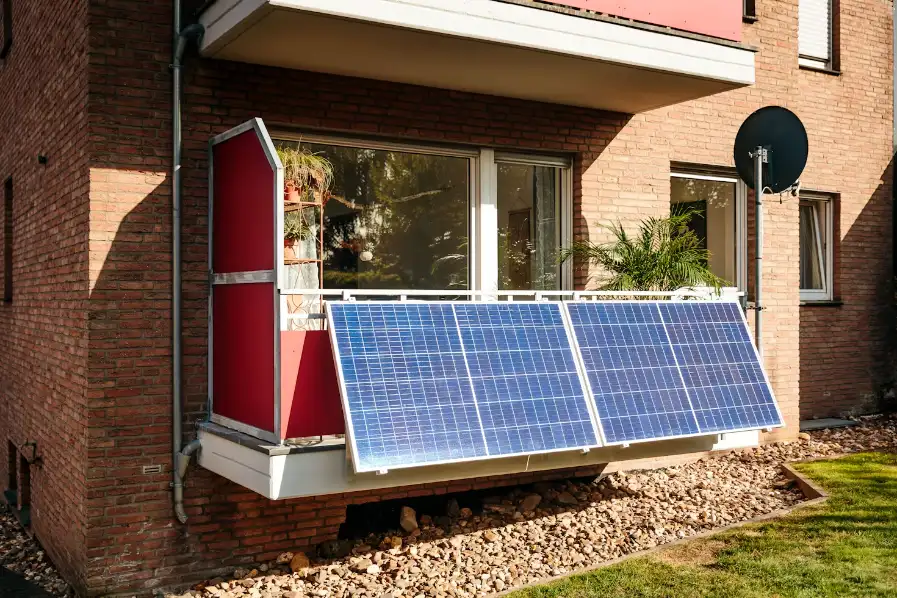
Amidst volatile global energy prices and accelerating urbanization, distributed solar power is undergoing an unprecedented transformation in form. In the past, distributed solar was largely the preserve of homeowners with detached houses; today, however, thanks to the maturation of micro-inverter and compact energy storage technologies, balcony solar systems with batteries are rapidly gaining popularity in major cities across Europe and the globe. Increasingly, apartment dwellers are moving beyond simple kits designed merely for real-time generation; they are shifting toward upgraded "micro-inverter plus portable storage" solutions, aiming to capture every kilowatt-hour of sunlight that would otherwise go to waste.
Yet, faced with hardware costs ranging from hundreds to over a thousand euros, most consumers weighing their options harbor a crucial, pragmatic question: Is this "plug-and-play" solar battery system a genuine tool for hedging against high electricity bills, or is it merely a "marketing gimmick" wrapped in high-concept branding by renewable energy hardware manufacturers?
To answer this objectively, we must look past the hype and analyze the fundamentals of energy conversion and financial payback. The conclusion is clear: balcony energy storage is certainly not a "sucker's bet," but neither is it a magic bullet that guarantees effortless returns regardless of how you buy it. Its actual economic value and return on investment (ROI) depend entirely on local electricity pricing structures and tiered rates, the technical architecture of the battery cells (such as cycle life and safety performance), and how well the storage capacity matches your household's daily base load. Only by pairing the right hardware specifications with the appropriate usage scenario can balcony solar-plus-storage systems truly bridge the gap between a purchase driven by sentiment and one that delivers tangible financial savings.
Why Apartment Renters Are Switching to Compact Solar Storage
For a long time, those living in multi-story apartment buildings or long-term rentals have effectively been excluded from the benefits of clean energy. Urban renters and apartment dwellers face significant barriers regarding traditional rooftop solar systems: rooftop space in multi-story buildings is typically communal property, making it impossible for individual residents to obtain independent installation permits. Furthermore, the high upfront costs (often thousands of euros), the need for invasive drilling that damages the building structure, and the "sunk cost" of being unable to take the system along when moving out all deter renters from adopting solar power.
The surge in balcony-based distributed energy storage systems has shattered these constraints regarding property rights and installation. By integrating micro-inverters with energy storage units, these balcony solar storage systems achieve a breakthrough in lightweight, streamlined technical design. The system requires no modifications to existing household wiring and involves no complex high-voltage work by professional electricians; instead, it connects via standard household sockets (such as the widely used European Schuko plug) that meet local safety standards. It converts the DC electricity generated by solar panels into AC power and feeds it directly into the home's micro-grid, prioritizing supply for active appliances like refrigerators and routers, as well as devices in standby mode.
This "plug-and-play" modular design is the primary reason these systems appeal so strongly to renters. A key advantage of these products—often considered the best balcony solar battery solutions for apartment dwellers—is that they are non-invasive and portable. Balcony mounts and clamps allow for installation without drilling, preserving the integrity of the rental unit's exterior walls and railings while avoiding property-related disputes with landlords. When a lease ends or a move is required, users can dismantle and pack up the system without causing damage in under half an hour, taking the entire unit to their next home. This exceptional flexibility and protection of the renter's assets drive the rapid popularity of portable balcony energy storage systems in the urban apartment market.
A Financial Reality Check: Crunching the ROI and Payback Numbers
Determining whether a system is a sound financial hedge or merely an "idiot tax" relies fundamentally on rigorous financial modeling. For households burdened by high electricity costs, the core value of a balcony solar solution—especially one with storage—must be demonstrated through quantifiable reductions in utility bills. Below, we quantitatively break down the Return on Investment (ROI) and payback period for the system across two distinct electricity market scenarios.
High Electricity Price Model (e.g., European/UK Markets)
In parts of Europe, residential electricity rates—whether tiered or flat—consistently remain high, ranging from €0.35 to €0.40/kWh. Let us consider a standard setup: an 800W balcony solar system paired with a 2kWh battery storage module.
- Increased Self-Consumption Rate: Without storage, peak daytime solar generation often exceeds the household's baseline standby power consumption; excess energy flows into the grid without compensation, resulting in a self-consumption rate of only about 30%. By adding a 2kWh storage unit, surplus daytime energy is stored and discharged during evening peak-demand periods (e.g., for lighting, TV, and cooking), significantly boosting the overall self-consumption rate to over 85%.
- Annual Generation and Savings Estimates: Under standard solar conditions (with approximately 900–1,000 equivalent full-load hours per year), an 800W system generates roughly 700–850 kWh annually. Based on an 85% self-consumption rate and electricity prices of €0.35–€0.40/kWh, the system can directly save a household between €250 and €340 in annual electricity costs.
- Hardware Costs and Static Payback Period: Currently, the average market price for a complete kit—including 800W solar panels, a microinverter, and a 2kWh storage battery—ranges from €1,000 to €1,200. Based on a simple financial calculation:

Given that lithium iron phosphate (LFP) batteries have a service life exceeding 10 years, the system—having recouped its initial hardware costs within 3.5 to 5 years—continues to generate net financial gains for the remaining 5–7 years, demonstrating an exceptionally high return on investment.
Model for Regions with Low Electricity Prices or Low Subsidies
However, not all markets offer such significant margins for electricity price arbitrage. In regions where residential electricity prices are heavily subsidized or extremely low (such as areas where rates are merely $0.08–$0.12/kWh):
- Extended Payback Period:The same 800W kit yields annual electricity savings of only around $60–$90, extending the static payback period to 10–15 years. When accounting for the normal capacity degradation the battery may experience over this timeframe, the financial appeal diminishes significantly if the system is viewed solely through the lens of "recouping costs via electricity savings."
- Redefining Non-Financial Value:In such markets, the positioning of balcony energy storage systems needs to shift from "financial investment product" to "functional consumer product." Its core value lies in providing off-grid emergency backup power (UPS functionality), mitigating the risk of power outages caused by extreme weather, reducing reliance on the centralized grid, and satisfying the desire of tech enthusiasts to explore energy self-sufficiency.
Technical Buyer’s Guide: Key Specs to Look For Before Buying
Having avoided the trap of paying a "premium for hype" (or "IQ tax"), the next core challenge for consumers is selecting safe, efficient, and durable hardware from a crowded market. Balcony energy storage systems are exposed to complex outdoor environments for extended periods; hardware specifications not only impact power generation and storage efficiency but also directly determine the device's lifespan and household safety. When shopping for the best budget balcony battery storage, be sure to prioritize the following three key technical indicators:
Battery Cell Technology: Why LiFePO4 Is the Only Choice
In the residential energy storage sector, battery cell chemistry is the fundamental factor determining device performance and safety. Current market offerings primarily fall into two categories: Ternary Lithium (NMC) and Lithium Iron Phosphate (LiFePO4). For balcony applications, LiFePO4 batteries offer overwhelming technical advantages:
Ultra-long Cycle Life: NMC batteries typically have a cycle life of only 800–1,200 cycles, with capacity degrading significantly after 3–4 years of use. In contrast, high-quality LiFePO4 cells can deliver 3,000–6,000 charge-discharge cycles at 80% DOD (Depth of Discharge). Based on one full charge-discharge cycle per day, the actual service life exceeds 10 years—perfectly covering the payback period calculated earlier.
Thermal Stability and Extreme Safety: Balconies are often exposed to high temperatures and direct sunlight during summer. NMC batteries have a thermal runaway threshold of only around 200°C and readily release oxygen during thermal runaway, fueling intense combustion. LiFePO4 batteries, however, have a thermal runaway temperature exceeding 800°C and a highly stable molecular structure, virtually eliminating the risk of fire or explosion—a critical factor for high-rise apartment living. System Architecture and Topology: DC-Coupling vs. AC-Coupling
The architectural design of a balcony energy storage system directly impacts energy conversion efficiency and future upgrade flexibility:
DC-Coupling: Direct Current (DC) generated by PV modules flows directly through a controller into the battery for storage; when power is needed, it is converted into Alternating Current (AC) by a micro-inverter for household use. This architecture involves only a single inversion process, resulting in a high overall system conversion efficiency of 90%–95% and relatively low costs, making it the mainstream solution for small-capacity balcony kits.
AC-Coupling: PV-generated power is first converted to AC by a micro-inverter, then rectified back to DC by the storage unit for battery storage, and finally converted back to AC for use. While this architecture offers broad adaptability and cross-brand compatibility, the dual AC/DC conversion process results in an energy loss of 10%–15%.
Modular Expansion Design: High-quality systems often feature a stackable structure, allowing users to purchase a 1kWh base unit initially—based on their budget—and seamlessly expand to 2kWh or 4kWh later according to actual electricity needs, thereby avoiding a large upfront investment.
Environmental Protection and Smart BMS Safety Management
Since most balcony energy storage units are installed on semi-open or unenclosed balconies, system protection and cold/moisture resistance are crucial for ensuring stable year-round operation:
IP65 Protection Standard: The product enclosure must meet an IP65 (or higher) dust and water resistance rating to protect internal circuit boards from damage caused by heavy rain, wind-blown sand, and high humidity.
BMS (Battery Management System) and Low-Temperature Protection: Forced charging of LiFePO4 (Lithium Iron Phosphate) cells at temperatures below 0°C can cause lithium dendrite formation, permanently damaging the internal cell separator. Units equipped with a smart BMS will automatically cut off the charging circuit upon detecting low temperatures or activate a built-in heating film to preheat the cells to a safe temperature before charging begins, ensuring reliable operation in winter or cold regions.
How to Choose the Best Budget Balcony Battery Kit
Once technical specifications and safety standards are understood, the primary concern for budget-conscious buyers shifts to finding the product that offers the best value for money within a limited budget. The market offers everything from entry-level kits costing a few hundred euros to high-end all-in-one units costing thousands; choosing an affordable balcony solar storage kit does not mean compromising on safety or quality. Instead, it is about stripping away unnecessary, premium-priced features and ensuring every penny is spent on core performance. When searching for the best budget balcony battery storage, you can make an informed choice and avoid common pitfalls by considering the following three factors:
The Key Metric for Value: Cost per Kilowatt-Hour (Cost-per-kWh)
Many first-time buyers make the mistake of focusing solely on the total system price while overlooking differences in actual storage capacity. The most objective metric for evaluating the cost-effectiveness of energy storage hardware is the cost per kilowatt-hour (Levelized Cost of Battery Storage):

For example, an entry-level kit priced at €600 with an actual usable capacity of only 0.8 kWh has a cost-per-capacity of €750/kWh; conversely, a €950 kit with a 1.6 kWh capacity has a cost-per-capacity of just €593.75/kWh. Although the latter has a higher total price, its "return on investment per unit of capacity" is significantly better in real-world use. When evaluating budget-friendly kits, prioritize products with a cost-per-capacity that sits at the lower end of the industry average.
Distinguishing "Essential Features" from "Premium Features": Cutting Unnecessary Costs
To drive up prices, many manufacturers add a host of non-core features. For buyers seeking the best value for money, knowing how to filter the feature list is crucial:
"Essential Features" to Look For:
Automatic Pass-through Charging: Once the battery is fully charged during the day, the solar-generated power must be able to bypass the battery and feed directly into the home micro-inverter; this prevents battery overcharging/over-discharging and ensures no surplus energy goes to waste.
Smart App-based Zero-Export & Dynamic Power Limiting: The ability to adjust output based on real-time household power demand—preventing excess energy from flowing back into the public grid for free—is a core software algorithm for ensuring a good ROI.
"Premium Features" You Can Skip:
Ultra-high-definition color touchscreens (monitoring can be fully handled via a mobile app).
Complex RGB ambient lighting and high-end metal casings (which add unnecessary manufacturing and shipping costs).
Excessive off-grid AC output sockets (if the system is intended solely for balcony grid-tied storage, there is no need to pay the premium price associated with the multi-port capabilities of portable power stations).
The "Golden Ratio" for Capacity and Power: 800W Solar + 1.5 kWh–2 kWh Storage
Another key to avoiding wasted money is steering clear of "inflated capacity." For most households adhering to the European 800W limit standard, matching solar power input to battery capacity at a ratio of 1:2 to 1:2.5 represents the most cost-effective "golden combination":
Why 1.5 kWh–2 kWh? A standard 800W balcony solar system generates an average of approximately 2.5–3.5 kWh of electricity on a sunny day. After deducting the 1–1.5 kWh "baseload" consumed by essential household appliances—such as refrigerators and routers—during the day, the net surplus available for battery storage falls precisely within the 1.5–2 kWh range.
The cost of over-provisioning: Blindly increasing capacity beyond 4 kWh means the system will fail to fully charge the battery during most seasons, rendering the cost of the unused capacity unrecoverable through electricity savings. Conversely, a capacity below 1 kWh is insufficient to effectively meet peak nighttime energy demands (such as lighting and the operation of televisions and computers), thereby preventing the maximization of self-consumption rates. Opting for a modular storage capacity of 1.5–2 kWh strikes the optimal balance between initial system costs and daily energy utilization efficiency.
 Final Verdict: Gimmick or Good Investment?
Based on the financial modeling and technical analysis above, we can reach a clear verdict on balcony solar systems with batteries: they are neither overhyped "gimmicks" (or "IQ taxes") nor a "no-brainer" financial product suitable for everyone. Instead, they are tools designed to precisely address specific energy-related pain points; their ultimate value depends entirely on your living situation, local electricity rates, and actual energy consumption needs.
To avoid ambiguity, we have compiled a definitive list of who should buy and who should skip this product:
Who Should Buy (Worth It):
Those facing high electricity rates (rates > $0.30/kWh or €0.35/kWh): If you live in Europe or a city with exorbitant electricity costs, the system can quickly recoup its hardware costs within 3.5–5 years, allowing you to enjoy pure financial savings in the years that follow.
Apartment renters and flat owners: Individuals who cannot install traditional rooftop solar due to property rights or building restrictions but still wish to benefit from the bill reductions and energy autonomy provided by clean energy.
Households prioritizing emergency backup power (UPS): Those who, in addition to daily savings, want an independent off-grid micro-system capable of powering essentials—such as routers, refrigerators, and mobile phones—during sudden grid outages or extreme weather events.
Who Should Skip It:
Users in low-electricity-cost areas whose sole goal is "recouping costs through savings": If local residential electricity rates are only $0.08–$0.12/kWh and there is no pressure from tiered pricing, the payback period will exceed 10 years, making the cost-effectiveness extremely low from a purely financial ROI perspective.
Users with severely shaded or sun-deprived balconies: Situations where the balcony orientation is poor (e.g., facing due north) or completely blocked by surrounding high-rises, resulting in less than 2 hours of effective daily sunlight; in such cases, the solar panels cannot generate enough surplus energy to charge the plug-and-play battery. In regions where local grid policies strictly prohibit micro-inverters and plug-in grid connections: unauthorized installation may result in grid-imposed fines or safety and compliance risks.
Quick Decision Matrix
Before placing an order, please consult the simple decision matrix below to assess whether your home meets the installation requirements:
Summary and Action Plan: Start by retrieving last month’s electricity bill to verify your actual electricity rate and baseline nighttime power consumption. If you face high electricity rates and live in a rental or apartment with a sunlit balcony, a well-configured balcony energy storage system is undoubtedly one of the best investments you can make to combat rising energy costs.If you have any questions regarding this article or a specific project, please feel free to contact us; our engineers will tailor a professional solution to your needs.
Frequently Asked Questions (FAQ)
Is a plug and play solar battery safe to connect to a standard home socket?
Yes, standard balcony systems with a plug and play solar battery are safe to connect to standard home wall outlets, provided they meet local grid compliance standards.
How long does a LiFePO4 balcony solar battery typically last?
A LiFePO4 battery for balcony solar system typically lasts 10 years or more under daily operation.
Unlike traditional NMC batteries that degrade after 800–1,200 cycles, premium LiFePO4 cells deliver 3,000 to 6,000 deep discharge cycles (at 80% DOD). Accounting for one full charge-discharge cycle per day (365 cycles annually), the battery will retain over 80% of its original capacity even after 8 to 10 years of continuous use.
Can I use an 800W balcony solar system with storage if my balcony gets partial shade?
Yes, partial shading does not prevent you from using an 800w balcony solar system with storage, though it will reduce total daily power output and battery charging speeds.
Modern balcony setups use dual independent MPPT (Maximum Power Point Tracking) controllers, allowing unshaded panels to output maximum power even if another panel is partially blocked. Furthermore, modern microinverters and BMS units effectively capture low-light input (100W–200W) on overcast days, continuously trickling energy into a balcony solar battery 2kwh system to power essential overnight base loads.
Do I need a professional electrician to install a balcony battery storage system in my flat?
For standard 800W-compliant plug-and-play systems, a professional electrician is generally not required.
Components use standardized connections (such as MC4 connectors and standard wall plugs) designed for simple DIY balcony mounting and outlet connection. However, while physical installation requires no advanced wiring, users must comply with local registration rules (such as registering on grid portals where required). An electrician is only necessary if your setup exceeds local plug-in wattage limits or requires dedicated electrical panel modifications.
What happens to the energy when my balcony battery reaches 100% capacity?
Once the battery hits full charge, the system's intelligent energy management automatically redirects incoming solar power based on your configuration:
Pass-Through Charging: The Battery Management System (BMS) stops charging the battery and redirects incoming DC solar power straight to the microinverter to power active household appliances in real time.
Zero-Export Control: If household energy demand is lower than total solar generation, a smart meter or zero-export feature automatically throttles microinverter output to match real-time consumption. Without zero-export controls, any unconsumed surplus energy feeds back into the public grid.
Your BESS Is Lying to You: 5 BESS Procurement Traps to Avoid
How AI Is Transforming Battery Energy Storage Profitability: VPP, Algorithmic Trading and ROI Analysis
contact us
For more questions please


Office Address: 701, Building A, Yonghuayuan Business Building, Baotian 2nd Road, Chentian Community, Xixiang Street, Bao'an District, Shenzhen, Guangdong Province, China
Factory Address 1: Room 701, Building 2, Kegu Industrial Park, Zone B, Jian'an Road, No. 790, Chang'an Town, Dongguan City, Guangdong Province, China
Factory Address 2: Building 7, Phase II Standardized Factory, Innovation Industrial Park, Duji Economic Development Zone, Huaibei City, Anhui Province, China