


PCENERSYS BOLG
Advantage Of Battery Management System in Pcenersys Lithium Iron Phosphate Battery
Introduction
Pcenersys has many years of independent research and development, design experience and high-quality management team. It has successively obtained ISO9001&14001&45001 Certificate, Awarded UN38.3/MSES/CE/IEC/Rohs Certification and a number of patents. As a BMS independently developed and designed by Lithium Battery Manufacturer Applied to household energy storage 48V powerwall, 51.2V powerwall, high voltage Lithium ion battery.
Our company has always been adhering to the service concept of "quality first, pragmatic innovation", providing customers with product support and technical maintenance through rich engineering experience and technical capabilities, and quickly responding to customers' daily consultation, on-site application and training.
Our company has always been adhering to the service concept of "quality first, pragmatic innovation", providing customers with product support and technical maintenance through rich engineering experience and technical capabilities, and quickly responding to customers' daily consultation, on-site application and training.
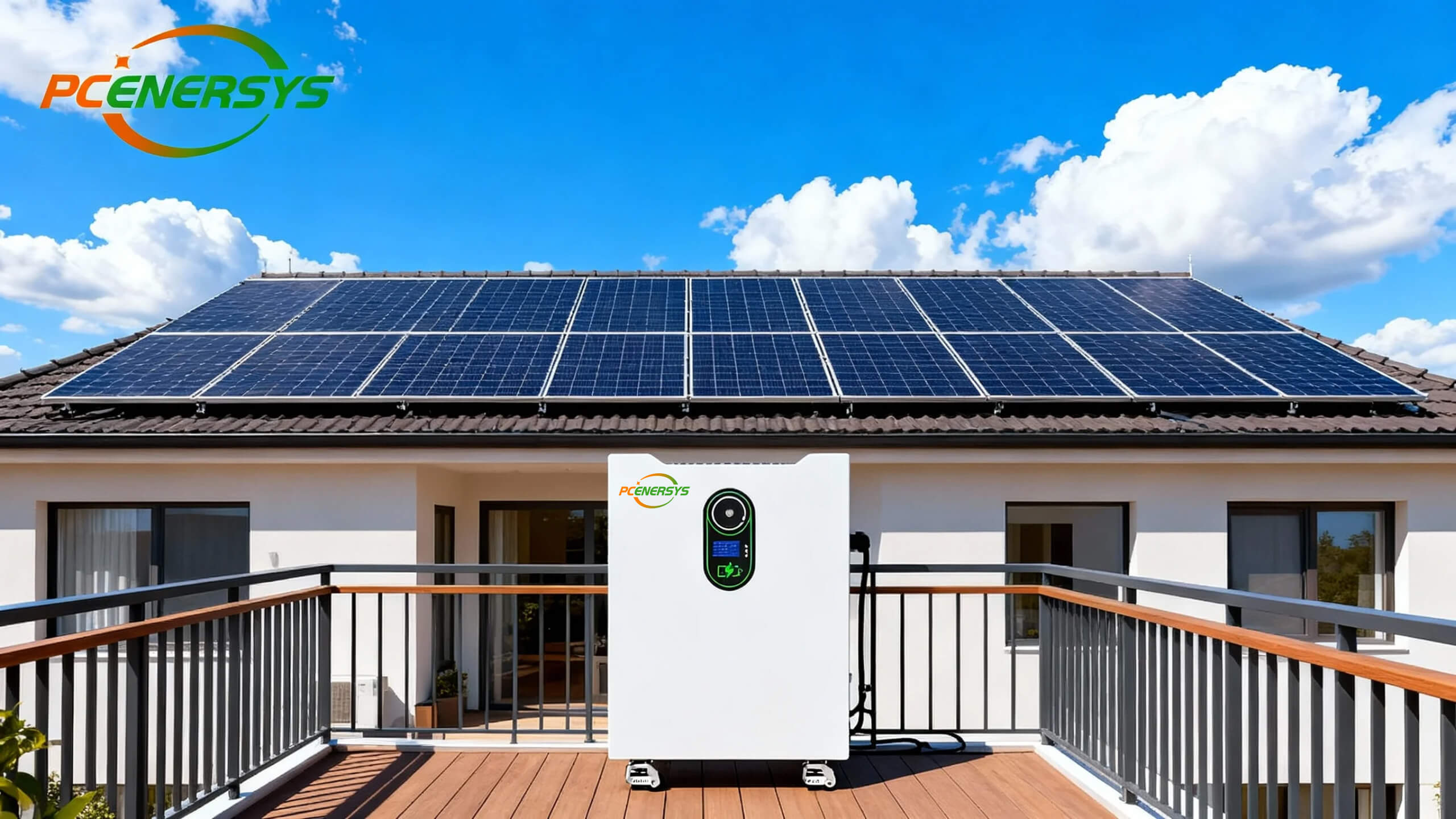
In 2022, China's lithium battery shipments will reach 130GWh, a year-on-year growth rate of 170%. As one of the core components of the energy storage lithium ion battery system, under the dual support of policies and market demand, the shipments of energy storage battery BMS-related leading companies have increased significantly. GGII predicts that by 2025, the market value of China's energy storage BMS will reach 17.8 billion yuan (including overseas exports), with a compound annual growth rate of 47%.
Unlike automotive BMS, high tech battery solutions are more complex and bulky, with deeper charging and discharging depths and longer life cycles. Energy storage BMS need to deal with more complex energy management systems. One of the criteria for customers to choose suppliers is stability and security, especially in fields such as data centers, which have high requirements for the quality, performance, and detection accuracy of energy storage BMS. Energy storage BMS involves many technical fields and has high technical barriers. Among them, software algorithm development and accurate data measurement are the core competitiveness of energy storage BMS enterprises.
At present, there are still certain technical bottlenecks in the development of energy storage BMS: the difficulty of collecting the internal temperature of the battery cell and the calculation of the internal state; the safety hazards caused by a large number of sampling points and wiring harnesses; the battery cell cannot be effectively detected when it is not installed and running. The standardization, modularization, and intelligence of energy storage BMS are the common direction of product upgrading, and the development trend towards distributed multi-layer management structure and active balancing technology is obvious. In the case of rapid growth in the market demand for energy storage lithium battery chips, Chinese lithium battery manufacturers will increase their independent research and development efforts, and the penetration rate of localization of BMS core components is expected to continue to increase.
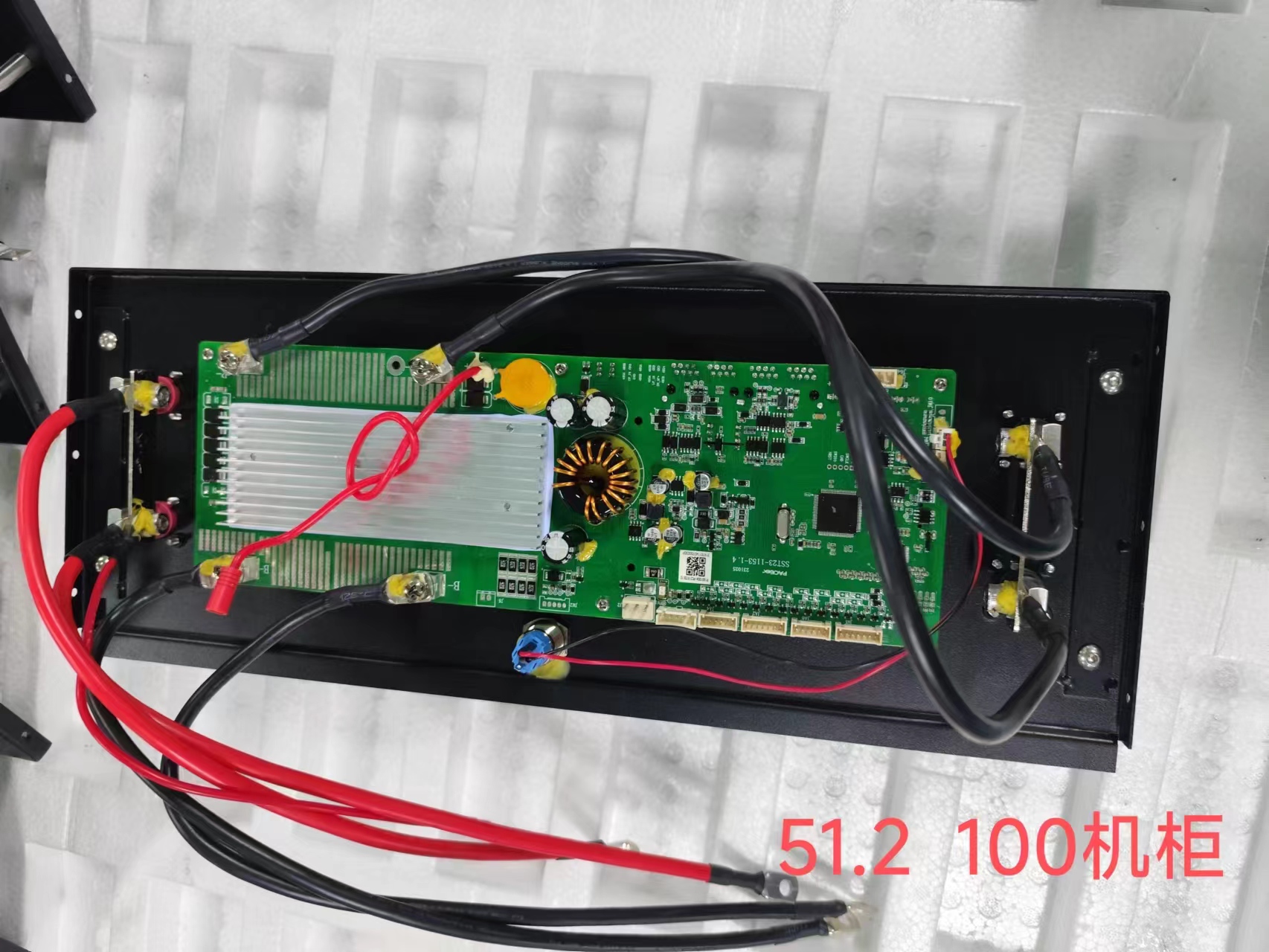
What is Li-ion battery BMS? Why does Energy storage lithium ion battery need BMS?
When it comes to energy storage lithium ion battery, it is often associated with some terms such as lithium-ion battery protection board and lithium-ion battery management system. As we all know, BMS mainly appears in Energy storage lithium ion battery. Lead-acid batteries generally do not have this management system. Lithium batteries require an additional BMS battery management system to protect the battery cells than lead-acid batteries.
The BMS battery management system is the link between the battery and the user. The important object is the secondary battery. Its purpose is to improve the utilization rate of the battery, prevent the battery from overcharging and over-discharging, increase the service life of the battery, and monitor the state of the battery. In layman's terms, it is an operating system for managing, controlling, and using lithium-ion battery packs. The BMS industry belongs to the midstream industry of the power lithium-ion battery industry chain. The BMS industry chain includes four links: mid-upstream raw materials, BMS modules, BMS finished products, and downstream applications.
The BMS battery management system is the link between the battery and the user. The important object is the secondary battery. Its purpose is to improve the utilization rate of the battery, prevent the battery from overcharging and over-discharging, increase the service life of the battery, and monitor the state of the battery. In layman's terms, it is an operating system for managing, controlling, and using lithium-ion battery packs. The BMS industry belongs to the midstream industry of the power lithium-ion battery industry chain. The BMS industry chain includes four links: mid-upstream raw materials, BMS modules, BMS finished products, and downstream applications.
BMS calls it the "brain" of the Energy storage lithium ion battery operating system. BMS is like the brain of the lithium ion battery, sending and receiving information from the battery and each external port, after in-depth analysis and processing of the information, and sending out the execution work Order. Considering that it has a crucial impact on new energy vehicles, the BMS industry continues to attract large quantities of lithium battery manufacturing companies to join.
Why does a home battery storage system need a management system?
Lifep04 lithium battery is widely used in long-time standby remote monitoring instruments because of its high working voltage, small size, light weight, high energy density, no memory effect, no pollution, small self-discharge, and long cycle life. Compared with Ni-MH batteries, lithium-ion batteries are 30-40% lighter and have a 60% higher energy ratio. However, lifep04 lithium battery also has serious flaws, which can be summarized in the following two aspects:
(1) safety
Lithium-ion batteries are poor in safety and have defects such as explosions. In particular, lithium-ion batteries that use lithium cobalt oxide as the positive electrode material cannot be discharged under high current, and their safety is poor. In addition, overcharging or overdischarging almost all lithium-ion batteries will cause irreversible damage to the battery.
Lithium-ion batteries are also very sensitive to temperature: if the temperature is too high, the electrolyte may decompose, burn or even explode; if the temperature is too low, the performance of lithium-ion batteries will deteriorate significantly, affecting the normal use of equipment.
Due to the limitations of the lithium-ion battery manufacturing process, the internal resistance and capacity of each battery will vary. When multiple lithium-ion batteries are used in series, the charging and discharging rates of each battery are inconsistent, resulting in low battery capacity utilization. In view of this, in the actual use of lithium-ion batteries, a special protection system is required to monitor the health of the batteries, so as to manage the use of lithium-ion batteries.
(2) Maintainability
At low temperatures, capacity fade and power cannot be accurately predicted, which makes the equipment less maintainable. Long-term online instruments need to be replaced regularly, and remote monitoring equipment works in scattered locations, and the distance between each location is long, so the workload and cost of battery replacement are very high.
In order to reduce the maintenance workload and reduce maintenance costs, the lithium-ion battery management system must have an accurate power state estimation function, accurately grasp the power state of the lithium-ion battery, and perform battery replacement in a more targeted manner. At the same time, the lithium-ion battery management system should have lower power consumption to reduce maintenance frequency and extend battery life. Therefore, a reasonable design of the lithium-ion battery management system is of great significance to the maintenance of long-term continuous power supply remote monitoring instruments.
What is the current Pcenersys technologically advanced BMS battery management system?
Advanced technology, stable and reliable products will be the core features of future BMS products, so what kind of products are technologically advanced, stable and reliable products? We will explain them from four dimensions: technology, function, quality, and standard specifications.
Advanced technology, stable and reliable products will be the core features of future BMS products, so what kind of products are technologically advanced, stable and reliable products? We will explain them from four dimensions: technology, function, quality, and standard specifications.

The BMS independently designed by Pcenersys has advanced technology:
1. The company masters the core algorithm of battery SOC;
2. Master the estimation of health status, the maximum allowable instantaneous (5s/30s) and continuous charging and discharging power estimation;
3. Master efficient equalization management technology, advanced heat dissipation mechanism, and can support a maximum passive equalization current of 200mA;
4. Master the industry-leading high-precision measurement technology, the total flow and total pressure accuracy can reach 0.5% FSR;
5. Optional active equalization module, the maximum equalization current can reach 5A, 24 strings of single board can be flexibly selected;
2. Master the estimation of health status, the maximum allowable instantaneous (5s/30s) and continuous charging and discharging power estimation;
3. Master efficient equalization management technology, advanced heat dissipation mechanism, and can support a maximum passive equalization current of 200mA;
4. Master the industry-leading high-precision measurement technology, the total flow and total pressure accuracy can reach 0.5% FSR;
5. Optional active equalization module, the maximum equalization current can reach 5A, 24 strings of single board can be flexibly selected;
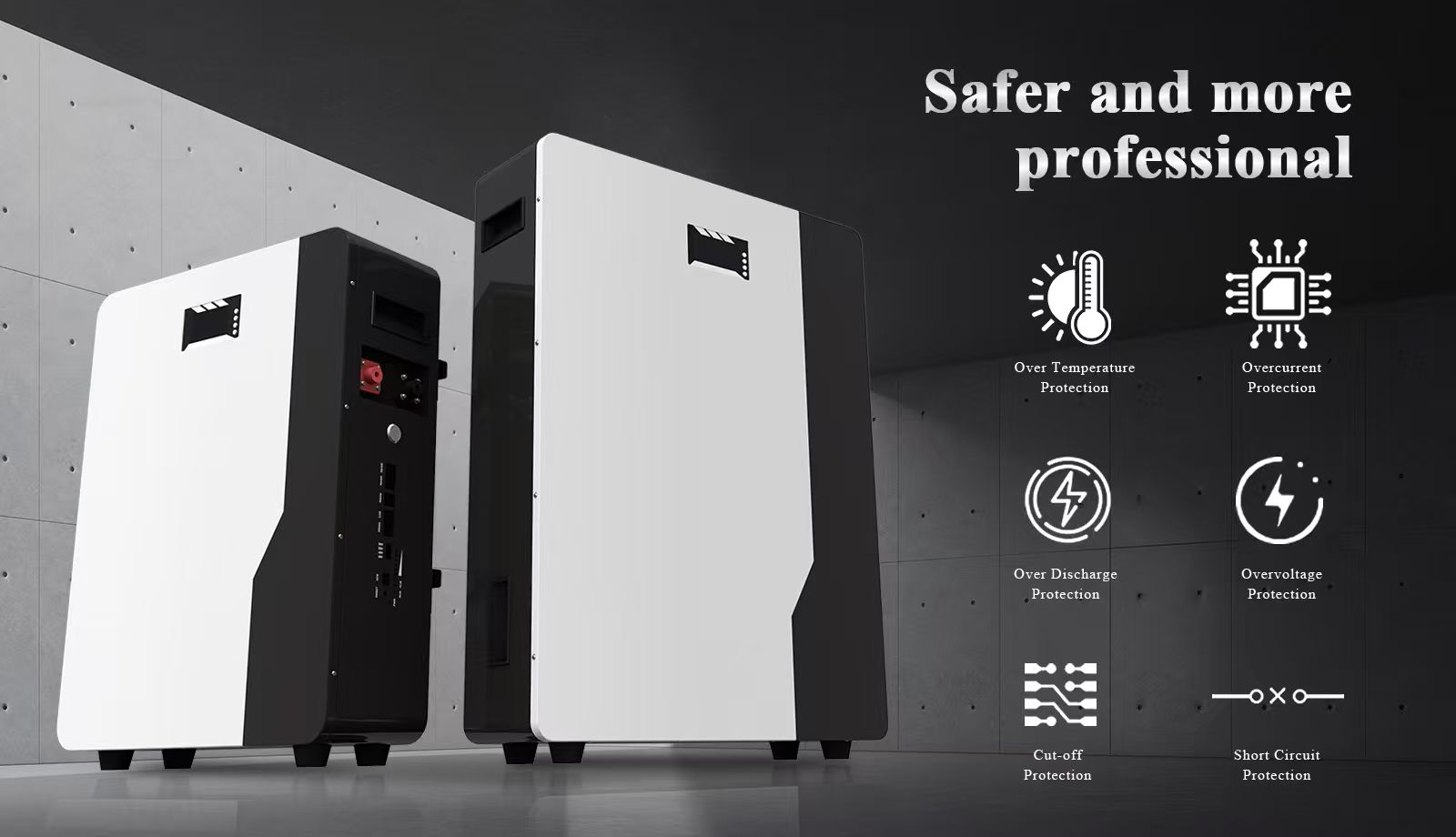
Pcenersys battery security features:
1. Battery safety management: with reliable overcharge/overdischarge protection, overcurrent/overtemperature/low temperature protection, multi-level fault diagnosis protection;
2. High-voltage safety management: with high-voltage relay adhesion detection, high-voltage interlock detection with high anti-interference, advanced high-voltage insulation monitoring;
3. Possess the disconnection diagnosis function of the voltage and temperature acquisition line;
4. The battery voltage acquisition module has safety mechanisms such as circuit overcurrent and short circuit protection, and the circuit is more reliable;
5. With flexible configuration of 5~36 strings and 5~48 strings all-in-one machine, it is suitable for all kinds of mainstream methods in the industry;
Stable quality:
1. All components are selected from automotive grade components, with a high standard operating temperature range of -40°C~85°C;
2. Wider and more reliable temperature monitoring, the monitoring range can reach -40~125℃;
Conforms to standard specification:
1. Support charging national standard GBT20234-2015 and GBT27930-2015;
2. Support the requirements of product functional safety lifecycle management in the ISO26262 international safety standard;
3. Support CCP calibration protocol, UDS, OBD-ii diagnostic protocol.
Summarize:
Pcenersys integrated intelligent battery management system BMS can not only protect lithium-ion batteries from various abnormal conditions, but also accurately monitor the charging/discharging process of each battery cell, with accurate data and safety. If there is no lithium-ion battery management system BMS, the charging and discharging and service life of the battery will be greatly reduced. If the battery is compared to a team of soldiers participating in the war, then the lithium-ion battery management system is the general, commanding every soldier to charge forward in battle.
Lead acid vs Lithium ion Battery: The key differences you don't know about
What Is a Power Conversion System (PCS)? How It Works in Energy Storage
Related blog


contact us
For more questions please


Office Address: 701, Building A, Yonghuayuan Business Building, Baotian 2nd Road, Chentian Community, Xixiang Street, Bao'an District, Shenzhen, Guangdong Province, China
Factory Address 1: Room 701, Building 2, Kegu Industrial Park, Zone B, Jian'an Road, No. 790, Chang'an Town, Dongguan City, Guangdong Province, China
Factory Address 2: Building 7, Phase II Standardized Factory, Innovation Industrial Park, Duji Economic Development Zone, Huaibei City, Anhui Province, China