


PCENERSYS BOLG
Battery Ah Explained: Why 100Ah Doesn’t Always Mean More Energy
What Does Battery Ah Mean? Understanding Amp Hours, Capacity & Real Performance
Battery Ah (amp-hour) is one of the most important specifications used to describe battery capacity. It indicates how much electrical charge a battery can deliver over a specific period of time under rated conditions.
However, Ah alone does not tell the complete story of battery performance. A higher Ah rating does not always mean a battery stores more energy or delivers more power, because voltage, usable capacity, depth of discharge (DoD), efficiency, and discharge rate also affect real-world performance.
In this guide, we will explain what battery Ah means, how amp-hours are calculated, the difference between Ah and Wh, and how Ah ratings apply to LiFePO4 batteries, solar energy storage systems, and BESS applications.
But in reality, this is not entirely correct. Because Ah only represents the current capacity of the battery, and what truly determines the actual energy storage capacity of the battery is the total energy (Wh) determined by both voltage and Ah.
For example:
|
Battery |
Voltage |
Ah |
Actual Energy |
|
Battery A |
12V |
100Ah |
1200Wh |
|
Battery B |
48V |
100Ah |
4800Wh |
Although both batteries are 100Ah, due to different voltages, the actual energy storage capacity of Battery B is four times that of Battery A.
This is also why experienced engineers in energy storage systems (ESS) and solar cell systems usually do not only focus on Ah, but also pay more attention to the total battery energy (Wh) and system operating efficiency.
What is Ah in a battery?Battery Ah (amp-hour) tells you how long a battery can deliver power. For example, a 100Ah battery can supply 10 amps for 10 hours.In simple terms, Ah determines battery runtime — not power. Understanding this is essential when choosing batteries for solar systems, inverters, or energy storage.
Battery Ah (amp-hour) is a unit that measures how much current a battery can deliver over time.
Example:
- 100Ah = 10A × 10 hours
Battery Ah Rating Explained: What Ampere-Hours Mean and Why It Matters
Amp hours (Ah) can be thought of as the battery’s “fuel tank.” It indicates how much power the battery can store and how long it can deliver current before needing to be recharged. The higher the Ah rating, the longer the battery can supply energy to devices.
Definition: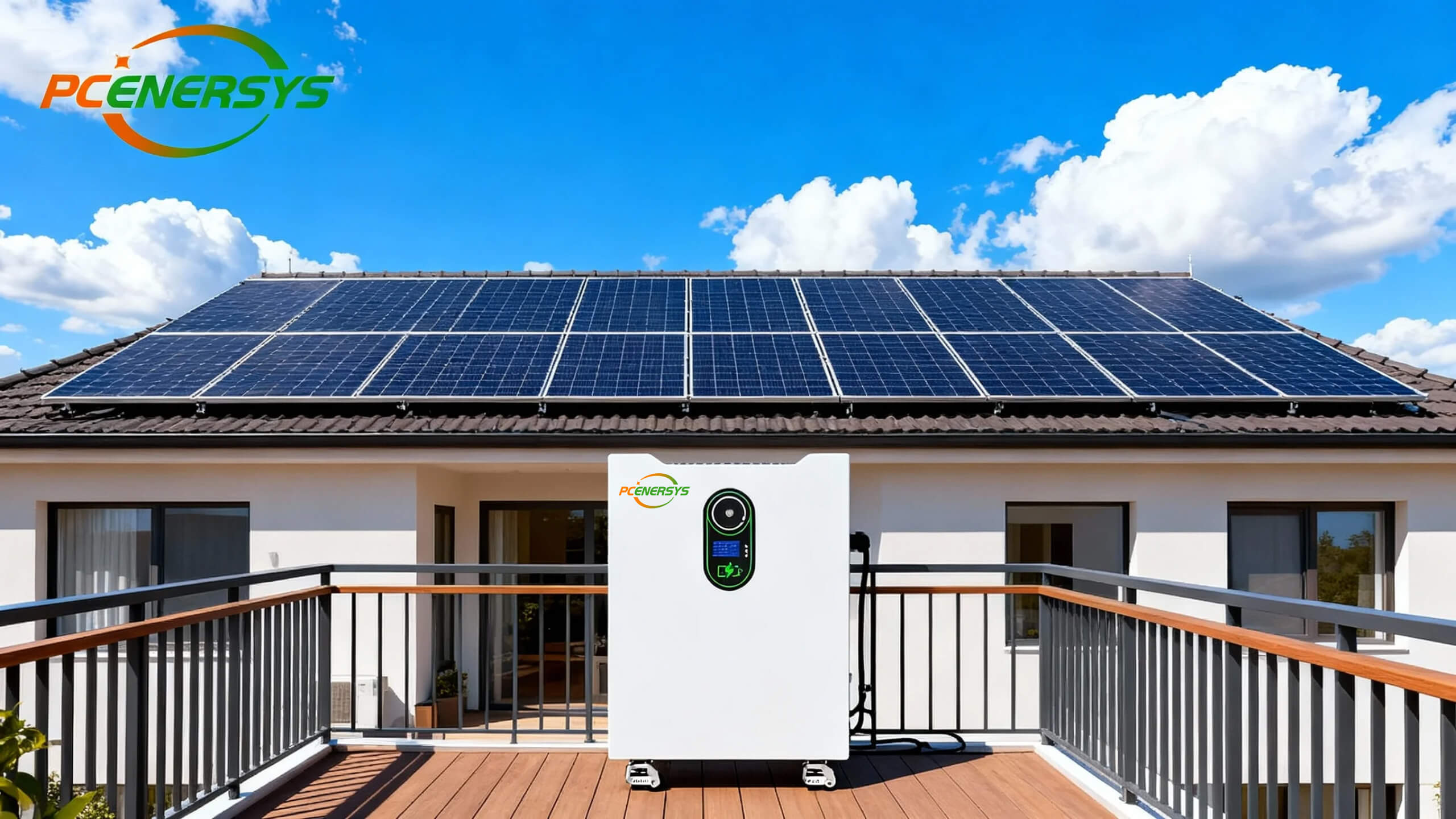
-
A = amps (current)
-
h = hours (time)
-
Ah = amps × hours
If a battery is rated at 10Ah, then:
-
It can supply 1 amp for 10 hours
-
Or 2 amps for 5 hours
-
Or 0.5 amps for 20 hours
Formula:
Battery Capacity (Ah) = Current (A) × Time (h)
Why amp hours matter
-
Longer runtime:
Higher Ah means the battery can power equipment for longer periods. A 100Ah battery can operate nearly twice as long as a 50Ah battery under the same load. -
Device compatibility:
Small electronics typically use batteries rated in mAh (milliamp hours), while electric vehicles, industrial systems, and home ESS require far higher battery amp hours for suitable performance. -
System design:
In solar energy storage, UPS, RV systems, and off-grid power designs, Ah determines total available energy. Designers rely on amp hours to size battery packs and achieve energy targets. -
Battery lifespan impact:
Higher capacity batteries usually experience shallower discharge cycles under the same load, helping extend cycle life. -
Charging considerations:
Batteries with higher amp hours store more energy and normally take longer to charge unless paired with high-power charging equipment.
Understanding Battery Ah Rating and Its Impact on Performance
Longer operation time
A battery with a higher Ah rating can deliver energy for a longer period. For example, a 12V 100Ah battery will continue powering a device nearly twice as long as a 12V 50Ah battery under identical conditions.
Better endurance in demanding applications
In electric vehicles, industrial machinery, and energy storage systems, battery amp hours directly influence how long systems can run without recharging. More Ah means more usable operational time.
Higher load tolerance
Larger battery amp hours often correlate with the ability to handle higher peak loads. Under the same environmental and usage conditions, a higher-capacity battery maintains voltage stability and supplies power without rapidly draining.
Charging time impact
The greater the Ah, the more energy needs to be replenished. This generally increases charging time unless paired with advanced charging solutions capable of delivering more current.
Efficiency and stability
Higher-capacity batteries often provide more stable performance under high loads, helping maintain voltage output and reducing losses. For critical systems, this improves power quality and overall efficiency.
Key Ah Ratings for Common Devices and Their Applications
Different devices require different levels of energy storage depending on operational duration and power demand.
Smartphones
Most modern smartphones have batteries ranging between 3000mAh and 6000mAh:
-
iPhone 17 Air: 3149mAh
-
iPhone 17 Pro: 3988mAh
-
iPhone 17 Pro Max: 4823mAh
-
Samsung Galaxy S25: 4000mAh
-
HUAWEI Pura 90 Pro Max: 6000mAh
These battery amp hours support one to two days of use depending on usage patterns.
Home Battery Energy Storage System
LiFePO₄ batteries for residential ESS are commonly in the range of:
-
100Ah – 200Ah for compact single-room or backup lighting systems
-
200Ah – 400Ah for full-home operation or longer outages
Solar Energy Storage Systems
Off-grid systems and long-duration backup power often require larger battery amp hours. Typical configurations include:
-
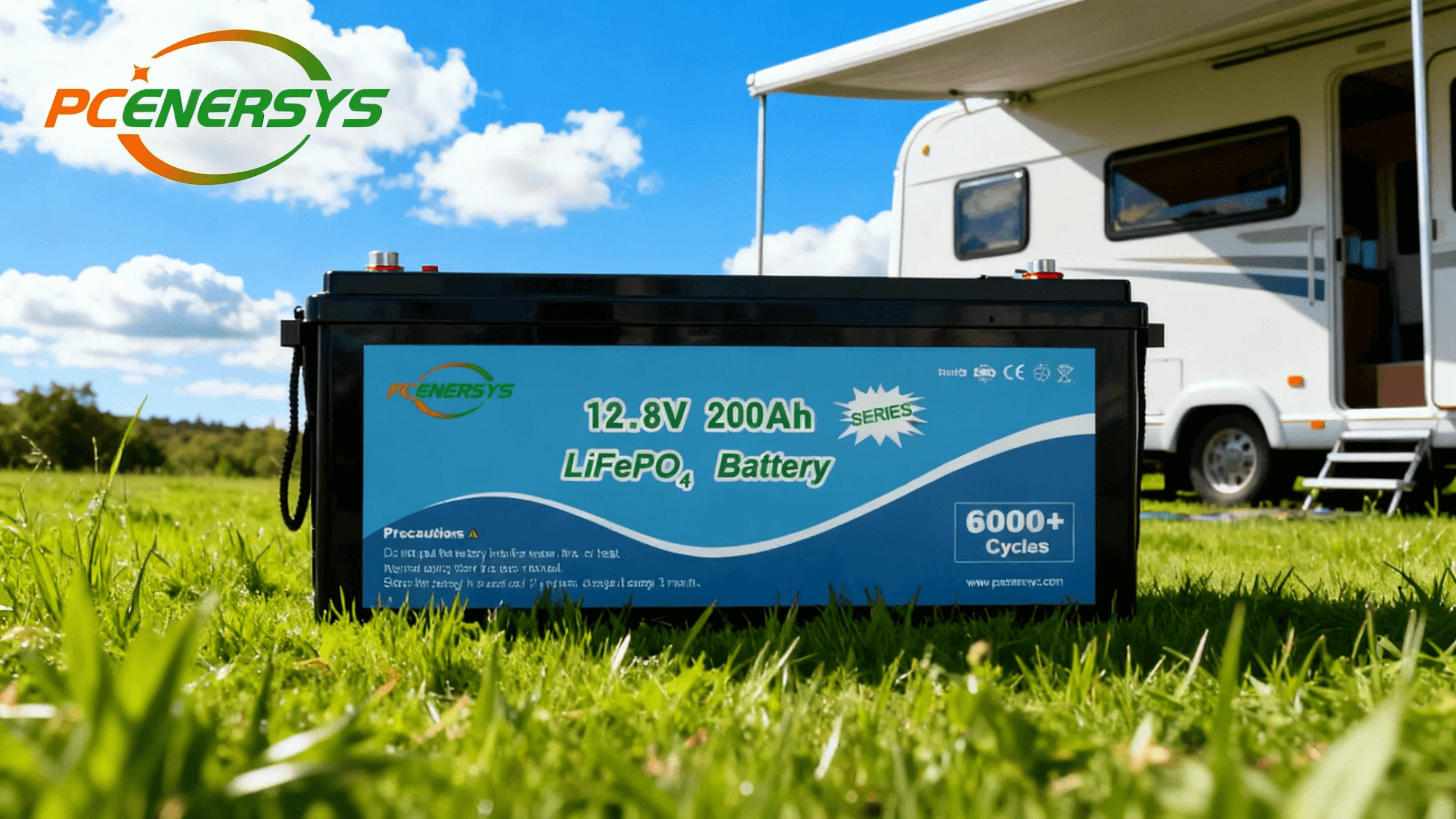
PCEnerSys 12V 200Ah LiFePO₄ battery:
For home appliances, golf carts, marine applications, electric lifts, motorized wheelchairs, and UPS systems. -
PCEnerSys 51.2V 200Ah LiFePO₄ battery:
Enabling homeowners to reduce their reliance on the grid and lower their energy bills.Enabling homeowners to reduce their reliance on the grid and lower their energy bills.
Why the large difference between 6000mAh in a phone and 200Ah in a solar battery?
The answer lies in power requirements and expected runtime. Phones need moderate power for 1–2 days, while a solar ESS may need to supply a household for several days of cloudy weather.
A real PCEnerSys customer explained:
“I replaced the 200Ah lead-acid battery pack in the RV with 200Ah lithium iron phosphate. Under the same load conditions, the available capacity of the newly replaced battery increases sharply, the charging speed becomes faster, and the voltage remains stable. I feel like the effective storage space has doubled.”
How to Calculate Battery Runtime from Ah
To estimate how long a battery will run, use the standard calculation:
Battery runtime (hours) = Battery Ah ÷ Device load (amps)
For example:
A system using 10 amps on a 200Ah battery will operate for about:
200Ah ÷ 10A = 20 hours
However, real-world performance varies due to:
-
Discharge rate
-
Temperature
-
Battery aging
-
Inverter/converter losses
-
Depth of discharge limits (especially in lead-acid batteries)
A PCEnerSys user shared:
“I used to struggle with planning power availability for my off-grid cabin. Now, with these calculations and my 200Ah lithium pack, I can confidently expect 4–5 days of operation between charges.”
But what about systems powering multiple devices with different loads throughout the day? How do we model fluctuating consumption? In such cases, solar calculators, power monitoring systems, or ESS software can simplify planning and reduce risk.
No matter the configuration, it is always wise to leave buffer capacity, especially where power availability is mission-critical.
Understanding how to use amp hours and battery amp hours in real-world calculations helps designers and users:
-
Select proper capacity
-
Manage daily consumption
-
Plan off-grid or emergency operation more reliably
Guide to Selecting the Right Battery Capacity in Ah
Choosing the appropriate battery amp hours depends on several practical factors:
1. Daily energy usage
Calculate the average power consumed in a day to determine the minimum Ah requirement.
2. Peak load demand
Systems must support the highest expected draw without exceeding discharge limits.
3. Runtime expectations
For off-grid systems, consider:
-
1–2 days for light users
-
3–6 days for remote cabins
-
Prolonged coverage for industrial backup
4. Depth of discharge (DoD)
LiFePO₄ batteries offer higher usable capacity (up to 90%) compared with lead-acid types (typically 50%), meaning fewer Ah may be required for the same usable energy.
5. Charging capability
Ensure chargers and solar controllers can sustainably restore the energy consumed daily.
Matching the right battery amp hours ensures a balanced system with stable performance, reliable runtime, and optimal battery lifespan.
Conclusion
Seeing this, we believe you also understand that ampere hours and the correct use of battery ampere hours are crucial for designing and operating reliable energy systems. When choosing an ESS solution, collaborating with professional equipment manufacturers helps ensure accurate dimensions, safe operation, and higher long-term efficiency. We provide high-performance lithium battery solutions designed specifically for residential, commercial, and industrial energy applications. If you still don't understand this or have other questions that need to be solved, please feel free to contact us, and we will send professional engineers to solve your problems.
FAQ
Is Battery Ah the same as battery capacity?
Battery capacity is commonly described in Ah, but Ah only represents the amount of charge, not the total energy. For example, although a 12V 100Ah and a 48V 100Ah have the same Ah, the 48V battery stores four times the energy of the former. Therefore, Ah is more suitable for comparing batteries of the same voltage, while Wh is more accurate when comparing different voltage systems such as solar energy storage, UPS, and off-grid power supplies.
Can two batteries with the same Ah perform differently?
Yes. Even with the same Ah value, different batteries can perform completely differently in actual use due to factors such as chemical system, discharge rate, internal resistance, temperature adaptability, and manufacturing quality. LiFePO₄ batteries typically maintain capacity better than lead-acid batteries at high discharge rates. Usable Ah also declines with aging. Therefore, actual performance depends not only on battery amp hours, but on the overall system design and operating environment.
Is it safe to use a battery with higher Ah than recommended?
In most cases, it is safe if the battery voltage and chemistry match the original design. A higher Ah simply means more stored energy and longer runtime. Devices only draw the current they need. However, higher-capacity batteries often need a compatible charger. This approach is widely used in solar ESS, RVs, UPS systems, and industrial storage applications.
Does Battery Ah affect inverter or solar system performance?
In solar ESS, higher battery amp hours increase system autonomy, enabling appliances to function longer during low-sun periods. However, inverter stability also depends on voltage, maximum current limits, BMS protections, and cabling. If Ah is too low, the battery may reach discharge limits early, causing inverter shutdown. Proper Ah sizing ensures smooth system operation.
What Battery Ah is best for home energy storage systems?
Most households need enough capacity to cover 4–8 hours of nighttime usage. A 48V 200Ah lithium battery usually provides 6–12kWh of usable energy. Users can start with one module and expand when load or lifestyle changes. When selecting the right battery amp hours, consider peak load, inverter power, required backup time, and whether the system operates in grid-tied, off-grid, or hybrid mode.
What does Ah mean in a battery?
Ah (amp-hour) measures how much current a battery can supply over time. For example, a 100Ah battery can deliver 10 amps for 10 hours.
Lithium vs Lead Acid Batteries: Key Differences, Lifespan & Cost (2026 Guide)
BESS Lifespan: How Long Do Battery Energy Storage Systems Last? (2026 Guide)


contact us
For more questions please


Office Address: 701, Building A, Yonghuayuan Business Building, Baotian 2nd Road, Chentian Community, Xixiang Street, Bao'an District, Shenzhen, Guangdong Province, China
Factory Address 1: Room 701, Building 2, Kegu Industrial Park, Zone B, Jian'an Road, No. 790, Chang'an Town, Dongguan City, Guangdong Province, China
Factory Address 2: Building 7, Phase II Standardized Factory, Innovation Industrial Park, Duji Economic Development Zone, Huaibei City, Anhui Province, China