


PCENERSYS BOLG
Battery Capacity Explained: Formula, Units (Ah) & Energy Storage Applications
Battery capacity is one of the most fundamental yet often misunderstood concepts in energy storage. Whether you are evaluating a solar battery system, comparing lithium and sodium batteries, or sizing an off-grid power solution, understanding battery capacity is essential. In simple terms, battery capacity determines how much energy a battery can store and how long it can deliver power. However, real-world applications—especially in energy storage systems—require a deeper understanding beyond basic definitions.
What Is Battery Capacity?
Battery capacity refers to the total amount of electrical energy a battery can store and deliver over time. It is typically expressed in ampere-hours (Ah) or watt-hours (Wh), depending on the context. While Ah measures the charge stored, Wh reflects the actual energy available, which makes it more relevant for energy storage systems.
From a technical perspective, international standards organizations such as the International Electrotechnical Commission define battery capacity based on controlled discharge conditions, including temperature, current, and cutoff voltage. This is important because real-world performance can vary significantly depending on how the battery is used.
In practical terms, battery capacity answers a simple but critical question: how long can a battery power a specific load?
What Does Ah Mean in Battery?
The term “Ah” stands for ampere-hour, which represents the amount of electric charge a battery can deliver over time. One ampere-hour means a battery can supply one ampere of current for one hour. For example, a 100Ah battery can theoretically deliver 100 amps for one hour or 10 amps for ten hours.
However, Ah alone does not represent the total energy stored in a battery. Voltage must also be considered. This is why two batteries with the same Ah rating but different voltages can store very different amounts of energy.
To better understand this, consider the relationship below.
Wh = V \times Ah
This formula shows that energy (Wh) depends on both voltage (V) and capacity (Ah). In energy storage systems, watt-hours or kilowatt-hours (kWh) are more commonly used because they directly reflect usable energy.
Battery Capacity Units Explained
Battery capacity is expressed in several units depending on scale and application. Smaller devices such as consumer electronics typically use milliampere-hours (mAh), while larger systems such as residential or commercial energy storage use kilowatt-hours (kWh).
The relationship between common units can be summarized as follows:
| Unit | Meaning | Typical Use Case |
|---|---|---|
| mAh | milliampere-hour | Phones, small devices |
| Ah | ampere-hour | Battery cells, modules |
| Wh | watt-hour | General energy measurement |
| kWh | kilowatt-hour | Energy storage systems |
In energy storage projects, kWh is the most relevant unit because it directly corresponds to electricity consumption. For example, a household consuming 30 kWh per day requires a battery system sized around that value, depending on backup duration and system efficiency.
Battery Capacity Formula (With Real Examples)
Understanding the battery capacity formula is critical when designing or evaluating a system. The most basic relationship is:
Capacity (Ah) = Current (A) \times Time (h)
This formula explains how capacity is derived from current and discharge time. However, in real-world energy storage, energy calculation is more important than charge.
A more practical formula is:
Energy (Wh) = Voltage (V) \times Capacity (Ah)
To illustrate this, consider a 12V battery rated at 100Ah. The total energy stored is 1,200Wh, or 1.2kWh. This means the battery can theoretically power a 200W device for about six hours, assuming ideal conditions.
For a larger system, such as a 10kWh residential energy storage system, the calculation works in reverse. If the system operates at 48V, the required capacity is approximately 208Ah. This type of calculation is commonly used when sizing battery banks for solar systems or backup power applications.
In practice, engineers also account for efficiency losses, depth of discharge (DoD), and safety margins, which means the actual usable capacity is typically lower than the nominal rating.
Battery Capacity in Energy Storage Systems
In energy storage applications, battery capacity directly determines system performance, backup duration, and economic value. Unlike small-scale batteries, storage systems must be designed around real energy consumption patterns.
For residential use, battery capacity defines how long a home can operate during a power outage. For example, a 10kWh system can support essential loads such as lighting, refrigeration, and communication devices for several hours. In commercial and industrial scenarios, capacity is often optimized for peak shaving, load shifting, and energy cost reduction.
Off-grid systems present an even more demanding use case. In these environments, battery capacity must be carefully calculated to ensure reliable power during periods without solar generation. This often requires larger battery banks and more conservative design assumptions.
How to Choose the Right Battery Capacity
Selecting the appropriate battery capacity requires a clear understanding of energy demand, usage patterns, and system objectives. The process typically begins by calculating daily energy consumption in kWh, followed by determining how many hours or days of backup are required.
Another critical factor is depth of discharge, which defines how much of the battery’s capacity can be safely used. For example, lithium-ion batteries often support 80–90% DoD, while other chemistries may have stricter limits. Adding a safety margin is also essential to account for system inefficiencies and unexpected load increases.
In real-world projects, these considerations are combined to ensure the system delivers reliable performance without excessive cost.
Real-World Example: PCENERSYS Energy Storage System
To better understand how battery capacity translates into real applications, consider a commercial energy storage solution from PCENERSYS. A 100kWh battery system can support a small commercial facility by storing excess solar energy during the day and supplying power during peak demand periods.


In practical terms, such a system can significantly reduce electricity costs by shifting energy usage away from peak pricing periods. It also enhances energy resilience by providing backup power during grid outages.
Low Voltage LiFePO4 Battery System
This type of application demonstrates how battery capacity is not just a technical parameter but a key driver of economic and operational value.
Factors That Affect Battery Capacity
Battery capacity is not a fixed value in real-world conditions. It is influenced by several factors, including temperature, discharge rate, and battery chemistry. Low temperatures, for example, can reduce available capacity, while high discharge rates can lead to lower effective performance due to internal resistance.
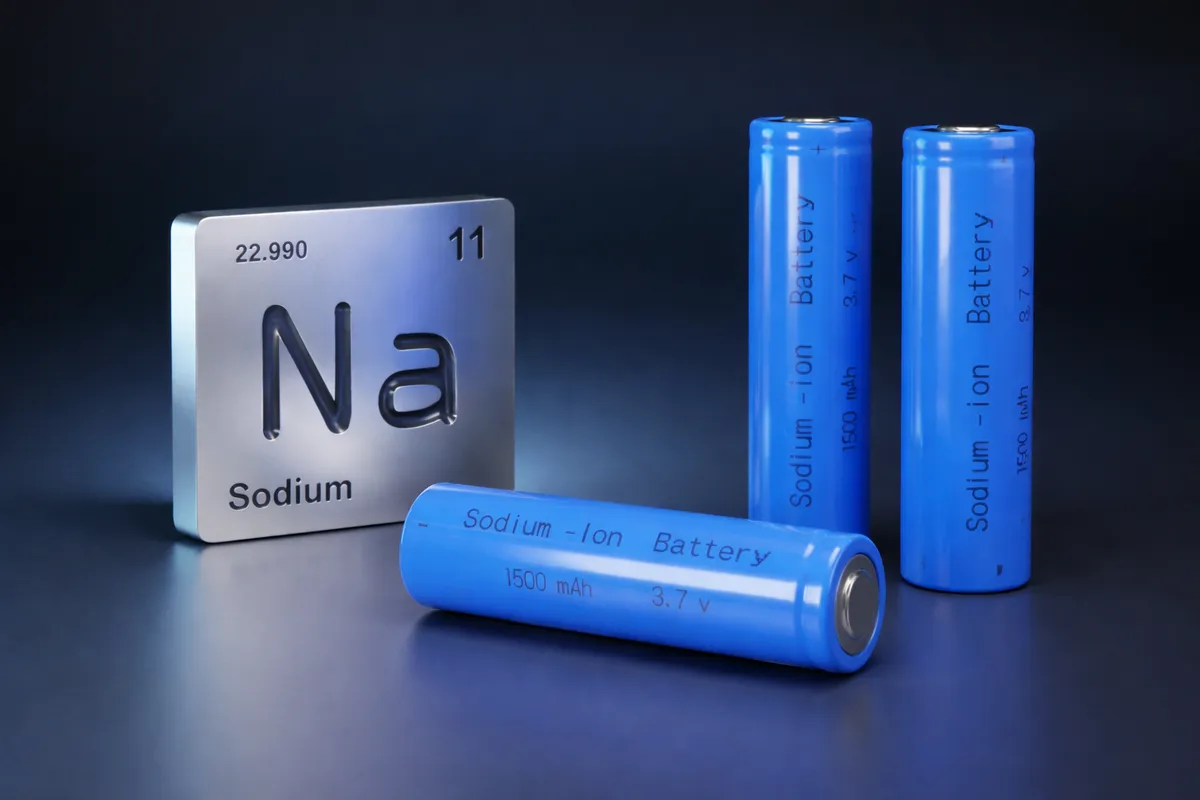
Battery chemistry also plays a significant role. Lithium iron phosphate (LFP) batteries offer stable performance and long cycle life, while emerging technologies such as sodium-ion batteries are gaining attention for their cost advantages and better low-temperature performance. These differences are increasingly important as the energy storage market evolves.
Battery Capacity vs Battery Life
Battery capacity and battery life are closely related but fundamentally different concepts. Capacity measures how much energy a battery can store, while battery life refers to how long the battery can operate over repeated charge and discharge cycles.
A battery with high capacity does not necessarily have a long lifespan. Cycle life, depth of discharge, and operating conditions all influence longevity. In energy storage systems, balancing capacity and lifespan is essential to achieving optimal performance and return on investment.
Future Trends in Battery Capacity
The role of battery capacity is becoming increasingly important as global energy systems transition toward renewable sources. According to the International Energy Agency, energy storage capacity is expected to grow rapidly in the coming years, driven by the expansion of solar and wind power as well as rising electricity demand from data centers and electrification.
At the same time, advancements in battery technology are improving capacity, efficiency, and cost-effectiveness. Sodium-ion batteries, in particular, are emerging as a promising alternative for large-scale energy storage due to their abundant raw materials and strong performance in specific conditions.
These trends indicate that understanding battery capacity will remain a critical skill for engineers, businesses, and energy planners alike.
Conclusion
Battery capacity is a foundational concept that underpins all battery and energy storage applications. While units such as Ah and Wh provide a starting point, real-world usage requires a deeper understanding of formulas, system design, and performance factors.
From residential backup systems to large-scale commercial applications, battery capacity determines how energy is stored, managed, and delivered. As the energy landscape continues to evolve, mastering this concept is essential for making informed decisions and optimizing system performance.
Frequently Asked Questions About Battery Capacity
What does Ah mean in battery capacity?
“Ah” (ampere-hour) represents the amount of electric charge a battery can deliver over time. A 1Ah battery can supply 1 amp of current for 1 hour. However, Ah alone does not indicate total energy, as voltage must also be considered.
What is the difference between Ah and Wh?
Ah measures electric charge, while Wh (watt-hour) measures energy. To calculate energy, multiply voltage by capacity:
Wh = V × Ah
In energy storage systems, Wh or kWh is more commonly used because it reflects actual usable energy.
What is the standard battery capacity formula?
The basic battery capacity formula is:
Capacity (Ah) = Current (A) × Time (h)
For energy calculations:
Energy (Wh) = Voltage (V) × Capacity (Ah)
These formulas are widely used in battery sizing and system design.
What are the most common battery capacity units?
Battery capacity is typically expressed in:
mAh (milliampere-hour) for small devices
Ah (ampere-hour) for battery cells and modules
Wh (watt-hour) for energy measurement
kWh (kilowatt-hour) for energy storage systems
How do you calculate battery capacity for a solar system?
To calculate battery capacity for a solar or energy storage system, first determine daily energy consumption (in kWh), then decide how many hours or days of backup are required. After that, adjust for system voltage, depth of discharge, and efficiency losses.
Why is battery capacity different from usable capacity?
Nominal battery capacity is measured under standard conditions, but usable capacity is lower due to factors such as:
Depth of discharge limits
Energy losses
Temperature effects
In most systems, usable capacity is about 80–90% of the rated value.
Does higher battery capacity mean longer battery life?
Not necessarily. Higher capacity means more stored energy, but battery life depends on cycle life, usage conditions, and battery chemistry. A larger battery may last longer per charge, but not necessarily over its total lifespan.
How does temperature affect battery capacity?
Temperature significantly impacts battery performance. Low temperatures reduce available capacity, while high temperatures can accelerate degradation. This is especially important in outdoor and energy storage applications.
Which battery capacity unit is used in energy storage systems?
In energy storage systems, kWh is the standard unit because it directly represents energy usage and system size. Ah is still used internally for battery design, but kWh is more relevant for users and system planning.
Lead Acid Battery vs Lithium Ion Battery: Which Is Better for Energy Storage?
Sodium vs Lithium Battery: Cost, Energy Density & BESS Performance


contact us
For more questions please


Office Address: 701, Building A, Yonghuayuan Business Building, Baotian 2nd Road, Chentian Community, Xixiang Street, Bao'an District, Shenzhen, Guangdong Province, China
Factory Address 1: Room 701, Building 2, Kegu Industrial Park, Zone B, Jian'an Road, No. 790, Chang'an Town, Dongguan City, Guangdong Province, China
Factory Address 2: Building 7, Phase II Standardized Factory, Innovation Industrial Park, Duji Economic Development Zone, Huaibei City, Anhui Province, China