


PCENERSYS BOLG
Lead Acid Battery vs Lithium Ion Battery: Which Is Better for Energy Storage?
Choosing the right battery technology is one of the most critical decisions in energy storage system design. As demand grows across residential, commercial, and off-grid applications, the debate between lead acid battery vs lithium ion battery continues to gain attention. While both technologies have their place, their performance, cost, and long-term value differ significantly. Understanding these differences is essential for selecting the right solution for modern energy needs.
Understanding Lead Acid and Lithium Ion Batteries
Lead acid batteries have been used for over a century and remain one of the most widely deployed energy storage technologies, particularly in backup power systems and off-grid applications. According to the U.S. Department of Energy, lead acid batteries are valued for their low upfront cost, mature supply chain, and reliability in simple systems. However, their limitations—such as lower energy density and shorter lifespan—have become more apparent as energy storage demands increase.
Lithium ion batteries, on the other hand, represent a newer generation of energy storage technology. Widely used in electric vehicles and increasingly dominant in stationary storage, lithium batteries offer higher efficiency, longer cycle life, and better overall performance. As highlighted by the International Energy Agency, lithium-ion technology now leads global battery deployment, especially in renewable energy integration and grid-scale storage.
For a deeper understanding of how battery capacity impacts system performance, see our guide on battery capacity and energy calculation
Key Differences Between Lead Acid and Lithium Ion Batteries
The fundamental differences between lead acid and lithium ion batteries can be clearly understood through performance metrics that directly impact real-world applications.
| Parameter | Lead Acid Battery | Lithium Ion Battery |
|---|---|---|
| Energy Density | Low | High |
| Cycle Life | 300–500 cycles | 3000–6000 cycles |
| Efficiency | 70–80% | 90–95% |
| Depth of Discharge | ~50% | 80–90% |
| Maintenance | Regular | Minimal |
| Lifespan | 3–5 years | 10–15 years |
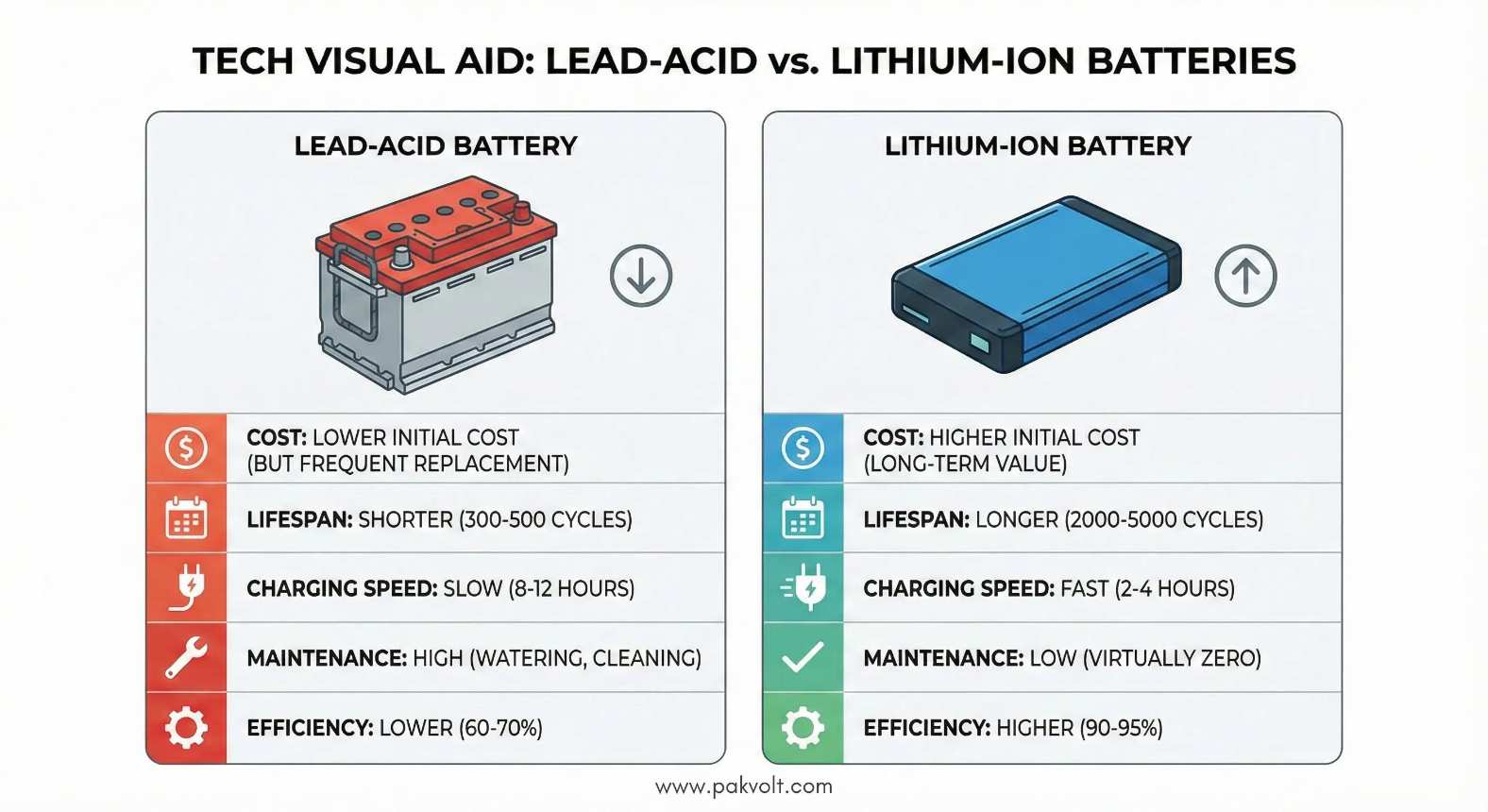
These differences translate into meaningful operational outcomes. Lithium-ion batteries deliver more usable energy, require less maintenance, and last significantly longer, making them more suitable for modern energy storage systems. In contrast, lead acid batteries remain relevant primarily due to their lower initial cost, but this advantage often diminishes when evaluated over the system’s lifetime.
Cost Comparison: Initial vs Lifetime Cost
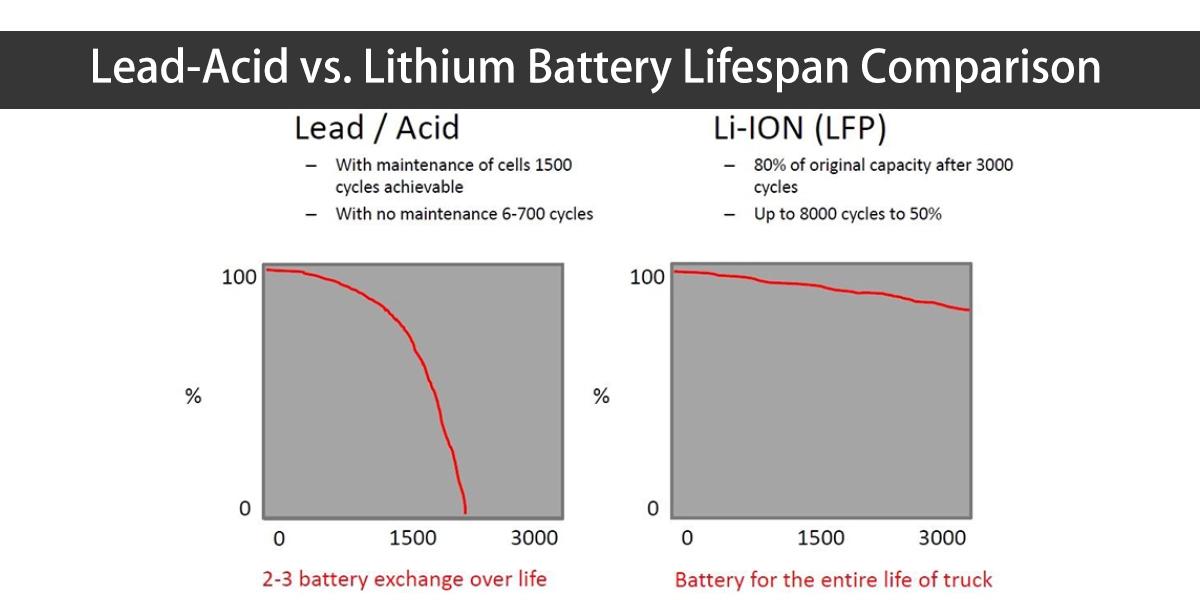
One of the most common questions is which battery is more cost-effective. While lead acid batteries are cheaper upfront, this does not reflect the true cost over time. A proper evaluation must consider total cost of ownership, including replacement cycles, efficiency losses, and maintenance.
For example, in a 10kWh energy storage system, a lead acid battery may need to be replaced two to three times within a 10-year period due to its shorter lifespan. In contrast, a lithium-ion battery can often operate for the entire period without replacement. When factoring in efficiency—where lithium systems typically achieve over 90% compared to 70–80% for lead acid—the long-term cost advantage becomes clear.
In most energy storage scenarios, lithium-ion batteries deliver a lower total cost of ownership despite higher upfront investment.
Performance in Real Energy Storage Applications
In real-world applications, the choice between lead acid and lithium ion batteries depends heavily on the use case. In residential solar energy storage systems, lithium-ion batteries are increasingly preferred due to their compact size, higher efficiency, and ability to provide reliable backup power during outages. These characteristics are particularly important as households seek to maximize self-consumption of solar energy.
In off-grid environments, lead acid batteries are still used due to their lower upfront cost and simpler system requirements. However, their limited depth of discharge and shorter lifespan often result in higher maintenance and replacement costs over time. As a result, lithium-ion solutions are rapidly gaining traction even in remote applications.
For commercial and industrial energy storage, lithium-ion batteries have become the dominant choice. Their ability to handle frequent charge and discharge cycles, combined with higher efficiency, makes them ideal for peak shaving, load shifting, and demand charge reduction.
Usable Capacity and Efficiency: Why Lithium Performs Better
A critical but often overlooked factor is usable capacity. Although two batteries may have the same nominal capacity, the actual energy they can deliver differs significantly due to depth of discharge limitations.
For example, a 100Ah lead acid battery typically allows only about 50% usable capacity to avoid damage, meaning only 50Ah is effectively available. In contrast, a lithium-ion battery can safely use 80–90% of its capacity, delivering up to 80–90Ah under similar conditions.
This means lithium-ion batteries deliver significantly more usable energy from the same nominal capacity, which directly improves system efficiency and reduces the required battery size.
Lifespan, Maintenance, and Reliability
Battery lifespan is another major differentiator. Lead acid batteries typically last between 300 and 500 cycles, which translates to approximately 3 to 5 years of operation in many applications. Lithium-ion batteries, by comparison, can achieve 3,000 to 6,000 cycles, supporting 10 to 15 years of use under proper conditions.
Maintenance requirements further highlight the difference. Lead acid batteries often require periodic inspection, electrolyte management, and ventilation considerations, while lithium-ion systems are largely maintenance-free. This difference not only affects operational cost but also system reliability, especially in critical applications.
Real Product Example: PCENERSYS Energy Storage System
In modern energy storage projects, lithium-ion technology is often the preferred choice due to its superior performance and long-term value. For example, a 100kWh energy storage system from PCENERSYS can support commercial operations by storing excess solar energy and supplying power during peak demand periods.
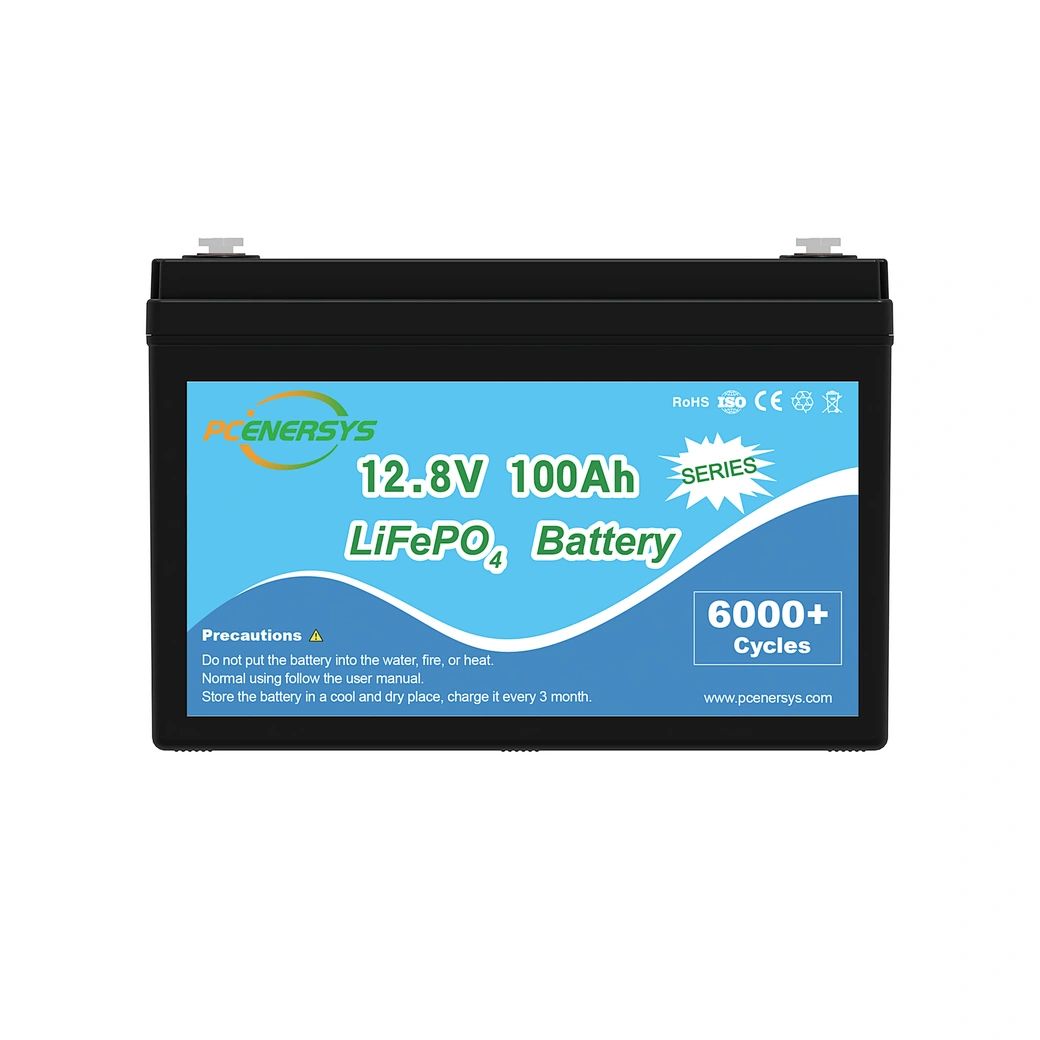
Such systems are designed to maximize efficiency, reduce electricity costs, and improve energy resilience. With higher usable capacity and longer lifespan, lithium-ion batteries enable more stable and predictable system performance.
To explore system configurations and technical specifications, visit our Low Voltage LiFePO4 Battery System.
Future Trends: Is Lithium Replacing Lead Acid?
The global energy storage market is undergoing rapid transformation. According to the International Energy Agency, battery storage capacity is expanding quickly, driven by renewable energy adoption and increasing electricity demand. Lithium-ion batteries are at the center of this growth due to their scalability and performance advantages.
At the same time, emerging trends such as AI data centers are significantly increasing electricity consumption, further accelerating the need for efficient and reliable energy storage solutions. While lead acid batteries will continue to serve niche applications, lithium-ion technology is expected to dominate future energy storage deployments.
Conclusion
The comparison between lead acid battery vs lithium ion battery ultimately depends on application requirements, budget, and long-term performance expectations. While lead acid batteries offer a lower initial cost, lithium-ion batteries provide superior efficiency, longer lifespan, and greater usable capacity.
In most modern energy storage scenarios, lithium-ion batteries are the better choice, particularly for systems that require high performance, reliability, and long-term cost efficiency. As energy systems continue to evolve, the shift toward lithium-based solutions is expected to accelerate.
FAQ: Lead Acid vs Lithium Ion Battery
Which is better lithium or lead acid battery?
Lithium-ion batteries are generally better for energy storage applications due to higher efficiency, longer lifespan, and greater usable capacity, while lead acid batteries may still be suitable for low-cost or backup use cases.
Why is lithium battery more expensive than lead acid?
Lithium batteries have higher upfront costs because of advanced materials and manufacturing processes, but they typically offer lower lifetime costs due to longer service life and higher efficiency.
Can I replace lead acid battery with lithium ion battery?
In most cases, lithium-ion batteries can replace lead acid batteries, but system compatibility, voltage requirements, and charging systems must be properly evaluated.
Which battery is better for solar energy storage?
Lithium-ion batteries are generally preferred for solar energy storage because they provide higher efficiency, deeper discharge capability, and longer operational lifespan.
How long do lead acid vs lithium batteries last?
Lead acid batteries typically last 3–5 years, while lithium-ion batteries can last 10–15 years depending on usage conditions and system design.
Battery Voltage Balance Explained: Why Cell Consistency Is Critical in Energy Storage Systems
Battery Capacity Explained: Formula, Units (Ah) & Energy Storage Applications

contact us
For more questions please


Office Address: 701, Building A, Yonghuayuan Business Building, Baotian 2nd Road, Chentian Community, Xixiang Street, Bao'an District, Shenzhen, Guangdong Province, China
Factory Address 1: Room 701, Building 2, Kegu Industrial Park, Zone B, Jian'an Road, No. 790, Chang'an Town, Dongguan City, Guangdong Province, China
Factory Address 2: Building 7, Phase II Standardized Factory, Innovation Industrial Park, Duji Economic Development Zone, Huaibei City, Anhui Province, China