


PCENERSYS BOLG
Quantum Battery vs Lithium: The Energy Storage Decision Engineers Can’t Afford to Get Wrong
Why Engineers Are Suddenly Questioning Their Energy Storage Choices
Engineers today face a growing challenge: choosing between emerging quantum battery technologies and widely adopted lithium systems. This article breaks down the key differences, risks, and practical considerations for real-world energy storage design.
The recent quantum battery breakthrough has triggered a wave of uncertainty across the energy storage industry. For EPC contractors, system integrators, and engineering firms, the question is no longer just about performance or cost—it is about future-proofing decisions.
Many engineers are now facing a new type of pressure:
- “What if I choose lithium today, and it becomes obsolete tomorrow?”
- “Are clients expecting next-generation battery solutions already?”
- “Should I redesign my system to accommodate future battery technologies?”
This concern is not theoretical. Clients—especially those involved in energy transition projects—are increasingly asking about future battery technology and whether new innovations like quantum batteries could impact long-term ROI.
To understand why this discussion is gaining momentum, you can refer to our latest industry update on how a quantum battery breakthrough signals future shift.
Quantum Battery Breakthrough Signals Future Shift in Energy Storage, But Lithium Remains Dominant
However, while the headlines are compelling, the engineering reality is far more grounded. This article will help you separate signal from noise and make decisions based on technical feasibility—not speculation.
What Is a Quantum Battery (From an Engineering Perspective)
At its core, a quantum battery is not simply a better battery—it is an entirely different paradigm of energy storage.
Traditional batteries, such as lithium-ion systems, store and release energy through electrochemical reactions. Ions move between electrodes, generating electrical current. This mechanism is well understood, highly optimized, and scalable.
A quantum battery, by contrast, is based on quantum mechanical principles such as superposition and entanglement. Instead of relying on chemical reactions, energy is stored in quantum states and potentially transferred collectively across multiple units.

From an engineering standpoint, this leads to several theoretical advantages:
- Ultra-fast charging (potentially seconds instead of hours)
- High efficiency through collective charging effects
- Reduced energy loss under ideal conditions
However, these advantages come with a critical caveat: they only exist under controlled laboratory environments.
What Quantum Batteries Are NOT
To avoid misinterpretation, engineers must clearly understand:
- They are not commercially available products
- They are not deployable in grid or industrial systems
- They are not compatible with current BESS architectures
In other words, quantum batteries are currently a research concept—not an engineering solution.
Quantum Battery vs Lithium: Core Engineering Differences
When making technology decisions, engineers need structured comparisons rather than hype.
Below is a practical engineering-level comparison:
| Parameter | Quantum Battery | Lithium-ion Battery |
|---|---|---|
| Technology readiness | Laboratory stage | Fully commercial |
| TRL (Technology Readiness Level) | TRL 2–3 | TRL 9 |
| System integration | Not feasible | Standardized |
| Cost predictability | Unknown | Stable |
| Supply chain | Non-existent | Global ecosystem |
| Safety standards | Undefined | Mature & regulated |
This comparison leads to one unavoidable conclusion:
Quantum batteries cannot be considered in any current engineering project.
Even when evaluating energy storage efficiency comparison metrics, lithium-ion systems continue to dominate in real-world performance due to their proven reliability and optimized system design.
Are There Any Real-World Applications Yet? (Short Answer: No)
Despite the media attention surrounding quantum battery breakthroughs, there are currently no real-world applications in:
- Grid-scale storage
- Commercial & industrial (C&I) systems
- Renewable integration projects
- Backup power long duration storage
All existing work remains confined to:
- Academic research
- Controlled laboratory experiments
- Prototype-scale demonstrations
What IS Being Deployed Today (Real Case Signals)
To put things into perspective, let’s look at technologies that are actually being deployed:
Case 1: Sodium-ion Battery Deployment (China)
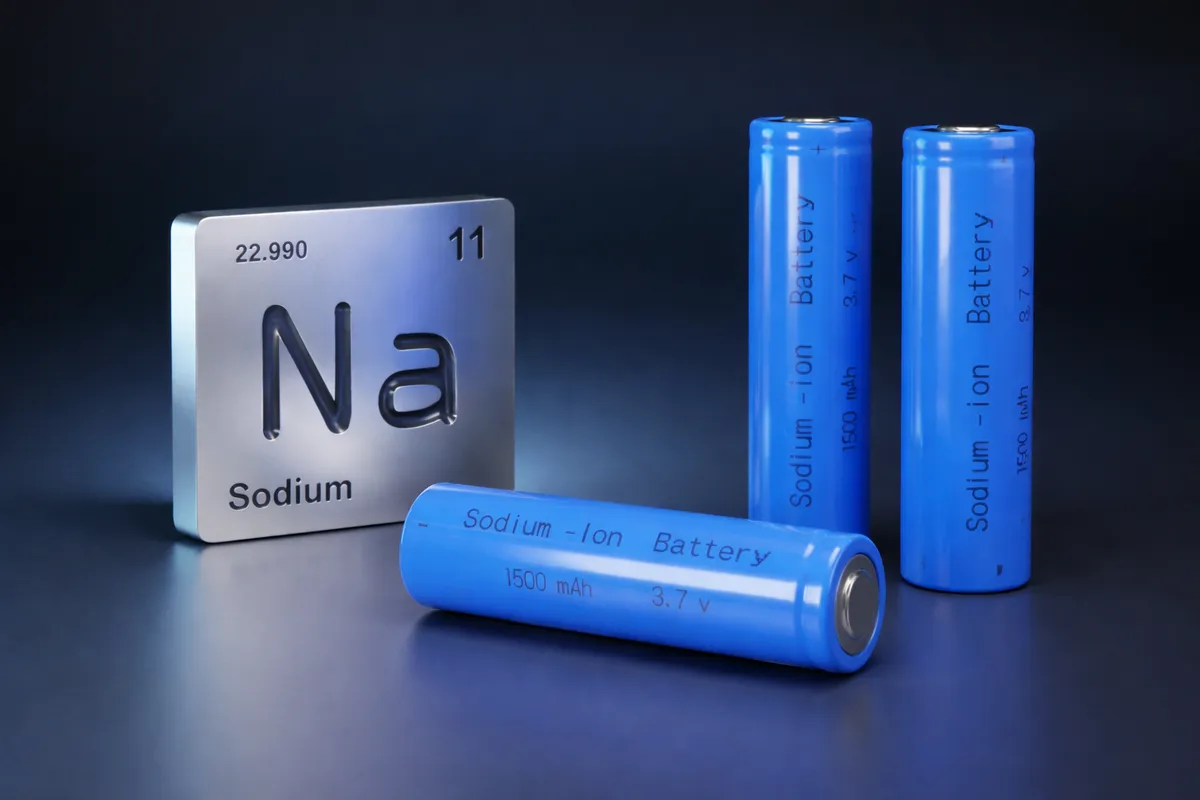
Several grid-scale pilot projects have already integrated sodium ion battery systems for renewable smoothing and short-duration storage. These systems offer cost advantages and improved safety under certain conditions.
Case 2: Solid-State Battery Pilot Projects (Europe)
Solid state battery technology is being tested in EV and stationary storage applications, with a focus on safety and energy density improvements.
Case 3: Lithium-Based C&I Storage (Global)
Lithium-ion remains the dominant choice for energy storage for energy transition projects, especially in:
- Peak shaving
- Backup power systems
- Renewable integration

These advanced battery case studies demonstrate a clear pattern: innovation is happening, but within technologies that are already close to commercialization—not in quantum systems.
Should Engineers Prepare for Quantum Battery Adoption?
This is one of the most critical questions—and one that must be answered with precision.
Short-Term (0–5 Years)
- No impact on project design
- No need for system adaptation
- No procurement considerations
Mid-Term (5–10 Years)
- Monitor research developments
- No integration into mainstream projects
Long-Term (10+ Years)
- Potential disruption (uncertain timeline)
- May influence future system architectures
Engineering Conclusion
At this stage, the correct strategy is awareness—not adoption.
Engineers should track developments in future battery technology but should not allow speculative technologies to influence current system design decisions.
How to Answer Clients Asking About Future Battery Technology
Client communication is often where confusion becomes risk.
When clients ask about quantum batteries or next generation battery technologies, engineers need a structured response that balances honesty with practicality.
Recommended Communication Framework
- Acknowledge the trend
- “Yes, new battery technologies are being developed globally.”
- Clarify current reality
- “However, quantum batteries are still in the research phase and not commercially available.”
- Reinforce current best practice
- “For current projects, lithium-based systems remain the most reliable and cost-effective solution.”
- Offer future flexibility
- “We can design systems that allow future upgrades if new technologies become viable.”
Example Statement
“While quantum battery technology shows promise, current energy storage projects rely on proven lithium-ion systems to ensure performance, safety, and return on investment.”
This approach ensures you maintain technical credibility while addressing client curiosity.
Will Quantum Batteries Replace Lithium?
This is one of the most searched—and most misunderstood—questions.
Short Answer: No (Not in the Foreseeable Future)
Why Not?
- Technology Maturity Gap
Lithium-ion has decades of optimization behind it. Quantum batteries are still experimental. - Economic Barriers
Even if technically feasible, cost structures for quantum systems remain unknown. - Infrastructure Lock-in
The global energy storage ecosystem—from manufacturing to integration—is built around lithium technologies. - Alternatives Already Emerging
Technologies such as sodium-ion and solid-state batteries are far more likely to scale before quantum batteries.
This places quantum batteries in the category of long-term alternatives to lithium ion batteries, rather than immediate replacements.
What Should You Do in Current Project Design? (Critical Section)
For engineers and EPC contractors, this is the most actionable part of the discussion.
1. Prioritize Proven Technologies
Focus on:
- Lithium-ion systems
- Mature large-scale energy storage solutions
- Bankable technologies with known performance metrics
2. Design for Flexibility
Future-proofing does not mean adopting new technologies—it means enabling adaptability.
Best practices include:
- Modular system architecture
- Scalable PCS design
- Flexible EMS integration
As demand for advanced energy storage solutions continues to grow, designing systems that can evolve over time becomes a key competitive advantage.
3. Work with Experienced Suppliers
Technology selection is only part of the equation—execution matters just as much.
Partnering with a reliable battery energy storage system supplier ensures:
- System reliability
- Compliance with standards
- Long-term operational support
4. Avoid Overengineering for Hypothetical Technologies
Do not:
- Oversize systems for unknown future requirements
- Delay projects waiting for new technologies
- Compromise ROI for speculative upgrades
The Real Trend: Diversification, Not Disruption
The future of energy storage is not about one technology replacing another—it is about diversification.
Different applications require different solutions:
- Short-duration storage → Lithium-ion
- Medium-duration → Sodium-ion / hybrid systems
- Long-duration → Emerging mechanical or thermal storage
- Experimental → Quantum batteries


Quantum batteries may eventually play a role, but they will likely complement—not replace—existing systems.
Conclusion: Make Engineering Decisions Based on Reality, Not Headlines
Quantum battery breakthroughs are exciting, but they should not distort engineering judgment.
For today’s projects:
- Lithium-ion remains the most reliable and scalable solution
- Emerging technologies should be monitored, not adopted prematurely
- System design should focus on flexibility and proven performance
For engineers and contractors, the goal is not to predict the future perfectly—but to make robust decisions based on current realities.
In this context, quantum batteries are not a solution to implement—but a signal to observe.
FAQ: Engineers’ Most Common Questions About Quantum Battery and Future Energy Storage
1. What is a quantum battery and how is it different from traditional batteries?
A quantum battery is an experimental energy storage concept based on quantum mechanics principles such as superposition and entanglement. Unlike lithium-ion batteries, which rely on electrochemical reactions, quantum batteries aim to store and transfer energy through quantum states.
From an engineering perspective, the key difference is that lithium-ion batteries are commercially viable and widely deployed, while quantum batteries remain in the research phase with no practical applications yet.
2. Is the recent quantum battery breakthrough ready for real-world projects?
No. Despite the attention around the latest quantum battery breakthrough, the technology is still at the laboratory stage.
There are currently:
- No commercial products
- No grid-scale deployments
- No industrial applications
Engineers should treat this as a long-term research development rather than a deployable solution.
3. Will quantum batteries replace lithium-ion batteries in the future?
Not in the foreseeable future.
Lithium-ion batteries dominate due to:
- Mature supply chains
- Proven reliability
- Scalable manufacturing
Quantum batteries may become part of future battery technology, but they are more likely to complement rather than replace lithium-ion systems.
4. Should I consider quantum batteries when designing current energy storage projects?
No. Quantum batteries should not be included in current project design decisions.
Instead, engineers should:
- Focus on proven technologies
- Optimize system efficiency and cost
- Design flexible architectures for future upgrades
Speculative technologies should not impact present-day engineering decisions.
5. What are the most practical alternatives to lithium-ion batteries today?
Several alternatives to lithium ion batteries are already emerging, including:
- sodium ion battery (cost advantages, early deployment)
- solid state battery (safety improvements, pilot stage)
- graphene battery technology (high performance, limited applications)
These technologies are far closer to commercialization than quantum batteries.
6. Are there any advanced battery case studies available today?
Yes. Real-world advanced battery case studies include:
- Sodium-ion battery deployments in grid projects (China)
- Solid-state battery pilot programs in Europe
- Large-scale lithium-based systems in commercial and industrial applications
These examples demonstrate that innovation is happening within deployable technologies—not quantum systems.
7. How should I respond when clients ask about future battery technology?
A structured response is recommended:
- Acknowledge innovation (future battery technology is evolving)
- Clarify reality (quantum batteries are not commercial yet)
- Reinforce current best option (lithium-ion remains dominant)
- Offer future flexibility (design systems that can be upgraded)
This approach maintains both technical accuracy and client confidence.
8. Do quantum batteries offer higher efficiency than current systems?
In theory, quantum batteries could achieve very high efficiency due to collective charging effects.
However, in practice:
- There is no real-world performance data
- No system-level efficiency benchmarks exist
Current energy storage efficiency comparison still favors optimized lithium-ion systems in real applications.
9. Should EPC contractors invest in quantum battery technology now?
At this stage, investment should be limited to awareness and monitoring.
Recommended approach:
- Track R&D trends
- Avoid capital allocation based on speculation
- Focus on deployable advanced energy storage solutions
10. How can I future-proof my energy storage projects today?
Instead of waiting for new technologies, engineers should:
- Use modular system designs
- Ensure compatibility with multiple battery types
- Work with experienced battery energy storage system supplier partners
This approach ensures that systems remain adaptable without compromising current project performance.
The Hidden Reasons Energy Storage Project Costs Vary — And What You Can Do to Improve Procurement Outcomes
Long-Duration Energy Storage vs Traditional Storage: Which One Will Win the Future of Energy?
contact us
For more questions please


Office Address: 701, Building A, Yonghuayuan Business Building, Baotian 2nd Road, Chentian Community, Xixiang Street, Bao'an District, Shenzhen, Guangdong Province, China
Factory Address 1: Room 701, Building 2, Kegu Industrial Park, Zone B, Jian'an Road, No. 790, Chang'an Town, Dongguan City, Guangdong Province, China
Factory Address 2: Building 7, Phase II Standardized Factory, Innovation Industrial Park, Duji Economic Development Zone, Huaibei City, Anhui Province, China