


PCENERSYS BOLG
Your BESS Is Lying to You: 5 BESS Procurement Traps to Avoid

The Field Reality of BESS Procurement: Why Energy Storage Projects Fall Short of Promised ROI
At project sites for Commercial & Industrial (C&I) and utility-scale Battery Energy Storage Systems (BESS), many EPC contractors and project owners are grappling with a severe "ROI erosion" problem. Financial models that appear sophisticated on paper often crumble the moment the equipment is energized and commissioned:
- Scenario 1 (Inflated Capacity Ratings): "You calculate peak-valley arbitrage returns based on a nominal capacity of 215 kWh, yet on the very first day of operation, you’re lucky if the actual AC-side discharge output hits even 90% of that figure."
- Scenario 2 (Collapse of Cell Consistency): "Less than two years into operation, battery racks start tripping frequently due to excessive voltage imbalances. Despite daily on-site repairs by service engineers, the system's usable capacity suffers a precipitous drop."
- Scenario 3 (Degradation and Warranty Disputes): "When you seek compensation for capacity degradation that far exceeds expectations, the manufacturer cites exemption clauses regarding 'ambient temperatures exceeding limits' or 'non-compliant Depth of Discharge (DOD),' effectively rendering the contractual warranty terms worthless."
A BESS unit is far more than just "hundreds of LFP battery cells stuffed into a metal cabinet." Containerized BESS units that look identical on the outside can harbor hidden internal flaws—ranging from poor cell consistency and thermal management issues to shortfalls in usable energy delivery and ineffective BMS balancing algorithms—that are sufficient to completely destroy the project's Levelized Cost of Storage (LCOS).
This article peels back the curtain on the hidden pitfalls of BESS procurement. We provide a step-by-step guide on how to identify and avoid five critical traps—inflated capacity ratings, cell inconsistency, thermal management failures, and warranty loopholes—during the drafting of technical specifications for RFPs and the Factory Acceptance Testing (FAT) phase, ensuring your energy storage assets achieve efficient, stable operation throughout their entire lifecycle.

Pitfall 1 — Capacity Misrepresentation: Nominal Capacity vs. Usable Capacity
During the BESS procurement process, a common pitfall regarding financial modeling arises when a buyer purchases a battery storage cabinet with a nominal rating of 215 kWh, only to discover during on-site testing that the actual discharge capacity is merely around 190 kWh. To understand this discrepancy, it is essential to rigorously distinguish between three core concepts:
Nominal Capacity: Simply the aggregate theoretical physical capacity of the individual LFP battery cells (e.g., a module assembly of fifteen 3.2V/280Ah cells in series), without accounting for any system losses.
Usable DC Capacity: The actual energy output available on the DC side, constrained by the Depth of Discharge (DoD—typically limited to 90%–95% to preserve cell longevity) and cell voltage differential protection thresholds.
AC Discharged Capacity: The net energy ultimately delivered to the grid or load at the Point of Common Coupling (PCC) after DC-to-AC conversion by the PCS (Power Conversion System) and the deduction of auxiliary power consumption (including liquid cooling units/AC, HVAC, BMS, and fan power draw).
Some energy storage battery suppliers exploit parameter ambiguity to mask true performance when marketing their products. Common tactics for inflating figures or misleading presentation include: conducting tests in a controlled laboratory environment at a constant 25°C using very low charge/discharge rates (e.g., 0.1C) to exaggerate initial usable energy data; or—when declaring Round-Trip Efficiency (RTE)—deliberately excluding power consumption from thermal management and auxiliary systems, calculating only the DC-side efficiency of the battery clusters themselves.
To avoid such pitfalls, buyers must incorporate strict acceptance criteria and contractual terms into the technical requirements of the BESS RFP:
FAT On-Site Verification: Require that, during the Factory Acceptance Testing (FAT) phase, a full charge/discharge cycle test be conducted at the PCC using a standard load bank at a 0.5C/0.5C rate to measure the actual AC Discharged Capacity and the true system RTE (inclusive of auxiliary power consumption).
Locking in the energy delivery curve: Explicitly require the supplier—within the RFP technical agreement—to provide curves mapping "Nominal Energy vs. Delivered AC Energy" across various C-rates (0.25C, 0.5C, 1C) and ambient temperature gradients, and designate "Delivered AC Energy" as the sole criterion for final payment and compensation for returns.
Pitfall 2 — Cell Inconsistency & Voltage Imbalance
For 1500V containerized BESS (Battery Energy Storage Systems), many buyers mistakenly believe that simply sourcing LFP battery cells from well-known brands guarantees success. However, issues regarding cell-to-cell consistency—hidden deep within the system—often trigger a severe "bucket effect" (or "weakest link" problem), acting as an invisible killer that erodes the project's lifespan.
1. Electrochemical Mechanism: The "Bucket Effect" of Cell Consistency
In large-scale energy storage systems utilizing series-parallel configurations, minute differences between cells are continuously amplified during charge-discharge cycles. When voltage differentials (ΔV > 20mV) or internal resistance (DC/AC) variances emerge:
Premature Cut-off Effect: Toward the end of a charge or discharge cycle, underperforming "weak cells" are the first to hit voltage protection thresholds (such as overcharge or over-discharge limits), forcing the entire battery rack to shut down prematurely. Chain Reaction: This means that even if 99% of the cells in the rack retain usable capacity, a single "weak link" cell is sufficient to drag down the actual usable capacity of the entire 1500V battery string, causing a precipitous drop in available capacity.
2. The Trap of Grade B Cells and Second-Life Batteries
To cut BESS procurement costs, some low-price suppliers mix Grade B cells, downgraded cells, or even recycled second-life EV batteries—none of which have undergone rigorous capacity grading and sorting—into the system integration process. During operation, these substandard cells are highly prone to:
Internal micro-short circuits. Accelerated capacity divergence. Localized thermal hotspots, creating serious safety hazards.
3. Limitations of BMS Balancing Capabilities
Many purchasers assume that simply equipping a system with a BMS (Battery Management System) guarantees reliability, yet they overlook the technological gap regarding balancing currents:
Passive vs. Active Balancing: Traditional passive balancing (typically 100mA) relies on dissipating energy as heat through resistors. When dealing with today's mainstream high-capacity cells (such as 280Ah or 314Ah LFP cells), this meager balancing current is woefully inadequate—akin to trying to put out a fire with a single cup of water—and fails to counteract the tendency for cell divergence during prolonged, high-intensity operation.
4. Engineering Standards and Factory Audit Checklists
To prevent consistency issues at the source, buyers must establish strict cell-sorting criteria within factory audits and technical agreements:
Capacity Spread: The spread in cell capacity at the time of delivery must be strictly controlled to within 1. ACIR Spread: The spread in AC internal resistance must be kept below 2. Static Delta Voltage: The static voltage difference after factory resting periods must be strictly less than 10mV.
Pitfall 3 — Thermal Management Traps: Liquid Cooling vs. Air Cooling
Throughout the lifecycle of a Battery Energy Storage System (BESS), temperature is the most critical physical variable determining battery longevity and system safety. However, when purchasing commercial and industrial (C&I) energy storage cabinets or containerized BESS units, buyers often focus solely on initial procurement costs, overlooking the decisive impact of thermal management architecture on long-term capacity degradation.
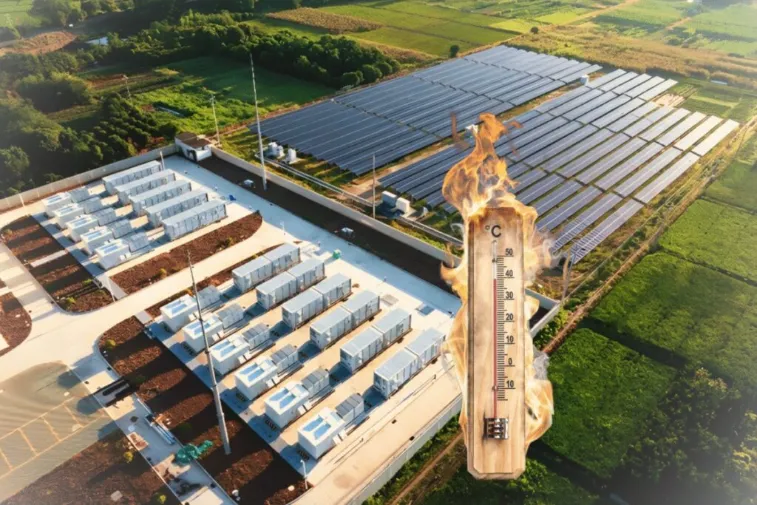
Electrochemical degradation follows the Arrhenius equation; the rate of internal chemical reactions within the battery cell doubles for every 10°C rise in ambient temperature.
High-Temperature Degradation: When LFP battery cells operate in high-temperature environments (above 35°C) for extended periods, the Solid Electrolyte Interphase (SEI) layer inside the cell thickens rapidly. This process is accompanied by lithium plating, resulting in the permanent loss of active lithium ions.
Polarization Caused by Temperature Differentials: If the temperature difference between cells within the same battery module or rack exceeds 3°C, cells in hotter zones degrade much faster than those in cooler zones. This uneven degradation rapidly widens the gap in cell consistency, triggering the "bucket effect" (where the system's performance is limited by its weakest component) and leading to premature system retirement.
Air Cooling vs. Liquid Cooling. Air Cooling Drawbacks of Air Cooling: Traditional air cooling relies on forced convection via air ducts and fans. High-density cabinets are prone to uneven airflow distribution, localized thermal hotspots, and significant temperature gradients. Furthermore, air cooling requires the continuous operation of high-power fans, substantially increasing auxiliary power consumption.
Technical Advantages of Liquid Cooling: Liquid cooling utilizes cold plates with internal flow channels that make direct contact with modules for heat exchange; the specific heat capacity of the cooling medium is far higher than that of air. High-quality liquid cooling systems can precisely control internal temperature differentials to Δt ≤ 2.5°C. This not only significantly extends battery cycle life but also enhances energy density and reduces the system's physical footprint.
3. Hidden Risks of Liquid Cooling Systems
While liquid cooling offers distinct advantages, poor manufacturing processes can introduce new risks:
Coolant leakage: Leaks caused by welding defects in cold plates or aging connectors can lead to high-voltage insulation failure.
Flow distribution imbalance: Poorly designed parallel flow paths for cold plates can result in significant disparities in heat dissipation performance across modules.
Improper TIM (Thermal Interface Material) application: Loose contact or air pockets/voids can cause a sharp increase in localized thermal resistance.
4. Buyer Acceptance and Verification Framework
To ensure the thermal management system meets its claimed specifications, buyers should clearly define the following verification processes in the procurement agreement:
Simulation verification: Require the supplier to submit high-precision Computational Fluid Dynamics (CFD) analysis reports.
SAT thermal field measurement: During the Site Acceptance Testing (SAT) phase, require the system to operate under continuous full-load charge/discharge conditions (0.5C/1C). Use infrared thermal imaging and designated cell temperature monitoring points to conduct measurements, ensuring the maximum temperature difference across the entire cabinet meets the strict requirement of Δt ≤ 2.5°C.
Pitfall 4 — Capacity Fade & Warranty Traps
In the commercial negotiations for BESS (Battery Energy Storage System) procurement, the "hidden pitfall" most frequently overlooked by buyers lies in the warranty terms. Many buyers are drawn in by supplier claims of "6,000-cycle life" or "15-year extended warranties," unaware that in real-world operating conditions, the rate of capacity degradation often far exceeds expectations, while complex warranty clauses serve as a "safe harbor" for suppliers to evade liability.
1. Calendar Aging vs. Cycle Aging
The actual capacity degradation of battery cells is the result of two superimposed factors:
Cycle Aging: Degradation of the electrode structure caused by the intercalation and de-intercalation of lithium ions during charge-discharge cycles. Laboratory figures—such as "6,000 cycles at 25°C (80% End of Life, or EOL)"—are obtained under highly idealized, constant-temperature conditions and standard charge-discharge rates.
Calendar Aging: Even when the energy storage system is idle, internal side reactions continue to consume active lithium if the system is maintained at a high State of Charge (SOC) or in a high-ambient-temperature environment. In real-world operations, fluctuating C-rates and rising ambient temperatures significantly accelerate the combined effects of calendar and cycle aging, rendering laboratory data useless for predictive purposes.
2. Decoding the "Word Games" in Warranty Terms
The EOL Liability Evasion Trap: Contracts may appear to guarantee "80% SOH (State of Health) / EOL performance," yet remain vague regarding the required response time for repairs once usable energy drops to 80% or who bears the cost of battery augmentation (adding battery modules).
Loopholes in Onerous Exemption Clauses: Suppliers often embed extremely strict operational constraints within the warranty details—such as stipulations that the "average daily ambient temperature must not exceed 25°C," "warranty coverage is voided if the C-rate exceeds 0.5C for a cumulative duration of X minutes," or "warranty eligibility is lost if SOC remains above 90% for extended periods." If the BMS logs are retrieved, suppliers can easily find grounds to disclaim liability, effectively rendering the warranty commitment worthless.
3. How to Draft a Robust Warranty and Compensation Agreement
To ensure the buyer's interests are effectively protected throughout the project's 10–15 year lifecycle, the following mandatory terms must be locked in when signing the BESS contract:
Linear capacity degradation guarantee based on energy throughput: Reject vague time-based warranties; instead, require an agreement guaranteeing a linear capacity degradation curve tied to specific annual energy throughput (measured in MWh/year).
Quantifiable Liquidated Damages (LD): Clearly define the LD formula within the contract. If the measured AC discharged capacity falls below the guaranteed degradation threshold, the supplier must provide cash compensation at a fixed rate per MWh of shortfall or perform battery augmentation free of charge within a specified timeframe, ensuring the project's full-lifecycle LCOS financial model remains intact.
Pitfall 5 — BMS & EMS Intelligence Gaps
In the 1500V high-voltage containerized BESS, the Battery Management System (BMS) and Energy Management System (EMS) are the "brains" that ensure safe operation and accurate measurement of the system. However, many cheap solutions still use the traditional static BMS architecture, and their solidified State of Charge (SOC) and State of Health (SOH) estimation algorithms are prone to serious cumulative measurement deviations, resulting in the system being unable to accurately determine the actual usable energy, and even causing major safety accidents such as battery overcharge and overdischarge.
In order to meet the operation and maintenance requirements of modern commercial and industrial (C&I) and grid-side (utility-scale) energy storage projects, purchasers must choose a BMS/EMS solution with high-level intelligent algorithms:
Dynamic calibration and prediction algorithm: BMS is required to have a real-time online SOH calibration mechanism and battery-level cell-level temperature monitoring capabilities, and be able to upload data to the cloud, and use AI algorithms to achieve intelligent early warning of minor anomalies in thermal runaway.
Seamless communication protocol interaction: The system must support standard industrial communication protocols (such as Modbus TCP, CAN bus, IEC 61850) to achieve millisecond-level seamless data interaction between BMS, local EMS, PCS (converter) and microgrid controller to ensure rapid response and execution of emergency shutdown (ESD) in the event of a sudden failure.

Conclusion & BESS Procurement Action Plan
Safeguarding the long-term value and actual returns of energy storage assets requires moving beyond the blind pursuit of low initial CAPEX and shifting focus toward rigorous control over cell consistency, thermal management, and legally binding warranty terms. Only by closing every potential loophole in the RFP technical specifications can you ensure the project achieves its projected high ROI over a 10–15 year lifecycle. Please feel free to contact us regarding any project-related issues or requirements; we are here to provide solutions.
Frequently Asked Questions (FAQ)
Answering the critical technical questions every C&I and utility-scale BESS buyer must evaluate during vendor audit and contract negotiation.
Q1: How to spot fake BESS capacity specifications during supplier evaluation?
To detect inflated or misrepresented capacity figures, insist on verifying Usable DC Capacity and AC Discharged Capacity rather than relying on Nominal Capacity nameplate figures. Require the supplier to perform a full 0.5C continuous charge/discharge test at the Point of Common Coupling (PCC) under standard ambient temperature . Ensure that all auxiliary power loads (HVAC liquid chillers, BMS self-consumption, and fans) are fully factored into the net delivered Round-Trip Efficiency (RTE) calculations.
Q2: What is the real cycle life of LFP BESS cells under industrial operating conditions?
While manufacturers often advertise lab-tested figures of 6,000 to 8,000 cycles at 25℃ (100%DOD, 0.5{C), real-world field lifespan is significantly affected by dynamic operating conditions. Under industrial operations featuring thermal gradient stress (Δ T > 3℃), sustained high State of Charge (SOC) idling, and seasonal ambient spikes, actual usable cycle life often drops by 15%--20%due to accelerated calendar aging and SEI layer thickening. Real-world modeling must account for coupled calendar and cycle degradation.
Q3: Why do BESS cells lose consistency over time, and how can system integrators prevent it?
Cell inconsistency naturally accelerates due to slight initial variations in internal AC/DC resistance and heat dissipation differences across a rack. Over time, higher-temperature cells age faster, creating a wider voltage imbalance ( ΔV) that triggers premature string shut-off via BMS protection limits (the "barrel effect"). System integrators prevent this by enforcing strict initial cell grading capacity spread < 1%, ACIR< 2%), deploying high-precision liquid cooling and integrating high-efficiency balancing BMS architectures.
Q4: How to test BESS capacity during Factory Acceptance Testing (FAT)?
During FAT, connect the containerized BESS or outdoor cabinet to a calibrated resistive-inductive load bank and power analyzer. Execute a complete 100%DODdischarge cycle at the rated continuous C-rate (0.5Cor 1C) from maximum charge cut-off down to minimum voltage thresholds. Record energy output at the AC breaker, track individual cell delta voltages at cycle limits, measure total auxiliary power draw throughout the cycle, and verify that delivered usable energy meets 100 of the contractual nameplate guarantee.
Q5: How to verify BESS warranty terms on capacity degradation before signing a contract?
Before signing a BESS procurement contract, audit the warranty clauses for restrictive operational loopholes such as unrealistic ambient temperature caps or dynamic C-rate restrictions. Ensure the warranty establishes a linear capacity fade curve tied directly to cumulative annual energy throughput (MWh/year) rather than calendar years alone. Crucially, embed explicit Liquidated Damages (LD) formulas that dictate financial compensation or mandatory battery augmentation if actual field capacity falls below guaranteed SOH/EOL thresholds.
Goodbye Lithium-Ion? How Close Are Sodium-Ion and Flow Batteries Really?
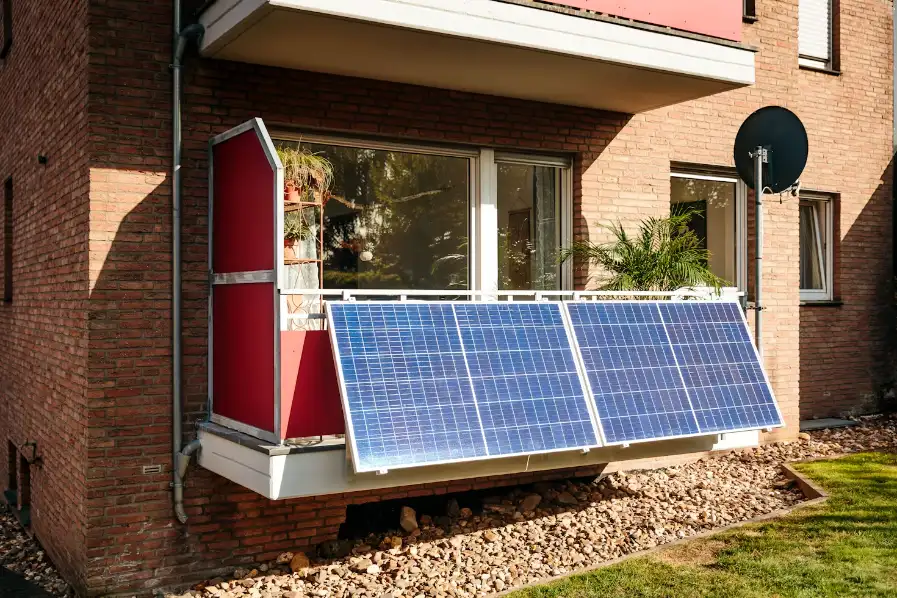
Balcony Solar with Battery: Smart Investment or Gimmick?
contact us
For more questions please


Office Address: 701, Building A, Yonghuayuan Business Building, Baotian 2nd Road, Chentian Community, Xixiang Street, Bao'an District, Shenzhen, Guangdong Province, China
Factory Address 1: Room 701, Building 2, Kegu Industrial Park, Zone B, Jian'an Road, No. 790, Chang'an Town, Dongguan City, Guangdong Province, China
Factory Address 2: Building 7, Phase II Standardized Factory, Innovation Industrial Park, Duji Economic Development Zone, Huaibei City, Anhui Province, China