


NEWS
ESS Manufacturer | Battery Technology | Global Energy Partner
2026 Energy Storage Surge: How the Supply Chain Absorbs Lithium Volatility
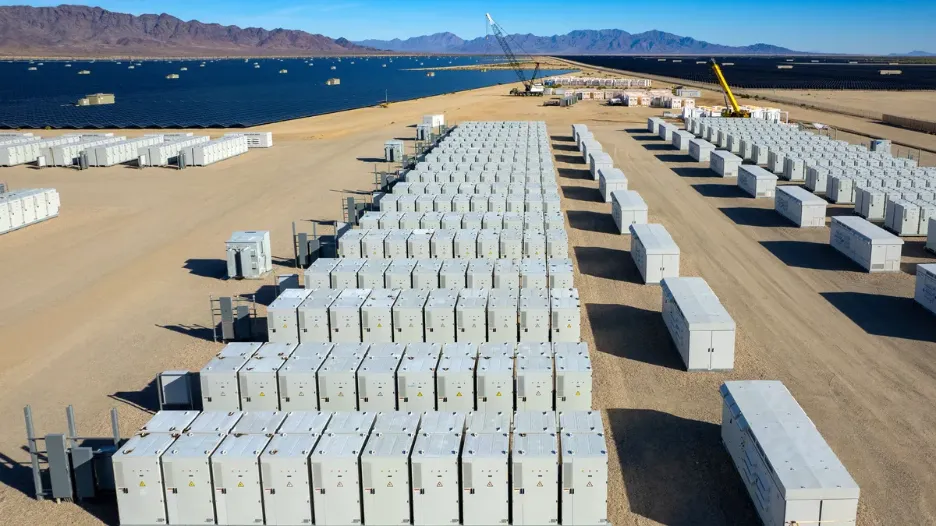
After reaching a high of 209800 yuan/ton in lithium prices, there has been a recent correction in lithium prices. As of the close on May 29th, lithium prices have still risen by over 42% this year. According to an interview with Shanghai Securities News, downstream energy storage demand continues to be booming, providing solid fundamental support for lithium prices. Top energy storage battery companies are already in full production, and institutions expect the global energy storage demand growth rate to exceed 50% by 2026.
Against the backdrop of high lithium prices, the industry chain has achieved smooth transmission through mechanisms such as price linkage and downstream direct procurement. However, small and medium-sized manufacturers still suffer from local friction due to insufficient bargaining power. Terminal car companies have gradually raised prices, forming a closed loop of cost transmission.
Global energy storage demand explosion in 2026: structural transformation from energy alternatives to AIDC essential needs

At the 18th Shenzhen International Battery Technology Exchange Conference (Exhibition) of CIBF 2026 held in mid May, the energy storage sector of participating companies received extremely high inquiries. Foreign guests can be seen everywhere on site, including many overseas homeowners and project developers.
The attention paid by overseas markets to energy storage is evident. Several leading energy storage battery manufacturers have stated that overseas energy storage demand is on the rise, and the company's energy storage battery sector is in full production. A salesperson from a listed energy storage battery company told us that in some overseas regions where electricity is scarce and prices are expensive, energy storage is gradually becoming a necessity.
The geopolitical conflicts in the Middle East have further amplified this demand. Lin Puzheng, Secretary of the Board of Directors of Dazhong Mining, believes that after the blockade of the Strait of Hormuz, oil and energy prices have risen significantly, and energy storage has become a necessity from a substitute for energy.
Yu Meihan, a new analyst at Guotai Haitong Electric, stated that Europe attaches great importance to energy security and independence, and it is expected that the large storage and household storage markets will maintain high growth rates in the future; Affected by the increase in subsidies for household storage policies in Australia, the household storage market has experienced an outbreak since the beginning of this year; The growth rate of the energy storage industry in the United States is not particularly outstanding, but 2026 is expected to become the first year of AI data center (AIDC) storage allocation in the United States. From 2026 to 2030, the cumulative demand for energy storage in the United States is expected to exceed 300GWh.
According to calculations by Guotai Haitong, the global demand for energy storage is expected to grow by approximately 50% to 55% in 2026, while the growth rate for power batteries is expected to be around 20% to 25%, and the overall demand for lithium batteries is expected to increase by around 30% to 35%.
However, while demand is booming, production capacity cannot keep up quickly. We have learned that the construction period of energy storage factories ranges from 7 months to 18 months, and capacity release takes time. Even if the top companies are in full production, it is still difficult to meet all orders.
To cope with the current tight production capacity, some battery companies have been exploring compromise solutions. For example, EVE Energy adopts the CLS model (collaborative research and development, technology licensing, service support), sharing technology patents, manufacturing processes, copyright trademarks, etc. with partners through technology licensing, and providing consulting and human resources support to produce energy storage batteries using partners' production lines.
Equivalent to 'borrowing' the other party's production line, that is, using one's own formula, sending one's own personnel to debug equipment, and sharing the profits of the order together.
The lithium price transmission mechanism is becoming mature: how can the three core models cope with upstream cost fluctuations?

We have researched and found that compared to power batteries, energy storage is less sensitive to lithium prices, and the lithium price conduction mechanism of power batteries is established earlier and more mature. The transmission of lithium prices in the industrial chain is basically smooth, but there are still frictions in some areas.
In the lithium battery industry chain, lithium ore is the upstream, followed by the midstream of positive electrode materials, electrolytes, separators, etc., then to power battery and energy storage battery enterprises, and finally to terminals such as electric vehicles, energy storage power stations, and 3C consumer electronics. During the cycle of rising lithium prices, the interests of all parties involved are complex, but the transmission mechanism has gradually taken shape.
At present, the lithium battery industry chain has explored three mature response strategies to ensure the smooth transmission of cost pressure:
Implementing an upstream downstream price linkage mechanism: This is the most widely used solution in the industry. By using a pre-set price linkage formula, companies can quickly transmit the fluctuations of lithium carbonate downstream. For example, the industry has established a calculation reference that for every 10000 yuan/ton increase in lithium carbonate, the cost of each kilowatt hour battery cell will correspondingly increase by 6 yuan.
Implementing downstream procurement and processing fee models: Many car companies choose to bypass intermediate links and directly negotiate prices with lithium salt factories, while positive electrode material factories transform into "contract factories" and only charge fixed processing fees. This model can effectively help material companies avoid the risk of drastic fluctuations in raw material prices, and BYD and its suppliers have implemented such operations in some links.
Utilizing prepayments to lock in raw material supply: Some leading battery companies with strong bargaining power receive prepayments of hundreds of millions of yuan from customers to lock in the supply and prices of upstream raw materials in advance, ensuring cost control in a volatile market.
|
Transmission Mechanism |
Core Logic |
Industry Impact & Examples |
|
Price Linkage |
Prices are dynamically adjusted based on a pre-set formula linked to raw material fluctuations. |
Most widely used; e.g., a 10,000 RMB/ton change in lithium carbonate results in a 0.006 RMB/Wh cell price adjustment. |
|
Direct Procurement |
Terminal clients buy lithium salts directly; manufacturers function as "contract factories" charging only processing fees. |
Effectively helps material companies bypass raw material price risks; practiced by firms like BYD and its suppliers |
|
Prepayment Lock-in |
Customers provide massive advance payments to secure raw material supply and fix prices in advance |
Utilized by leading battery makers with high bargaining power; involves prepayments of hundreds of millions of yuan |
However, the price transmission mechanism of the industrial chain is not absolutely smooth, and there are still local frictions. Midstream enterprises with weak bargaining power are still under pressure.
The price linkage mechanism has not provided "absolute fairness" for battery manufacturers. The relevant personnel of the listed companies in the medium-sized battery cell sector mentioned above stated that small and medium-sized battery cell factories are in a situation of being "caught off both ends". For example, when lithium carbonate is priced at 150000 yuan/ton, according to the linkage formula, the battery cell quotation should be 0.423 yuan/Wh. However, downstream car companies with strong bargaining power may request to deduct 3 cents and only recognize 0.42 yuan/Wh.
In addition, some midstream manufacturers who purchase lithium salts themselves still feel "struggling". A spokesperson from a leading electrolyte company stated that the rising cost of raw materials needs to be shared by the entire supply chain, either by suppressing their own gross profit, reducing the cost of lithium salt processes, or seeking alternatives.
Although there is local friction, the cost is ultimately transmitted to the consumer end. Since May, some models of more than 10 mainstream car companies, such as BYD and Changan Qiyuan, have increased in price, with individual vehicle price increases ranging from 2000 yuan to 10000 yuan. This indicates that the rise in lithium prices has been transmitted to the overall vehicle price through the battery link, forming a closed loop of price transmission.
Game and Balance: How to Achieve Smooth Transmission of Lithium Carbonate Prices in the Battery Industry Chain?
During the cycle of rising lithium prices, the interests of all parties involved are complex, but the transmission mechanism of the industrial chain has gradually taken shape: firstly, establishing an upstream and downstream price linkage mechanism; Secondly, the downstream directly purchases lithium salts, while the positive electrode material factory is only responsible for processing; Thirdly, customers prepay to lock in raw materials.
Although the above mechanisms have largely alleviated the impact of price fluctuations, the profit distribution within the industrial chain has not yet reached an ideal equilibrium state. Midstream enterprises with weaker bargaining power often need to offset local friction by compressing their gross profit or optimizing production processes during the cost transmission process. With the release of more integrated production capacity in the second half of 2026, the industry's focus will shift from simple "price transmission" to the deep construction of "supply chain resilience". It is widely believed in the industry that only through deeper technological cost reduction and risk sharing agreements between the upstream and downstream of the industrial chain can the global solar storage market maintain sustainable cost competitiveness in the face of normalized lithium price fluctuations.
17.7 billion subsidies and 40% growth rate: Why Italy's 2027 KEY ENERGY is the true growth pole for energy storage companies
SNEC 2026: Photovoltaic giants reunite, who will be the focus of BC technology and long-term energy storage track?
Related Article

contact us
For more questions please


Office Address: 701, Building A, Yonghuayuan Business Building, Baotian 2nd Road, Chentian Community, Xixiang Street, Bao'an District, Shenzhen, Guangdong Province, China
Factory Address 1: Room 701, Building 2, Kegu Industrial Park, Zone B, Jian'an Road, No. 790, Chang'an Town, Dongguan City, Guangdong Province, China
Factory Address 2: Building 7, Phase II Standardized Factory, Innovation Industrial Park, Duji Economic Development Zone, Huaibei City, Anhui Province, China