


NEWS
ESS Manufacturer | Battery Technology | Global Energy Partner
Arizona’s 4GWh CO Bar Complex: A Blueprint for Financing Mega BESS Projects Under IRA
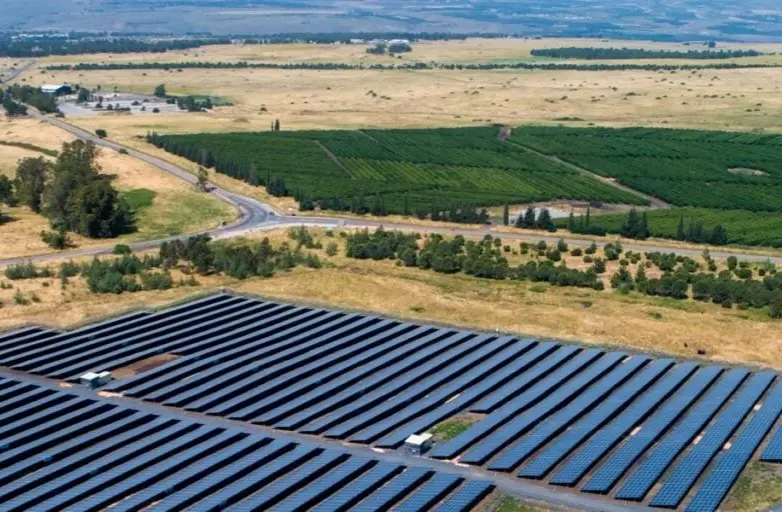
Inside the $3B Financing of CO Bar Complex: How Enlight Is Scaling 4GWh BESS Amid Grid Bottlenecks
As the North American renewable energy market reaches new heights, independent power producer (IPP) Enlight Renewable Energy and its U.S. subsidiary, Clēnera, officially signed a debt financing framework agreement on June 25. The proceeds will fully fund the CO Bar Complex project in Arizona. Boasting a massive capacity of 1.2 GW of solar power and 4 GWh of battery energy storage systems (BESS), this mega-scale green energy cluster ranks among the largest utility-scale solar and storage complexes currently under construction in North America—and indeed the world. The project is slated to commence commercial operation (COD) in phases between 2027 and 2028, poised to fundamentally reshape the energy landscape of the Southwest power grid.
The "Connect and Expand" Strategy: Solving the Interconnection Queue Nightmare
In the current landscape of clean energy development in North America, capital is often not the primary obstacle; the grid interconnection queue represents the industry's toughest challenge. Whether within the CAISO region or the WECC (Western Electricity Coordinating Council) area covering Arizona, conventional projects frequently face agonizing waits of five to seven years between application submission and the completion of interconnection studies. This delay causes numerous utility-scale BESS (Battery Energy Storage System) projects to be abandoned after missing their optimal investment windows.
To address this systemic pain point, Enlight eschewed the inefficient, piecemeal approach of applying for grid interconnection on a project-by-project basis. Instead, it leveraged its core technical asset: the "Connect and Expand" business model.
At the heart of this strategy, the developer secured a rare, high-capacity grid node to serve as a strategic anchor. Using this node as a foundation, they organically linked five sub-projects—much like assembling Lego bricks: the CO Bar 1–3 phases focused on solar PV combined with some storage, while the CO Bar 4–5 phases, dedicated entirely to energy storage, seamlessly shared the same interconnection pathway.
This "hub-and-spoke" cluster design not only maximized grid asset utilization but also allowed the project team to bypass multiple complex approval hurdles. Consequently, the 4GWh BESS project secured financial backing from seven major international banks—including BNP Paribas and MUFG—in remarkably short order. This innovative grid strategy undoubtedly serves as a textbook example for the industry in tackling the widespread issue of interconnection delays across the United States.
Deconstructing the Financial Engine: $1.7B Debt Meets $1.5B Tax Equity
|
Financial Indicator |
Key Figures & Deal Structure |
Strategic Value & Offtake |
|
Total Capital Expenditure |
$2.90 Billion – $3.05 Billion |
Capital expenditure for 1.2GW solar + 4GWh BESS |
|
Term Debt Commitment |
$1.70 Billion (Backed by 7 Global Banks) |
Jointly committed by BNP Paribas, MUFG, Wells Fargo, etc. |
|
Projected Tax Equity |
$1.45 Billion – $1.52 Billion |
Monetizing Section 45/48 ITCs under the IRA framework |
|
Year-1 Expected EBITDA |
$205 Million – $210 Million |
Highly predictable cash flow with 85% contracted revenue |
|
Primary BESS Offtaker |
Salt River Project (SRP) |
20-year Long-Term Service Agreement for CO Bar 4 & 5 |
The IRA Bonus Playbook: Maximizing Domestic Content and Energy Community Credits
In the North American utility-scale energy storage market, industry reports often speak only in general terms about projects "expected to receive tax credits." However, the reason the CO Bar Complex was able to secure nearly $1.5 billion in Inflation Reduction Act (IRA) tax equity investment lies in Enlight’s strategic capitalization on a combination of IRA policy incentives, effectively maximizing the benefits derived from the Investment Tax Credit (ITC).
This strategy for leveraging policy incentives hinges on two key compliance factors:
- Energy Community Bonus (+10%): The project is sited in an area of Arizona historically dependent on coal and fossil fuels. Under IRS definitions, this location qualifies the project for the "Energy Community Bonus," boosting the total tax credit rate by 10 percentage points above the baseline.
- Domestic Content Bonus (+10%): For the standalone storage phases of the project (CO Bar 4 & 5), Enlight is actively pursuing the "Domestic Content Bonus." This requires the project's supply chain—specifically the sourcing of critical components such as battery cells, DC blocks, and BESS enclosures—to strictly meet the latest U.S. domestic content thresholds.
- Compliance regarding domestic supply chains has become a critical differentiator for securing financing in the North American utility-scale storage sector. Enlight’s move sends a clear signal to the global energy storage supply chain: in an era where global capital places a premium on "bankability," projects that align with U.S. domestic manufacturing requirements are far more likely to attract the favor of major financial institutions

Industry Outlook: What the CO Bar Financing Tells Us About the 2026-2028 BESS Market
The successful financing of the CO Bar Complex is not merely a victory for a single enterprise; it serves as a bellwether for the trajectory of the global utility-scale BESS (Battery Energy Storage System) market from 2026 to 2028. From this massive transaction, we can identify several key industry trends:
1. Financial giants have fully matured their assessment of the "bankability" of long-duration energy storage.
In the past, major international banks often adopted a "wait-and-see" approach regarding the long-term revenue models of standalone utility-scale storage projects. However, the joint financing commitment of $2.6 billion from seven top-tier global financial institutions—including BNP Paribas, MUFG, and Wells Fargo—sends a powerful signal from Wall Street and the European financial sector: the asset valuation and risk modeling frameworks for 4-hour long-duration BESS are now fully established. Long-duration storage has effectively become a "hard asset," functioning as a quasi-baseload power asset capable of generating stable cash flows.
2. The comprehensive rise of standalone BESS is unlocking a new phase in the WECC "Duck Curve" dynamic.
The CO Bar 4 & 5 phases of the project—operating purely as storage assets—successfully secured a 20-year long-term service agreement with the Salt River Project (SRP). This signals that the U.S. Southwest grid (WECC) is rapidly evolving from the traditional "solar-plus-storage" co-location model toward a phase of grid regulation dominated by large-scale standalone BESS.
As solar penetration peaks in high-insolation regions like Arizona, the gap between midday negative pricing caused by solar generation and the evening peak in electricity demand—the classic "Duck Curve"—is becoming increasingly extreme. Relying solely on co-located storage can no longer meet the grid's flexibility requirements. High-capacity, standalone storage assets with independent dispatch capabilities are emerging as the central hubs for smoothing grid fluctuations and managing the flow of clean energy. Over the next two years, these highly flexible and reliable standalone utility-scale storage projects will continue to lead the forefront of global investment and financing in the new energy sector.
Australia’s 40GW Energy Storage Roadmap: Decoding AEMO’s 2026 ISP and the BESS Reality Gap
Which European Markets Lead Grid-Scale BESS & EPC Growth?
Related Article

contact us
For more questions please


Office Address: 701, Building A, Yonghuayuan Business Building, Baotian 2nd Road, Chentian Community, Xixiang Street, Bao'an District, Shenzhen, Guangdong Province, China
Factory Address 1: Room 701, Building 2, Kegu Industrial Park, Zone B, Jian'an Road, No. 790, Chang'an Town, Dongguan City, Guangdong Province, China
Factory Address 2: Building 7, Phase II Standardized Factory, Innovation Industrial Park, Duji Economic Development Zone, Huaibei City, Anhui Province, China