


NEWS
ESS Manufacturer | Battery Technology | Global Energy Partner
Australia Renewable Energy FY26: Record 9.1 GW Operations Amid 18-Month Grid Delays
Lead Section: Key Highlights
A Historic Breakthrough in Australia’s Energy Transition
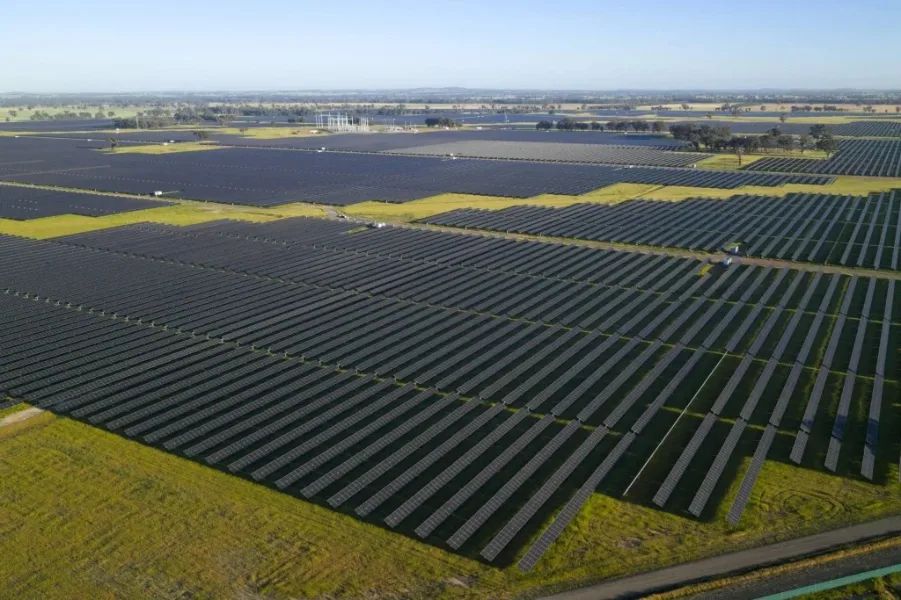
Sydney, July 20, 2026 — The latest "Connection Scorecard" released by the Australian Energy Market Operator (AEMO) reveals that the 2025/26 financial year (FY26) saw a record-breaking volume of large-scale renewable energy and storage projects achieve grid connection and reach Full Operational Capability within Australia’s National Electricity Market (NEM). The cumulative new capacity totaled 9.1 GW / 12.9 GWh.
This milestone achievement represents a more than 100% year-on-year increase compared to the 4.4 GW delivered in the 2024/25 financial year (FY25). It not only marks a new phase in infrastructure capacity for the NEM—one of the world's largest hybrid power systems—but also provides a robust foundation for accelerating Australia’s transition away from fossil fuels.
End-of-Year Sprint and Structural Drivers
This record-breaking fiscal year was largely driven by a surge in project delivery—a "sprint effect"—during the fourth quarter (the June quarter). In that quarter alone, 14 key projects with a combined capacity of 3.9 GW successfully passed grid compliance testing and entered full operational status, accounting for nearly 43% of the total capacity delivered throughout the fiscal year.
Data indicates that, despite facing supply chain fluctuations and complex grid connection assessment processes, the accelerated grid integration achieved by developers and EPC contractors toward the end of the fiscal year served as a primary driver for transforming Australia’s energy mix.
Expert Perspective: End-to-End Delivery and Technological Diversity
Margarida Pimentel, AEMO’s General Manager of Connections & Onboarding, highly commended this historic grid connection performance while offering an objective assessment of future project delivery. “Despite ongoing operational challenges, the FY26 results demonstrate a strong end-to-end performance across the grid connection pipeline,” stated Margarida Pimentel, Manager of Connections and Onboarding at AEMO.
“While our dynamic connection pipeline has expanded significantly from 53 GW to 75.4 GW, reaching our national transition targets requires more than just a growing list of applications. Ensuring seamless end-to-end delivery efficiency and deploying a diverse technology mix—combining solar PV, wind generation, and battery energy storage systems (BESS)—remains the ultimate key to supporting Australia’s energy transition.”
Pimentel emphasized that although the current grid connection pipeline has expanded by 42%, the challenge of efficiently converting these applications into dispatchable physical assets remains a priority that the entire industry must address collaboratively.
The Dominance of Energy Storage and the Surge in "Retrofitting" Existing Solar with Batteries
In AEMO’s latest Connection Scorecard report, the most striking structural shift is the comprehensive rise of energy storage assets. Data reveals that within the massive 75.4 GW grid connection pipeline, Battery Energy Storage Systems (BESS) command a dominant 52% share. Batteries have moved beyond being mere ancillary support for renewable energy; they have officially ascended to a leading role in Australia’s National Electricity Market (NEM).
2.1 Underlying Drivers of BESS Dominance (Accounting for 52% of the Pipeline)
The core reason BESS projects account for such a significant portion of the connection pipeline lies in the NEM’s unique market mechanisms, which offer highly attractive "revenue stacking" opportunities for commercial energy storage:
- Wholesale Market Arbitrage: As solar penetration surges, the spread between daytime and nighttime electricity prices in the NEM has widened dramatically. BESS can capitalize on this by absorbing low-cost electricity during periods of extremely low or even negative prices and discharging it during the evening peak—when prices are high—thereby generating substantial arbitrage profits.
- Frequency Control Ancillary Services (FCAS): The Australian grid demands exceptional system frequency stability. With millisecond-level response times, BESS holds a natural competitive advantage in the FCAS market. By providing critical services such as frequency regulation and contingency reserves, BESS projects can secure stable and diversified cash flow streams.
2.2 Hybrid Projects and the 24 GW "Solar-Plus-Storage" Retrofit Wave
Beyond standalone BESS projects, the NEM is undergoing a profound transformation toward "solar-plus-storage" integration. Data indicates that 4.3 GW (18%) of the applications received during the fiscal year were for co-located or hybrid solar-plus-storage projects. A more profound trend is that developers of existing standalone PV assets—totaling 24 GW—have initiated or completed the process of retrofitting their sites with Battery Energy Storage Systems (BESS).
1. Industry Bottlenecks: Duck Curve, Negative Pricing, and Curtailment
This surge in retrofitting activity stems directly from the existential crisis facing standalone PV projects. With the rapid expansion of distributed and utility-scale solar capacity, the National Electricity Market (NEM) has experienced an extreme "Duck Curve" phenomenon. During midday periods of abundant sunshine, electricity supply vastly exceeds demand, frequently triggering negative pricing and severe, widespread solar curtailment. Standalone PV plants face a dilemma where generation often results in financial loss, severely eroding their return on investment (ROI).
2. A Shift in Technology and Models: Transitioning to Dispatchable, Flexible Assets
Faced with this bottleneck, retrofitting existing PV plants with BESS—using either AC-coupled or DC-coupled architectures—has become a strategic consensus across the industry:
The industry is shifting away from a "generate-and-sell" model that relies entirely on weather conditions toward a model based on "dispatchable assets" characterized by high flexibility and time-shifting capabilities.
By adding battery storage, PV plants can capture and store curtailed energy during midday periods of negative pricing—thereby avoiding price troughs—and precisely deliver clean electricity to the grid during periods of high demand and pricing. This "solar-plus-storage synergy" not only significantly mitigates the risk of grid-imposed curtailment but also injects much-needed grid resilience into the Australian power system.

Undercurrents in Delivery: An In-Depth Analysis of the Grid Connection Timeline Extending to 18 Months
Despite record-breaking grid connection capacity achieved in the 2025/26 financial year (FY26), beneath this surface-level boom, the delivery of renewable energy projects in Australia is facing increasingly severe systemic bottlenecks. Data from AEMO’s Connection Scorecard indicates that the "last mile"—the journey from project approval to the Commercial Operation Date (COD)—remains fraught with challenges.
3.1 The "Bottleneck Effect" in the Implementation Phase
Data shows that in the last financial year, while 14.4 GW of new projects successfully advanced to the Implementation Stage—the phase led by developers involving actual engineering construction and grid connection testing—only 6.4 GW ultimately completed delivery, resulting in a conversion rate of less than 45%.
Of particular concern to the industry is the significant extension of project delivery timelines. AEMO statistics reveal:
- Increased Median Duration: The median duration for the implementation phase has surged from 14 months (recorded in the previous 12-month cycle) to 18 months.
- Prolonged Backlog: One-third (33%) of projects currently in the implementation phase have remained there for more than two years.
This trend indicates that while many projects secure initial connection approval, they subsequently stall for extended periods during physical construction, model assessment, and grid compliance testing.
3.2 Four Root Causes of Project Assessment and Commissioning Delays
Based on surveys of various industry stakeholders and an in-depth analysis of AEMO data, the root causes of delays in project grid connection and commissioning can be attributed to the following four key factors:
1. Design Changes & Technical Restructuring
Modifications to the electrical architecture during project development—necessitated by site geological conditions, adjustments to land lease arrangements, or changes in Point of Connection (POC) requirements—often trigger a restart of the compliance review process, forcing a suspension of construction progress.
2. Equipment Replacement & GPS Re-modeling
Amid supply chain fluctuations or changes in procurement costs, it is common for developers to switch inverter or BESS (Battery Energy Storage System) vendors mid-project. However, changing hardware necessitates the resubmission of complex dynamic grid simulation models—known as Generator Performance Standards (GPS)—to AEMO. This re-modeling and re-assessment process typically takes several months or longer.
3. Commercial & Capital Dynamics
Beyond technical hurdles, fluctuations in project capital are also critical drivers of delay. Factors such as asset sales, extended timelines for reaching Financial Close, and protracted commercial negotiations regarding Power Purchase Agreements (PPAs) with offtakers can all force construction work to halt while awaiting resolution.
4. Grid Capacity & Grid-Forming Requirements
As transmission congestion intensifies in certain regions of the National Electricity Market (NEM), grid operators are demanding greater system support capabilities from newly connected assets. In particular, for projects incorporating grid-forming inverters and technologies designed for "weak grid" stability, AEMO and Network Service Providers (NSPs) have introduced more rigorous and complex standards for on-site commissioning and model validation, thereby extending the testing cycle.
Industry Outlook: Pathways and Recommendations for Meeting 2030 Transition Targets
Faced with record grid-connection figures for the 2025/26 financial year (FY26) and the accompanying delivery bottlenecks, Australia’s energy transition stands at a critical juncture—shifting from a phase of "scale expansion" to one of "high-quality delivery." To achieve the Federal Government’s target of an 82% renewable energy share by 2030, the entire value chain must align its efforts across policy support, engineering planning, and technological innovation.
4.1 Policy Drivers and the Synergistic Effect of the Capacity Investment Scheme (CIS)
To address the financing and revenue uncertainties faced by developers, favorable government policies are creating deep synergies with AEMO’s Integrated System Plan (ISP). The Capacity Investment Scheme (CIS) plays a pivotal role in this regard:
Revenue Underwriting: The CIS tender mechanism provides long-term revenue floor guarantees for large-scale solar, wind, and BESS projects. This significantly lowers risk premiums in capital markets and accelerates the path to financial close.
Alignment of Grid Connection Priorities with ISP Planning: In conjunction with the ISP’s planning for transmission corridors and Renewable Energy Zones (REZs), CIS-supported projects are gaining greater certainty regarding grid access. This establishes a solid institutional foundation for the physical realization of the 75.4 GW grid-connection pipeline.
4.2 Actionable Insights for the Value Chain
Addressing the pain point of 18-month grid-connection delays, industry data from FY26 offers clear strategic guidance for participants across the value chain:
1. Insights for Developers
Lock in Grid Models Early: Developers must enhance the accuracy of dynamic grid modeling—specifically Generator Performance Standards (GPS)—during the pre-FID (Final Investment Decision) planning stage to avoid making ill-advised changes to electrical topology mid-stream. Supply Chain "Freezing": Minimize mid-project changes to inverter or BESS suppliers to prevent lengthy review delays caused by the need to resubmit R2 model assessments.
2. Insights for EPCs & OEMs
Grid-Forming Technology as a Critical Barrier: As the number of "weak grid" areas grows, grid-forming inverters—capable of providing synthetic inertia and black-start functionality—have become a fundamental requirement for equipment to enter the NEM market.
Advantages of High C-rate and High-Compliance Hardware: For the FCAS ancillary services market, battery and inverter equipment that offers high C-rate charge/discharge capabilities and has fully passed AEMO’s complex grid simulation certification will command significant price premiums and enjoy faster grid connection timelines.
4.3 Closing Remark: Overcoming Grid Bottlenecks through Resilience
The record-breaking 9.1 GW / 12.9 GWh of installed capacity reaching full operation by FY26 powerfully demonstrates the Australian National Electricity Market's (NEM) resilience and capital appeal in driving the transition to clean energy. However, beneath these impressive figures, extended grid connection timelines and backlogs in the assessment process remain a "Sword of Damocles" hanging over the entire industry.
Looking toward 2030, only through coordinated action among policymakers, grid operator AEMO, equipment suppliers, and developers—jointly tackling "physical hardware bottlenecks" like transmission line expansion and "software compliance bottlenecks" like grid connection model assessments—can Australia truly transform its massive 75.4 GW project pipeline into a clean energy foundation that supports secure grid operation.
GB 29447-2026: China’s Energy Rules to Wipe Out 1.5M Tons
Slash €260 billion in import costs! The EU builds the "first electricity-powered continent," ushering in a golden era for energy storage and power grids
Related Article


contact us
For more questions please


Office Address: 701, Building A, Yonghuayuan Business Building, Baotian 2nd Road, Chentian Community, Xixiang Street, Bao'an District, Shenzhen, Guangdong Province, China
Factory Address 1: Room 701, Building 2, Kegu Industrial Park, Zone B, Jian'an Road, No. 790, Chang'an Town, Dongguan City, Guangdong Province, China
Factory Address 2: Building 7, Phase II Standardized Factory, Innovation Industrial Park, Duji Economic Development Zone, Huaibei City, Anhui Province, China