


NEWS
ESS Manufacturer | Battery Technology | Global Energy Partner
Global Battery Oversupply Risk by 2030: How China’s Capacity Growth Is Reshaping the Energy Storage Market
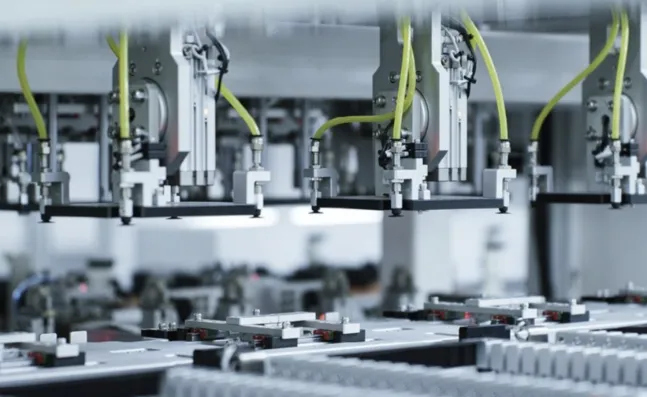
The Global Battery Supply-Demand Disequilibrium
The Numbers Game: The Quantitative Decoupling of Global Battery Supply and Demand
According to the latest report on global low-carbon energy released in July 2026 by the Carnegie Endowment for International Peace—a leading U.S. think tank—the core supply chains underpinning the global clean energy transition are poised to face an unprecedented structural "tsunami" by the end of the century. Data indicates that global total demand is projected to range between 4,000 GWh and 5,100 GWh by 2030. In stark contrast, China’s anticipated manufacturing capacity alone is expected to surge to between 5,862 GWh and 6,720 GWh by that same year.
This implies that China’s maximum battery supply capacity alone will exceed the highest projected global demand by 31.7%. This severe overcapacity is no longer merely a theoretical macroeconomic projection; it is a hard reality that is set to reshape the landscape of global free trade in new energy. For global automakers, energy storage system integrators, and policymakers, this signals impending, profound upheaval within traditional supply chain networks.
Regional Breakdown: The Horizontal Horizon of Global Gigafactories
Amid the global standoff over production capacity, Western economies—despite aggressively promoting localized manufacturing through policy—still face formidable challenges regarding the sheer speed of scaling up mass production.
OECD Countries: Domestic battery manufacturing capacity is projected to reach approximately 1,881 GWh by 2030, with a theoretical maximum of 2,422 GWh achievable only under an ideal policy scenario.
Emerging Markets: Emerging economies, led by India and Indonesia, are expected to contribute an additional 217 GWh of capacity.
This geographical distribution of capacity reveals a harsh commercial reality: even if OECD nations fully utilize their production capabilities, they still cannot compete with established overseas supply chains on cost or scale, and the economic cost of a complete decoupling would be unimaginable.
The Economics: Price Imbalances in the European Market
Cost Disparities: The Core Competitive Edge of Overseas Production
In Western business and academic circles, market fundamentals and capital efficiency remain the primary benchmarks for measuring supply chain resilience. Data from the Carnegie Endowment clearly indicates that geopolitical barriers and tariff policies alone struggle to completely halt trade flows driven by free-market principles; the core driver lies in persistent disparities in production costs.
In the fiercely competitive European market, Chinese-made batteries demonstrate an overwhelming pricing advantage:
- NMC (Nickel Manganese Cobalt) batteries: Chinese-made units delivered to Europe are priced 10% to 27% lower than locally produced alternatives.
- LFP (Lithium Iron Phosphate) batteries: The price advantage is even more striking, with Chinese-made versions costing 24% to 50% less than those produced in Europe.
With a cost gap reaching as high as 50%, any Western automaker seeking to maximize profits and break into the mass-market electric vehicle sector finds it impossible to forgo such a massive cost advantage in the short term.
Capital & Trade Flows: The Irreversible Gravity of Market Supply
This cost advantage is directly reflected in the massive volume of cross-border capital and trade flows. Statistics show that throughout 2025, China’s monthly battery exports consistently exceeded $6 billion—a figure representing a highly significant flow of value. Notably, the European market alone accounted for nearly half (approximately 50%) of this immense export volume.
These compelling figures serve as a wake-up call for policymakers: in the absence of locally produced alternatives that offer comparable cost competitiveness, any forced decoupling of supply chains would inevitably shift the resulting cost premiums and inflationary risks onto Western end-consumers and downstream industries.
Supply Chain Vulnerabilities: The Dual Bottlenecks of LFP and Sodium-ion
The Structural Monopoly of Lithium Iron Phosphate (LFP)
For Chief Risk Officers (CROs) and supply chain strategists at multinational corporations, genuine risk mitigation requires looking beyond final battery pack assembly to secure control over upstream operations. A supply chain audit by the Carnegie Endowment reveals a stark reality: the West faces severe structural vulnerabilities in the LFP (lithium iron phosphate) battery supply chain.
Driven by robust demand from both the electric vehicle (EV) and battery energy storage system (BESS) sectors, LFP chemistry now accounts for approximately 50% of the global lithium-ion battery market. However, a critical bottleneck remains: roughly 98% of the global production capacity for LFP material precursors and key refined materials is still heavily concentrated in China. Even if Western nations establish domestic "gigafactories," without a stable supply of these fundamental materials, their manufacturing chains would essentially be trying to "cook a meal without rice."
The Replication Effect of Sodium-ion Technology
Of even greater concern to Western policymakers is the "replication effect" associated with the next generation of breakthrough technologies. Sodium-ion batteries—a highly promising alternative that does not rely on lithium resources—are rapidly moving toward commercialization.
Think-tank reports have issued a stark warning: the commercial manufacturing supply chain for sodium-ion batteries is currently almost entirely concentrated in China. Due to a lack of early-stage industrial infrastructure and targeted financial support, the West faces a high risk of falling behind once again in this critical cycle of emerging technology. Such a technological lag would further exacerbate the reliance of Europe and the United States on a single overseas source of supply.
Western Counter-Hedge: Next-Generation Battery Technology
Despite facing disadvantages in the short-to-medium-term supply chain, OECD economies are not without leverage. Further upstream in the technology roadmap, the West retains a firm grip on R&D leadership and core patent barriers in next-generation technologies such as silicon-anode and lithium-metal batteries.
This innovative edge in cutting-edge technology will serve as a crucial strategic lever for the West in future global supply chain negotiations.
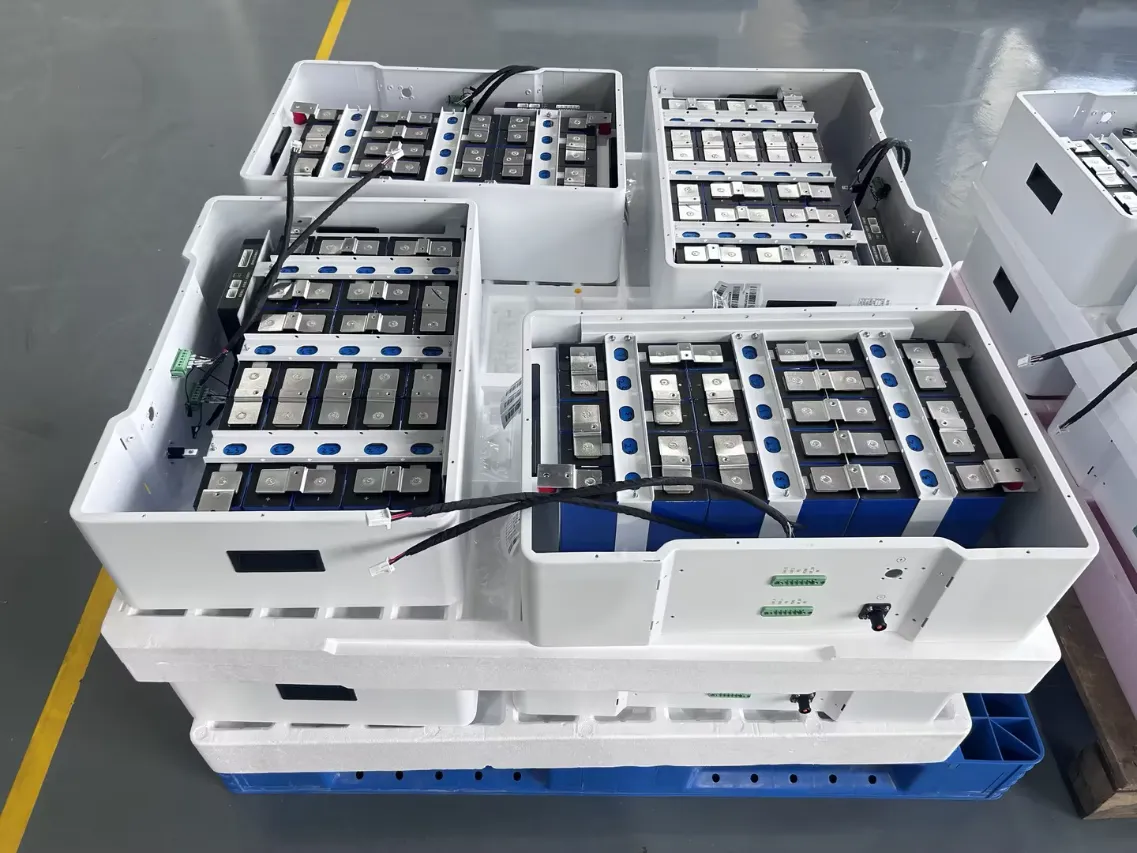
Emerging Demand Drivers: AI Data Centers and the 2035 Mineral Roadmap
The BESS Revolution Triggered by AI Infrastructure
Amid the ongoing clean energy transition, a critical cross-sector dynamic is reshaping traditional models of battery demand. The accelerated deployment of renewable energy, coupled with the explosive growth of computing capacity in global AI data centers, has triggered an unprecedented power crunch. To secure a round-the-clock supply of green energy, data centers are driving the adoption of stationary storage—specifically Battery Energy Storage Systems (BESS)—establishing it as a vital growth engine and a key outlet for total battery demand. This emerging demand not only hedges against volatility in the electric vehicle market but also creates new opportunities to absorb excess production capacity.
The 2035 Critical Minerals Deflection
As diverse next-generation technologies—such as sodium-ion and lithium-metal batteries—gain wider adoption on the demand side, the landscape of the global upstream critical minerals supply chain is set to undergo a dramatic "chemical shift" in Europe by 2035.
Long-term projections indicate that the European Union's reliance on upstream critical raw materials will see the following adjustments by 2035:
- Graphite demand: Projected to drop significantly by 25.6% (a shift that will largely hedge against supply chain disruption risks associated with overseas graphite export controls).
- Cobalt demand: Projected to decrease by 8.7% (further aiding the West in decoupling from mineral sources in regions sensitive to environmental and geopolitical concerns).
- Lithium demand: Projected to buck the trend and rise by 5.4%.
This restructuring of the mineral roadmap, driven by technological evolution, necessitates that multinational corporations continuously adjust their long-term commodity procurement and hedging strategies.
Strategic Recommendations: A Tactical Roadmap for "Selective Cooperation"
Pragmatic Realism: Shifting to Selective Partnerships
Faced with an inevitable surge in production capacity, the Carnegie Endowment does not advocate for blind, wholesale supply chain decoupling; instead, it offers a pragmatic prescription for Western executives and policymakers. The report suggests that OECD economies should pursue selective partnerships—through joint ventures and industrial alliances—in bottleneck areas where alternative suppliers are extremely scarce (such as the supply chains for key LFP precursors and refining). By introducing mature overseas production capacity and processes domestically, nations can leverage "cross-border collaboration" to rapidly secure their supply chains and enhance industrial resilience.
Multilateral Coordination: Rebalancing the Ecosystem
To prevent future setbacks regarding technological pathways, the Western world must strengthen multilateral policy coordination. The report calls on the United States, Europe, Japan, and South Korea to establish a high-level coordination mechanism for industrial policy. These four parties should pool industrial capital and provide targeted policy support and financial backing to sodium-ion manufacturers outside China, thereby building a diversified next-generation energy ecosystem at the source and hedging against the risks associated with a single source of supply.
Productivity Counter-Hedge: Deploying Industry 4.0
At the level of micro-manufacturing, Western enterprises must leverage their proprietary software and technological barriers to execute a strategy of "productivity hedging." It is recommended that Western manufacturers significantly increase R&D investment and practical implementation in automation, digital twins, and industrial AI. By achieving peak efficiency through digital software and unmanned manufacturing, they can boost overall productivity and largely bridge the fundamental cost gap separating them from traditional overseas supply chains.
1MW Cap GONE, Approvals Slashed! The 2026 Philippines Solar Gold Rush Starts Now
Inside the Inverter Ban: Why the EU’s Cybersecurity Crackdown Risks 14% of Solar Demand and Disrupts BESS Integration
Related Article

contact us
For more questions please


Office Address: 701, Building A, Yonghuayuan Business Building, Baotian 2nd Road, Chentian Community, Xixiang Street, Bao'an District, Shenzhen, Guangdong Province, China
Factory Address 1: Room 701, Building 2, Kegu Industrial Park, Zone B, Jian'an Road, No. 790, Chang'an Town, Dongguan City, Guangdong Province, China
Factory Address 2: Building 7, Phase II Standardized Factory, Innovation Industrial Park, Duji Economic Development Zone, Huaibei City, Anhui Province, China