


NEWS
ESS Manufacturer | Battery Technology | Global Energy Partner
$20 Billion in Investments in Play: Peru Releases Latest National Energy Plan—A Pivotal Turning Point for Energy Storage and Solar PV?
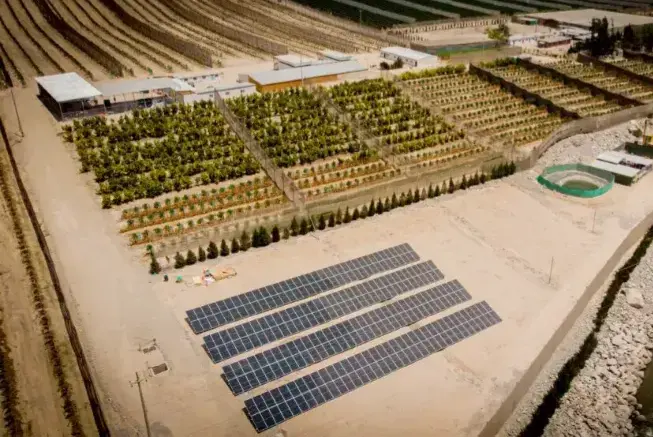
Introduction and Executive Summary
In July 2026, Peru’s Ministry of Energy and Mines (MINEM) adopted Ministerial Resolution No. 270-2026-MINEM/DM and formally published—in the official gazette El Peruano—a draft supreme decree establishing a National Energy Planning Framework. The core objective of this proposal is to standardize the preparation of long, medium-, and short-term integrated energy plans, supply-demand balances, and forecasting reports. However, the framework’s high-level design is characterized by a distinct emphasis on governance over target-setting: it establishes no specific deployment or installation targets for solar PV or battery energy storage systems (BESS) and entirely sidesteps the critical issue of commercial remuneration mechanisms.
This cautious policy approach has sparked a strong reaction from the industry. The Peruvian Renewable Energy Association (SPR) had previously warned that the absence of clear auction rules and specific regulations regarding ancillary services and isolated systems was creating significant investment barriers in Peru's new energy market. The failure of this key high-level plan to provide a concrete market framework means that private investment projects valued at over US$20 billion will face prolonged compliance assessments and a period of uncertainty.
Regulatory Meta Note: Although the policy fails to directly resolve the commercial implementation issues facing solar PV and battery energy storage, it establishes—for the first time—a structured foundation for assessing future electricity demand, available generation resources, and grid expansion needs, serving as a vital technical cornerstone for understanding the governance logic behind Peru's energy transition.
Current State of Peru’s Power Mix and the Growth Momentum of New Energy
In recent years, Peru has witnessed strong growth momentum in new energy installations. According to the latest official government statistics, Peru added approximately 454 MW of utility-scale solar photovoltaic (PV) capacity in 2025. Driven by this surge in installations, the country's cumulative installed PV capacity reached approximately 952 MW by the end of 2025—poised on the brink of the critical gigawatt (GW) milestone. These robust figures indicate that solar power is shifting from the periphery to the mainstream of Peru’s electricity matrix; however, this explosive pace of grid integration has simultaneously brought the power system's deep-seated structural contradictions to a critical juncture.
Regarding the spatial distribution of resources versus power consumption, Peru faces severe resource mismatches and cross-regional transmission constraints. The southern regions (such as Arequipa and Moquegua) boast world-class solar irradiance, with annual levels generally exceeding 2,500 kWh/m². Yet, the country's traditional industrial hubs, major mining operations, and primary population centers are heavily concentrated in the central and northern regions. Due to a lack of adequate high-voltage cross-regional transmission lines, the vast amounts of clean green energy generated in the south cannot be effectively transmitted to the load centers in the north, resulting in localized connection limitations caused by lagging grid expansion.
This geographical disconnect signals the end of the era of haphazard, spontaneous grid integration for solar projects in Peru. To address the inherent volatility and intermittency of solar power generation, the Ministry of Energy and Mines (MINEM) urgently needs to abandon its past fragmented approval processes. The promulgation of Decree No. 270-2026-MINEM/DM is driven by the government's imperative to establish a comprehensive, holistic coordination model. By precisely calculating the future supply-demand balance, grid integration capacity, and potential priorities for transmission and distribution investment, the orderly integration of new photovoltaic capacity—in terms of both timing and location—can be guided, thereby ensuring overall national energy security and grid stability.

A Deep Dive into Regulation No. 270-2026-MINEM/DM: What Does the Policy Establish, and What Does It Omit?
The draft regulation, issued via Ministerial Resolution No. 270-2026-MINEM/DM, essentially restructures the "governance level" of Peru's energy sector. For a long time, various power entities, operational bodies, and ministries in Peru acted independently regarding energy forecasting, resulting in a lack of consistency between statistical data and market outlooks. The new policy’s core contribution lies in resolving this disorder by establishing a unified cross-departmental methodology and standardizing planning cycles—covering long, medium, and short-term horizons—on a national scale. By regulating the preparation, updating, and publication frequency of energy plans, balance sheets, and forecast reports, the framework aims to enhance the transparency of official analysis, thereby mitigating the "hidden barriers" that hinder industry development.
This upgrade to the governance structure offers systemic benefits for the long-term development of solar PV assets. The proposed framework provides a more structured foundation for assessing future aggregate electricity demand, available generation resources, and grid expansion requirements. For PV investors, this means leveraging officially released coordinated scenarios and forecasting models to anticipate which transmission and distribution investments will be prioritized and where potential grid connection limitations exist. Such forward-looking insight significantly reduces non-technical siting risks associated with insufficient grid integration capacity.
However, from the perspective of high-value commercial implementation, the regulation’s limitations are equally apparent: its omission of energy storage—a "missing energy storage dimension"—reveals a conservative policy stance that prioritizes governance over incentives. Although long-term planning acknowledges the volatility of solar power and the growing reliance on grid flexibility—and recognizes Battery Energy Storage Systems (BESS) as tools for mitigating outages and providing grid support—the draft fails to establish any substantive framework for the battery market. The report must explicitly state that the decree neither establishes mandatory deployment targets for energy storage projects nor defines critical capacity tariff structures or remuneration mechanisms for ancillary services. More importantly, it completely sidesteps the need to clarify the legal and settlement status of battery energy storage systems—whether as independent power market participants or as "dual-role assets"—within the wholesale electricity market. All pathways for commercial monetization and practical implementation remain indefinitely deferred, pending future revisions to specific electricity market regulations.
Anxiety Surrounding $20 Billion in Capital: The Unfinished Agenda of the SPR and Law No. 32249 (Capital Markets & Institutional Blockers)
From a historical perspective, institutional bottlenecks in Peru’s electricity market have long fueled intense collective anxiety within the industry. Dating back to December 2025, the Peruvian Renewable Energy Association (SPR) issued a public appeal urging the government to swiftly release clear regulatory guidelines to implement Law No. 32249, which aims to modernize the electricity market. The association warned that the prevailing regulatory vacuum—characterized by a lack of transparent auction rules, pricing mechanisms for ancillary services, and specific integration protocols for isolated systems and microgrids—is evolving into a serious barrier to investment. This uncertainty has directly caused numerous renewable energy assets, having already completed preliminary surveys, to stall at the final stage of development.
Underpinning this policy standoff is a capital landscape comprising private investment projects valued at over $20 billion. This massive pool of capital—currently in a "wait-and-see" mode—is driven by two core forces: first, Independent Power Producers (IPPs) from international markets (such as Europe and the US), who urgently require clear legal protections and feed-in tariffs to mitigate cross-border investment risks; and second, Latin American and multinational mining giants planning to transition their captive power plants to green energy in pursuit of decarbonization goals.
Typical examples include the 130 MWp solar PV plus 160 MWh energy storage off-grid project planned by regional power giant Electro Oriente in Iquitos—deep within the Amazon rainforest—and the industrial-scale battery energy storage projects for peak shaving currently being advanced by major gold mining companies like Poderosa. While the technical solutions for these projects are mature, they remain on hold, awaiting the finalization of regulatory policies. The hidden costs of policy delays will ultimately be passed on to the entire industry in the form of financial expenses. Amidst high regulatory uncertainty, international financial institutions and banking syndicates will significantly raise their risk premium assessments for renewable energy projects in Peru, driving up the Weighted Average Cost of Capital (WACC). Because Draft Decree No. 270-2026-MINEM/DM fails to establish long-term remuneration mechanisms at the national planning level, private investment projects face the risk of immediate collapse when seeking non-recourse project financing from commercial banks, as they will be unable to meet rigorous bankability standards. This is the root cause of the anxiety surrounding the $20 billion in capital currently caught in this regulatory impasse.

Synergy Analysis: Piecing Together the Commercialization of Energy Storage in Peru via the April "Ancillary Services Draft"
To accurately assess the long-term impact of Decree No. 270-2026-MINEM/DM on the new energy market, it is essential to cross-reference it with another major policy issued by Peru’s Ministry of Energy and Mines (MINEM) in April 2026: the *Draft Regulation for Complementary Services* (released via Ministerial Resolution No. 171-2026-MINEM/DM). Only by examining the high-level planning framework from July alongside the draft operational details from April can one assemble the complete picture of energy storage (BESS) commercialization in Peru.
The April draft on ancillary services effectively offers an alternative monetization pathway for Battery Energy Storage Systems (BESS). Amid rising penetration of intermittent renewable energy, the draft sends a clear, market-oriented signal: it permits energy storage systems and non-traditional market participants to formally engage in ancillary services—such as system reserves, primary and secondary frequency regulation, and voltage control. Even more groundbreaking is the introduction of a cost-allocation mechanism based on the "Causality Principle," whereby the party responsible for system imbalances or grid fluctuations bears the service costs, with price caps established by the regulator, OSINERGMIN. This provides a direct regulatory springboard for early-stage energy storage assets to break free from the limitations of simple price arbitrage and unlock diversified revenue streams.
- From the perspective of industry trends, the successive introduction of these two measures represents a synergistic combination of actions, driving Peru’s electricity market to transition from "administratively directed dispatch" toward a "technology-neutral competitive model." The July Framework for integrated energy planning adopts a macro perspective, addressing technology forecasting and demand projections while clarifying requirements for medium- to long-term inter-regional transmission infrastructure and grid flexibility amidst high levels of photovoltaic integration.
- The April Draft on ancillary services takes a micro perspective, establishing short-term operational rules and market entry criteria to send clear economic signals to the market.
The strategic combination of these two elements marks an acceleration in the construction of the foundational logic for Peru's modern electricity market. This policy complementarity not only significantly lowers hidden barriers to private sector investment but also establishes a solid institutional framework for future utility-scale energy storage projects to achieve revenue stacking through capacity payments and ancillary services.
|
Regulatory Instrument / Milestone |
Publication Date |
Core Strategic Dimension |
Critical Remaining Bottlenecks |
|
Ministerial Resolution No. 171-2026-MINEM/DM |
April 2026 |
Ancillary Services Market Liberalization |
Unresolved remuneration price caps for BESS participating in frequency regulation and reserves (pending OSINERGMIN final approval). |
|
Ministerial Resolution No. 270-2026-MINEM/DM |
July 2026 |
National Long, Medium-, and Short-Term Integrated Energy Planning Framework |
Highly focused on governance and demand forecasting methodologies; fails to establish specific Solar PV/BESS deployment targets or a commercial battery market framework. |
|
Law No. 32249 (Institutional Legacy) |
December 2025 (Industry Appeal) |
Power Market Modernization Framework Law |
Acute lack of practical implementation guidelines regarding dynamic renewable energy auctions, operational ancillary service rules, and off-grid/isolated system consumption. |
Conclusion and Investment Recommendations Report
From a macro perspective, Peru’s newly issued Decree No. 270-2026-MINEM/DM serves not as a powerful "catalyst" for the new energy market, but rather as a "steering wheel" that clarifies the path forward. While the policy does not offer direct financial subsidies or mandate rigid installation targets, it fosters private sector participation by breaking down information silos and enhancing the transparency of official statistics and forward-looking information—all while adhering to market principles. This top-level governance framework is implicitly removing regulatory barriers that previously hindered new energy investment in Latin America.
For decision-makers planning to enter the Peruvian and Latin American power markets, the report offers the following core investment recommendations:
Manufacturers of solar PV and battery energy storage systems (BESS), as well as international independent power producers (IPPs), should maintain a stance of prudent optimism. Given that the decree establishes only the top-level governance framework, the specifics of commercial monetization remain subject to significant uncertainty.
Investors should currently focus their strategic attention on two key quantitative indicators:
Closely monitor the regulator, OSINERGMIN: Scrutinize the approval process regarding price caps and maximum pricing methodologies for ancillary services, as outlined in the new regulations introduced in April. As industry experts have warned, the level of these pricing signals will determine the viability of the battery energy storage market.
Monitor real-time updates on official forecasts regarding regional grid connection limitations: Use this data as a fundamental risk benchmark to assess the bankability and technical site suitability of future solar PV projects.
Slash €260 billion in import costs! The EU builds the "first electricity-powered continent," ushering in a golden era for energy storage and power grids
1MW Cap GONE, Approvals Slashed! The 2026 Philippines Solar Gold Rush Starts Now
Related Article



contact us
For more questions please


Office Address: 701, Building A, Yonghuayuan Business Building, Baotian 2nd Road, Chentian Community, Xixiang Street, Bao'an District, Shenzhen, Guangdong Province, China
Factory Address 1: Room 701, Building 2, Kegu Industrial Park, Zone B, Jian'an Road, No. 790, Chang'an Town, Dongguan City, Guangdong Province, China
Factory Address 2: Building 7, Phase II Standardized Factory, Innovation Industrial Park, Duji Economic Development Zone, Huaibei City, Anhui Province, China