


NEWS
ESS Manufacturer | Battery Technology | Global Energy Partner
SECI FDRE-IX Tender: Inside India's Largest 4,800MWh BESS Pipeline (2026)
SECI Launches Massive 4,800MWh FDRE-IX Tender Backed by Co-Located BESS
In mid-June 2026, the global renewable energy market witnessed a major development: the Solar Energy Corporation of India (SECI)—the country's state-owned renewable energy giant—officially launched the highly anticipated SECI FDRE-IX tender (Tender No.: SECI/C&P/IPP/13/0006/26-27). Industry analysts have quickly identified this initiative as one of India's largest Battery Energy Storage System (BESS) tenders of 2026.
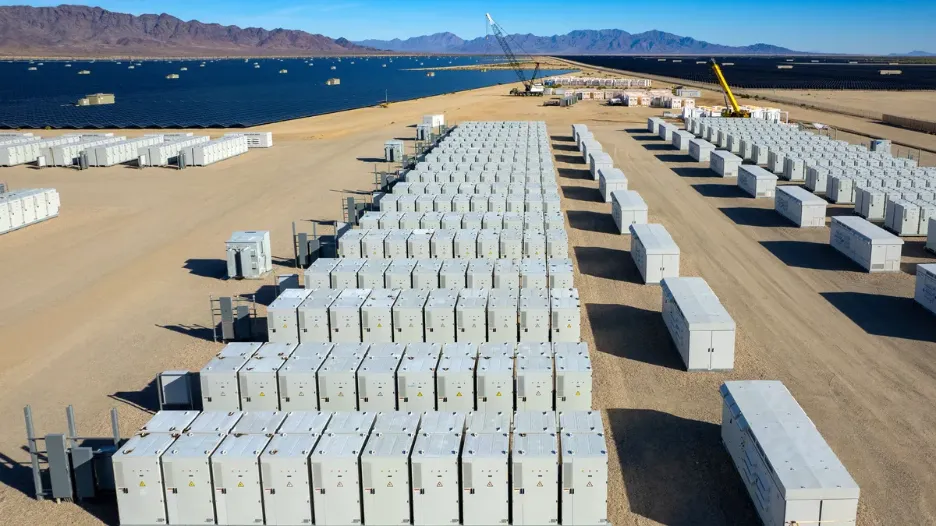
According to official tender documents, the project seeks to develop 1,200 MW of Firm and Dispatchable Renewable Energy (FDRE) capacity under a "Build-Own-Operate" (BOO) model. To ensure reliable power delivery during peak demand periods, the project mandates the inclusion of co-located energy storage systems capable of providing a continuous four-hour power supply. This requirement will directly generate demand for the procurement and integration of 4,800 MWh (4.8 GWh) of battery storage capacity, setting a new industry record for scale.
As a pivotal step in upgrading India's green power grid, all awarded projects must connect to the Inter-State Transmission System (ISTS) to facilitate efficient, cross-regional power transmission. SECI has established an aggressive timeline: the deadline for online bid submission is July 20, 2026, with the formal bid opening scheduled for July 23. This marks the start of a high-pressure countdown for the global energy storage supply chain as stakeholders finalize their bids.
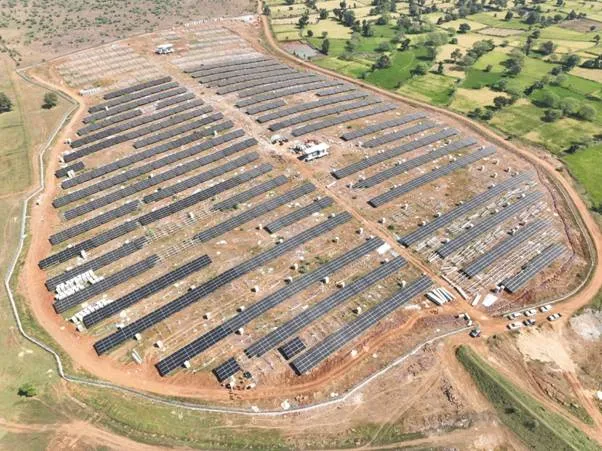
The Shift to 4-Hour Co-Located Storage: Technical Rigors of FDRE
Moving beyond mere installed capacity figures to the realm of practical technical implementation, the FDRE-IX tender showcases India's rigorous technical definition of "Firm and Dispatchable Renewable Energy" (FDRE) to the global market. Unlike traditional intermittent green power grid integration, FDRE mandates that developers employ technical solutions to transform volatile wind and solar resources into "supply-guaranteeing assets" akin to conventional thermal power plants. This requirement underpins the logic of India's 1,200 MW renewable energy storage tender, which compels the co-location of renewable generation assets and energy storage systems. By connecting battery systems and wind/solar plants in parallel at the same Inter-State Transmission System (ISTS) substation node, the approach not only maximizes the utilization of land and transmission infrastructure but also physically enhances the dynamic reliability of the regional grid.
Against this backdrop, the technical benchmarks set by the SECI tender for assured peak power supply (targeting June 2026) are exceptionally stringent. The tender stipulates that the off-taker will designate a four-hour peak demand window daily; for every 100 MW of contracted capacity, the system must precisely and unconditionally deliver 400,000 kWh of electricity during this period. This requirement for high-intensity, continuous four-hour output is driving a major technological shake-up across the global energy storage supply chain. Conventional high-C-rate (0.5C/1C) frequency regulation systems—designed for 1–2 hour durations—are ill-suited for such Long-Duration Energy Storage (LDES) needs in terms of cost and lifespan. Market momentum is shifting decisively toward high-capacity, liquid-cooled systems that offer superior durability and are optimized for continuous, low-C-rate (0.25C) charging and discharging.
An even more rigorous "black swan" technical clause is SECI’s elimination of the option to charge batteries using non-renewable (thermal) power during off-peak periods. The tender strictly mandates that any energy storage system charged with non-renewable electricity will not have its output classified as renewable energy; 100% matching with renewable power sources is required. This requirement for the traceability of highly pure green electricity undoubtedly poses an extreme technical challenge for the intelligent scheduling algorithms within integrators' EMS (Energy Management Systems).
In response to the evolution of these fundamental rules, the authoritative international energy storage publication *Energy-Storage.News* (in its industry insight report) has conducted in-depth tracking, confirming that long-duration, co-located energy storage has become a key technical "entry ticket" for multinational equipment vendors seeking to enter the Indian market.
Hidden Financial Checkpoints: Net Worth and 1.5x Tariff Penalty Risks
Having cleared the initial technical hurdles, developers and equipment suppliers face an even more formidable challenge: the financial burden. Unlike major international media outlets that tend to gloss over the macro details, any corporate decision-maker participating in the SECI FDRE-IX tender must scrutinize the financials with absolute precision.
First, the tender establishes an exceptionally high net worth requirement for Battery Energy Storage Systems (BESS). The regulations explicitly mandate that bidders demonstrate a net worth of ₹9.68 million per megawatt (MW) of installed solar capacity and ₹13.68 million per MW of wind capacity; the threshold for energy storage capacity is set at ₹2.4 million per megawatt-hour (MWh) (approximately US$25,300). This implies that for a developer bidding at maximum capacity, the financial assets required to qualify—based on storage assets alone—would reach the tens of millions of dollars, effectively turning this major tender into a high-stakes game reserved for large-scale capital and major conglomerates.
What further unnerves investors across the supply chain is the uncompromising "hefty penalty mechanism." The tender stipulates that, while the 25-year Power Purchase Agreement (PPA) secures long-term revenue, any shortfall in monthly delivery—specifically falling more than 10% below the required output during designated peak hours—triggers a severe penalty: a fine calculated at 1.5 times the applicable PPA tariff. Such draconian penalties impose immense, zero-margin-for-error demands regarding the storage system's lifecycle failure rates, cell consistency, and daily operations and maintenance (O&M) capabilities.
Detailed calculations regarding these rigorous financial metrics and penalty clauses have been provided by the India-based *Vyqon Tender News Bulletin*, which offers the most comprehensive data disclosure available. It is precisely these precise, "invisible" financial red lines that form the risk model which international energy storage companies must evaluate before venturing into this market.
Unlocking Extra Revenue: Merchant Trading Opportunities Beyond PPA Peak Hours
After becoming accustomed to the urgency created by steep penalties and strict asset-related thresholds, this tender offers global investors a highly valuable policy incentive. Beyond guaranteeing a mandatory four-hour power supply during peak periods, SECI permits developers to flexibly utilize the surplus capacity of energy storage facilities during the remaining twenty hours—time not covered by the contract—to generate incremental revenue through spot market trading on the Indian Energy Exchange (IEX) or direct sales to third parties.
This rule change effectively transforms the project from a simple "fixed-rate supply guarantee" model into a dual business model combining a "fixed PPA" with "free-market arbitrage." For the large-scale assets involved in India's largest BESS tender (2026), engaging in merchant energy storage trading during off-peak hours offers more than just a way to capture high-frequency arbitrage profits from intraday price spreads using idle battery capacity; it serves as a decisive factor in determining the project's long-term Internal Rate of Return (IRR).
However, this also creates a grueling proving ground for the technical prowess of system integrators. The tender enforces a strict bottom line: fulfilling the PPA supply guarantee takes absolute precedence; selling power externally without first meeting contractual obligations incurs severe financial penalties. This complex dual-dispatch requirement places extreme demands on the system's Energy Management System (EMS) and its intelligent dispatch algorithms. The system must seamlessly ensure stable green power output and perfectly comply with grid dispatch instructions, all while accurately predicting market price differentials to execute optimal charge-discharge cycles. This presents a perfect opportunity for leading Chinese integrators and inverter (PCS) giants—who possess advanced algorithms and extensive experience in multi-mode dispatch—to leverage their technical expertise to command a premium.
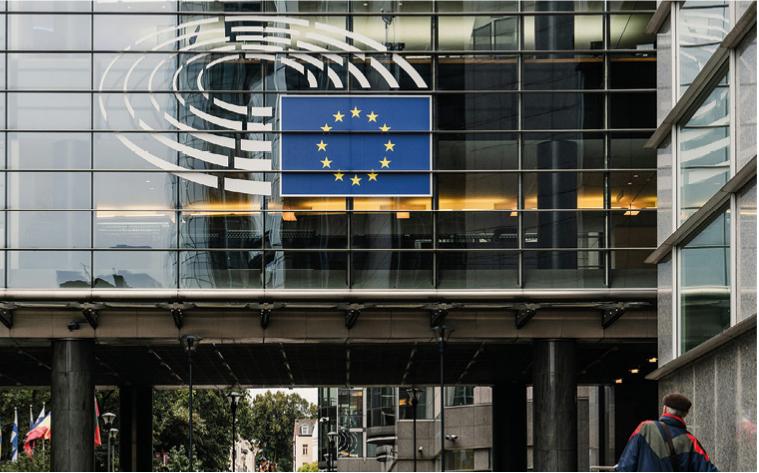
ALMM Mandates and GIB Protection Laws: Compliance Red Lines for Global Suppliers
While the massive 4.8 GWh capacity presents an enticing commercial prospect for the global energy storage supply chain, any cross-border equipment supplier, system integrator, or developer seeking a share of the market must confront two rigid policy "red lines" during the initial risk assessment phase. These barriers are the deciding factors in whether a project can successfully reach commercial operation within 18 months or become mired in a protracted dispute over claims.
The first red line is a market access list characterized by strong protectionist undertones. The tender explicitly mandates that 100% of the photovoltaic (PV) modules and wind turbines used in the project be sourced from the "Approved List of Models and Manufacturers" (ALMM) issued by India’s Ministry of New and Renewable Energy (MNRE). As the scope of this list has expanded to include upstream PV cells, overseas equipment not on this compliance "whitelist" is effectively barred from entry. This compels global system integrators to form deep partnerships with certified local manufacturers or top-tier international giants right from the equipment selection stage.
The second red line involves "black swan" regulatory risks related to environmental and geopolitical compliance. If the integrated wind-solar-storage project is sited in Rajasthan or Gujarat—states with the highest concentration of renewable energy in India—developers must strictly and unconditionally adhere to the Supreme Court of India’s latest rulings regarding the protection of the Great Indian Bustard (GIB). Because dense overhead high-voltage transmission lines have historically caused mass fatalities among this endangered bird species due to collisions, the Supreme Court has issued key rulings mandating that low-voltage lines in core habitats be placed underground, while high-voltage corridors must be rerouted or equipped with bird flight diverters.
When participating in this 1,200 MW renewable energy storage tender in India, Chinese supply chain enterprises must look beyond the battery equipment itself. They must remain highly vigilant regarding the risk of severe grid-connection delays caused by ALMM-related supply bottlenecks or the mandatory undergrounding of cables for GIB protection. Vyqon Tender News Express—a domestic Indian think tank specializing in the power sector and environmental impact assessments—has previously issued specific risk alerts regarding the latest geopolitical policy shifts and legal precedents concerning these two major compliance "red lines."
Conclusion: What the FDRE-IX Milestone Means for the Global BESS Supply Chain
The SECI FDRE-IX tender launched by India is far more than a routine capacity expansion; it represents a pivotal milestone in the global commercialization of Long-Duration Energy Storage (LDES). By combining high capital entry barriers and steep financial penalties for under-delivery with a flexible intraday market arbitrage mechanism, the Indian government is effectively using the "invisible hand" to aggressively weed out speculative players who previously relied on low-price, low-quality bids, thereby forcing the regional market to evolve toward a more mature commercial ecosystem.
These technically rigorous tender rules will directly catalyze a wave of technological upgrades across the global battery supply chain. Because the requirement for four consecutive hours of high-intensity charge/discharge cycles imposes exacting demands on system cycle life, thermal uniformity, and the aggregate costs of land and grid interconnection, traditional air-cooled systems based on 280Ah cells will rapidly be phased out. They are being superseded by China’s cutting-edge technologies—centered on high-capacity 314Ah or 530Ah cells and integrated into ultra-high-density, liquid-cooled storage containers exceeding 5MWh in capacity. Only such hardware-software integrated solutions—offering superior energy density and dynamic dispatch capabilities—will enable developers to navigate the fierce competition of this massive Indian BESS tender while simultaneously hedging against default risks and maximizing arbitrage gains from off-peak spot market trading.
Moving Beyond the "Box": Why Global Energy Storage Is Entering a Solution-Driven Era
Suniva Nasdaq Merger: How the SUNE Reverse Merger Redefines the US Solar-Plus-Storage Supply Chain
Related Article
contact us
For more questions please


Office Address: 701, Building A, Yonghuayuan Business Building, Baotian 2nd Road, Chentian Community, Xixiang Street, Bao'an District, Shenzhen, Guangdong Province, China
Factory Address 1: Room 701, Building 2, Kegu Industrial Park, Zone B, Jian'an Road, No. 790, Chang'an Town, Dongguan City, Guangdong Province, China
Factory Address 2: Building 7, Phase II Standardized Factory, Innovation Industrial Park, Duji Economic Development Zone, Huaibei City, Anhui Province, China