


PCENERSYS BOLG
Sodium-Ion vs LFP in 2026: Buy the Right Chemistry for the Right Job
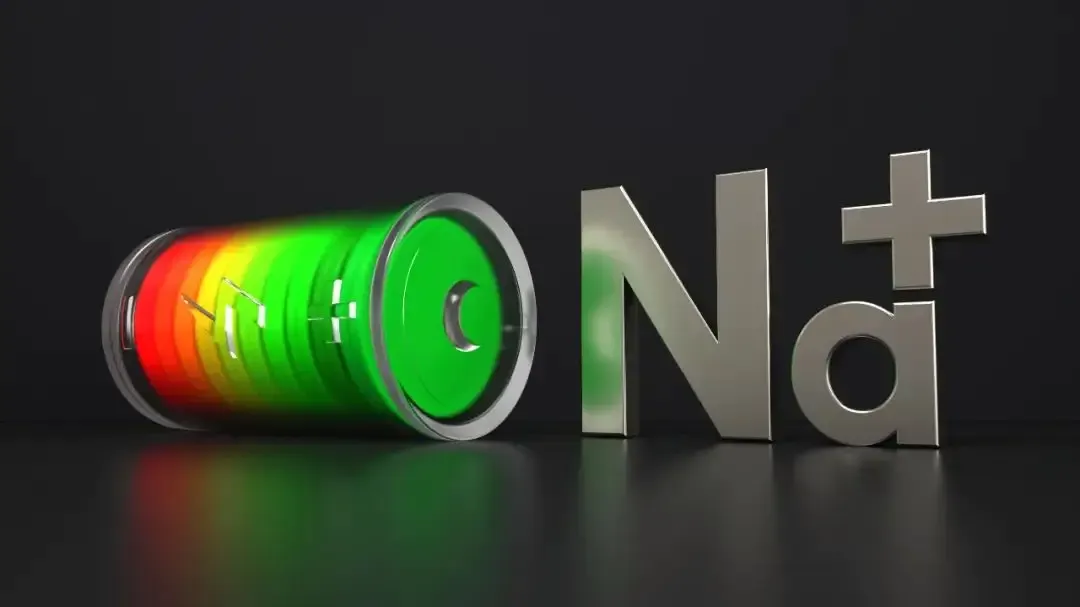
Choosing between sodium-ion vs LFP is one of the most common questions in commercial and industrial (C&I) energy storage planning in 2026. The pitch is everywhere: sodium has no lithium, a cheaper and more abundant supply chain, and better low-temperature performance. But for a project that has to run for 10–20 years, the real question is not "which chemistry is better" — it is "which chemistry fits my site, my load profile, and my risk tolerance today."
This guide gives a neutral, engineering-based comparison of sodium-ion vs LFP for C&I owners, energy managers, EPC contractors and system integrators. It covers where sodium-ion is genuinely strong today, where it is not ready, the three data gaps every buyer should ask about, and a practical decision map by scenario.
Why 2026 Is the Year the Decision Has to Be Made
2026 is the first year in which sodium-ion is no longer a lab curiosity. Commercial 100kWh-scale sodium-ion C&I cabinets are shipping, China's new sodium-ion storage projects passed 500 MW in the first three quarters of 2025, and grid-scale demonstration tenders are being written. At the same time, LFP has been pushed through a decade-long cost learning curve and is now the default for nearly every C&I and containerized storage project worldwide.
For owners and developers, this creates a timing dilemma: wait and be late, or buy early and accept risk. The right answer is not a blanket position — it depends on your site, your load profile, and how much unproven performance you can carry on a 15-year balance sheet. This guide is built around that decision rather than around a technology verdict.
Quick Answer: Which Chemistry Should You Buy in 2026?
The short answer: LFP remains the default choice for most C&I storage projects in 2026. Sodium-ion is not replacing LFP — it is starting to land as a complementary tool in specific scenarios.
For a project that has to come online next year:
- Choose LFP when you need a mature, bankable system with a decade of field-validated cycle life data.
- Consider sodium-ion when the project is in a cold climate, a weak-grid environment, or a lithium-price-sensitive procurement strategy, and the scale is a hundred-kWh-level pilot.
- Choose LFP now for planned multi-MWh grid-scale long-duration storage; revisit sodium-ion once field degradation data matures, likely around 2027–2028.
The strategic case for sodium-ion holds up — no lithium, supply-chain diversity, lower long-term material cost potential. But its technical maturity is still at the "excellent in the lab, early in the field" stage. Choosing the wrong chemistry means betting a decade-long project on a set of parameters that have not yet been validated by real-world operation.
What Sodium-Ion Is Good At (and What It Is Not)
What Sodium-Ion Does Well Today
Sodium-ion's advantage is not "better than LFP" — it is "filling gaps where LFP underperforms":
- Low-temperature performance: below −20°C, LFP's usable capacity and charging efficiency drop noticeably. Sodium-ion is less temperature-sensitive, making it suited to Nordic climates, high-altitude sites and regions with harsh winters.
- Supply-chain security: the cathode contains no lithium and does not depend on a single-country lithium supply chain, which has strategic value for owners pursuing chemistry-diversified procurement.
- Material cost potential: sodium is far more abundant in the Earth's crust than lithium, giving long-term material cost headroom — but note this is potential, not "already cheaper today."
- Safety profile: sodium-ion's off-gassing mode and thermal runaway behavior differ from LFP, but this does not mean "absolutely safe" — system-level safety design remains essential.
Where Sodium-Ion Is Not Ready
- Energy density: current commercial sodium-ion systems still have lower system-level energy density than mainstream LFP. The same capacity requires more footprint, which matters on space-constrained sites.
- Cycle life: public spec sheets commonly claim 3,000–6,000 cycles, but most of these numbers come from laboratory conditions, not field operation.
- Bankability: ten-plus years of field data, third-party-verified warranty terms, and mature insurance and financing models — LFP has them today; sodium-ion essentially does not.
- Scale options: sodium-ion systems available in 2026 are mostly hundred-kWh to MWh-scale C&I cabinets. Multi-MWh containerized sodium-ion stations are still in the demonstration phase.
The Three Data Gaps Every Buyer Should Ask About
The biggest risk when evaluating a sodium-ion project in 2026 is not "sodium-ion is bad" — it is "the parameters you were given have no field-data backing." Every sodium-ion supplier should be asked these three questions:
Gap one: the real gap between anode coulombic efficiency and round-trip efficiency.
Modern LFP typically achieves coulombic efficiency above 99% and round-trip efficiency of roughly 90–95%. Sodium-ion, constrained by hard carbon anode materials, usually shows initial coulombic efficiency in the 75–85% range, and public project-level round-trip efficiency data is still scarce. A few percentage points of efficiency loss compounds across a 20-year revenue model into a significant gap — on a 100kWh system cycling once a day, every extra point of RTE is worth roughly 365 kWh per year of lost revenue or avoided cost. Ask for measured, not nominal, round-trip efficiency at your operating temperature.
Gap two: the aging trajectory is different from LFP.
LFP degradation typically shows up as gradual capacity fade, which owners and BMS systems can track by capacity decline. Early aging studies of sodium-ion indicate that internal resistance rises before capacity visibly drops — meaning if you apply LFP-style state-of-health monitoring, you may misread the battery's condition. By the time capacity visibly fades, the system has already lost efficiency for some time. Procurement implication: ask how the BMS will track resistance, how it will alarm, and what the warranty says when resistance crosses a threshold but capacity has not yet.
Gap three: no scaled field degradation curve exists yet.
The first peer-reviewed aging studies on commercial sodium-ion cells were only published in early 2026. Before that, every cycle-life number on a sodium-ion spec sheet came from lab data or vendor projections — not from real operating environments. For a project designed to run 10–20 years, this is a risk that must be acknowledged.
Procurement advice: ask suppliers for cycle test reports that match your duty cycle, internal resistance tracking data, and how efficiency fade is defined in the warranty terms. Do not rely on the headline cycle-life number on the first page of the spec sheet.
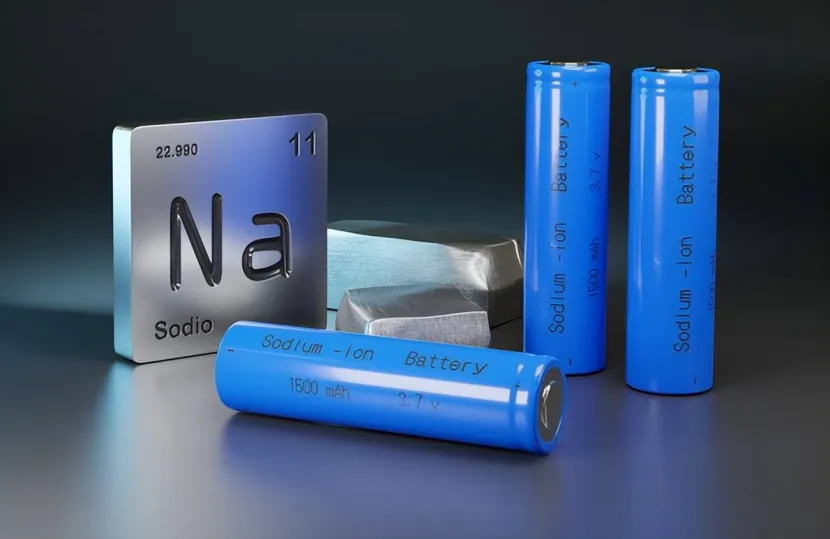
The 2026 Decision Map: Sodium-Ion vs LFP by Scenario
The table below gives the recommended chemistry route by scenario, based on mid-2026 industry maturity — this is a current judgment, not a permanent rule.
|
Scenario |
Recommended chemistry |
Why |
|
Cold-climate C&I (winter below −20°C) |
Evaluate sodium-ion first |
Sodium-ion's low-temperature advantage is meaningful for buildings dependent on winter operation |
|
Weak-grid / off-grid backup |
Either; choose by budget |
Both work for backup; sodium-ion adds supply-chain security value |
|
Standard C&I peak shaving (temperate climate) |
LFP |
Mature, bankable, field-validated cycle life, scaled unit cost |
|
Hospital / data center (high availability) |
LFP |
Isolated cabinet service, millisecond switchover, a decade of operating experience, proven redundancy |
|
Multi-MWh campus / grid-scale long-duration storage |
LFP |
Scale, bankability, and containerized supply chain are the most mature |
|
Lithium-price-sensitive / chemistry-diversified procurement |
Small-scale sodium-ion pilot |
Start with a hundred-kWh demonstration, build your own operating data, do not bet the whole project at once |
|
Extremely space-constrained / energy-density-sensitive sites |
LFP |
Sodium-ion's current system energy density is below LFP; footprint cost erodes material savings |
In practice, the dividing line is not chemistry preference but project risk. If the project cannot tolerate unproven degradation data, LFP is the safe default. If the project has a specific pain point that sodium-ion addresses better than LFP, a scoped pilot is the right entry point.
A common middle path is a dual-chemistry architecture: LFP as the main system handling daily peak shaving and backup, plus a small sodium-ion cabinet dedicated to the cold-season or weak-grid window where LFP efficiency drops. This lets you build in-house operating data on sodium-ion without betting the whole project on it. For a deeper acceptance checklist, see our sodium-ion due diligence checklist.
Which C&I Projects Favor Which Chemistry Today?
Translating the decision map into concrete project types:
- Commercial buildings / office towers (temperate climate): choose LFP. Peak shaving, backup power, solar self-consumption — these are LFP's most mature use cases, backed by a decade of field data.
- Manufacturing plants / workshops: choose LFP, unless the site is in a harsh winter region requiring frequent low-temperature startups. Demand charge management and peak shaving are LFP's home turf.
- Hotels / resorts (weak-grid regions): evaluate both. If the local grid is unreliable and supply-chain security matters, start with a hundred-kWh sodium-ion pilot while LFP remains the main system.
- Agriculture / farms / remote sites: sodium-ion's low-temperature performance and outdoor adaptability are advantageous for distributed microgrid demonstrations.
- Large solar parks / grid-scale projects: choose LFP. Multi-MWh scale, medium-voltage grid connection, financing-driven — sodium-ion does not yet meet the conditions for replacement.
- Owners seeking technology optionality: start with a hundred-kWh to 100kWh-level sodium-ion pilot, build your own operating data, and keep LFP as the main system. Do not bet the entire project on sodium-ion at the outset.
PCEnerSys' Stance: Dual-Chemistry, Right Tool for the Right Job
PCEnerSys offers both LFP and sodium-ion routes, and the position is pragmatic: we do not oversell sodium-ion as the future, and we do not dismiss it as a supplement.
- LFP product line: the 6.1MWh indoor stackable system and 5MWh liquid-cooled container serve multi-MWh C&I and campus projects, with ≥6,000 cycles, IP21 indoor or outdoor liquid-cooled deployment, and modular phased expansion — a decade of field-validated maturity.
- Sodium-ion product line: the 100kWh/50kW sodium-ion C&I system (IP65, operating temperature −20°C to 60°C, module temperature difference ≤5°C, 6,000+ cycles, over 80% solar self-consumption) targets sodium-ion's advantage scenarios: cold climates, weak grids, distributed microgrids — suited to technology optionality and small-scale demonstration.
If your project is at the stage of "want to try sodium-ion but unsure of scale," start from scenario fit rather than chemistry preference. Contact the PCEnerSys engineering team or send your project requirements for a quote, and our engineers will recommend a route based on your site, load profile and temperature conditions.
FAQ
Q1: Is sodium-ion better than LFP?
In 2026, it is not "better" — it has different strengths by scenario. LFP still leads in energy density, cycle-life data, bankability and scale options; sodium-ion adds value in low-temperature performance, supply-chain security and long-term material cost potential.
Q2: Can sodium-ion replace LFP in C&I energy storage?
Not in the short term. LFP has a decade of field validation, mature financing models and a global supply chain; sodium-ion is at the early commercial stage, suited to small-scale pilots in specific scenarios and not yet ready for broad replacement.
Q3: What is the main risk of choosing sodium-ion in 2026?
The biggest risk is not technology failure — it is that the parameters on the spec sheet lack field-data backing. Cycle life, efficiency and aging curves mostly come from laboratory conditions, without real-world degradation validation, which directly affects project revenue models and bankability.
Q4: Is sodium-ion cheaper than LFP now?
Material cost potential is larger, but current system cost is not necessarily below LFP. Sodium-ion scale effects are still ramping, while LFP's unit cost has already dropped along a decade-long learning curve. True cost advantage will emerge only once sodium-ion production scales.
Q5: What projects should start with sodium-ion in 2026?
Cold-climate C&I, weak-grid backup, lithium-price-sensitive chemistry-diversified procurement, and distributed microgrid demonstrations for owners building technology optionality. Scale should start from a hundred-kWh to 100kWh level.
Q6: How long until sodium-ion is ready for grid-scale storage?
The industry consensus is that sodium-ion will be competitive for grid-scale long-duration storage around 2027–2028, assuming scaled production capacity materializes as planned and field degradation data reaches bankable levels. Until then, multi-MWh projects should stick with LFP.
Related Reading
Containerized vs Cabinet BESS: How to Choose the Right C&I Energy Storage System

contact us
For more questions please


Office Address: 701, Building A, Yonghuayuan Business Building, Baotian 2nd Road, Chentian Community, Xixiang Street, Bao'an District, Shenzhen, Guangdong Province, China
Factory Address 1: Room 701, Building 2, Kegu Industrial Park, Zone B, Jian'an Road, No. 790, Chang'an Town, Dongguan City, Guangdong Province, China
Factory Address 2: Building 7, Phase II Standardized Factory, Innovation Industrial Park, Duji Economic Development Zone, Huaibei City, Anhui Province, China