


PCENERSYS BOLG
MW vs MWh: What’s the Difference? Power, Energy & Simple Examples
Introduction
This article clearly explains the difference between MW and MWh, how they relate to power and energy, and how they are used in real-world BESS (Battery Energy Storage System) projects and other renewable applications.

Understanding MW VS MWh (Megawatt VS Megawatt-hour)
What Does MW Meaning?
MW (Megawatt) measures power — the rate at which energy is generated, consumed, or transferred at any given moment.
-
1 MW = 1,000 kW
-
It represents how much energy can be delivered per second.
For example:
-
A 1 MW inverter in a solar or battery energy storage system means it can instantly deliver up to 1 MW of power to the grid.
-
In a BESS, MW determines how fast the system can discharge its stored energy — it reflects the power output capability or “strength” of the system.
In simple terms, MW tells you how powerful the system is at any moment.
What Does MWh Meaning?
MWh (Megawatt-hour) measures energy — the total amount of power delivered or consumed over time.
-
1 MWh = 1 MW × 1 hour
-
It describes the energy capacity or total usable energy stored in a system.
For instance:
-
A 2 MWh battery system can deliver 2 MW of power for one hour, or 1 MW for two hours.
-
In energy storage applications, MWh determines how long the system can keep supplying power.
In short, MW tells you “how fast”, while MWh tells you “how long.”
Difference between mw and mwh
| Comparison | MW (Megawatt) | MWh (Megawatt-hour) |
|---|---|---|
| Meaning | Power | Energy |
| Description | Instantaneous rate of energy output | Total energy delivered over time |
| Formula | Power = Energy ÷ Time | Energy = Power × Time |
| Use in BESS | Determines discharge power | Determines storage duration |
| Example | 1 MW inverter can supply 1 MW instantly | 1 MWh battery stores enough energy for 1 MW for 1 hour |
For example, a 100 MW / 200 MWh energy storage system means it can discharge 100 MW of power continuously for 2 hours.
How to Convert MW to MWh
The conversion between MW and MWh depends entirely on time.
Formula:
Energy (MWh) = Power (MW) × Time (hours)
Examples:
-
A 5 MW energy storage system operating for 4 hours delivers:
→ 5 MW × 4 hours = 20 MWh -
A battery with 10 MWh of capacity, discharging at 2 MW, can run for:
→ 10 ÷ 2 = 5 hours
This calculation is essential when planning solar farms, wind power systems, or LiFePO₄ battery-based BESS projects, as it determines the required storage duration to balance grid demand and renewable generation.
Practical Examples
Solar Power Systems
In solar installations, MW represents the installed capacity of the photovoltaic array, while MWh represents the total energy generated over time.
For instance, a 10 MW solar farm might produce around 40–50 MWh per day under optimal sunlight conditions.
Wind Power Systems
For a 2 MW wind turbine, depending on wind speed and efficiency, it can generate around 1.5–2 MWh per hour.
Understanding both MW and MWh helps operators accurately estimate production, capacity factors, and grid performance.
Common Misconceptions Between MW and MWh
Despite being fundamental concepts, MW and MWh are often misunderstood. Below are common misconceptions:
1. MW and MWh Are Interchangeable
False.
MW measures instantaneous power, while MWh measures energy over time. They are related but not interchangeable.
2. Higher MW Means Larger Energy Storage
Not necessarily.
A system with high MW but low MWh may discharge very quickly. For example, a 1 MW / 1 MWh system only operates for 1 hour, whereas a 1 MW / 4 MWh system runs for 4 hours.
Thus, power (MW) defines discharge strength, while energy (MWh) defines duration.
3. Ignoring the MW–MWh Ratio
In BESS design, the MW-to-MWh ratio determines how effectively the system can perform different grid services:
-
1:1 or 1:2 ratio is suitable for fast frequency regulation.
-
1:4 or higher ratio is ideal for load shifting and peak shaving.
An imbalanced configuration can cause inefficiencies or fail to meet application needs.
Real-World Applications of MW and MWh
Home Microgrids
In residential energy systems, MWh defines how long the backup can last, while MW defines how much load can be supported at once.
Example: a 10 kW / 20 kWh home storage battery can power a household for about 2 hours.
Industrial Energy Storage Systems
Factories often require high MW for machinery and high MWh for continuous operation.
For example, a 2 MW / 8 MWh industrial ESS can discharge during peak electricity pricing hours to reduce energy costs.
This balance improves energy management efficiency and reliability.
Wind Power Energy Storage
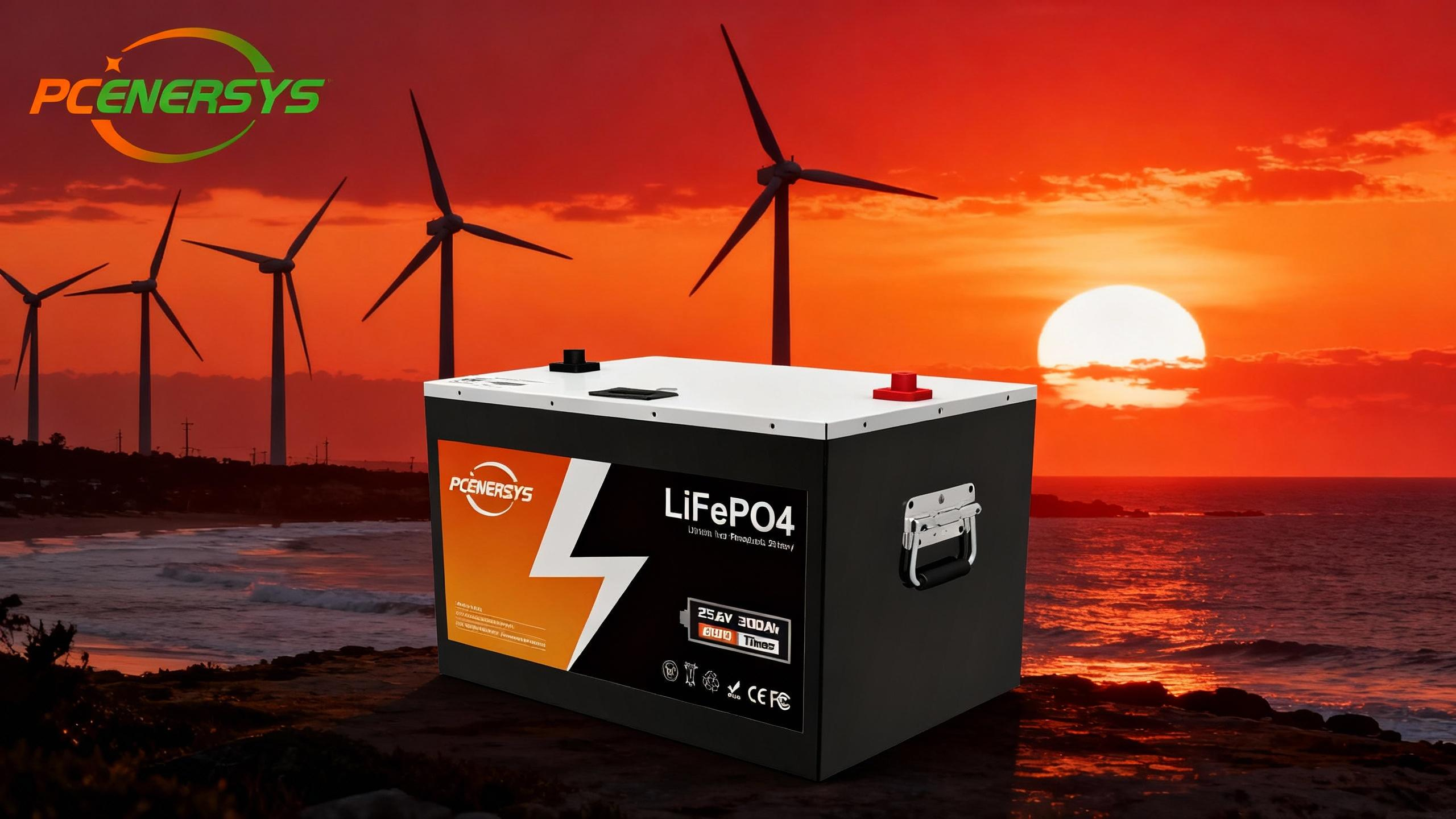
Wind generation fluctuates with weather. A 50 MW / 100 MWh storage station can discharge for two hours, smoothing power output and stabilizing the grid.
LiFePO₄ batteries are often used in such applications for their safety, long cycle life, and stable energy performance.
Solar Farm Operations
In solar farms, MW refers to inverter or system output power, while MWh represents total stored energy.
For example, a 100 MW / 400 MWh hybrid solar-plus-storage project can release stored energy for up to 4 hours during evening demand peaks — improving grid stability and renewable utilization.
Emergency Backup Systems
Critical facilities like hospitals or data centers rely on the correct MW–MWh balance:
-
MW ensures immediate response capacity.
-
MWh determines how long critical operations can continue.
Example: a 1 MW / 2 MWh system can supply essential loads for about 2 hours during an outage.
How Are MW, MWh, and Duration Related?
MW, MWh, and duration are closely related when describing an energy storage system. MW indicates how much power the system can deliver, MWh indicates how much energy it can store, and duration indicates how long the system can deliver power at its rated output.
The basic relationship is:
Duration (hours) = Energy Capacity (MWh) ÷ Power Rating (MW)
For example, a 100 MW / 200 MWh battery energy storage system has a nominal duration of:
200 MWh ÷ 100 MW = 2 hours
This means the system can theoretically deliver 100 MW for 2 hours at its rated power output.
The relationship can also be reversed:
- MWh = MW × Duration
- MW = MWh ÷ Duration
- Duration = MWh ÷ MW
| BESS Rating | Duration | Simple Explanation |
|---|---|---|
| 100 MW / 100 MWh | 1 hour | 100 MW for 1 hour |
| 100 MW / 200 MWh | 2 hours | 100 MW for 2 hours |
| 100 MW / 400 MWh | 4 hours | 100 MW for 4 hours |
| 50 MW / 200 MWh | 4 hours | 50 MW for 4 hours |
In simple terms, MW tells you how much power a battery can deliver at one time, MWh tells you how much energy it can provide, and duration tells you how long that power can last.
Conclusion
Understanding the difference between MW and MWh is fundamental for anyone working with energy storage systems, solar power, or BESS design.
-
MW defines instantaneous power — how much energy can be delivered at once.
-
MWh defines total energy — how long it can be sustained.
Grasping this distinction allows project developers, engineers, and decision-makers to accurately evaluate performance, optimize system design, and achieve efficient renewable integration.
FAQ
Q:How many homes can 1 MW of power supply?
Generally, 1 MW of power can supply electricity to around 800–1,000 homes for one hour, depending on regional energy consumption.
In Europe and North America, the average household uses around 1–1.2 kW per hour, so 1 MW of generation capacity can support roughly a thousand typical homes simultaneously.
Q:What is the typical MW-to-MWh ratio in energy storage projects?
In BESS systems, the MW-to-MWh ratio indicates the relationship between power output and storage duration.
-
1:2 (e.g., 100 MW / 200 MWh) → 2-hour system
-
1:4 (e.g., 50 MW / 200 MWh) → 4-hour system
Short-duration (1–2 hour) systems are used for frequency regulation, while long-duration (4+ hour) systems are used for load shifting and renewable integration.
Q:Does a higher MW always mean a larger energy capacity?
No. MW defines power level, while MWh defines total energy.
A high MW system may have short duration, and a high MWh system may have long duration but lower output.
The ideal configuration depends on specific application needs, such as frequency control, backup, or peak shaving.
Q:How are MW and MWh used in electricity billing?
Utilities charge based on both metrics:
-
MW (demand charge) – for maximum power drawn.
-
MWh (energy charge) – for total energy consumed.
Industrial users may pay based on peak MW usage plus total MWh consumption, ensuring fair cost distribution and grid planning efficiency.
Q:What is the relationship between MW, MWh, and kWh?
These are related units of power and energy:
-
1 MW = 1,000 kW
-
1 MWh = 1,000 kWh
MW measures power, while MWh and kWh measure energy.
For example, a 1 MW solar system running for one hour generates 1 MWh, equivalent to 1,000 kWh of electricity.
We have a wealth of industry cases, including different cases from various regions and industries. We also develop different solutions according to the needs of our users. If you are interested, you can visit our case page to view more cases.
LiFePO₄ Battery Inverter Compatibility: Can You Use LiFePO4 with an Inverter?


contact us
For more questions please


Office Address: 701, Building A, Yonghuayuan Business Building, Baotian 2nd Road, Chentian Community, Xixiang Street, Bao'an District, Shenzhen, Guangdong Province, China
Factory Address 1: Room 701, Building 2, Kegu Industrial Park, Zone B, Jian'an Road, No. 790, Chang'an Town, Dongguan City, Guangdong Province, China
Factory Address 2: Building 7, Phase II Standardized Factory, Innovation Industrial Park, Duji Economic Development Zone, Huaibei City, Anhui Province, China