


NEWS
ESS Manufacturer | Battery Technology | Global Energy Partner
Inside the Inverter Ban: Why the EU’s Cybersecurity Crackdown Risks 14% of Solar Demand and Disrupts BESS Integration
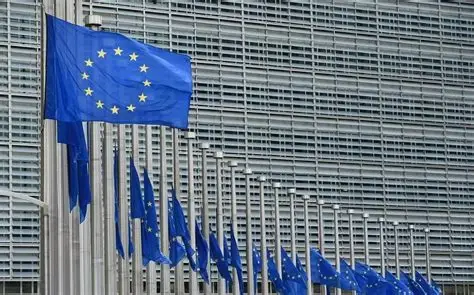
The 14% Fracture: Re-Evaluating Europe’s 2030 Solar Baseline
According to the latest policy impact modeling released by Wood Mackenzie on July 9, 2026, the European Commission’s ban on funding for suppliers from high-risk countries is causing a significant structural fracture in Europe’s renewable energy landscape. Data indicates that this restrictive policy—aimed at excluding solar inverters and power conversion systems (PCS) from countries like China in government-funded projects—is projected to eliminate 14% of Europe’s solar demand between 2026 and 2030, effectively wiping out over 28 GWdc of installed capacity. Concurrently, this supply chain decoupling measure is expected to shrink the scale of battery energy storage system (BESS) deployments by 12% during the same period.
Currently, the administrative scope of the ban has sparked widespread anxiety among market developers. The initial impact of the policy manifests as a direct cutoff of funding from EU-level public financial institutions—such as the European Investment Bank (EIB) and the Modernisation Fund and Recovery and Resilience Facility (RRF), which provide massive capital injections for the energy transition in Central and Eastern Europe. However, what truly threatens to drastically lower industry baseline forecasts is the secondary linkage mechanism the European Commission is currently pressing member states to adopt: a requirement that projects funded by national budgets must also adhere to these restrictions. Once member states achieve full compliance and enact domestic legislation, the proportion of affected project capacity will far exceed the currently disclosed 14%; regulatory compliance risks for utility-scale solar and storage projects across Europe have reached an all-time high.
The Cloud, The Grid, and The Gateway: Why Inverters Transformed into Security Targets
From the practical perspective of grid engineering, Europe’s move to phase out certain hardware from its supply chain stems fundamentally from anxiety regarding control—an anxiety arising from the evolution of traditional physical assets into complex digital nodes. In earlier grid topologies, solar inverters and Power Conversion Systems (PCS) were viewed merely as passive hardware for power conversion. However, modern smart inverters have fully transformed into deeply integrated digital sensors and data gateways. Through edge computing and cloud-based management systems, these devices perform real-time reactive power regulation, dynamic voltage control, and complex interactions with Battery Energy Storage System (BESS) communication protocols. This high degree of digitization and interconnectivity has effectively turned them into the nerve endings of the grid's core infrastructure.
This technological evolution directly sparked intense technical debates during the European Commission's revision of the EU Cybersecurity Act this past January. In closed-door meetings, technical experts from Transmission and Distribution System Operators (TSOs/DNOs) and grid dispatchers voiced long-term technical concerns that went far beyond superficial geopolitical maneuvering. The core issue centers on the devices' built-in capabilities for Over-the-Air (OTA) firmware updates and remote power curtailment. Control over modern large-scale storage and photovoltaic clusters is highly centralized in vendors' cloud management platforms; this means that, in the event of malicious malware injection or firmware tampering, external actors could—without physical access to the hardware—issue commands for mass power curtailment or extreme operational adjustments. Such actions could trigger resonance overloads due to frequency imbalances or even lead to widespread regional grid blackouts.
This potential for malicious control has convinced EU security officials of the urgent need to classify smart inverters—which rely heavily on a small number of overseas suppliers—as "high-risk dependencies." Cybersecurity risks stemming from these technical characteristics are prompting the EU to formally evaluate the possibility of classifying solar inverters and energy storage conversion systems as critical infrastructure—a move that is fundamentally transforming the compliance and market access framework for solar-plus-storage assets in Europe.
Disproportionate Vulnerability: Why Eastern Europe Bears the Brunt of Funding Bans
Geographic boundaries have created a stark disparity in the impact of the ongoing purge targeting infrastructure supply chains. Wood Mackenzie’s forecasts clearly indicate that the consequences of this ban differ by orders of magnitude between Western Europe and Central and Eastern Europe (CEE). While most large-scale solar PV and energy storage projects in Western Europe have long operated under highly market-driven models—relying heavily on private commercial Power Purchase Agreements (PPAs) and subsidy-free merchant markets to ensure bankability—public funding remains the sole lifeline for the financial viability of utility-scale projects in key CEE markets such as Romania, Bulgaria, Czechia, the Baltic states, and Greece.
Green transition projects in these CEE markets are largely tethered to financial lifelines from EU institutions, specifically the Modernisation Fund and the Recovery and Resilience Facility (RRF). In regions heavily dependent on direct government grants and subsidies, a total cutoff of public funding—triggered by the use of inverters from high-risk suppliers like those from China—leaves EPC teams unable to bridge the massive funding gap in the short term. Lacking a sufficient private capital buffer, a large number of ground-mounted solar plants and utility-scale storage projects currently in the interconnection queue face the imminent freezing of financing decisions or even outright cancellation.
Even more far-reaching is the fact that the shockwaves of this Brussels-led compliance review are spreading beyond the EU’s borders via cross-border financial networks. Transnational energy hub projects in North Africa, the Middle East, and the Caspian region are not immune. Because large-scale utility-scale projects in these developing regions have long relied on low-interest loans and multilateral financial instruments from the EBRD (European Bank for Reconstruction and Development) and the EIB (European Investment Bank), non-EU developers operating overseas are also being forced to urgently undertake similar rigorous regulatory compliance self-assessments. They are forced to make a highly constrained strategic trade-off between maintaining the fiercely disruptive price-performance ratio of Chinese components and inverters, and preserving their bankability with core European banks.

Technical Splitting: The Unintended Engineering Costs of Component Decoupling
From a practical engineering standpoint, the forced "decoupling" of supply chains—driven by administrative intervention—is imposing steep, hidden technical costs on system integrators. The core technical pain point highlighted by Wood Mackenzie research analyst Joe Shangraw strikes at the heart of the integrated technology strategies the industry adopted in recent years to maximize efficiency. Previously, to reduce on-site installation time and optimize thermal management, major developers had largely shifted to "All-in-One" (containerized) BESS (Battery Energy Storage System) solutions. In these highly integrated AC/DC architectures, components such as battery cells, the BMS (Battery Management System), liquid cooling piping, and the PCS (Power Conversion System/storage inverter) underwent rigorous system-level integration and testing prior to leaving the factory. However, recent compliance reviews have disrupted this balance: to avoid high-risk suppliers, EPC teams are now compelled to implement "split procurement" for battery packs and the PCS, prohibiting the use of a single brand for both if that brand faces potential compliance risks.
This forced hardware separation has turned into an engineering nightmare on construction sites. The most immediate consequence of split procurement is severe chaos regarding communication protocol adaptation. Low-level data from the BMS (such as individual cell voltage, temperature, and SOC) requires high-frequency interaction with third-party compliant PCS units and station-level SCADA systems via customized Modbus-TCP or CAN bus protocols. When hardware components are cobbled together from suppliers across different ecosystems, on-site engineers are forced to grapple with rewriting protocol stacks and calibrating closed-loop control logic. This directly leads to significant delays—often spanning months—in system commissioning and grid-connection acceptance testing. Even more critical is the issue of accountability: should the highly integrated system experience faults during operation—such as thermal runaway warnings or single-phase ground faults—the lack of a single responsible entity often leads to protracted finger-pointing and warranty disputes among multiple suppliers, resulting in massive losses due to downtime. From the perspective of asset financial modeling, this technological fragmentation fundamentally upends traditional CAPEX (capital expenditure) estimates. Although switching to European or compliant third-party inverter brands appears to cause only a modest 2% to 8% increase in the system's overall BOS (Balance of System) costs, this figure is highly misleading. When recalibrating the asset's full-lifecycle LCOE (Levelized Cost of Electricity), developers must capitalize substantial upfront costs associated with engineering redesigns and additional system integration testing. Furthermore, the significant price premiums charged by European inverter brands for localized O&M (operations and maintenance) services and extended warranties drive up operational costs during the latter half of the asset's lifecycle—a shift that fundamentally alters the bankability models for ground-mounted solar-plus-storage assets in Europe beyond 2026.
The 80% Buffer: Private Capital as the Retaining Wall for Supply Chains
Beneath the grand narrative where EU geopolitical maneuvering intersects with administrative directives, the pure commercial logic of the free market is revealing a fiercely competitive nature. A sober assessment by Juan Monge, a principal analyst at Wood Mackenzie, punctures the idealistic bubble of Brussels policymakers: restrictions on paper do not equate to the actual choices made by project developers on the ground. Data indicates that approximately 80% of installed solar PV and BESS (Battery Energy Storage System) capacity across Europe relies on purely private capital, commercial PPAs (Power Purchase Agreements), or non-recourse project financing that requires no government subsidies. In these ecosystems—driven by merchant power markets—investors apply rigorous mathematical precision to CAPEX (capital expenditure), LCOE (Levelized Cost of Energy), and supply chain lead times. This meticulous calculation of "cents-per-watt" cements the absolute dominance of Chinese inverter brands, underpinned by their formidable economies of scale—a position that established European incumbents (such as SMA) cannot simply displace in the short term.
However, this supply chain bulwark—built upon market inertia—is being severely strained by the uncoordinated, "pre-emptive" legislative actions of individual EU member states. While the European Commission has yet to finalize revisions to the EU Cybersecurity Act, certain member states—driven by acute geopolitical anxiety—have already begun implementing aggressive, sector-specific bans. Lithuania has taken the lead, formally enacting legislation to mandate a complete physical disconnection of any remote control or energy infrastructure data management systems (SCADA/EMS) with Chinese origins. Meanwhile, the German federal government is reportedly urgently assessing the prevalence of "high-risk" inverters within critical infrastructure—such as the energy backbone—and is contemplating the introduction of stricter market access regulations. This state of highly inconsistent regulatory fragmentation has compelled multinational Independent Power Producers (IPPs) and asset developers to abandon their previously universal, standardized supply chain strategies. To hedge against the risk of project failure amidst an uncertain business environment, they have been forced to incorporate more complex and costly risk management matrices into their portfolios—designing entirely distinct equipment compliance packages tailored to the specific grid interconnection queues of different countries. This disconnect between institutional cultures and policy trends is subtly reshaping the overall risk assessment logic for ground-mounted solar-plus-storage assets in Europe for the 2026–2030 period.
Global Battery Oversupply Risk by 2030: How China’s Capacity Growth Is Reshaping the Energy Storage Market
In-depth Analysis:Why Europe’s Solar + BESS Integration Requires a Cultural and Regulatory Overhaul
Related Article



contact us
For more questions please


Office Address: 701, Building A, Yonghuayuan Business Building, Baotian 2nd Road, Chentian Community, Xixiang Street, Bao'an District, Shenzhen, Guangdong Province, China
Factory Address 1: Room 701, Building 2, Kegu Industrial Park, Zone B, Jian'an Road, No. 790, Chang'an Town, Dongguan City, Guangdong Province, China
Factory Address 2: Building 7, Phase II Standardized Factory, Innovation Industrial Park, Duji Economic Development Zone, Huaibei City, Anhui Province, China