


PCENERSYS BOLG
Beyond the Inverter: A Senior Engineer’s Guide to Power Conversion Systems (PCS) in 2026
The Heartbeat of BESS: Why PCS is More Than Just a Box
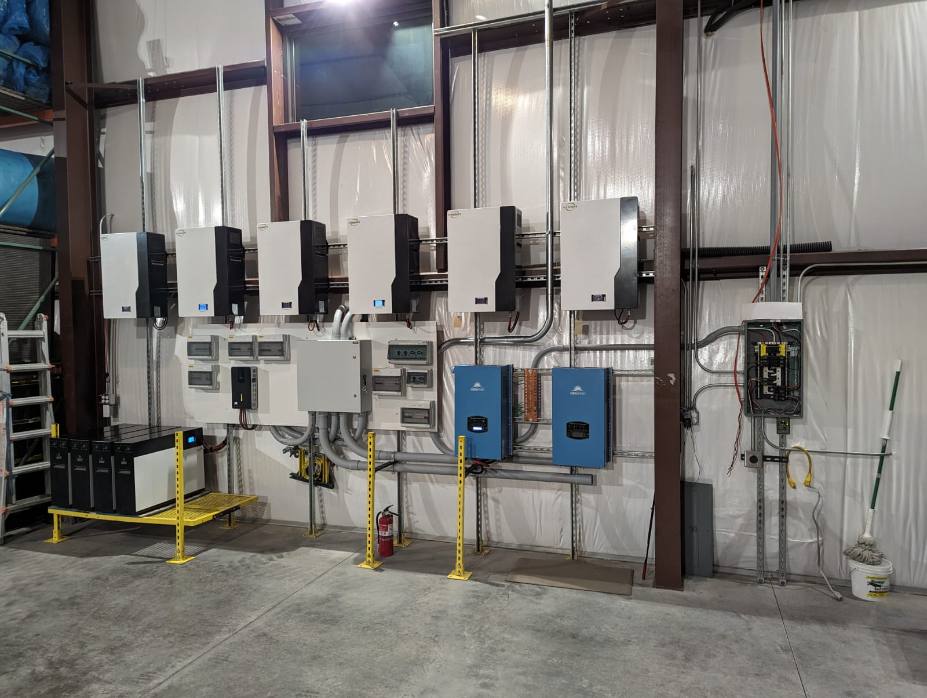
In the BESS project, many people focus their attention on the battery, but overlook the "behind the scenes hero" who can truly determine the life and death of the project and sit on the control panel - the Power Conversion System (PCS). If you think it's just a "tin box" that converts DC electricity into AC electricity, then reality will teach you a lesson when it comes to actual grid connection.
By definition, a Power Conversion System (PCS definition) is a power electronic device capable of achieving bidirectional AC/DC conversion. But in the eyes of our frontline engineers, it is more like a "super shock absorber" that is racing between the power grid and the battery to the extreme. When new energy sources such as wind power and photovoltaics fluctuate violently like wild horses, or when the grid frequency suddenly changes, PCS mobilizes algorithms and throughput energy in milliseconds (ms) to instantly smooth out the impact. If the response is delayed by half a beat, not only will the power grid refuse to connect to the grid, but the backend battery system of Jingui will also be instantly invalidated by sudden overload. Without precise "bidirectional scheduling" of PCS, even the most expensive batteries are just a pile of "dead power" that cannot communicate with the outside world.
The Great Misconception: PCS vs. Traditional Inverters
In all these years of practice, I have heard that the most dangerous mistake a novice has made is: "PCS? Isn't it just a large photovoltaic inverter? ”This cognitive misconception often marks the beginning of a project explosion or being fined by the power grid.
Essentially, traditional inverters are just passive receivers - when the sun comes out, they convert direct current into alternating current and "brainlessly" feed it into the grid. But PCS (energy storage converter) is the "active manager". Its most hardcore weapon is the Four Quadrant Operation capability. This means that it can not only control the bidirectional flow of energy (charge/discharge), but also independently regulate active power and reactive power.
In frequency regulation of the power grid, this technology is a life-saving remedy. According to the analysis of BESS operation data from Lawrence Berkeley National Laboratory (LBNL) in the United States, when the grid frequency suddenly drops due to a fault, PCS with four quadrant control can switch to the first/fourth quadrant within 200 milliseconds and inject dynamic reactive power support into the grid. This is by no means comparable to the fine-tuning of the "one-way output" of traditional inverters - traditional photovoltaic inverters usually have to choose "off grid self-protection" when facing this kind of grid distortion, while PCS is the lone hero who goes upstream and stabilizes the market.
The Silent Revolution: From Grid-Following to Grid-Forming
The older generation of electrical engineers before our group of engineers often sighed that there used to be giant synchronous generators, dozens of tons of rotors rotating, with their own overwhelming "rotating inertia", and the power grid was as stable as Mount Tai. But now, the large-scale integration of new energy into the grid has made it as fragile as paper. The traditional "grid rolling" PCS can only function like a parasite, relying on the voltage and frequency provided by the power grid to operate. Once the power grid collapses, it can also instantly go blind.
But this is precisely the moment when "Grid Forming" PCS staged technological heroism. It no longer seeks the power grid because it is the power grid itself. Through the Virtual Synchronous Machine (VSM) algorithm, the networked PCS has "simulated" the rotational inertia that old engineers dream of.
In the remote "power island" projects without power grid, such as Ali in Xizang or Africa, this technology has shown real dominance. According to a technical report by the International Renewable Energy Agency (IRENA), in microgrids without traditional power plant support, grid forming PCS can independently establish stable voltage sources and frequencies within 0 milliseconds, and build the entire microgrid from scratch. Even in the face of tens of times the surge current when starting heavy loads, it can still withstand it firmly on its own. This is not a simple equipment upgrade, it is a silent revolution that transforms new energy from a "follower" to a "ruler".
In order to further understand the difference between traditional "Grid Rolling" and "Grid Forming", we have inserted the following technical comparison table here for users to easily and clearly understand the difference:
Technical Comparison: Grid-Following vs. Grid-Forming PCS
|
Technical Parameter |
Grid-Following (GFL) PCS |
Grid-Forming (GFM) PCS |
|
Core Role in Grid |
Current Source (Grid Dependent) |
Voltage Source (Grid Independent) |
|
Black Start Capability |
No (Requires external voltage reference) |
Yes (Autonomous grid restoration) |
|
Inertia Support |
Zero (Relies on synchronous machines) |
Virtual Inertia (Algorithm-driven) |
|
Weak Grid Performance |
High risk of harmonic instability & tripping |
Excellent (Stabilizes low SCR environments) |
|
Control Mechanism |
Phase-Locked Loop (PLL) tracking |
Power-Frequency ($P-f$) & Voltage-Reactive ($V-Q$) Droop Control |
|
Typical Use Cases |
Standard commercial & utility-scale BESS |
Microgrids, islanded power systems, weak grids |
Integration Nightmares: What Keeps Engineers Awake at Night?
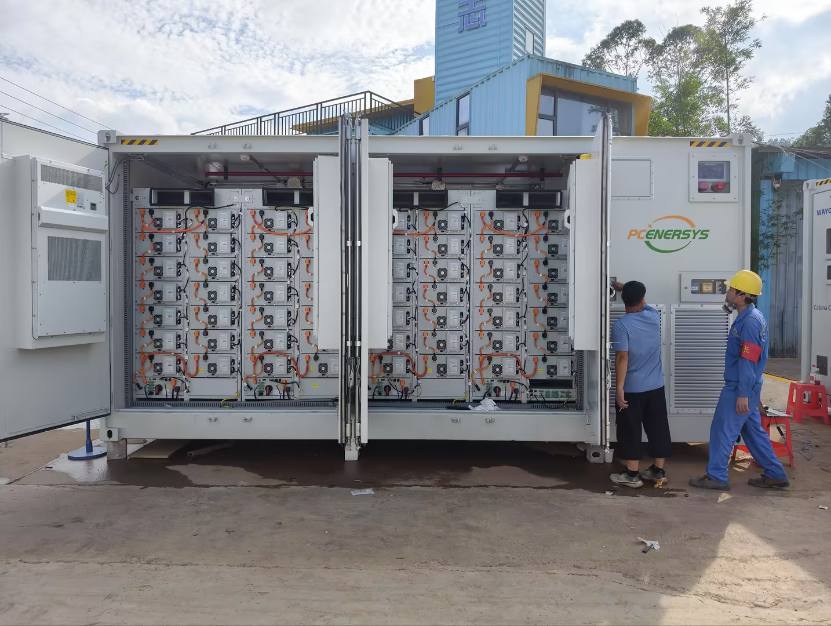
In the energy storage community, what scares engineers the most is not the incalculable conversion efficiency, but the damn "three electric linkage" - the communication black hole between PCS, BMS, and EMS.
Many manuals will tell you that the protocol is universal, but during on-site integration at minus 20 degrees Celsius, you will find that a small "communication packet loss" or millisecond level instruction delay in the Modbus TCP protocol can cause the entire stack of batteries to instantly report a "serious fault" and forcibly shut down. I once experienced a project in which the battery pack frequently triggered overcurrent protection during charge/discharge switching, just because PCS could not perfectly analyze the dynamic power limiting data sent by BMS. The whole site was in chaos.
So, my advice to everyone is: when choosing, don't just focus on the 99% conversion efficiency. A true "god level" PCS must possess extremely strong protocol compatibility and communication fault tolerance . It needs to be able to understand the "dialect" of each BMS and maintain logical composure during network jitter. After all, a PCS that can maintain high voltage without disconnecting is much more reliable than a "mute" inverter that has high efficiency but often disconnects.
Deep Dive: FAQ (Solving Your Most Pressing Questions)
This section is designed to clear the fog. As engineers, we know that the difference between a smooth commissioning and a multi-million dollar delay often lies in these technical nuances. Here are the answers to the most debated questions in the field today.
Deep Dive: FAQ (Solving Your Most Pressing Questions)
Q: What exactly is a Power Conversion System (PCS)?
A: At its core, a PCS is a high-performance, bidirectional device that acts as the "intelligent gateway" between a Battery Energy Storage System (BESS) and the electrical grid. Unlike a simple power source, its primary job is to convert Direct Current (DC) from the batteries into Alternating Current (AC) for the grid (and vice-versa) with microsecond precision, enabling active energy management.
Q: Is a PCS the same as a standard solar inverter?
A: Absolutely not. A standard solar (PV) inverter is a "one-way street" designed to harvest energy from panels and push it to the grid. A PCS is a "two-way superhighway." It must handle bidirectional power flow—meaning it charges and discharges the battery—while managing complex grid-support algorithms like frequency regulation and voltage control that standard inverters simply aren't built to handle.
Q: What are the 4 main types of converters used in power electronics?
A: In the world of power engineering, we categorize converters by their input and output:
- AC-DC (Rectifiers): Converts grid power to charge batteries.
- DC-AC (Inverters): Discharges battery power to the grid.
- DC-DC (Choppers): Often used to stabilize battery voltage before it hits the main conversion stage.
- AC-AC (Cycloconverters): Used for frequency changes in specialized industrial motors.
In a modern BESS project, a PCS is essentially a high-density integration of AC-DC and DC-AC stages.
Q: Why is the PCS considered the most critical component in a BESS project?
A: While batteries account for the lion's share of the CAPEX, the PCS carries the highest Risk Factor. If a battery cell fails, you lose a fraction of capacity; if the PCS fails, your entire site goes dark. It is the only component that "talks" to both the volatile chemicals in the battery and the high-voltage stresses of the grid. It’s the brain, the heart, and the primary insurance policy of your energy storage investment.
Strategic Selection: Picking a Partner, Not Just a Vendor
When choosing PCS, don't be fooled by that fancy parameter table. As a veteran who has worked in the power electronics industry for decades, I have seen too many people lose everything in the O&M stage in order to save a few cents on initial installation costs.
You should understand that the design lifespan of PCS is usually 10 to 15 years, which is a long run. The current trend is indeed tempting: 1500V high-voltage systems can significantly increase energy density, and liquid cooling technology can control temperature differences within 3 ℃, taking efficiency to the next level. These new technologies certainly need to be pursued, but more importantly, it depends on who your "comrades" behind you are.
When making a selection, I suggest that you investigate suppliers like choosing a lifelong partner: do their firmware updates have a high frequency? Can they provide remote patches when the power grid instruction set changes? Can their after-sales team arrive at the scene with the instrument within 24 hours, or will they only reply to your email and queue up?
Remember, what you are buying is not a pile of silicon wafers and inductors, but the stable operation of the system for the next fifteen years. In this era of rapid iteration, a partner with long-term service capabilities and continuous technical support is much more valuable than a "passerby A" manufacturer who only knows how to fight price wars.
Conclusion: Stability in an Unstable Grid
In the long march of transitioning from fossil fuels to green energy, the power grid is becoming more sensitive and complex than ever before. The Power Conversion System (PCS) we are discussing today is no longer a cold topology structure in the laboratory, it is a defense line that ensures the continuous transformation of modern society. Whenever we talk about a 'zero carbon future', we are essentially talking about how to harness those electrons, and PCS is the hands that tame them.
As engineers, we are well aware that the throughput of every watt hour of energy is related to the safety of the power grid. We are not only doing voltage conversion, but also building the strongest foundation for the future green energy world. In this era of unstable power grids, a hardcore, smart, and reliable PCS is the best gift we can give to the future.
Let experts lend you a helping hand
At PCENERSYS, we deeply understand that hardware is just a carrier, and its true value lies in understanding the intricate "electronic symphony" between batteries and the grid. Whether you are planning a complex microgrid or building a megawatt scale power plant project, our mission is to ensure that your energy conversion is efficient and flawless.
Are you still confused about the selection of your BESS project? Don't let integration risks become a stumbling block for your project. Let PCENERSYS's senior engineering team provide you with professional technical diagnosis, assist you in avoiding potential risks, and create the most robust energy storage solution.
[Contact PCENERSYS immediately for your exclusive technical consultation solution]
MW vs. MWh: Why Confusing Power and Energy Destroys BESS ROI
Why Power Batteries vs Energy Storage Batteries Are Often Confused-An article tells you

contact us
For more questions please


Office Address: 701, Building A, Yonghuayuan Business Building, Baotian 2nd Road, Chentian Community, Xixiang Street, Bao'an District, Shenzhen, Guangdong Province, China
Factory Address 1: Room 701, Building 2, Kegu Industrial Park, Zone B, Jian'an Road, No. 790, Chang'an Town, Dongguan City, Guangdong Province, China
Factory Address 2: Building 7, Phase II Standardized Factory, Innovation Industrial Park, Duji Economic Development Zone, Huaibei City, Anhui Province, China