


PCENERSYS BOLG
How to Protect Residential Batteries During Extreme Heatwaves? A Comprehensive Guide to Thermal Safety and Overheat Prevention
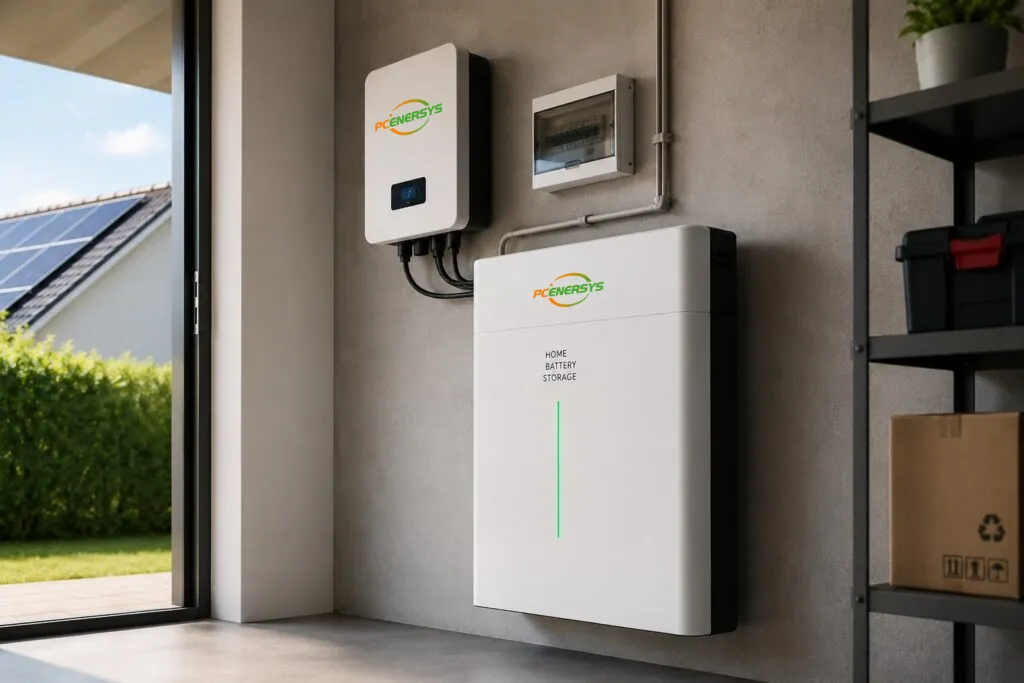
Introduction: Heatwaves and Safety Risks in Residential Energy Storage
Recent market data indicates unprecedented, explosive growth in the global distributed energy storage market. According to the latest industry figures from the Spanish Photovoltaic Union (UNEF), Spain’s newly installed capacity for distributed photovoltaic (PV) self-consumption storage reached 540 MWh in 2025—a substantial 65% increase year-over-year. The residential battery energy storage segment emerged as the primary driver of this growth; installations surged by 99% to reach 219 MWh, accounting for 40% of the total installed capacity. Notably, as many as 61% of homeowners opted to install battery systems alongside their new residential PV setups.
However, the rapid adoption of residential energy storage systems has brought safety and performance challenges associated with extreme weather into sharp focus. Against the backdrop of global warming, frequent summer heatwaves are repeatedly breaking historical records. These intense heatwaves have a profound impact on home batteries. In Europe, soaring summer temperatures have exposed many batteries—often deployed in suboptimal environments—to a high risk of overheating. A recent incident in Germany, where a residential battery overheated and exploded, caused significant property damage and served as a wake-up call for the entire residential storage industry: inadequate thermal management not only accelerates equipment aging but can also lead to catastrophic safety incidents.
It is crucial to recognize that high temperatures act as a "silent killer," threatening both the lifespan and safe operation of energy storage systems. To prevent battery overheating during the summer, both system installers and end-users must implement comprehensive heat-mitigation strategies. By employing scientific site selection and installation layouts, fully utilizing the derating protection mechanisms of Battery Management Systems (BMS), and implementing intelligent load scheduling during extreme heat, we can effectively mitigate thermal risks and ensure the long-term safety and efficiency of residential energy storage systems.
Chapter 1: Physical Mechanisms—How High Temperatures Compromise Battery Health and Safety
1.1 Optimal Temperature vs. Critical Thresholds
Understanding how temperature affects the internal chemical reactions of lithium batteries is fundamental to ensuring stable equipment operation. For mainstream residential energy storage systems currently on the market, the optimal operating temperature range is 20°C to 30°C. Within this range, the activity of lithium ions and the conductivity of the electrolyte achieve an ideal balance, maximizing charge-discharge efficiency and service life.
However, when ambient temperatures soar and cross critical thresholds, a series of irreversible internal damages occurs:
- High-Temperature Range (>40°C): When the operating temperature exceeds 40°C, the electrolyte inside the cell undergoes accelerated thermal decomposition and side reactions, causing the Solid Electrolyte Interphase (SEI) layer to break down and thicken. This significantly increases internal resistance and leads to the permanent loss of active lithium ions, resulting in severe battery capacity degradation and directly compromising the system's battery health.
- Extreme Cold Range (<0°C): Notably, extreme low temperatures are equally hazardous. When charging occurs below 0°C, the diffusion rate of lithium ions into the graphite anode layers drops sharply, making them prone to depositing as metallic lithium on the anode surface—a phenomenon known as "lithium plating." The resulting lithium dendrites not only cause permanent capacity loss but can also puncture the separator, triggering an internal short circuit.
1.2 From Overheating to Thermal Runaway: The Process of Physical Evolution
Under conditions of extreme weather or poor heat dissipation, Joule heat generated during charging and discharging can accumulate within the battery pack if it is not dissipated in time. When the rate of internal heat accumulation exceeds the rate of heat dissipation, the battery enters a highly dangerous chain of physical changes:
The residential energy storage market is currently dominated by Lithium Iron Phosphate (LFP) batteries. Compared to traditional ternary lithium (NCM/NCA) or lead-acid batteries, LFP batteries offer a higher thermal decomposition temperature (typically exceeding 270°C) and superior crystal structure stability. However, this does not mean that LFP batteries are entirely immune to thermal hazards; without effective battery protection measures, high temperatures can still lead to catastrophic consequences.
The typical progression of this extreme physical evolution is as follows:
Localized overheating/heat accumulation → SEI layer decomposition and separator meltdown → Widespread internal short circuit → Thermal runaway
When the internal temperature exceeds critical limits, the cell separator gradually shrinks and melts, causing direct contact between the positive and negative electrodes and resulting in a widespread short circuit. The immense heat released by the short circuit drastically accelerates internal side reactions, generating large quantities of flammable gas and extreme heat, ultimately triggering irreversible thermal runaway. Therefore, establishing a robust protection system to curb heat accumulation at the source is the key to preventing battery thermal runaway.
Chapter 2: The Physical Line of Defense—Guidelines for Optimal Home Battery Installation and Site Selection
2.1 Golden Rules for Site Selection: Recommended Areas vs. Prohibited Zones
The passive heat dissipation of residential energy storage systems relies heavily on the ambient temperature of the installation environment. To ensure the system operates safely and efficiently during periods of high summer heat, selecting the optimal installation location serves as the first line of physical defense. Proper site selection can significantly reduce thermal stress and enhance the system's safety performance under high-temperature conditions.
When planning the installation location, the following zoning guidelines must be strictly observed:
|
area classification |
Specific installation location |
Reasons for site selection and evaluation of heat dissipation performance |
|
Ideal Region |
Basement, or a shaded indoor room free from direct sunlight |
It operates within the "thermal stability zone," being virtually unaffected by extreme external temperatures, with ambient temperatures consistently maintained between 18°C and 25°C throughout the year. |
|
feasible region |
The exterior facade of the north wall with a sunshade, and a well-ventilated garage. |
It avoids intense midday solar radiation; the garage or north wall provides excellent air circulation, effectively dissipating heat generated during system operation. |
|
Death Zone |
Uninsulated attic/basement level, west-facing terrace, walls exposed to direct sunlight |
Strictly prohibit installation! Due to the greenhouse effect, attic temperatures can exceed 50°C; direct sunlight may cause equipment casings to reach dangerous local temperatures. |
2.2 Real-World Case Study
[Case Study] Frequent Power Derating and Overheat Shutdowns in Summer Caused by Improper Attic Installation
Project Background: A homeowner in the Czech Republic installed a 10 kWh residential battery energy storage system (BESS) and inverter in an uninsulated attic to save living space on the ground floor.
Fault Symptoms: During a July heatwave, when outdoor temperatures reached 35°C, the ambient temperature inside the enclosed attic soared to 52°C due to the intense greenhouse effect. Internal heat could not dissipate, causing a sharp drop in charge/discharge power between 12:00 PM and 3:00 PM daily and frequently triggering the battery management system's overheat protection shutdown.
Remediation and Comparison: Acting on the technical team's advice, the homeowner relocated the battery to a cool area in the basement and maintained a 15 cm ventilation gap around the equipment. After the relocation, the battery's ambient temperature remained stable between 24°C and 27°C—even during extreme heat with outdoor temperatures of 38°C—restoring normal charge/discharge efficiency and completely eliminating shutdown issues.
2.3 Physical Installation and Heat Dissipation Space Requirements
Beyond the choice of general location, specific installation details are crucial for effective passive cooling. The following principles must be observed during physical installation:
Maintain Adequate Safety Clearance for Heat Dissipation: A minimum physical gap of 10 cm to 15 cm must be maintained between the battery cabinet and the wall, as well as between the battery and the inverter (a primary heat source). This ensures smooth airflow, allowing natural convection to effectively carry away heat generated by the battery cells and heat sinks.
Assessment of Heat Dissipation Methods: Most residential batteries utilize fanless passive cooling designs that rely on natural ventilation, making them highly sensitive to ambient temperature and space constraints. If environmental conditions are harsh and relocation is not possible, forced air cooling or auxiliary air conditioning fans must be installed to actively lower the ambient temperature and ensure the physical safety of the equipment.

Chapter 3: Software Defense Line—BMS Temperature Protection and Derating Mechanisms
3.1 What is BMS Derating?
If physical site selection serves as the first passive barrier, then the battery temperature protection built into the Battery Management System (BMS) acts as the core active defense mechanism ensuring battery safety.
The BMS utilizes sensors distributed at critical locations within the battery cells to perform continuous, millisecond-level temperature monitoring. When the system detects that cell or ambient temperatures have risen beyond preset safety thresholds (typically 40°C to 45°C), it automatically triggers the thermal derating mechanism:
- Active Derating: The BMS issues a command via communication protocols to force the inverter to reduce charge and discharge currents. The underlying logic is based on Joule's Law (P=I²R): reducing current exponentially decreases internal heat generation within the cells. "Reducing power to save the system" is a self-protection measure designed to prevent cells from entering thermal runaway under conditions of high temperature and high load.
- Critical Shutdown: If ambient temperatures continue to rise and reach critical safety limits (typically 55°C–60°C), the BMS instantly cuts off the main relay, forcing the system to stop operating to prevent irreversible physical damage and the risk of fire.
3.2 Real-World Case Analysis
[Case Study] Midday Power Drop: BMS Derating Mechanism Mistaken for "Equipment Failure"
- Issue Description: During a summer heatwave in Europe, multiple homeowners reported to pcenersys after-sales support that their residential energy storage systems experienced a sudden drop in output power—from 5 kW down to 2 kW or less—between 12:00 PM and 2:00 PM (peak solar generation hours). They suspected hardware defects or battery damage.
- Expert Analysis (Kiwa PI Berlin Perspective): Garikoitz Sarriegi, Head of Conversion and Storage at the authoritative European third-party certification body Kiwa PI Berlin, provided a clear explanation for this phenomenon: it was not a hardware failure, but rather the standard battery BMS temperature protection mechanism functioning as intended. During the hottest part of the day, the combination of high ambient temperatures and internal heat generated by high-rate charging and discharging triggered the BMS derating logic. The BMS actively limits current to control the temperature rise of the battery cells; this is a standard and necessary safety measure.
- Insights from EnerSys after-sales experience: Understanding this mechanism helps avoid unnecessary service calls. Installers should inform system owners that power reduction during high-temperature conditions indicates the BMS is performing a self-protection function; to restore full-power operation, the priority should be to improve physical heat dissipation around the battery, rather than blindly replacing hardware.
Chapter 4: Operational Defense—User Strategies to Mitigate Heat Risks During Heatwaves
4.1 Midday Load Shifting
Beyond physical siting based on hardware design and automatic BMS protection, end-user operational habits are equally critical to the system's thermal safety. During periods of extreme summer heat, adopting proactive load scheduling strategies is one of the most effective and cost-efficient ways to reduce battery heat generation.
Users should aim to schedule the operation of high-power devices—such as air conditioners, ovens, heat pumps, and EV charging stations—during peak solar generation hours (typically 11:00 to 15:00):
- Core Principle: When high-power devices operate during the midday solar peak, the DC electricity generated by the PV modules is converted by the inverter and supplied directly to the loads (Direct Consumption/Self-Consumption). This "direct solar supply" mode significantly reduces the current flowing into and out of the battery.
- Reducing Thermal Stress: Based on battery heat generation mechanisms, high-rate charging and discharging are primary triggers for rapid internal cell heating. Midday load shifting alleviates the charge/discharge burden on the battery during the hottest part of the day, thereby substantially reducing internal thermal stress and the risk of heat accumulation.
4.2 Emergency Response Checklist for Extreme Weather
When meteorological authorities issue heatwave warnings or during periods of extreme heat, users are advised to follow this checklist for system inspection and emergency maintenance:
- Clear Heat Dissipation Channels and Debris: Check the area around the battery cabinet and inverter for stacked cardboard boxes, debris, or dust accumulation; ensure that the 10–15 cm clearance zone reserved for heat dissipation remains completely unobstructed.
- Activate Auxiliary Ventilation: If the battery is installed in a garage or a dedicated equipment room, activate exhaust fans, axial fans, or auxiliary air conditioning during periods of extreme heat to force air circulation and prevent the formation of localized "heat islands."
- Avoid high-rate discharging during the hottest part of the day: Try to avoid operating multiple high-power appliances simultaneously (such as running an air conditioner and an oven at the same time) between 12:00 PM and 3:00 PM, when temperatures peak; this prevents the battery from triggering an overheat shutdown due to high-current discharge.
Chapter 5: The Foundation of Safety—Recognizing International Compliance and Safety Certifications
When purchasing or deploying residential energy storage systems, selecting products with rigorous international safety certifications serves as the first line of defense in preventing thermal runaway at the design stage. Garikoitz Sarriegi, a technical expert at Kiwa PI Berlin—a renowned European third-party certification body—emphasizes that these authoritative certifications demonstrate the equipment has undergone stringent environmental and thermal protection testing, ensuring system safety even under extreme weather conditions.
When selecting a system, prioritize the following core certification standards:
- IEC 62619: The core safety standard for industrial and energy storage lithium batteries; it includes rigorous tests for thermal abuse and external short circuits to ensure that battery cells do not catch fire during abnormal high-temperature conditions.
- UL 9540 / UL 9540A: Safety standards at the energy storage system level. UL 9540A specifically tests for thermal runaway fire propagation, verifying that thermal runaway in a single cell will not trigger a chain-reaction explosion across the entire battery pack.
- UN 38.3: A safety certification for the transport of lithium batteries, ensuring structural stability of the cells under conditions of extreme temperature fluctuations, mechanical shock, and low atmospheric pressure.
- CE Mark: A residential battery bearing the CE mark indicates full compliance with European directives on electrical safety and electromagnetic compatibility; it serves as the mandatory credential for market entry into Europe.
Chapter 6: Frequently Asked Questions (FAQ)
Q1: What temperature is too hot for a home battery?
A: Ambient temperatures exceeding 40°C are considered too high for residential batteries. Prolonged operation above 40°C accelerates internal aging and causes irreversible capacity loss. When temperatures rise to the 45°C–50°C range, the Battery Management System (BMS) typically triggers "derating" protection, automatically reducing charge and discharge power; if cell temperatures reach critical limits (usually 55°C–60°C), the BMS will shut down the system to prevent thermal runaway.
Q2: Can I install my solar battery in the attic or garage?
A: Installation in an attic is strictly prohibited, while garage installation depends on specific conditions. Attics are prone to a strong greenhouse effect; temperatures can easily soar above 50°C in summer, leading to frequent system shutdowns or safety hazards. A garage is a viable location provided it is well-ventilated, shielded from direct sunlight, and allows for a heat dissipation clearance of at least 10–15 cm between the system, the wall, and the inverter.
Q3: Why does my solar battery lose capacity faster in the summer?
A: High summer temperatures significantly accelerate internal chemical side reactions. In environments exceeding 40°C, the thermal decomposition of the electrolyte speeds up, and the Solid Electrolyte Interphase (SEI) layer thickens, consuming active lithium ions. This increases internal resistance and accelerates battery degradation, resulting in a more rapid decline in usable battery capacity during the summer.
Q4: Is an LFP (LiFePO4) battery completely safe from thermal runaway?
A: LFP batteries possess exceptional thermal stability, but they are not entirely immune to thermal runaway. Compared to traditional ternary lithium batteries, Lithium Iron Phosphate (LFP) batteries feature a higher thermal decomposition temperature (>270°C) and a more stable crystal structure, making them less prone to violent combustion. However, in extreme scenarios—such as severe external physical damage, prolonged exposure to extreme heat combined with poor heat dissipation, or BMS system failure—LFP batteries can still experience separator melting and internal short circuits, potentially triggering thermal runaway. Therefore, scientific thermal management and compliance with safety certifications remain indispensable.
Building a safe and efficient residential energy storage system requires a four-pronged thermal protection strategy: scientific site selection, an understanding of BMS derating logic, optimization of midday load habits, and adherence to CE/UL certification standards. Only by organically integrating physical heat dissipation, software-based protection, and routine O&M can the battery system ensure long-term, stable operation during extreme heatwaves and completely eliminate the risks of overheating and thermal runaway. Please feel free to contact our engineers if you encounter any issues or have specific project requirements; we are here to provide solutions.
How AI Is Transforming Battery Energy Storage Profitability: VPP, Algorithmic Trading and ROI Analysis
Beyond Textbook GFM: Designing Droop Control That Actually Survives the Field
contact us
For more questions please


Office Address: 701, Building A, Yonghuayuan Business Building, Baotian 2nd Road, Chentian Community, Xixiang Street, Bao'an District, Shenzhen, Guangdong Province, China
Factory Address 1: Room 701, Building 2, Kegu Industrial Park, Zone B, Jian'an Road, No. 790, Chang'an Town, Dongguan City, Guangdong Province, China
Factory Address 2: Building 7, Phase II Standardized Factory, Innovation Industrial Park, Duji Economic Development Zone, Huaibei City, Anhui Province, China